The global copper landscape stands at a pivotal inflection point, with technological advancement and environmental imperatives converging to create one of the most compelling investment narratives in commodity markets. As nations accelerate their transition to renewable energy systems and electrification strategies gain momentum across industries, the copper demand outlook presents both extraordinary opportunities and significant supply-side challenges that savvy investors cannot afford to ignore.
Electric vehicle adoption has emerged as perhaps the single most transformative force reshaping copper consumption patterns. A conventional internal combustion engine vehicle contains approximately 25 kilograms of copper, while electric vehicles require between 60 to 85 kilograms of the red metal. With global EV sales continuing their exponential trajectory and major automakers committing to full electrification timelines, this sector alone represents a fundamental shift in baseline copper requirements. The ripple effects extend far beyond vehicle manufacturing, encompassing charging infrastructure buildouts that demand substantial copper investments for power distribution networks and rapid charging stations.
Renewable energy infrastructure development adds another layer of complexity to the copper demand outlook, with wind turbines and solar installations requiring significantly more copper per megawatt than traditional fossil fuel power plants. Offshore wind projects, in particular, present copper-intensive scenarios due to extensive cabling requirements and transmission infrastructure needed to connect remote installations to mainland power grids. As governments worldwide implement aggressive renewable energy mandates and corporations pursue carbon neutrality goals, these infrastructure projects are scaling at unprecedented rates.
The artificial intelligence boom and expanding data center requirements introduce an often-overlooked dimension to copper consumption projections. Modern data centers, essential for supporting cloud computing, machine learning applications, and digital transformation initiatives, require extensive copper wiring for power distribution, cooling systems, and data transmission. As AI computational demands continue growing exponentially, the supporting infrastructure investments translate directly into increased copper requirements.
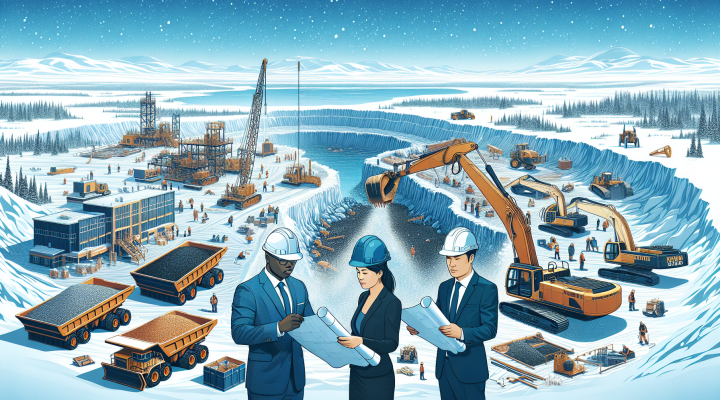
Supply-side fundamentals present a starkly different picture, with several factors constraining production capacity expansion. Many of the world’s largest copper mines are experiencing declining ore grades, requiring more intensive processing to extract equivalent copper quantities. Permitting delays for new mining projects, particularly in jurisdictions with stringent environmental regulations, have created a pipeline bottleneck that could persist for several years. Additionally, geopolitical tensions in key copper-producing regions introduce supply chain uncertainty that impacts long-term planning for both miners and consumers.
Investment implications extend beyond direct mining exposure, encompassing companies developing copper recycling technologies, exploration firms with promising deposits, and manufacturers implementing copper-efficient designs. The copper demand outlook suggests that secondary markets for recycled copper will become increasingly valuable as primary supply constraints tighten. Companies pioneering urban mining techniques and advanced recycling processes may capture significant value as the circular economy principles gain traction.
Resource allocation strategies must account for the extended lead times inherent in copper market dynamics. Unlike some commodities where supply can adjust relatively quickly to demand signals, copper mining projects typically require five to ten years from discovery to production. This temporal disconnect between demand acceleration and supply response capability creates structural market imbalances that historically have driven sustained price appreciation cycles.
The convergence of technological transformation, environmental mandates, and supply constraints positions copper as a critical enabler of the modern economy’s evolution. Investors recognizing these fundamental shifts early and positioning accordingly stand to benefit from what appears to be a multi-decade growth cycle driven by irreversible technological and societal changes. The copper demand outlook reflects not merely cyclical commodity dynamics, but a structural reshaping of global resource requirements that will define investment opportunities for years to come.