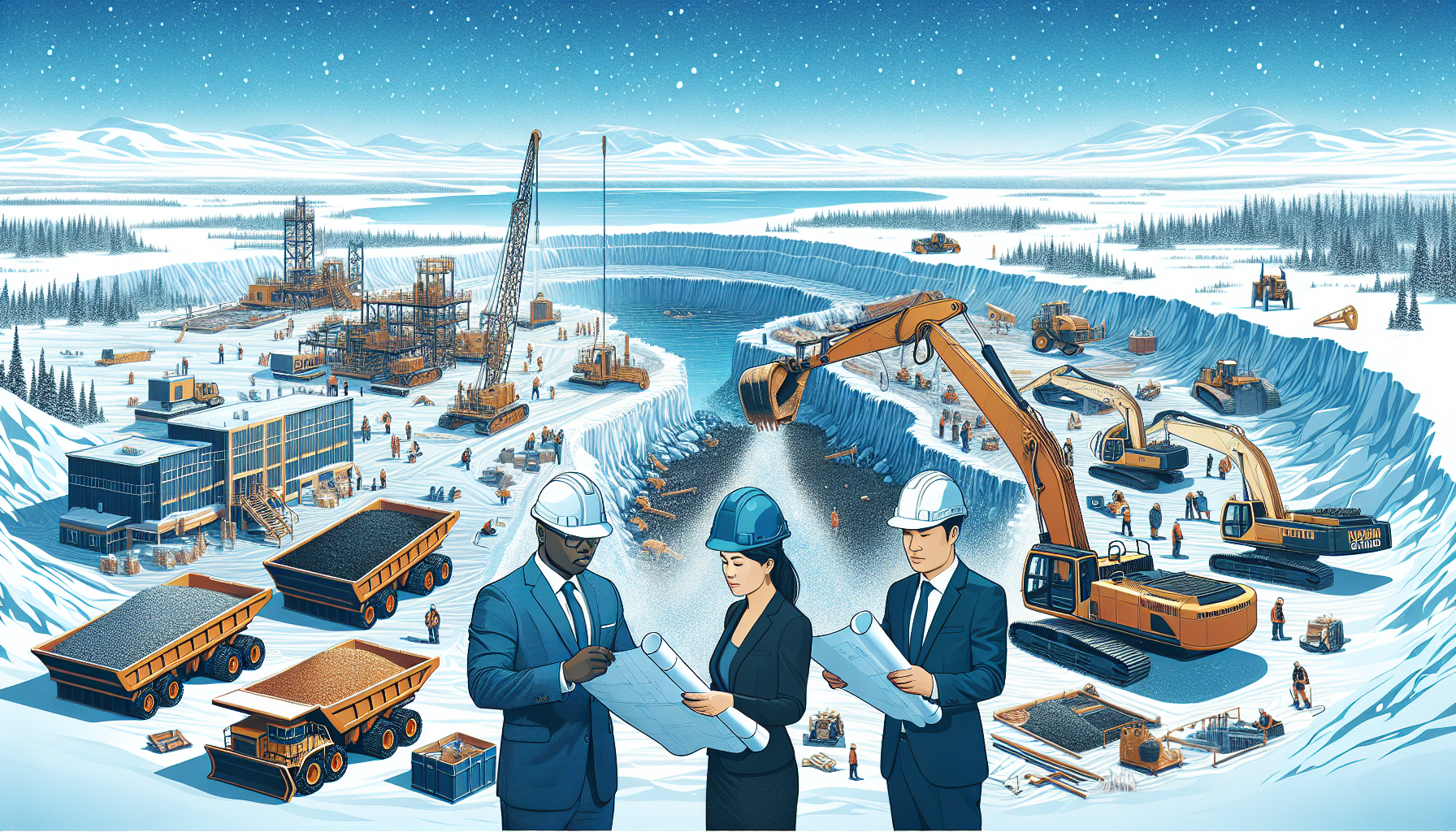
Canada’s vast northern territories are experiencing an unprecedented transformation as traditional resource extraction evolves into the backbone of the nation’s clean energy ambitions. From the diamond mines of the Northwest Territories to the mineral-rich landscapes of Nunavut, northern resource development is shifting from fossil fuel dependency toward critical mineral extraction and renewable energy infrastructure that will power the global green transition.
This evolution represents more than an industrial pivot—it’s a strategic repositioning that places Canada’s remote regions at the center of international clean energy supply chains. As global demand for lithium, cobalt, rare earth elements, and other critical minerals surges, northern resource development projects are becoming essential components of North America’s energy security strategy.
Critical Minerals Drive Northern Mining Renaissance
The northern territories contain some of the world’s largest untapped reserves of materials essential for battery production, wind turbines, and solar panels. Recent geological surveys have identified substantial lithium deposits in the Northwest Territories, while Nunavut’s mineral potential extends to rare earth elements crucial for renewable energy technologies.
Mining companies are investing billions in northern resource development projects specifically targeting these clean energy materials. The Nechalacho rare earth elements project in the Northwest Territories exemplifies this shift, positioning Canada as a key supplier outside of China’s dominant market position. Similarly, lithium exploration projects across northern Manitoba and Saskatchewan are attracting international investment as automakers seek secure battery mineral supplies.
Indigenous communities are playing increasingly central roles in these developments, with many nations establishing partnerships that ensure both environmental protection and economic benefits. The Mackenzie Valley Resource Management Act has created frameworks for sustainable northern resource development that balances extraction with traditional land use and ecological preservation.
Renewable Energy Infrastructure Transforms Remote Communities
Northern resource development increasingly includes ambitious renewable energy projects that reduce reliance on diesel generators while supporting mining operations. Wind and solar installations, combined with advanced battery storage systems, are replacing costly fossil fuel transportation to remote locations.
The Inuvik Wind Project demonstrates how northern communities can leverage renewable resources for both local energy needs and industrial development. These projects create training opportunities for northern residents while establishing the electrical infrastructure necessary for expanded mineral processing operations.
Hydroelectric potential in northern regions remains largely untapped, with several proposed projects designed to power both communities and resource extraction facilities. The proposed Taltson Hydroelectric Expansion would provide clean electricity to diamond mines while connecting previously isolated northern communities to reliable power grids.
Technology Innovation Addresses Northern Challenges
Northern resource development faces unique logistical and environmental challenges that are driving technological innovation across the clean energy sector. Extreme weather conditions, permafrost considerations, and remote locations require specialized equipment and approaches that often pioneer solutions applicable worldwide.
Advanced mining techniques minimize environmental impact while maximizing extraction efficiency. Automated equipment reduces the need for permanent workforce housing in sensitive northern ecosystems, while real-time monitoring systems ensure environmental compliance throughout project lifecycles.
Transportation innovations include electric vehicles designed for northern conditions and drone delivery systems that reduce the carbon footprint of supply chains. These technologies, developed for northern resource development, are finding applications in other remote regions globally.
Economic Partnerships Strengthen Northern Communities
The evolution toward clean energy-focused northern resource development is creating new economic opportunities for northern communities while respecting Indigenous rights and environmental stewardship. Revenue-sharing agreements ensure that resource extraction benefits local populations through education funding, infrastructure development, and business opportunities.
Training programs specifically designed for northern residents are creating pathways into renewable energy careers, from solar panel installation to wind turbine maintenance. These skills remain valuable as northern communities continue transitioning toward renewable energy independence.
Federal and territorial governments are supporting this transition through targeted investment programs, regulatory frameworks that expedite clean energy projects, and international trade agreements that position Canada as a reliable supplier of critical minerals to allies.
Northern resource development stands at a historic inflection point where traditional extraction industries are becoming the foundation for global clean energy infrastructure. As international demand for critical minerals continues growing and renewable energy costs decline, Canada’s northern regions are positioning themselves as essential contributors to the worldwide transition away from fossil fuels. The success of these initiatives will determine not only the economic future of northern communities but also Canada’s role in the global clean energy economy for decades to come.