Archives for June 29, 2019

Weekly Market Review – June 29, 2019

Stock Markets

Stocks finished mixed this week as markets took in the strong gains from the month of June. Investors were in a wait-and-see mode anticipating Friday’s G20 Summit in Japan. The big takeaway would be a trade truce and resumption of negotiations between the U.S. and China, which stalled last month. The week also marked the end the quarter and the first half of 2019. At the year’s midpoint, we reached an important milestone: the 10-year anniversary of the current economic expansion. Of course, some volatility crept in during the second quarter 2019, but the markets remained strong with rising bonds and stocks adding to gains. While this expansion might be the longest, analysts still believe that there is room to run for some time.

Two large mergers of note happened this week. Eldorado Resorts says it will acquire Caesars Entertainment in a deal worth about $17 billion, making the pair the largest U.S. gaming company. Drug maker AbbVie has agreed to acquire rival Allergan for around $63 billion in cash and stock.

U.S. Economy

As we end the 2nd quarter, the current U.S. economic expansion logs in as the longest-running one on record, going back to 2009 and surpassing the 1991-2001 expansion. Obviously, the quality and characteristics of the economy have evolved over time, but can this expansion continue even further? Most analysts are in agreement that it can, but they caution that they don’t believe the next stage will look the same as this current phase. Expansions have typically finished with the end of a bubble, such as housing or tech, from an external shock or based on poorly conceived monetary policies. None of these are at play at the moment. The good news for investors is that bull markets rarely end without an accompanying recession. This expansion is by most estimates performing well enough continue to offer support to the stock market going forward.

Metals and Mining

Gold has been on a tear this month and now gold markets are testing if the precious metal can hold support above $1,400. There is continued and persistent selling pressure after hitting its six-year high this week.

Market sentiment is clearly bullish as prices pushed to a six-year high, but by week’s end, sentiment took a more reserved stance since analysts are questioning aggressive expectations for lower U.S. interest rates that came out of last week’s Fed meeting. Gold’s gains have also been largely supported by expectations of an interest rate cut in July by the Federal Reserve.

So, although Gold is off its highs, it is still experiencing its best month in three years. Gold prices are up almost 1% for the week and up nearly 8% for the month. Silver was also on track for a monthly gain, but then moved down slightly on Friday. As of 12:30 p.m. EDT, silver was trading at US$15.25 per ounce. The other precious metals remain strong, with platinum inching up to US$838 per ounce and palladium closing out the week US$1,518.50 per ounce.

Energy and Oil

Oil prices moved higher at the end of this week, like other markets anticipating the meeting between Donald Trump and Xi Jingping. The sentiment is of course that talks could result in a breakthrough in trade negotiations, an agreement to resume talks, or a collapse and subsequent increase in tariffs. All of these will affect oil prices. OPEC kicks off its meeting in Vienna on Monday. Market bulls will be hoping that the G20 summit will provide a trade breakthrough while the supply side of oil continues to show bullish signals, according to market insiders.

Natural gas spot prices fell at most locations this report week. Henry Hub spot prices fell from $2.36 per million British thermal units (MMBtu) last Wednesday to $2.32/MMBtu yesterday. According to data from PointLogic Energy, total U.S. consumption of natural gas rose by 4% compared with the previous week. Natural gas consumed for power generation climbed by 8% week over week based on slightly warmer than normal temperatures in the US southeast.

European governments are reported to be “doubling down” on efforts to keep economic ties with Iran, in an effort to keep their nuclear deal alive. The EU has tried to develop a financing mechanism to bypass U.S. sanctions, but most foreign companies are unwilling to do business in Iran under the current heated climate.

World Markets

The pan-European STOXX Europe 600 Index, the UK’s FTSE 100 Index, and the exporter-heavy German DAX Index all rose slightly throughout the week based on expectations that the Group of 20 summit would help ease global trade tensions. One soft spot was the yield on the 10-year German bond, which fell to -0.34% as European economic indicators were disappointing.

Chinese stocks were off slightly for the week as traders were moving cautiously in advance of a much-anticipated meeting between President Trump and his Chinese leader Xi Jinping at the G20 summit. The benchmark Shanghai Composite Index declined 0.8% and the large-cap CSI 300 Index lost 0.2%. However, for the month of June both indexes rose off of positive signals on trade earlier in the month. The Shanghai benchmark rose 2.8% and the CSI 300 Index gained 5.4% in June based on optimistic investors expecting the G20 meeting between both leaders would, at least lead to the resumption of trade talks that halted last month.

The Week Ahead

It’s a shortened week for U.S. financial markets with banks and markets closed on Thursday for the U.S Independence Day holiday. Canada will close its banks and markets on Monday for their Independence Day celebrated July 1st. Major economic news includes the ISM manufacturing Purchasing Managers’ Index, May factory order numbers, auto sales reported on Tuesday and June’s jobs report released on Friday.

Key Topics to Watch

–           Post G20 summit trade news

–           ADP employment report

–           ISM nonmanufacturing index report

–           May Factory orders report

–           Nonfarm payrolls June report

–           June unemployment rate report

–           Gold pricing post G20

Markets Index Wrap Up

The best 2-in-1 tablets for 2019

What to buy when you don’t quite want a laptop.

Two-in-1 tablets are far from perfect. But just because there isn’t a flawless laptop replacement today doesn’t mean you can’t get a tablet that’s good enough to get some work done on the road. Tech’s biggest players are falling over themselves to push out these devices, giving the premium-tablet category new life. It’s easy to see why people would want these hybrids: They offer the power and productivity of a notebook in the thin and light body of a tablet. But there isn’t an operating system yet that’s versatile enough to work as well as a tablet as it does as a desktop (or vice versa). So as you approach this decision, it’s worth thinking about which mode is more important to you.

Still, thanks to the competition brewing among Microsoft, Apple, Google and Samsung, these devices can only get better. In the meantime, existing 2-in-1s are plenty powerful for banging out a proposal on an airplane or updating a spreadsheet from the back of a cab. If you’re realistic about your expectations and want something for these specific situations, you’ll likely find one that’s right for you.

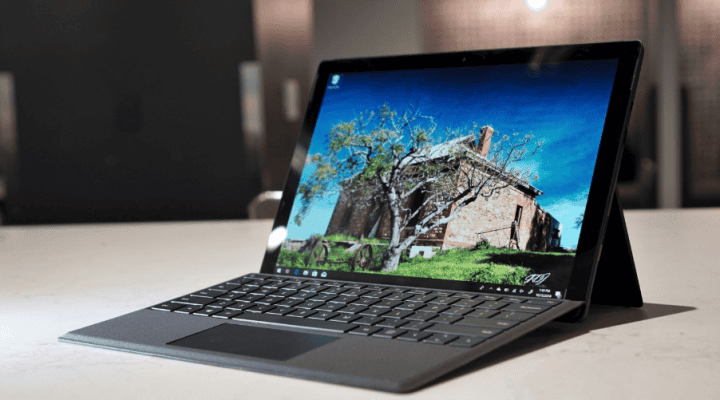
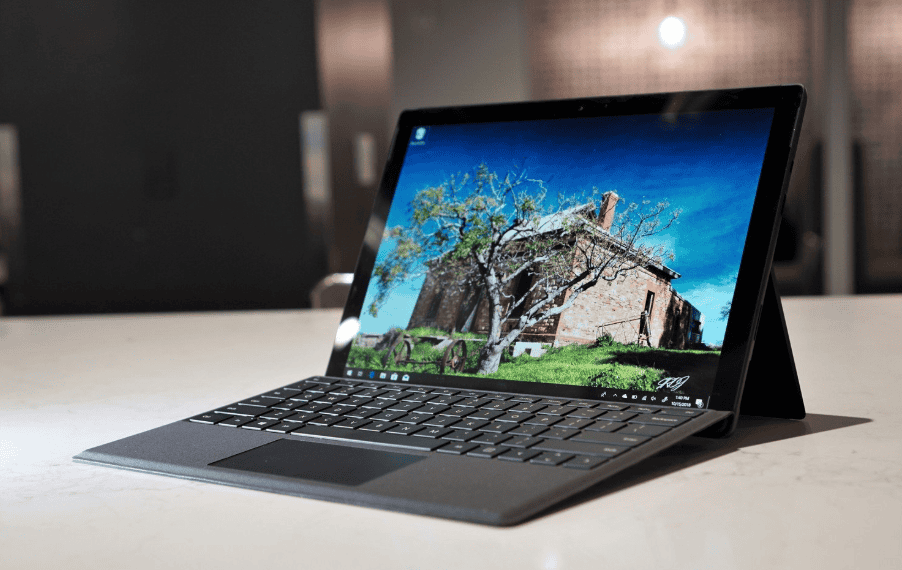
For the road warrior: Microsoft Surface Pro 6

If you work on the go a lot and need something lightweight, sturdy and capable of multitasking like a champ, the Surface Pro 6 is the 2-in-1 for you. It’s hands down the best hybrid for productivity. Microsoft has refined its formula so much that the sixth Surface Pro is a nearly perfect hybrid. It provides powerful performance and long-lasting battery in a lightweight yet sturdy frame. PC users will find the Windows 10 software familiar and just as capable of multitasking as on a laptop. Plus, Microsoft makes arguably the best tablet keyboard on the market.

The Surface Pro 6 comes with a bright display and a classy all-black option that refreshes the tablet’s dated design. The base model with an Intel Core i5 processor, 8GB of RAM and 128GB of storage costs $899, but you’ll have to add $129 for a Type Cover, bringing the total to $1,019. That’s pricey, but it still isn’t the most expensive option on this list.

For those chained to iOS: Apple iPad Pro 12.9-inch

Apple wants so much for you to think of the iPad Pro as a notebook replacement that it markets the device as “more powerful than a PC laptop.” Indeed, the iPad Pro’s A12X Bionic is a beast of a chip that can handle most tasks. Just don’t expect to edit 8K videos on it. The tablet also has a beautifully light design and crisp, vibrant screen, making it a joy to write on with the Apple Pencil. It has great battery life, to boot.

Theoretically, the new USB-C port also makes the iPad Pro more versatile than before. It should let you connect far more accessories and avoid the hassle of a Lightning adapter. Think things like SD card readers, external monitors and mechanical keyboards — something you might want to consider, given that Apple’s keyboard folio is serviceable at best. But finding compatible USB-C peripherals takes some trial and error, so don’t expect all of your accessories to work seamlessly.

iOS 12 is also a limited platform for multitasking, though the new iPadOS beta promises significant improvements. So when that finally rolls out, it might make the iPad Pro a better productivity machine. You’ll need to pay $199 for the smart keyboard folio in addition to the iPad Pro’s $999 starting price, making this about $180 more expensive than the Surface. But hey, that Apple premium probably doesn’t matter to the loyalists.

For the digital artist: Samsung Galaxy Book 2

Whether it’s a tablet or a phone, the reasons to pick Samsung over other brands tend to be its typically superior displays and the useful S Pen. But for the Galaxy Book 2, you might also appreciate the fact that it comes with built-in gigabit LTE support. It adds the underrated convenience of always being online no matter where you go (cell coverage notwithstanding) and is best for someone who always needs to be updating Google Docs or a blog.

However, since the Book 2 runs Windows on an ARM-based Snapdragon CPU, it’s limited by slightly laggy performance and a smaller selection of apps (compared to full Windows). Still, Microsoft and Qualcomm continue to work on the software to make the experience as close to standard Windows as possible. For now if you need a beefy machine, go for a Surface Pro. If your workflow doesn’t depend on obscure apps or you won’t be editing videos or photos, then the Book 2 might be right for you. Plus, at just $999 including a keyboard and the S Pen, this is the most affordable option on our list.

Wrap-up
All these options hover around the $1,000 price, which is admittedly a lot to spend on a device that’s not a full-fledged laptop. But a good 2-in-1 can be the best travel companion on your business trips, and these are the industry’s finest offerings, making whichever one you pick a worthy investment. Just think how much work you can get done armed with one of these.

Microsoft continues distancing Cortana from Windows

It’s now available as a standalone app on the Windows Store.

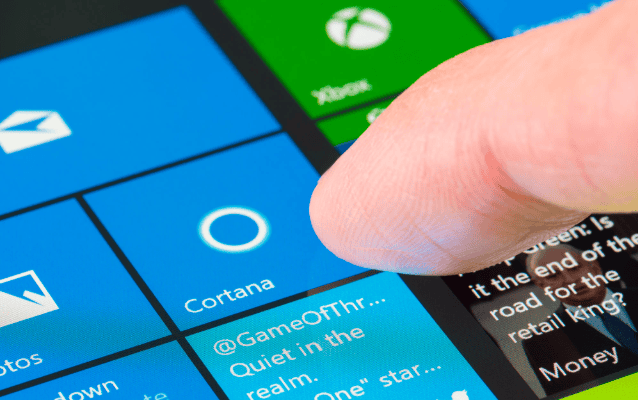
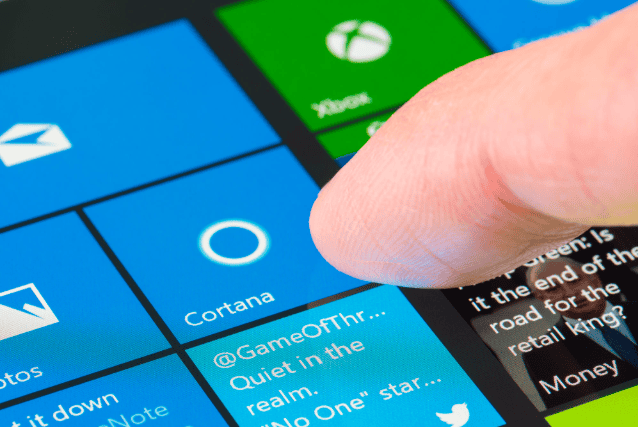
Microsoft’s virtual assistant Cortana could be split off from Windows 10 to become its own separate app. The Verge reports that a beta version of Cortana has appeared on the Windows Store and is now available to download.

This move suggests that Microsoft will choose to update the voice assistant separately from Windows in future. It could make Cortana more agile, giving developers the chance to update without having to push wider updates. A separate app may also one day give users more control over its usage, allowing them to uninstall it if they don’t want it on their machines.

Microsoft has been tweaking Cortana’s placement for some time. It split the voice assistant function from the search in Windows 10, saying it made the change to “enable each experience to innovate independently to best serve their target audiences and use cases.”

It has also been working on other improvements for Cortana like more natural-sounding conversations which make conversing with the assistant feel more like interacting with a real person.

Cortana began its life as an OS assistant, but has since launched on different platforms including iOS devices, thermostats and smart speakers. This latest iteration could be one way to promote Cortana as its own entity.

GrubHub is buying web domains for the restaurants it lists (updated)

GrubHub‘s bid to conquer app-based food delivery may be hurting the web presences of the restaurants themselves. New Food Economy has discovered that GrubHub and its Seamless sub-brand have been acquiring “thousands” of web domains linked to restaurants, over 23,000 of which belong directly to GrubHub. Most of them are close or identical to the eateries’ actual names, effectively preventing the locations from buying an address they might want to use.

Moreover, GrubHub appears to run “shadow” pages on some of these domains without the permission of the restaurants themselves. While both the real and shadow pages ultimately result in orders, GrubHub’s unsurprisingly points foodies solely to its own services. That could deprive restaurants of revenue by steering would-be customers away from the actual sites, where the companies don’t have to share some of their money with GrubHub.

We’ve asked GrubHub for comment. However, some restaurant owners are already irked by the practices. This might prevent restaurateurs from using the most obvious web address, reducing the chances that customers will find their online presences. Shadow pages could even outrank the real pages in search results and make it harder to see menus and ordering options beyond what GrubHub offers. In other words, your favorite Thai place or pizza joint might have trouble retaining their independence.

Update (6:56 PM ET): Grubhub VP of communications Brendan Lewis responded to the report, saying that Grubhub’s practice is not cybersquatting “in bad faith.” By the company’s account, it registered domains on behalf of restaurants, but now says it no longer provides the service.

Tesla’s dashboard Sketchpad is getting an upgrade

Aside from the many games that are available on Tesla dashboards, drivers have enjoyed plenty of other easter eggs over the years. Since it arrived two years ago, in-the-know Tesla owners have used the infotainment system’s Sketchpad to doodle on the screen while they’re, for instance, waiting for the battery to charge. Today, the company said it’s bringing more features to the tool in its next software update.

While it didn’t spell out exactly what’s on the way to Sketchpad, last month, one Tesla owner asked for a color picker, saturation controls and more extensive undo options. Tesla retweeted that request with a simple “wish granted” comment, so you might expect those features to arrive in Sketchpad soon. Other potential options include animation support, after one person asked for that and Elon Musk replied with a deadpan “ok.”

It seems other creative features are on the way, including a music tool and even karaoke, according to the company’s CEO. We’ll wait with bated breath until the first album recorded using Tesla’s dashboard drops. Whatever the case, it can’t possibly be much worse than Musk’s own supposed Soundcloud rap track.

Stocks to Watch: Apple, Nike and Smart Global

Here are some of the companies with shares expected to trade actively. Stock movements noted by ticker reflect movements during regular trading hours; premarket trading is specified separately.

Apple Inc. —Down 0.5% premarket: Shares of the company were down almost 1.4% in the extended session after it announced design chief Jony Ive will leave later this year to form his own company.

Nike Inc. —Up 0.1% premarket: The apparel maker posted higher sales in the latest quarter, boosted by strong demand in both the U.S. and China, despite the continuing trade conflict between the two countries.

Smart Global Holdings Inc. —Down 3.3% premarket: The chip manufacturer was down more than 13% in late trading after reporting weaker-than-expected revenue for its third fiscal quarter.

Boeing Co. —Up 0.1% premarket: The company’s troubled 737 MAX fleet is expected to stay grounded until late this year due to its latest flight-control problem.

Constellation Brands Inc. —Up 7.3% premarket: The Corona brewer said it expects beer sales to continue rising in the single digits in fiscal 2020, with wine and spirits sales down in the double digits.

Goldman Sachs Group Inc. —Up 2.4% premarket: Goldman Sachs and other bank stocks moved higher after all 18 banks reviewed passed round two of the Federal Reserve’s stress tests.

Twitter Inc. —Up 0.6% premarket: The social media company said it would begin flagging tweets by government officials and political figures world-wide who violate its rules, a response to criticism of its oversight that could set the company up for new controversy.