Archives for June 29, 2019

Stocks to Watch: CanWel Building Materials Group Ltd. (TSX:CWX) Down -2.76%

CanWel Building Materials Group Ltd. (TSX:CWX) stock finished trading at -2.76%, bringing the stock price to $4.86 on the Toronto Stock Exchange. The stock price saw a low of $4.71 and a high of $4.96.

The company’s stock was traded 532 times with a total of 206,059 shares traded.

CanWel Building Materials Group Ltd. has a market cap of $377.56 million, with 77.69 million shares in issue.

CanWel Building Materials Group Ltd is a wholesale distributor of building materials and home renovation products. The company primarily serves new home construction, home renovation, and industrial markets, as well as provides its building products to dealer/lumberyard and home improvement centers. In addition, the group also offers wood pressure treating services. The portfolio of the firm consists of engineered wood products, fasteners, insulation, outdoor living products, plywood, roofing and accessories, siding and trim, and security and door ware products. The operating segments of the company are Building Materials Distribution and Forestry. Geographical it operates in the region of Canada and the Western United States of which Canada regions accounts for larger revenue share.


Stocks to Watch: iA Financial Corporation (TSX:IAG) Up +1.13%

iA Financial Corporation (TSX:IAG) stock finished trading at +1.13%, bringing the stock price to $53.52 on the Toronto Stock Exchange. The stock price saw a low of $53.19 and a high of $53.89.

The company’s stock was traded 1,494 times with a total of 201,466 shares traded.

iA Financial Corporation has a market cap of $5.81 billion, with 106.53 million shares in issue.

iA Financial Corp, formerly Industrial Alliance Insurance and Financial Services Inc is a life and health insurance company. It offers life and health insurance products, savings and retirement plans, mutual funds,securities, auto and home insurance, mortgages, and others.

Stocks to Watch: Premium Brands Holdings Corporation (TSX:PBH) Up +2.82%

Premium Brands Holdings Corporation (TSX:PBH) stock finished trading at +2.82%, bringing the stock price to $89.85 on the Toronto Stock Exchange. The stock price saw a low of $89.32 and a high of $90.13.

The company’s stock was traded 1,018 times with a total of 120,945 shares traded.

Premium Brands Holdings Corporation has a market cap of $3.34 billion, with 37.42 million shares in issue.

Premium Brands Holdings Corp is engaged in specialty food manufacturing, premium food distribution and wholesale businesses with operations in British Columbia, Alberta, Saskatchewan, Manitoba, Ontario, Quebec, Nevada, and Washington State. The company’s business segments include Specialty Foods, Premium Food Distribution, and Corporate. The Specialty Foods segment consists of its specialty food manufacturing businesses, which contributes about two thirds of the group revenue; the Premium Food Distribution segment consists of the company’s distribution and wholesale businesses; the Corporate segment includes the company’s head office activities along with its finance and information systems.

Major rock slide in Fraser River raises serious concerns about spawning salmon Social Sharing

A rock slide has created an obstruction on the Fraser River. A Fisheries and Oceans Canada representative said Friday the department has installed acoustic monitoring equipment to determine if fish are able to pass up through the slide to the upper part of the river.

Rock slide took place June 21 or 22 in remote area near Big Bar, just west of Clinton

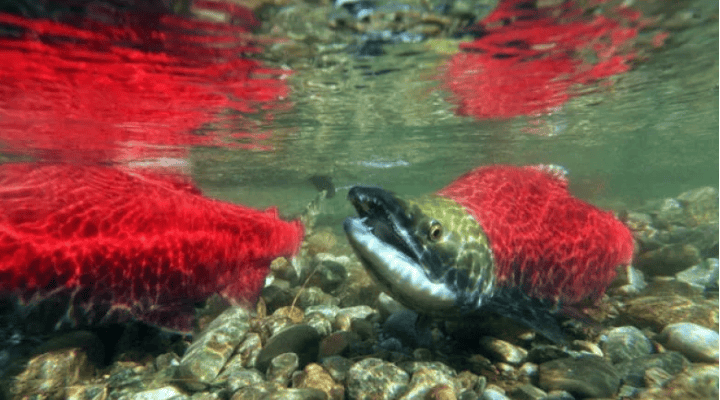
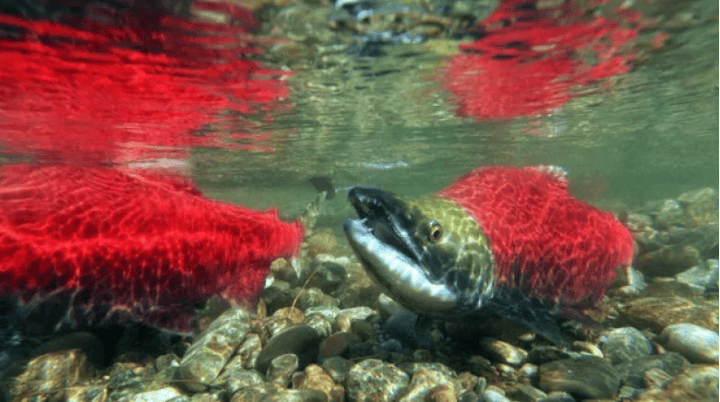
A significant rock slide in British Columbia’s Fraser River appears to be blocking salmon from migrating upstream to spawning grounds, raising concerns about impacts to species that are already in peril.

The federal and B.C. governments say they’re working together to assess the impacts and come up with responses to the slide that happened around June 21 or 22 in a remote area near Big Bar, just west of Clinton.

The obstruction has created a five-metre waterfall. A Fisheries and Oceans Canada representative said Friday the department has installed acoustic monitoring equipment to determine if fish are able to pass up through the slide to the upper part of the river.

“Our initial assessment is that chinook salmon are holding below the rock slide and they’re having difficulty getting up past the falls,” said Bonnie Antcliffe, associate regional director general, on a conference call with reporters.

“However, until we have more information from the acoustic monitoring equipment, it’s really difficult to confirm the extent of fish passage. Some fish may be getting up.”

She said the department is planning to install a second acoustic monitoring device below the slide.

Looking into several options to help fish
The department is looking at several options to address the problem, including monitoring the site to determine if fish are able to pass through the area when the water level drops naturally in the coming weeks, she said.

It’s also considering reducing the velocity of water or the height of the falls, or providing passage for fish through engineering and rock work.

Another option would be moving the fish by truck from below the slide to above it, but that would be difficult because it is a remote area with little road access, she said.

“This is an extremely important situation and it’s also very dynamic and it’s very complex,” Antcliffe said. “At this point, we’re doing everything we can to ensure we address the issue quickly but also in an appropriate manner to ensure a successful outcome for fish.”

Jennifer Davis, with the provincial Forests Ministry, said the natural turbidity of the Fraser River has made it challenging to determine how many fish are passing through. The area is also very remote, with steep canyon slopes and limited access for helicopters, she said.

Scientists on site are working hard to determine the magnitude of the problem and what responses can happen, Davis added, and they’re also co-ordinating with First Nations and communities.

“There’s a whole variety of things that can be looked at, but it’s a bit premature to jump into which action it would be.”

‘A critical zone’
There are a number of stocks, including chinook, steelhead, coho and sockeye that would migrate above the barrier for spawning, and Fisheries and Oceans already has concerns about some of those species and has implemented conservation measures to protect them, said the department’s Andrew Thomson.

“That’s what’s really at risk here, is further impairment of the stocks that are already in a critical zone,” he said.

While there’s no concrete figure on how many salmon are currently impacted, Thomson said typically at this time the run that would be most prominent would be chinook, and it’s believed to be the early part of their migratory window.

But later in summer, Thomson said scientists would expect to see a very large number of chilko sockeye moving through the area — potentially upward of a million fish.

“Depending on the stock numbers, there could be quite a number of fish that would be below this barrier.”

Ontario to appeal court’s ruling upholding federal carbon-pricing law

The Ontario Court of Appeal has ruled the federal government’s carbon charge is constitutionally sound

Provincial Court of Appeal finds the legislation is constitutionally sound

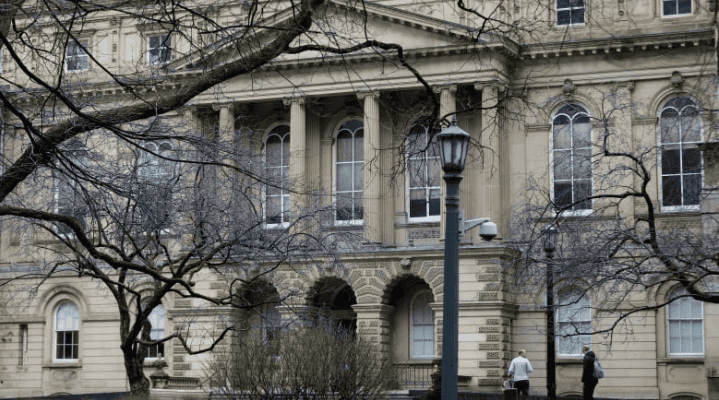
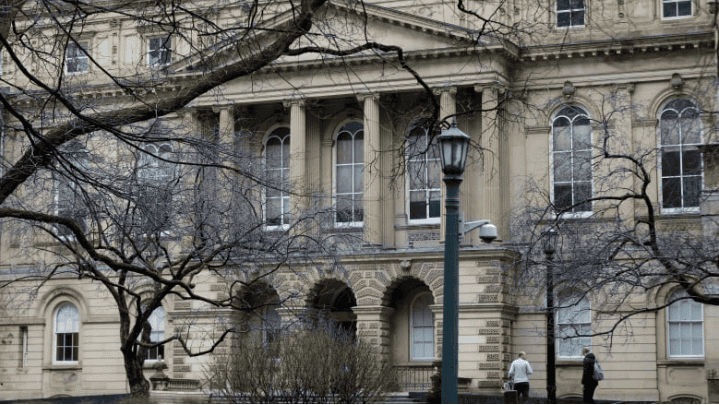
The federal government’s carbon pricing scheme is constitutionally sound and has the critical purpose of fighting climate change, Ontario’s top court ruled in a split decision on Friday.

The Greenhouse Gas Pollution Pricing Act, enacted in April, is within Parliament’s jurisdiction to legislate in relation to matters of “national concern,” Chief Justice George Strathy wrote on behalf of the court.

“Parliament has determined that atmospheric accumulation of greenhouse gases causes climate changes that pose an existential threat to human civilization and the global ecosystem,” Strathy said.

“The need for a collective approach to a matter of national concern, and the risk of non-participation by one or more provinces, permits Canada to adopt minimum national standards to reduce [greenhouse gas] emissions.”

Ontario’s Progressive Conservative government under Premier Doug Ford, who calls the carbon charge an illegal tax, had argued the act is a violation of the Constitution because it allows the federal government to intrude on provincial jurisdiction.

The provincial government announced it will seek leave to appeal the decision to the Supreme Court of Canada. “We know, as do the people of this province, that the federal government’s carbon tax is making life more expensive for Ontarians and is putting jobs and businesses at risk,” Ford said in a statement released Friday afternoon.

“We promised to use every tool at our disposal to challenge the carbon tax and we will continue to fight to keep this promise.”

During four days of submissions in April, Ontario insisted the act would undermine co-operative federalism. Provincial lawyers argued the federal government would end up with the power to regulate almost every facet of life — such as when you can drive, where you can live, or whether you can have a wood-burning fireplace.

“Ontario doesn’t need a carbon tax to address climate change,” provincial environment minister Jeff Yurek said in Friday’s statement.

“Our made-in-Ontario environment plan considers our province’s specific priorities, challenges and opportunities, and commits to meeting Canada’s greenhouse gas emissions target of 30 per cent below 2005 levels by 2030, without imposing a carbon tax on the people of our province.”

For their part, federal lawyers argued the province was fearmongering. The act, they said, was a legitimate response to potentially catastrophic climate change by creating an incentive for people to change their behaviour.

‘They are not taxes’: chief justice

To the delight of environmental groups, the majority of the Appeal Court agreed with Ottawa, rejecting any contention the carbon levy is an illegal tax.

“They are regulatory in nature and connected to the purposes of the act,” Strathy wrote. “They are not taxes.”

Cutting greenhouse emissions cannot be dealt with “piecemeal” and must be addressed as a single matter to ensure its efficacy, the court said. “The establishment of minimum national standards does precisely that.”

In a dissenting opinion, Justice Grant Huscroft said climate change did not amount to an “emergency case” and warned against allowing rhetoric to colour the analysis. Carbon pricing is only one way to deal with greenhouse gases, he said.

“There are many ways to address climate change, and the provinces have ample authority to pursue them.”

Federal Conservative Leader Andrew Scheer agreed with Huscroft. “Ontarians have said loud and clear that they do not want Justin Trudeau’s carbon tax,” Scheer said in a statement Friday.

“The good news is that after Oct. 21, provinces will no longer have to fight the Liberal carbon tax in court. My first action as prime minister will be to scrap Justin Trudeau’s carbon tax and help Canadians get ahead.”

Federal act applies in 4 provinces
The federal act currently only applies in four provinces with conservative governments — Ontario, Manitoba, New Brunswick and Saskatchewan — which Ottawa says don’t meet national standards. Alberta is in the process of its own challenge against the law.

“Alberta has a strong and credible plan to reduce emissions without punishing Albertans with a retail carbon tax on people trying to heat their homes or drive to work. This makes a federal carbon tax redundant here,” Premier Jason Kenney said in a statement Friday.

“We are committed to our right to make policy choices in our own jurisdiction. We will be making that case to the federal government, to the Supreme Court of Canada and to the Alberta Court of Appeal in our own reference case this fall.”

Federal Environment Minister Catherine McKenna called the judgment good news for Canadians who believe climate action is urgent. She took aim at those opposed to the act, such as Ford, Kenney and Scheer.

“It is unfortunate that Conservative politicians … continue to waste taxpayers’ dollars fighting climate action in court rather than taking real action to fight climate change,” McKenna said in a statement.

In all, 14 interveners — among them some provinces, Indigenous groups and environmental and business organizations — lined up to defend or attack the law, with most siding with Ottawa. Some observers said the challenge was more about politics than the environment.

In May, Saskatchewan’s Appeal Court, in a 3-2 decision, upheld the carbon pricing law as constitutional. The Supreme Court of Canada has said it will hear Saskatchewan’s appeal of that ruling in December — after the federal election.

‘Nail in the coffin’ for conservative premiers
Stewart Elgie, a professor of law and economics at the University of Ottawa, called the decision a “big nail in the coffin” for conservative premiers challenging carbon pricing.

“Two provincial Appeal Courts have upheld the federal law, and it is very likely the Supreme Court will do the same,” Elgie said. “It would be great if Doug Ford took the $30 million he’s using to fight carbon pricing, and instead used it to fight climate change.”

Ontario Green Party Leader Mike Schreiner said he was relieved the courts rejected Ford’s attempts to make Ontario a “rogue actor in the fight against the climate crisis.”

Peter Tabuns, a Toronto MPP and the Ontario NDP’s critic on climate issues, said the challenge was a “political stunt” aimed at helping the federal Conservatives in the fall election.

G20 summit 2019: Xinhua: No new US tariffs on Chinese goods

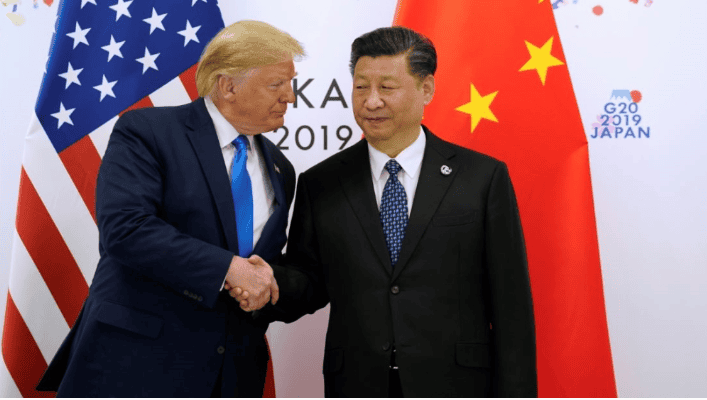
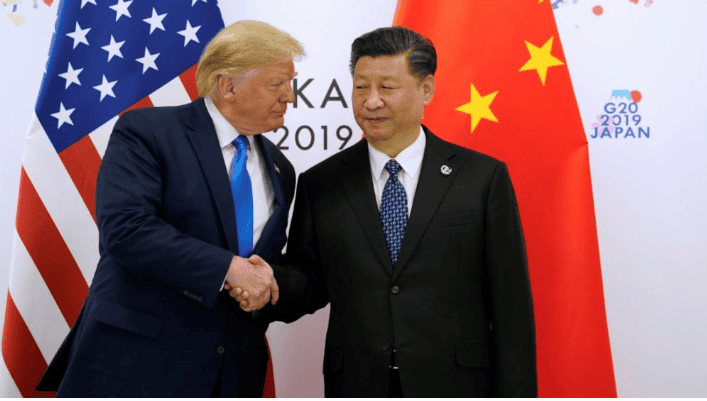
The big event of the G20 Summit is under way. China’s President Xi Jinping reminded Trump of the history of relations between their countries before trade talks begin

The annual summit of the Group of 20 nations has entered its second and final day in Osaka, Japan. At the top of the agenda is the ongoing trade war between China and the United States, the world’s two biggest economies.

The G20 is an international leaders’ forum comprising 19 countries and the European Union.

Collectively, the grouping represents more than 80 percent of the world’s economic output and two-thirds of its people. Its primary aim is to promote international financial stability.

Chinese state media say US will not levy new tariffs on Chinese exports
The Xinhua news agency is reporting that the US has agreed to not levy new tariffs on Chinese exports following talks between the two countries’ leaders.

China and the US have agreed to restart trade talks and will have discussions on specific issues, Xinhua said.

Trump: Relations with China are ‘back on track’
After a meeting with Chinese President Xi Jinping, US President Donald Trump says relations between the two countries are “back on track” after a breakdown in trade talks last month.

“We had a very, very good meeting with China. I would say probably even better than expected. The negotiations are continuing,” Trump told reporters.

He said both sides will be making statements later on Saturday.

The meeting between the two has been seen by analysts and economists as the most important of the G20 Summit. They say a failure to agree on ways to ratchet down the US-China trade dispute could have dire consequences for the world economy.

Cooling on the climate
In a joint press conference with representatives of France and the United Nations, Chinese Foreign Minister Wang Yi called for urgent action to address climate change.

“In our view climate change concerns the future of mankind,” he said, “so our generation needs to make the right choice. All countries need to step up to the plate and deliver on their commitments in the Paris Agreement to the full extent.”

He added: “We must promote green infrastructure, green investment, and green financing. We look forward to working with like-minded parties to build a green Silk Road to achieve high-quality development and to leave behind a clean and beautiful world for future generations.”

But these are rare words of support for fighting climate change during the G20 Summit.

While French President Emmanuel Macron has pledged not to sign any G20 statement that leaves out any reference to the 2015 Paris deal on combatting climate change, he’s up against the US, which is trying to stifle any mention of it. Under pressure from the US, Japan is on course to leave out references to global warming in the final communique.

Meanwhile G20 countries have increased their annual spending on coal-fired plants to $64bn, according to a report by the Overseas Development Institute. It also says G20 nations have tripled subsidies for the industry in recent years.

Trump-Xi meeting under way: Seeking a ‘historic’ trade deal
Meanwhile, Trump laid out his vision for the two countries trade relationship:

“As you know we’ve had an excellent relationship but we want to do something that will even it up with respect to trade,” Trump said.

“I think it’s something that’s actually very easy to do. I actually think we were very close … something happened where it slipped a little bit and now we’re getting a little bit closer, but it would be historic if we could do a fair trade deal. We’re totally open to it and I know you’re totally open to it. I think we can go on to do something that would be truly be monumental and great for both countries and that’s what I look forward to doing.”

Trump-Xi meeting under way: Ping pong diplomacy and trade
The most highly anticipated event of this year’s G20 Summit is under way. US President Donald Trump and Chinese President Xi Jinping are meeting to discuss their ongoing trade dispute.

Before their meeting they made brief statements to the media.

Xi reminded Trump about the history of modern relations between China and the US, starting with a table tennis tournament between American and Chinese players in the 1970s which paved the way for formal diplomatic relations which began in 1979.

“The small ball played a big role in moving world events,” Xi said.

“Forty years on, enormous change has taken place in the international situation and China-US relations,” Xi said.

“But one basic fact remains unchanged. China and the United States both benefit from cooperation and lose in a confrontation. Cooperation and dialogue are better than friction and confrontation.”

No sign of rapprochement over trade war?
Speaking to Al Jazeera’s programme Inside Story, Aly-Khan Satchu, economist and CEO of Rich Management, an investment advisory company in Kenya, thinks that both Presidents Trump and Xi aren’t in the mood to compromise.

“Overwhelming the summit is this gladiatorial combat between President Trump and Xi Jinping is the trade war, the tariff war. Essentially the direction of the global economy is going to be driven by whether these two can have a truce.

“Both of whom are going to be unable to reconcile … . Trump is a train driver but the train tracks have been set and he can either speed it up or slow it down. Xi, the paramount leader … the nature of paramount leaders and you’re up on a pedestal and everyone can point at you and he can’t compromise either.

“And while everyone’s talking about a big fat agenda, let’s make no mistake – this is about the two superpowers and about whether they can come to some kind of resolution. The direction of travel is much more adversarial and we should read the signs for what they are.”

Trump-MBS bilateral meeting
US President Donald Trump held a working breakfast with Saudi Crown Prince Mohammed bin Salman, also known as MBS, at a hotel in Osaka.

Neither of them answered questions about the investigation into the murder of Saudi journalist Jamal Khashoggi in Saudi Arabia’s consulate in Istanbul last year.

Trump heaped praise on MBS, saying it was “a great honour” to meet with him and described Saudi Arabia as “a good purchaser of American products.” Turning to MBS, Trump added, “You’ve done a really spectacular job.”

‘Hello’: Another Trump-Kim meeting on the cards?
US President Donald Trump began the second day of the G20 Summit by shifting the focus to the Korean Peninsula. In an early morning tweet he wrote:

“After some very important meetings, including my meeting with President Xi of China, I will be leaving Japan for South Korea (with President Moon). While there, if Chairman Kim of North Korea sees this, I would meet him at the Border/DMZ just to shake his hand and say Hello(?)!”

It did not appear that US officials had warned North Korea in advance about Trump’s unexpected offer of a meeting, and it wasn’t clear whether or not such a meeting would prove feasible.

Resisting protectionism
Japan’s Nikkei newspaper is reporting that the G20 leaders will agree to accelerate World Trade Organization (WTO) reforms but stop short of calling for the need to resist protectionism in a communique to be issued on Saturday.

The G20 members broadly agreed on the need to accelerate stalled WTO reforms in Friday’s session on global growth and trade, a Japanese government official told reporters, according to the Reuters news agency.

Instead of a pledge to resist protectionism, Japan is working with other G20 nations to urge members to promote a “free, fair and non-discriminatory” trade policy, the paper said. The proposal has been endorsed by several members already, it said without citing sources.

The G20 leaders will release the communique after they wrap up their two-day meeting on Saturday.

It will be the second straight G20 summit in which members forgo pledging the need to denounce protectionism. The language on protectionism was removed at last year’s summit in Buenos Aires, nodding to a request by Washington which is sensitive to criticism of the tariffs it is slapping on some G20 members.

Merkel hopes for US-China trade resolution
German Chancellor Angela Merkel said she hoped the US and China would make some progress towards defusing their ongoing trade dispute.

Germany’s export-oriented economy is extremely exposed to, and already suffering from, the impact of soured trade relations between the world’s largest and second-largest economies.

Merkel said in a statement that she had discussed trade in her bilateral meeting with US President Donald Trump, who has taken to task both Beijing and Berlin, two of the world’s main exporters, on the issue.

“We hope that discussions between China and the U.S. on the margins of this conference will, along with other talks, perhaps lead to successes,” she told reporters.

Uighur leader urges world leaders to pressure China
An exiled advocate for China’s ethnic Uighur minority urged world leaders to act to prevent the disappearance of his people’s culture.

Speaking to reporters on the sidelines of the Osaka meeting, Rebiya Kadeer said strong world pressure was essential to free an estimated one million people, mostly ethnic Uighurs, held in internment camps in western China.

“(The) entire Uighur people are facing (an) existential threat, and it’s real and urgent,” Kadeer, the 72-year-old head of the World Uyghur Congress, said through an interpreter. “I call (on) European countries who are economically dependent on China to wake up and stand up against Chinese genocide of Uighurs and take practical actions immediately.”

Chinese officials describe the camps as voluntary “vocational education centres” where Turkic-speaking Uighurs receive job training.

Kadeer’s presence in Osaka will no doubt anger China, which labels her a dangerous separatist and has previously condemned Japan for allowing her entry.

Trump prepares for ‘productive’ talks with Xi on trade war
US President Donald Trump said he hoped for productive talks with his Chinese counterpart Xi Jinping on a trade war that is casting a shadow on global growth, but added he had not made any promises about a reprieve from escalating tariffs.

Concerns remain that an agreement will not be reached between China and the US.

“At a minimum, it will be productive,” Trump said of the meeting with Xi.

“We’ll see what happens and what comes out of it,” Trump told reporters after a series of meetings with leaders where he made clear his priority was two-way trade deals to boost the US economy.

Asked, however, if he had promised Xi a six-month reprieve on imposing new tariffs on a $300bn list of Chinese imports, Trump said: “No.”

China hopes US can meet it halfway in G20 talks
China’s Foreign Ministry expressed hope Washington can “meet China halfway” as President Xi prepares to meet Trump amid a costly tariff fight over trade and technology.

Investors are hoping for a repeat of Trump and Xi’s December agreement to postpone new tariff hikes and other action while they tried to negotiate a settlement. But analysts caution any truce at the G20 is likely to be temporary because of the array of disputes that separate the two sides.

The two sides are in a stalemate after 11 rounds of talks. Beijing has said any agreement must be balanced and rejects US complaints it steals or pressures companies to hand over technology.

“We hope that the US can meet China halfway and work together with us to promote a positive result from the meeting,” Foreign Ministry spokesman Geng Shuang said. “This is in the interest of both countries and also meets the common expectation of the international community.”