
Archives for May 6, 2019

Holographic tech could be key to future quantum computers

Conceptual design 3d render of a futuristic holographic display mobile smart phone tablet device with hologram projection technology

You could use light pulses to encrypt data.

A breakthrough in studying light might just be the ticket to the future of quantum computing. Researchers at EPFL have found a way to determine how light behaves beyond the limitations of wavelengths, opening the door to encoding quantum data in a sci-fi style holographic light pattern. The team took advantage of the quantum nature of the interaction between electrons and light to separate beams in terms energy, not space — that let them use light pulses to encrypt info on the electron wave and map it with a speedy electron microscope.

Existing techniques for both studying light and extracting 3D info are inherently limited by the size of wavelengths. This allows a considerably higher resolution that can even include holographic movies of fast-moving objects.

The approach is still very early and might not reach quantum computers for a long time. However, it does hint at a future where you could have secure yet small quantum processors. Existing quantum computers tend to be giant, room-sized affairs — there’s no guarantee EPFL’s design will lead to something that fits on your desk or in your pocket, but it’s a step in the right direction.
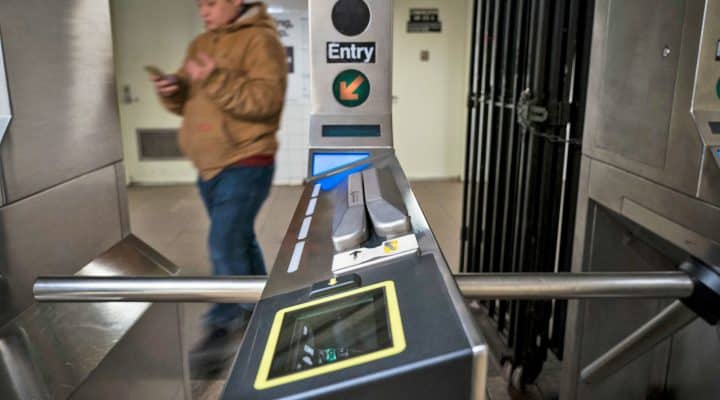

iOS 12.3 code hints at support for more forms of mass transit

This is likely the key to New York’s transit plans.

Apple’s plans to expand support for mass transit now appear likely to hinge around its next big iOS 12 update. Tap Down Under has found code within iOS 12.3 that hints at support for EMV payment cards (think credit cards like AmEx, Mastercard and Visa) within Apple Pay Express Transit, letting you pay for public transportation fares in New York and other areas where EMV is an option. You could set a preferred card for transportation if you don’t want to use your usual card for subway rides.

It’s not certain just when iOS 12.3 will arrive, although there have already been four betas as of this writing. A finished release may be a few weeks away, if not sooner.

Whenever it shows up, it would be part of a larger plan. Reported leaks claim that iOS 13 will support a much wider variety of mass transit cards, including different takes on cards that require loading value. It might just be a matter of time before your iPhone supports a local tap-to-ride service, whatever the format.

Dust storms may have stolen all of Mars’ water

The winds that killed Opportunity may have ended any chance for life on the red planet.

In May 2018, Opportunity had been doing science on Mars since 2004, and there was no reason to think that the plucky rover wouldn’t carry on. Then, a dust storm hit that completely obscured the planet from view. After fine dust coated Opportunity’s solar panels, the rover apparently lost power and was declared dead by NASA in February 2019. Now, scientists think similar storms may have also delivered a coup de grace to water on Mars, stripping it from its surface for good.

At one point, Mars had a thick atmosphere and up to 20 percent of its surface was covered by liquid water, scientists figure. Around 4 billion years ago, however, Mars lost its magnetic field and with little to protect it from destructive solar winds, the red planet lost much of its atmosphere.

That left water on the surface vulnerable, and according to new observations from the ExoMars Trace Gas Orbiter (TGO), dust storms may have helped finish off the oceans and lakes. While water particles in the atmosphere normally linger at around 12 miles (20 km) in altitude, TGO noticed that the dust storms that killed Opportunity lifted H20 molecules up to 50 miles (80 km) above the ground.

At that altitude, where the atmosphere is very thin, the water was ripped into its constituent hydrogen and oxygen by charged solar particles. “When you bring water to higher parts of the atmosphere, it gets blown away so much easier,” said Geronimo Villanueva, a NASA researcher and co-author of the TGO study published in Nature.

Scientists are studying Mars’ dust storms because they could have a big impact on future manned and robotic missions. The rover Curiosity (which is nuclear, not solar-powered) got a first hand look at the storms, sending valuable data back to scientists. One key finding was that dust devils (above), or mini tornadoes, tend to disappear during large storms.

That was a big problem for Opportunity, as those swirling winds can actually clean dust off the rovers’ solar panels. As such, during a storm, “you need to be prepared to go a while before your next dust devil passes over and cleans you off,” NASA Goddard atmospheric scientist Scott Guzewich.

Commercial drones are way more popular than the FAA expected

Expected growth: 44 percent. Actual growth: 170 percent.

The Federal Aviation Authority (FAA) has unveiled its predictions for the future of drones, and the findings came as a surprise, even to the FAA itself. Non-commercial drone growth has greatly exceeded expectations, increasing by 170 percent last year, despite officials thinking that it would only grow by 44 percent. This also forced experts to race back to the drawing board and re-write its predictions for the entire industry as a result.

The percentages are impressive, but it’s worth bearing in mind that the actual numbers aren’t huge: the total number of commercial drones registered with the FAA now sits at 277,000. By contrast, there are about 1.25 million personal drones in the US, expected to rise to 1.4 million by 2023.

In that same year, the FAA now predicts there will be 835,000 commercial drones, which represents a tripling of the total over the next five years. Their original prediction was that there’d be about 452,000 commercial drones flying by 2022, but based on their unexpectedly fast takeup, that figure now looks likely to be achieved in early 2020 instead.

The full report notes that “the significant growth in this sector over the past year demonstrates the uncertainty and potential of the market.” It goes on to say that while the FAA does not expect the current growth rate to continue, “nevertheless, the sector will be much larger than what we understood as recently as last year.”

Last month, Alphabet Inc’s Wing division became the first drone delivery company to receive its FAA Air Carrier Certification, allowing it to commence its planned air courier service. Drone deliveries have also been trialed by other companies including UPS, which launched a drone ‘airline’ to transport medical samples.

Besides deliveries, commercial drones are used for tasks like photography and videography, inspection of buildings and land, research and pilot training. The FAA registered 116,000 new drone pilots last year, and expects that number to rise to 350,000 by 2023.

Stocks to Watch: TherapeuticsMD, Inc. (TXMD) and Solaredge Technologies, Inc. (SEDG) on the Marquee

The price of TherapeuticsMD, Inc. (NASDAQ:TXMD) went up by $0.07 now trading at $4.36. Their shares witnessed a 24.22% increase from the 52-week low price of $3.51 they recorded on 2018-12-21. Even though it is still -75.69% behind the $7.66 high touched on 2018-06-08. The last few days have been good for the stock, as its price has grew by 5.57% during the week. It has also performed poorly over the past three months, as it lost around -19.11% while it has so far retreated around -25.98% during the course of a year. The stock of TXMD recorded 14.44% uptrend from the beginning of this year till date. The 12-month potential price target for TherapeuticsMD, Inc. is set at $15.17. This target means that the stock has an upside potential to increase by 247.94% from the current trading price.

21 institutions entered new TherapeuticsMD, Inc. (NASDAQ:TXMD) positions, 68 added to their existing positions in these shares, 76 lowered their positions, and 26 exited their positions entirely.

TherapeuticsMD, Inc. (TXMD) trade volume has decreased by -6.79% as around 2,408,598 shares were sold when compared with its 50-day average volume of traded shares which is 2,583,934. At the moment, TXMD is witnessing a downtrend, as it is trading -1.44% below its 20-day SMA, -13.05% below its 50-day SMA, and -17.23% below its 200-day SMA. The company runs an ROE of roughly -127.3%, with financial analysts predicting that their earnings per share growth will be around 19.5% per annum for the next five year. This will be compared to the -21.5% decrease witnessed over the past five years.

The first technical resistance point for TherapeuticsMD, Inc. (NASDAQ:TXMD) will likely come at $4.41, marking a 1.13% premium to the current level. The second resistance point is at $4.46, about 2.24% premium to its current market price. On the other hand, inability to breach the immediate hurdles can drag it down to $4.26, the lower end of the range. TXMD’s 14-day MACD is 0.05 and this positive figure indicates an upward trading trend. The company’s 14-day RSI (relative strength index) score is 40.81, which shows that its stock has been neutral. The 20-day historical volatility for the stock stands at 26.69 percent, which is low when compared to that of the 50-day’s 35 percent.

The shares of SolarEdge Technologies, Inc. (NASDAQ:SEDG) has increased by 1.83%, and now trading at $44.56 on the Wall Street in the intra-day deal, with their shares traded now around 507,246. This is a decline of -28,770 shares over the average 536,016 shares that were traded daily over the last three months. The stock that is trading at $44.56 went higher by 37.45% from its 52-week low of $32.42 that it attained back on 2018-12-24. The stock recorded a 52-week high of $70.74 nearly 357 days ago on 2018-05-14.

SEDG stock has performed well over the past 30 days, as it added 15.26% while its price climbed by 26.95% year-to-date (YTD). Looking at the last few days, it has been tough for the stock, as it tumbled -3.07% over the last week. The stock’s 12-month potential target price is now at $49. This means that the stock price might likely increase by 9.96% from its current trading price. 6 out of 9 Wall Street analysts which represents 66.67% rated the stock as a buy while the remaining 11.11% rated it as a hold, with 22.22% of analysts rating it as a sell.

SolarEdge Technologies, Inc. (NASDAQ:SEDG) has been utilizing an ROE that is roughly 25.3%, with stock analysts predicting that the company’s EPS for the next five years will go up by 9.87% per year, following the 46.3% raise that was witnessed during the past five years. The stock at the moment is on a uptrend, trading 3.93% above its 20-day SMA, 8.98% above its 50-day SMA, and 7.01% above its 200-day SMA. In percentage terms, the aggregate SolarEdge Technologies, Inc. shares held by institutional investors is 93.6%. 38 institutions jumped in to acquire SolarEdge Technologies, Inc. (SEDG) fresh stake, 127 added to their current holdings in these shares, 85 lowered their positions, and 33 left no stake in the company.

The stock’s 9-day MACD is -0.62 and this negative figure indicates a downward trading trend. The company’s 9-day RSI score is 62.07, which shows that its stock has been neutral. The 20-day historical volatility for the shares stand at 22.83 percent, which is less when compared to that of the 50-day’s 27.27 percent. On the daily chart, we see that the stock could reach the first level of resistance at $44.97, sporting a 0.91% premium to the current level. The next resistance point is at $45.38, representing nearly 1.81% premium to the current market price of SolarEdge Technologies, Inc. (SEDG). On the other hand, failure to breach the immediate hurdles can drag it down to $43.74, the lower end of the range.

Stocks to Watch: Eyes on Allegheny Technologies Incorporated (ATI), NGL Energy Partners LP (NGL)

The price of Allegheny Technologies Incorporated (NYSE:ATI) went up by $1.14 now trading at $25.64. Their shares witnessed a 23.03% increase from the 52-week low price of $20.84 they recorded on 2018-12-26. Even though it is still -17.71% behind the $30.18 high touched on 2018-09-28. The last few days have been good for the stock, as its price has grew by 2.93% during the week. It has also performed poorly over the past three months, as it lost around -6.97% while it has so far retreated around -2.66% during the course of a year. The stock of ATI recorded 17.78% uptrend from the beginning of this year till date. The 12-month potential price target for Allegheny Technologies Incorporated is set at $32.82. This target means that the stock has an upside potential to increase by 28% from the current trading price.

41 institutions entered new Allegheny Technologies Incorporated (NYSE:ATI) positions, 131 added to their existing positions in these shares, 160 lowered their positions, and 45 exited their positions entirely.

Allegheny Technologies Incorporated (ATI) trade volume has decreased by -26.53% as around 1,223,169 shares were sold when compared with its 50-day average volume of traded shares which is 1,664,852. At the moment, ATI is witnessing a downtrend, as it is trading -0.27% below its 20-day SMA, -2.66% below its 50-day SMA, and -2.63% below its 200-day SMA. The company runs an ROE of roughly 9.6%, with financial analysts predicting that their earnings per share growth will be around 79.5% per annum for the next five year. This will be compared to the 30.5% increase witnessed over the past five years.

The first technical resistance point for Allegheny Technologies Incorporated (NYSE:ATI) will likely come at $25.97, marking a 1.27% premium to the current level. The second resistance point is at $26.29, about 2.47% premium to its current market price. On the other hand, inability to breach the immediate hurdles can drag it down to $24.41, the lower end of the range. ATI’s 14-day MACD is -0.36 and this negative figure indicates a downward trading trend. The company’s 14-day RSI (relative strength index) score is 50.79, which shows that its stock has been neutral. The 20-day historical volatility for the stock stands at 37.65 percent, which is high when compared to that of the 50-day’s 34.04 percent.

The shares of NGL Energy Partners LP (NYSE:NGL) has increased by 2.59%, and now trading at $13.87 on the Wall Street in the intra-day deal, with their shares traded now around 692,074. This is a decline of -153,490 shares over the average 845,564 shares that were traded daily over the last three months. The stock that is trading at $13.87 went higher by 59.24% from its 52-week low of $8.71 that it attained back on 2018-12-26. The stock recorded a 52-week high of $14.83 nearly 13 days ago on 2019-04-23.

NGL stock hasn’t performed well over the past 30 days, as it lost -0.43% while its price climbed by 44.63% year-to-date (YTD). Looking at the last few days, it has been tough for the stock, as it tumbled -4.34% over the last week. The stock’s 12-month potential target price is now at $14.86. This means that the stock price might likely increase by 7.14% from its current trading price. 4 out of 7 Wall Street analysts which represents 57.14% rated the stock as a buy while the remaining 42.86% rated it as a hold, with 0% of analysts rating it as a sell.

NGL Energy Partners LP (NYSE:NGL) has been utilizing an ROE that is roughly 16.3%, with stock analysts predicting that the company’s EPS for the next five years will go up by 3% per year, following the -25.7% drop that was witnessed during the past five years. The stock at the moment is on a downtrend, trading -2.63% below its 20-day SMA, 0.39% above its 50-day SMA, and 17.18% above its 200-day SMA. In percentage terms, the aggregate NGL Energy Partners LP shares held by institutional investors is 67.2%. 18 institutions jumped in to acquire NGL Energy Partners LP (NGL) fresh stake, 59 added to their current holdings in these shares, 52 lowered their positions, and 18 left no stake in the company.

The stock’s 9-day MACD is -0.46 and this negative figure indicates a downward trading trend. The company’s 9-day RSI score is 40.21, which shows that its stock has been neutral. The 20-day historical volatility for the shares stand at 26.01 percent, which is more when compared to that of the 50-day’s 21.17 percent. On the daily chart, we see that the stock could reach the first level of resistance at $14.03, sporting a 1.14% premium to the current level. The next resistance point is at $14.18, representing nearly 2.19% premium to the current market price of NGL Energy Partners LP (NGL). On the other hand, failure to breach the immediate hurdles can drag it down to $13.44, the lower end of the range.