Archives for May 5, 2019

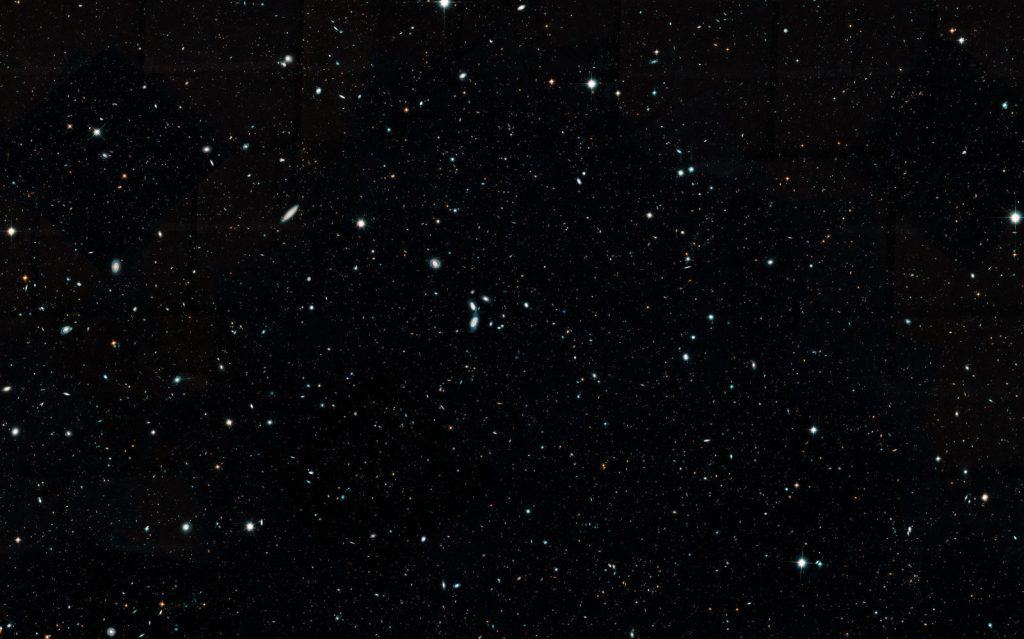
NASA’s Hubble Legacy Field image contains 16 years of data

This Hubble Space Telescope image represents the largest, most comprehensive “history book” of galaxies in the universe.The image, a combination of nearly 7,500 separate Hubble exposures, represents 16 years’ worth of observations.The ambitious endeavor, called the Hubble Legacy Field, includes several Hubble deep-field surveys, including the eXtreme Deep Field (XDF), the deepest view of the universe. The wavelength range stretches from ultraviolet to near-infrared light, capturing all the features of galaxy assembly over time.The image mosaic presents a wide portrait of the distant universe and contains roughly 265,000 galaxies. They stretch back through 13.3 billion years of time to just 500 million years after the universe’s birth in the big bang. The tiny, faint, most distant galaxies in the image are similar to the seedling villages from which today’s great galaxy star-cities grew. The faintest and farthest galaxies are just one ten-billionth the brightness of what the human eye can see.The wider view contains 100 times as many galaxies as in the Hubble Ultra Deep Field, taken in 2004. The new portrait, a mosaic of multiple snapshots, covers almost the width of the full Moon. Lying in this region is the XDF, which penetrated deeper into space than this legacy field view. However, the XDF field covers less than one-tenth of the full Moon’s diameter.

It shows 265,000 galaxies, some in the state they were in as far back as 13.3 billion years ago.

The Hubble Space Telescope has been capturing tons of space images since it entered orbit in 1990. Now, NASA has put together a mosaic photo using 16 years’ worth of data to create one of the widest views of the universe we’ve ever seen. The image, called Hubble Legacy Field, was created from 7,500 individual exposures captured in wavelengths spanning from ultraviolet to near-infrared light by 31 different programs.

It encompasses a region in the sky that includes those shown in older Hubble mosaics — the Ultra Deep Field and the eXtreme Deep Field — and contains 265,000 galaxies. That’s 30 times as many galaxies as previous deep field images, enough to cover an area that’s almost as wide as the moon.

While the eXtreme Deep Field is still our deepest look into the universe, the Legacy Field also gives us a glimpse of the early cosmos — a time “when small, young galaxies collided and merged with other galaxies,” NASA explained. It shows the state of galaxies as far back as 13.3 billion years ago, or just 500 million years after the Big Bang.

NASA says no image will surpass the Legacy Field’s scope until future telescopes make their way to orbit. That could take years and years, though, seeing as Hubble’s successor, the James Webb telescope, won’t be launching until 2021.

Garth Illingworth, who led the team that assembled the image, said:

“This one image contains the full history of the growth of galaxies in the universe, from their time as ‘infants’ to when they grew into fully fledged ‘adults…’ We’ve put together this mosaic as a tool to be used by us and by other astronomers. The expectation is that this survey will lead to an even more coherent, in-depth and greater understanding of the universe’s evolution in the coming years.”
OnePlus explains the 7’s lack of a water resistance rating

It supposedly costs customers money.

Don’t expect OnePlus to slap water and dust resistance ratings on its phones any time soon. Co-founder Carl Pei has posted the company’s rationale for declining to get an IP rating. The company wanted to do things based on “what you really need” rather than the industry, Pei said. An IP rating would be the “simplest” way to prove resistance, but OnePlus figured it was better to show what phones can “bring to you in real life.”

An accompanying video also claimed that water resistance ratings “cost you money,” and showed a OnePlus 7 model being dunked in a bucket as ‘proof’ of its ability to survive immersion.

Pei didn’t rule out IP ratings in the future, and didn’t want customers to try submerging their own phones.

Whether or not this persuades anyone is another story. It doesn’t necessarily cost the buyer money to get an IP rating — it’s up to the company to decide how that cost affects profits. And IP ratings can be particularly important if you’re a fan of the outdoors. They give you an at-a-glance understanding of whether or not a phone will survive your excursions, helping you make informed purchases. Although the absence of an IP rating doesn’t necessarily mean a phone is fragile, it won’t be very reassuring.

First private Japanese rocket reaches space

The modest test expanded the horizons for private spaceflight.

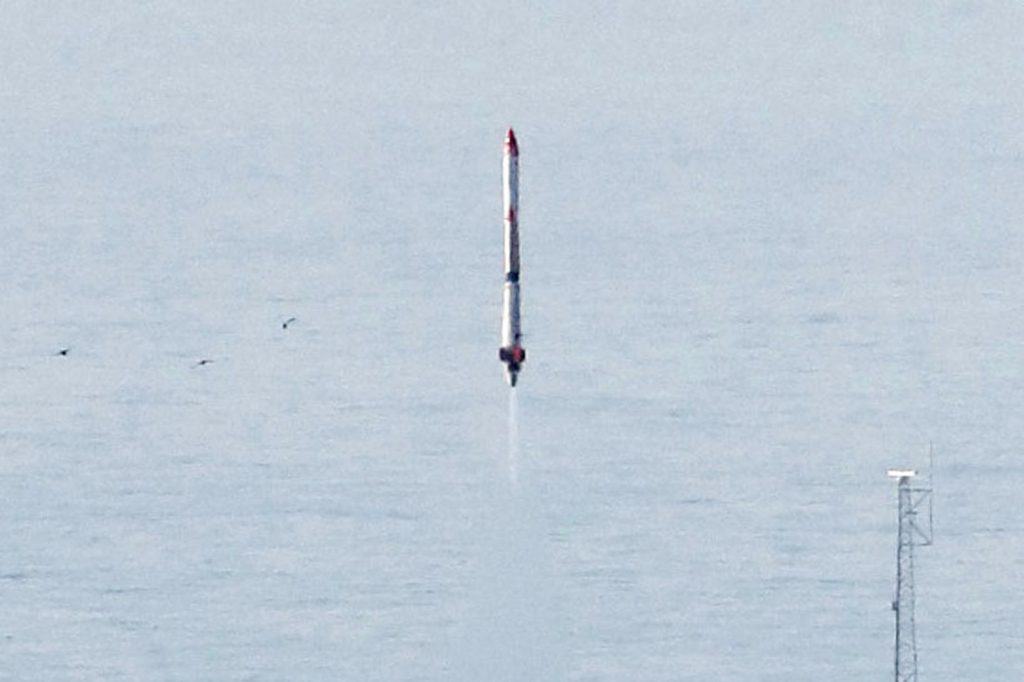
Japan can finally include itself among the ranks of countries with successful private spaceflight outfits. Interstellar Technologies has successfully launched its MOMO-3 sounding rocket into space, with the vehicle easily crossing the Kármán line (62 miles in altitude) before splashing into the Pacific. It’s a modest start — the rocket only stayed aloft for 8 minutes and 35 seconds — but it’s also a relief after Interstellar’s previous two attempts ended in failure.

There was a fair amount riding on the mission. Interstellar’s ultimate aim is to ferry small satellites into orbit at a fraction of the cost of government launches, and this takes the company one step closer to achieving its dream. It also relieves some of the pressure on Interstellar founder Takafumi Horie. There had been skepticism about the Livedoor creator’s spaceflight chops given his controversial entrepreneurial history (including a conviction for accounting fraud). This shows that his initiative can work on a basic level — the challenge is translating a test like this into a full-fledged business.

Microsoft announces its first ‘real’ laptop

The Surface Laptop feels like it’s been around for a lot longer than just two years.

It’s hard to believe that only two years have passed since Microsoft first announced the Surface Laptop. That’s probably because the company had already built up a reputation with the Surface line of convertible tablets. Those computers tried to marry the portability and touch-screen convenience of the iPad with accessories, software and specs that made it more of a “real computer.”

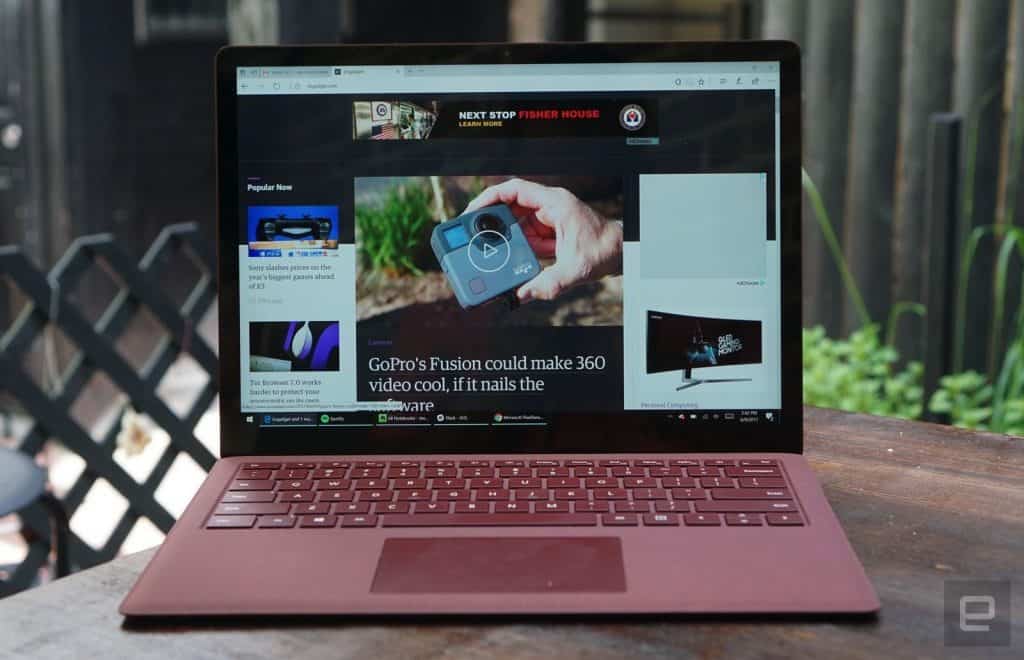
It took Microsoft a few years to hone in on what exactly made the standard Surface work, but by 2015 it had really nailed the concept with the Surface Pro 4. But still, there were plenty of people who longed to see what Microsoft could do if it applied its burgeoning hardware chops to a more traditional laptop design. Enter the Surface Laptop, a computer with no fancy hinges or detachable keyboard; its most notable design quirk was the fabric-covered keyboard palm rests. But people who loved the design prowess Microsoft showed off with the Surface Pro but wanted a package that sat better on the lap were delighted.

And with good reason: The Surface Laptop quickly became one of the best all-around notebook computers, a device that hit right in the intersection of style, capability and price. It was basically a more modern MacBook Air that ran Windows, a device that had lots of people interested.

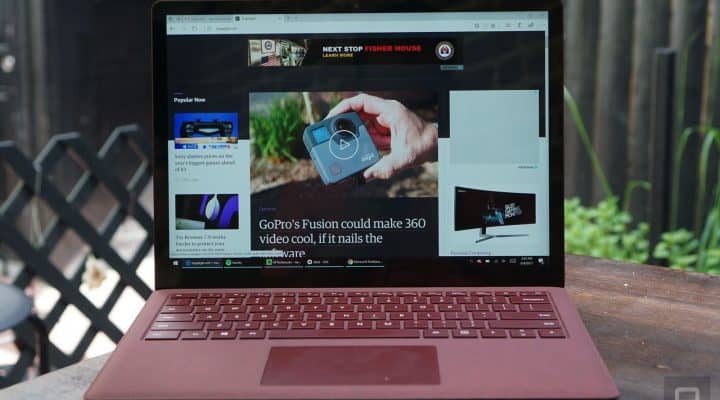
Microsoft Surface Laptop

Of course, the Surface Laptop didn’t launch without a slight controversy — but it was about software, not hardware. You may or may not recall that Microsoft briefly dabbled with a Windows 10 variant called Windows 10 S. It was a slightly more locked-down version of Windows 10 that only allowed app installs from the Windows Store and only let users browse the web with Microsoft Edge. To some extent, it was meant to be a competitor to Chrome OS, which had found great success in the education market by 2017.

But consumers seemed more willing to accept the limitations of Chrome OS given how much inexpensive Chrome hardware was available. The Surface Laptop, on the other hand, started at $999, making it a harder sell for education-focused buyers. Initially, Microsoft offered free upgrades to Windows 10 Pro, but said it would charge $50 for upgrades starting in 2018.

Fortunately, Microsoft quickly realized the error of its ways and started shipping the Surface Laptop with the full Windows 10 Pro experience, The company still offers a streamlined “S” mode for Windows, but for the most part Windows 10 S is a blip in Microsoft’s long and winding operating system history.

That’s good news, because there’s almost nothing else to complain about with the Surface Laptop, which was upgraded last fall. Sure, it could use a USB-C port for charging and connectivity, but that’s basically one quibble. There are other laptops that are cheaper, or thinner and lighters, or more powerful. But it’s not often we come across a computer that truly checks all the boxes for almost anyone who might be considering it.

Stocks to Watch: Stella-Jones Inc. (TSX:SJ) Down -1.34%

At close of market on Friday, Stella-Jones Inc. (TSX:SJ) stock finished trading at -1.34%, bringing the stock price to $45.68 on the Toronto Stock Exchange. The stock price saw a low of $45.30 and a high of $46.07.

The company’s stock was traded 1,438 times with a total of 162,185 shares traded.

Stella-Jones Inc. has a market cap of $3.16 billion, with 69.13 million shares in issue.

Stella-Jones Inc produces and sells lumber and wood products. The company sells products in five main customer categories. The railway ties category, which generates the most revenue of any category, sells pressure-treated lumber to the railway industry. The utility poles category, which contributes the next largest amount of revenue, sells utility poles for electrical transmission and communications infrastructure use. The other three categories are residential lumber for use in housing construction, industrial products for use in marine and building industries, and logs and lumber, which sells wood products to homebuilding markets. The firm organizes itself into two segments based on geography: the United States and Canada. The majority of revenue comes from the United States.

Stocks to Watch: Air Canada Voting and Variable Voting Shares (TSX:AC) Up +1.82%

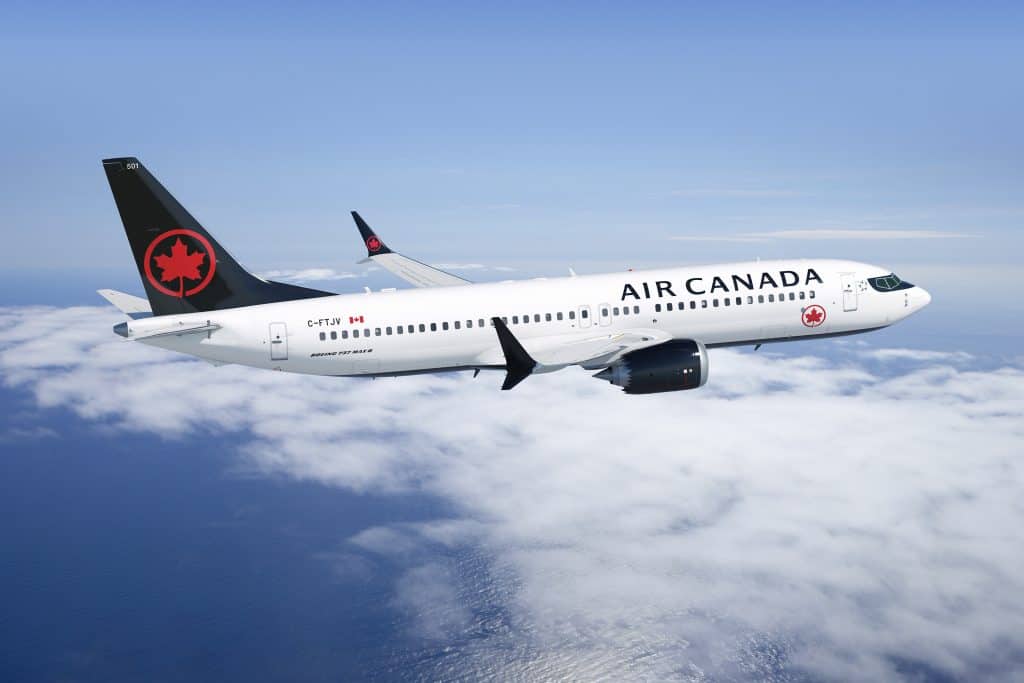
3D imagery, 737 MAX, MAX, 737 MAX 7, 737 MAX8, 737 MAX 9

At close of market on Friday, Air Canada Voting and Variable Voting Shares (TSX:AC) stock finished trading at +1.82%, bringing the stock price to $33.62 on the Toronto Stock Exchange. The stock price saw a low of $32.44 and a high of $33.75.

The company’s stock was traded 4,474 times with a total of 916,781 shares traded.

Air Canada Voting and Variable Voting Shares has a market cap of $9.05 billion, with 269.3 million shares in issue.

Air Canada is Canada’s largest airline, serving nearly 40 million passengers annually together with its regional partners. Air Canada provides over 1,500 daily flights to around 200 destinations and is a founding member of the Star Alliance. In 2016, the company generated CAD 14.7 billion in total revenue, split across passenger services (roughly 90% of revenue), cargo (4%), and other (6%).