Archives for March 29, 2019

Potential pipeline buyer

One of the leaders of a First Nations consortium planning to offer $6.8 billion for majority ownership of the Trans Mountain pipeline says federal government principles for Indigenous buyers are “exactly aligned” with its goals.

Harrie Vredenburg, a Project Reconciliation executive board member and professor at the University of Calgary’s Haskayne School of Business, says the principles unveiled by Finance Minister Bill Morneau on Monday don’t affect his group’s plan to invite all Indigenous communities in Western Canada to join in a united bid for 51 per cent of the pipeline.

The four points suggest that discussions of potential Indigenous ownership of the pipeline can proceed only if the communities involved have “meaningful economic participation,” if the deal can proceed in the spirit of reconciliation, and if the resulting entity works to the benefit of all Canadians and goes forward on a commercial basis.

Vredenburg says the principles are consistent with messages his organization has shared in meetings with federal department officials over the past five months.

He says the project, led by executive chairman Delbert Wapass, a former chief of the Thunderchild First Nation in Saskatchewan, is well-advanced and there have been meetings with investment banks, oil companies and First Nations.

Morneau has said the government won’t negotiate the sale of the pipeline it bought for $4.5 billion last summer until after construction of its controversial proposed expansion is “de-risked.”

Court-ordered consultations with affected Indigenous groups are expected to wrap up in May, allowing the expansion to go to Ottawa for a decision on approval.

A long-term fund with $370 billion under management shares some investing ‘themes’

Canada’s national pension fund invests for the long-term, its CEO told CNBC on Sunday, and he named trends that are helping to guide its decision-making.

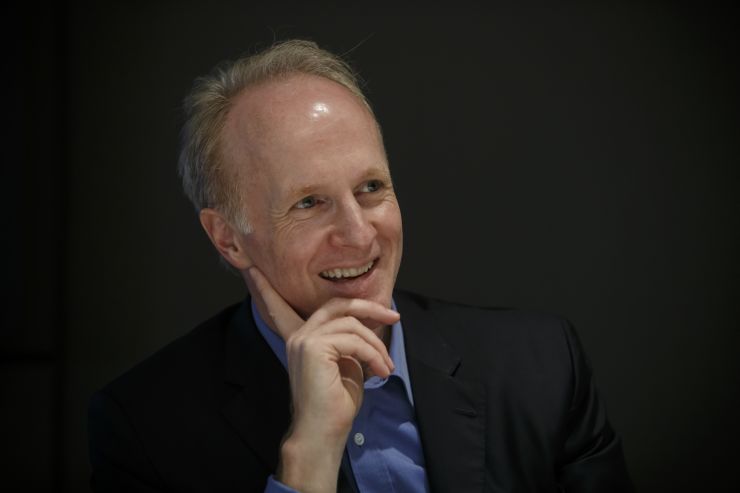
“We’re trying to go deep on certain areas where we see long-term trends and try to identify the best parts of those themes to invest in, companies to invest in, to express that view,” Mark Machin, president and CEO of Canada Pension Plan Investment Board, told CNBC’s Martin Soong at the China Development Forum in Beijing.

Machin picked several themes that the fund — one of the world’s largest, with nearly $370 billion of assets under management — is betting on.

‘Retail 4.0’

New retail, or what Machin referred to as “Retail 4.0,” is one sector that the long-term investment fund is watching.

“We’re substantial investors in Alibaba, which we were pre-IPO and post-IPO. We’ve also invested in funds alongside them that are specializing in new retail, as well as Meituan Dianping, ” he said.

Chinese food delivery app Meituan Dianping listed in Hong Kong last September. Some analysts are not as bullish about the tech firm, with one predicting more than 30 percent downside for the stock.

Self-driving automobiles

The pension fund, which invests on behalf of more than 20 million Canadians, is looking at electric and autonomous vehicles, as well as sensor companies.

”We’ve invested in companies like Zoox, which is an autonomous taxi company based on the (U.S.) West Coast, ” Machin said.

California-based Zoox received approval in December to provide driverless ride services for public passengers.

The privately held company last week became the target of a lawsuit from Tesla, which claims Zoox “absconded” with proprietary information related to “warehousing, logistics, and inventory control operations,” according to a filing in the U.S. District Court for the Northern District of California.

Zoox declined to comment on the suit.

Shifting demographics

There will be more retirees than children in the U.S. by 2035, according to the Census Bureau.

That demographic shift is one theme the fund has been investing in, said Machin. He added that aging baby boomers often want to “go see the world” when they reach retirement.

“One of the best ways that Americans want to go see the world is go to Europe and go on a river cruise … So we invested in a company called Viking Cruises, which is the leading provider of river cruises, and some other cruises, in Europe and increasingly around the world,” Machin added.

Privately held Viking Cruises operates the vessel Viking Sky, which was evacuated over the weekend after suffering engine failure in stormy waters.

Rise of the middle class

Another trend in emerging markets, he said, is the rise of the middle-income segment of the population.

“So here in China, in India, we’re investing in things that will best express that view of rise of the middle class. ”

No, Americans Really Do Not Have Enough Retirement Savings

A new report on retirement security from the Government Accountability Office contains what seems like a stunning finding: 48% of older households have “no retirement savings.” By “no retirement savings,” however, the GAO means only that they have no defined contribution plan, that is, an IRA or 401(k). As the report states in the next couple of lines, some of the 48% have a defined benefit plan (often called a pension). Of Americans nearing retirement, 29% have neither a DB nor a DC plan.

But by not stating clearly the issue about DBs, the new GAO report gave scholars at conservative think tanks an easy opportunity to score a point in the debate between those who do and those who do not think Americans have enough retirement savings. Despite the GAO’s inexact wording, Americans do not have enough retirement savings, even when considering DB plans.

True, if you have a DB benefit with enough years of service, it doesn’t matter so much that you don’t have what the GAO calls “retirement savings” (though even if you have a DB plan you may still need a supplement; some DB income levels are quite low). Everyone has a friend or relative who sacrificed relative wage increases for a generous teacher or union pension that is a lot more secure than someone’s 401(k).

On the other hand, people with lump-sum DC plans for retirement always worry about spending it down too fast—as they should. You need to save about 20% more in a DC plan than in a DB plan just to ensure you have enough money if we live to 90 (though most of us won’t live that long). People with DC accounts should be worried since they don’t have benefits-for-life, the longevity insurance that someone with a traditional plan has. Having a DC plan to insure against living to 90 is like having to fund your own kidney transplant. DB plans have longevity insurance; with DC plans you are on your own.

Although the GAO report is excellent—as are the previous entries in the series—the bigger picture is that the GAO understates the magnitude of the retirement savings crisis. This is because average DC account balances are wholly inadequate. A recent study from my research center at the New School found that the median DC account balance of workers aged 55-64 was $92,000—enough to provide an income of just $300 a month over the course of retirement. Including those with no retirement savings at all, the median account balance is a mere $15,000.

These numbers make sense in light of the fact that most Americans do not expect to be financially secure when they retire. Stagnating wages make it difficult to save without getting ripped off, and both employers and the government have done next to nothing to help workers. Notably, there is no deep political divide on the issue of retirement income security. Seventy-six percent of Americans are concerned they won’t achieve a secure retirement; those numbers are 78% for Democrats and 76% for Republicans.

The widespread and bipartisan worry could have significant political ramifications, as Rachel Cohen reports in The New Republic:

There are signs that retirement will play a significant role in the 2020 race. In February, Bernie Sanders reintroduced the Social Security Expansion Act, with sponsorships from three other leading Democratic presidential contenders: Cory Booker, Kirsten Gillibrand, and Kamala Harris. They belong to a congressional caucus dedicated to increasing Social Security benefits. Formed last fall, it already has more than 150 Democratic members, and Sanders and Elizabeth Warren, another presidential candidate, are its co-chairs in the Senate.

Why not just expand Social Security to solve the retirement crisis? If we expanded Social Security to provide adequate retirement for the vast majority of Americans, workers’ payroll taxes would rise to about 30% of pay—up from around 12% today. Rarely do nations secure pensions for all workers with a just a pay-go system. Nations that achieve widespread retirement security do so with both advance-funded and Social Security-type pensions.

Everyone needs an alternative to the crumbling 401(k) and IRA system, and something more than what is currently being proposed in Congress. An improved U.S. retirement system would mandate contributions, arrange for professionally managed investments, and pay out annuities. Blackstone Executive Vice Chairman Tony James and I have put together such a plan as a supplement to Social Security: Guaranteed Retirement Accounts.

The bottom line is that Americans do not have enough retirement savings. This is not because we drink too many lattes, as financial writer Helaine Olen has argued for many years, but because employers and workers are not required to contribute to retirement savings plans above and beyond Social Security. Many low-income workers once had some retirement security; janitors and ladies garment workers weren’t rich, but they had pension plans at work. Some gig workers, like job-to-job carpenters, also had pensions when they were in a union. What we need today is a portable universal pension system that supplements Social Security.

Some may still deny there is a problem. But the number of poor or near-poor people over the age of 62 is set to increase by 25% between 2018 and 2045, from 17.5 million to 21.8 million. If we do nothing in the next 12 years, 40% of middle-class older workers will be poor and near poor elders. That is a problem.

No, Half of Older Americans Aren’t Without Retirement Savings

If you were a government agency that produced a study whose headline result was repeatedly misinterpreted, what would you do when you updated that study? Maybe hold back on the headlines that were misinterpreted? Not if you were the federal Government Accountability Office, which in an update to previous work declared this week that 48% of U.S. households aged 55 and over in 2016 “had no retirement savings.” That claim is factually incorrect, and the way it will be interpreted by politicians and the press will only make it less true.

Senator Bernie Sanders has repeatedly cited the GAO’s past results, rephrasing them in ways that are entirely rational for a non-specialist but which lead to radically incorrect results. A recently as January 2019 Sanders tweeted:

“Today, in America, more than half of older workers have no retirement savings – zero. That is unacceptable. We must create an economy that works for all of us, not just the wealthy few.”

But, as FactCheck.org and others have noted, this statistic – derived from the Federal Reserve’s Survey of Consumer Finances – excludes anyone who has only a traditional defined benefit pension. If we count both retirement accounts and traditional pensions, 72% of households aged 55 and over have retirement savings. That’s up from only 64% in 1989 – so things are getting better, not worse. But you wouldn’t know that from the press coverage.

Excluding traditional pensions from “retirement savings” defies common sense, and it isn’t even justifiable on a technical level. In the National Income and Product Accounts and the Federal Reserve’s Financial Accounts of the United States, household wealth includes both defined contribution retirement plan assets such as IRAs and 401(k)s and the future benefits owed to employees via traditional defined benefit pensions. I can’t see why the GAO’s headline number would categorize this group – most of whom are public sector employees with generous pensions – as “non-savers,” especially when that limited definition of retirement savers has already caused confusion.

And there’s a second issue that will cause readers to be misled: the distinction between households and individuals. The Fed’s SCF measures things on a household basis, whereas in public policy we mostly care about individuals. The issue comes in that married households or non-married couples – with two people – are much more likely to have retirement savings than unmarried, single-individual households. Among married households aged 55 and up, 83% had a retirement account or pension plan, versus only 59% of single-individual households. This means that about 77% of Americans 55 and up have retirement savings, versus only 72% of households. How do I know people will be misled? Because they already have been: for instance, Bloomberg’s Ben Steverman, an experienced financial reporter, repeatedly interpreted the GAO’s household figures to mean individuals.

So the true state of retirement savings – 77% of older Americans with retirement plans – is radically different than the GAO’s stated 52%. It’s a 25 percentage point difference, or a 48% relative difference in the number of older Americans with retirement savings. They’re simply very different numbers. And yet, I can see it now: almost no one who will cite the GAO’s 52% figure will be moved in the slightest by the correct figure of 77% of older Americans having a retirement plan. Just as they aren’t moved when they find that out the true median retirement income is 30% higher than is stated in the Current Population Survey, the dataset used to measure elderly poverty and reliance on Social Security. Or how they don’t care when it’s pointed out that 81% of full-time employees have access to a retirement plan at work, as shown in the Bureau of Labor Statistics’ National Compensation Survey, versus the sub-40% figure that retirement crisis proponents cite based on the faulty Current Population Survey data. Many people are utterly convinced that America faces a “retirement crisis” and no data, argument or evidence will convince them otherwise.

But let’s say you did care about the data. You might nevertheless point out that 23% of older Americans without a private retirement plan is a big problem, which is a perfectly legitimate claim. And yet being without a private retirement plan doesn’t mean you’re without retirement income. Even “non-savers” almost certainly have Social Security benefits, and some – perhaps small businessmen or farmers – have retirement income coming from outside a formal retirement plan.

To illustrate, let’s look at near-retirees in 2001 who didn’t have either a retirement account or a traditional pension. These households, aged 50 to 59, had median household earnings of just $23,688 in 2016 dollars. So this isn’t a rich group of people who you’d expect should be saving much for retirement outside of Social Security. But that gives you an idea of the level of pre-retirement earnings they’ll be looking to replace once they retire. Now fast forward 15 years to 2016, when this same age-group of people would now be aged 65 to 74. Their median household income in 2016 was $20,901, equal to 88% of their pre-retirement earnings – a more than adequate “replacement rate” by most financial advisors’ recommendations. In other words, even these non-savers are on average doing okay in retirement.

One might argue, a government report can’t contain this kind of detail and nuance. But why not? I ran these figures while sitting by the pool on vacation, so why can’t a government agency give elected official and the public the facts and data they need to make informed decisions on retirement policy?

You may be automatically enrolled in this state-run retirement savings plan if your N.J. boss doesn’t offer a 401(k)

Gov. Phil Murphy on Thursday will sign a bill into law creating an entirely new retirement savings plan for private-sector workers in New Jersey who aren’t able to save through an employer-sponsored 401(k).

The Secure Choice Retirement Plan aims at boosting New Jerseyans’ retirement nest eggs by automatically enrolling workers in an IRA that is managed by the state. The state has at least two years to get the program up and running.

The goal of the savings plan is to promote “greater retirement savings for private-sector employees in a convenient-low cost, and portable manner,” according to the bill (A4134), which is modeled after the Illinois Secure Choice Program.

It targets some 1.7 million workers in the Garden State whose employers don’t provide access to a retirement plan. Bill sponsors have said that of employees who don’t have a payroll deduction, only 5 percent save for retirement “on a consistent basis.”

Here’s what you need to know:

How do you enroll in the Secure Choice Savings Plan? Will they really take money from your paycheck?

The savings program creates an automatic enrollment payroll deduction IRA, which means many workers will automatically contribute 3 percent of their wages to an Individual Retirement Account, or IRA.

That’s many workers, but not all. The bill requires employers with 25 or more employees that don’t already offer a qualified retirement plan, such as a 401(k), to arrange an automatic payroll deduction. Employers will fewer than 25 workers have the option of creating the payroll deduction but are not legally required to.

You can opt out if you don’t want to be in the retirement plan.

How much can you contribute?

Workers will be automatically enrolled at a 3 percent contribution but can adjust that rate to a different percentage of your wages or to a set dollar amount. You can change your contribution rate one time per quarter.

What if you opt out and then change your mind — or join the program and change your mind?

Under the bill, employers will hold an open enrollment period at least once a year, during which workers who previously chose not to participate can opt back in.

You can also pull out of the plan at any time.

The board that oversees the fund will have to disseminate information on how to contribute, how to opt out, how to change your contribution level and how to withdraw your savings.

Who controls the money?

The law will create a New Jersey Secure Choice Savings Board that includes the state treasurer, the state comptroller, the director of the Office of Management and Budget, two public members appointed by the governor at the recommendation of Legislative leaders, a business trade representative appointed by the governor, and a representative of people enrolled in the plan appointed by the governor.

Members appointed by the governor require the consent of the state Senate.

Board members are not compensated.

They are charged with implementing and overseeing the savings program and will establish various investment options and create all the processes for enrollment and withdrawal.

Do you have a say in how your money is invested?

To an extent. The board may offer workers a “capital preservation fund” that’s conservatively invested to protect the assets, a life-cycle fund that adjusts risk based on the enrollee’s proximity to retirement, a default investment fund for people to don’t make an election, and any other investment options.

What are the administrative fees associated with the plan?

By law, administrative costs and expenses for the management of the plan cannot exceed 0.75 percent in the first three years and 0.6 percent thereafter. This cap includes any investment fees.

The state is expected to front the cost of getting the plan up and running, and then the plan will take over those costs and reimburse the state.

The plan will be audited annually and that report, which will include fees and expenses, will be available to the public.

Will my employer kick in money? Will the state?

No. And no.

The employer’s role is really limited and its obligations are administrative only. They’re not meant to bear any financial risk or liability.

It’s worth noting that this plan is completely separate and apart from the New Jersey public pension fund. That is a defined-benefit plan that promises state and local government workers a certain benefit after they retire. The government employers bear the risk of investment losses.

Under the Secure Choice program, you have an individual retirement account and the investment gains or losses are your own.

“The state shall have no liability for the payment of any benefit to any participant in the program,” the bill says.

If the state runs it, can the state raid it?

Here’s how the bill puts it: “The amounts deposited in the fund shall not constitute property of the state and the fund shall not be construed to be a department, institution, or agency of the state. Amounts on deposit in the fund shall not be commingled with state funds and the state shall have no claim to or against, or interest in, such funds.”