Archives for March 29, 2019

Debt levels never higher

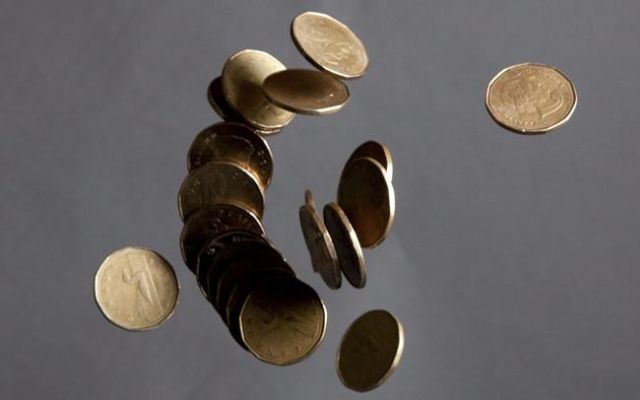
Loonies are pictured in Vancouver, Sept. 22, 2011. If you’ve found yourself with an overwhelming amount of debt, you can at least take comfort in knowing you’re not alone.

If you’ve found yourself with an overwhelming amount of debt, you can at least take comfort in knowing you’re not alone.

Canadian debt levels have been rising for decades, with the average family now owing $1.78 for each dollar of disposable income, compared with 66 cents for each dollar of income in 1980. Overall household debt has climbed 54 per cent in the last decade to reach $2.2 trillion.

The rising levels of indebtedness have left many households vulnerable, said Laurie Campbell, CEO of Credit Canada Debt Solutions Inc.

“Debt levels have never been higher than they are now…there’s no wiggle room.”

For those feeling overwhelmed and unable to pay their debts, there are two regulated, last-resort options: bankruptcy, and the less drastic consumer proposal.

Both put a freeze on creditors and allow you to eventually get out of debt while only paying part of what you owe.

Under a consumer proposal the amount paid back is negotiated with creditors, while bankruptcy payments are set by laws that also require you to sell assets.

But people shouldn’t rush into either option despite the stress, said Campbell.

“It’s not something to be taken lightly.”

Campbell recommends first getting free advice from non-profit credit counsellors to look at your full financial picture, and explore gentler options like an interest freeze to help pay off debt.

She said there is a risk of falling back into debt if other budgeting issues haven’t been sorted out yet, while bankruptcy and consumer proposals have long-term implications that need to be understood.

“Everyone should look at all their options very carefully before making that decision, because it’s a very final decision.”

The bankruptcy process generally lasts either nine or 21 months depending on income, and then the bankruptcy stays on public record for six years. A consumer proposal generally lasts five years and then stays on your record for three more. A second and third bankruptcy have much longer terms.

During the bankruptcy process, a trustee will take stock of your assets and income to determine what needs to be sold and what you’re required to pay.

The law allows keeping essentials like clothes as well as a low-valued car and other assets, with rules varying by province. Bankruptcy also requires minimum payments of $200 a month through the process to cover administration costs, and significantly more if your income is above a threshold. For those unable to pay, the fee can be waived in certain circumstances.

If you have a house with a mortgage, you may be able to keep it if your equity in it is small and you can manage the mortgage payments. If your equity is above a threshold, which varies by province, you’d have to find a way to pay that back as well or the trustee would have the power to sell it.

Throughout the process you will also have to report your income and expenses on a monthly basis to the trustee. Any changes in circumstance, such as a raise or inheritance, could increase your payments.

Despite the requirements, the process is simpler than many fear, said Shelley Koehli, a licensed insolvency trustee in New Westminster, B.C.

“For most people that go through the bankruptcy, it doesn’t impact their way of life, other than they don’t have access to credit until they’re discharged.”

For those who don’t want to go through the bankruptcy process, or want to keep more of their assets, the consumer proposal is less invasive.

While a longer process, it provides more control on keeping assets while still only paying back part of your debts.

“It’s kind of that in-between option,” said Koehli.

Both a bankruptcy and a consumer proposal can cover unsecured credit and debt like credit card debt, unsecured bank loans, back taxes, lines of credit, payday loans and unpaid bills.

However, they will not deal with secured debt like your mortgage, secured car loan or lease. They will also not include debts like spousal or child support, court imposed fines and student loans that are less than seven years old.

Koehli said the biggest mistake is waiting to talk to someone. Some clients sell off assets they could have kept before approaching her, while others fear they wouldn’t be able to cross the border or that they may go to jail.

“No, we don’t have debtors’ prison anymore.”

Campbell also said it’s important to reach out for help as early as possible, even before the situation becomes desperate.

“Get help quickly. Don’t wait until it impacts every part of your life.”

NASA proves its space helicopter can fly on Mars

Scientists tested Mars 2020’s smaller companion in JPL’s Space Simulator.

The scientists working on NASA’s Mars helicopter project are done building the actual 4-pound vehicle that’s blasting off to the red planet with the Mars 2020 rover. But they can’t just strap the helicopter to its bigger companion’s belly and call it a day — they first have to prove that it can actually fly in Martian conditions. That’s why in late January, the team replicated our neighboring planet’s much thinner atmosphere in JPL’s Space Simulator in order to make sure the helicopter will be able to take off. Spoiler alert: they were able to successfully conduct two test flights in Martian conditions on separate days.

Since the Martian atmosphere only has about one percent the density of Earth’s, the researchers would’ve had to conduct their flight tests at an altitude of 100,000 feet if they did’t rely on the simulator. The 25-foot-wide vacuum cylinder was the much better choice, especially since the agency has been using it to test machines meant for the red planet anyway. In fact, it’s where the Curiosity team tested the rover here on Earth.

To be able to replicate the Martian atmosphere, the team injected carbon dioxide into the chamber after sucking out all nitrogen, oxygen and other gases. They also had to use a gravity offload system in the form of a motorized lanyard that tugged at the helicopter as it hovered above the ground, since Mars only two-thirds of our planet’s gravity.

While the unmanned aerial vehicle (UAV) only logged a total of one minute of flight time at an altitude of 2 inches above the ground, the scientists were able to get the data they need to be able to say that it will work on Mars. “The next time we fly, we fly on Mars,” project manager MiMi Aung said. “Watching our helicopter go through its paces in the chamber, I couldn’t help but think about the historic vehicles that have been in there in the past. The chamber hosted missions from the Ranger Moon probes to the Voyagers to Cassini, and every Mars rover ever flown. To see our helicopter in there reminded me we are on our way to making a little chunk of space history as well.”

Both the Mars 2020 rover and the helicopter are expected to arrive on the red planet in February 2021. The helicopter will serve as a demo for future space UAVs, while the rover will study the planet’s geology, assess the possibility of life in the past and collect samples by drilling into its surface.

eBay uses AI to help you shop for similar-looking items

‘Looks like this’ can ensure you find something that suits your style.

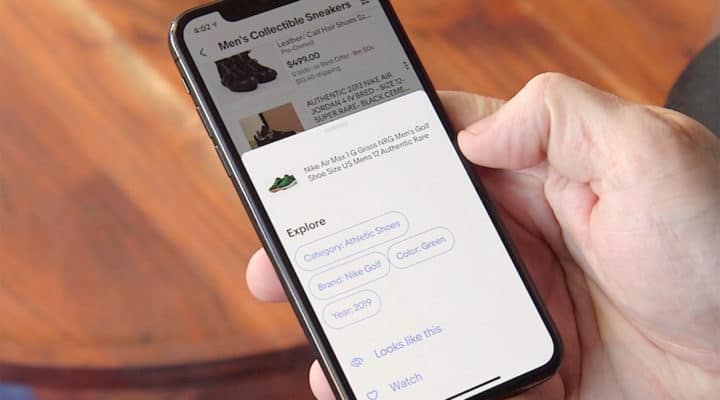
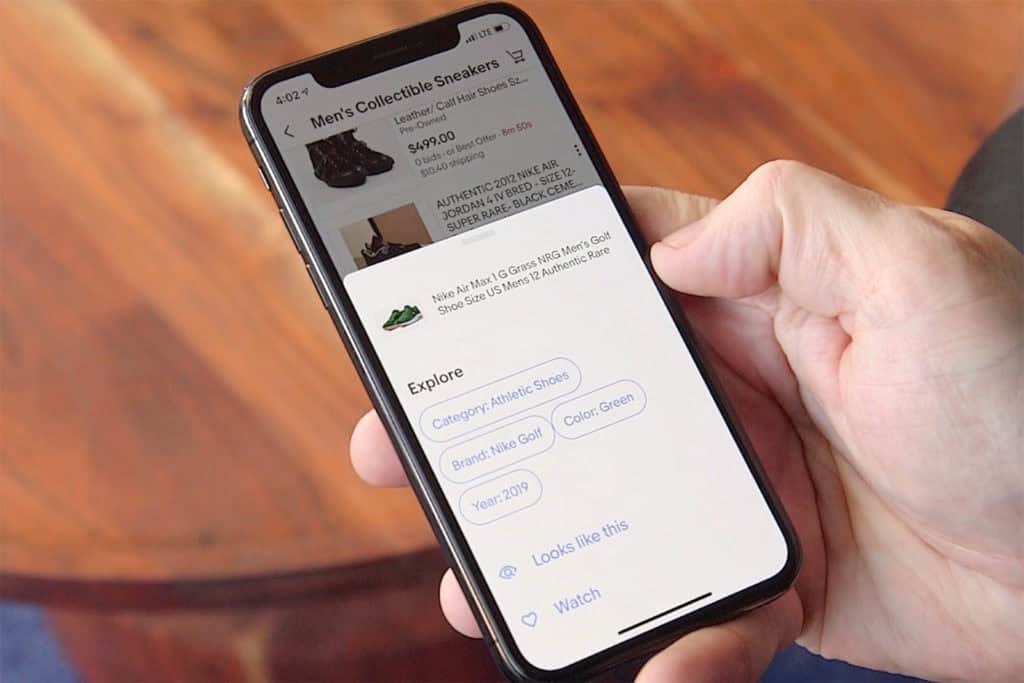
When you’re shopping, you probably have a general look in mind. But how do you describe that to a shopping site? eBay might have an answer: have AI figure it out. It’s implementing a feature that uses computer vision to find items that resemble what you’re looking at. Tap the three-dot menu next to a product and it’ll give you both simple category buttons (such as “athletic shoes”) as well as a “looks like this” option to find visually similar items. Eye a green set of sneakers, for instance, and you should see comparable footwear without having to construct an elaborate search.

This AI-guided shopping is available in eBay’s Android and iOS apps right now, though it’s currently only available in the US, UK, Australia and Germany. Don’t be surprised if other online merchants implement similar computer vision tech, though — it’s a fairly obvious solution to common problems for internet shopping, such as tracking down alternatives to out-of-stock items.

Boston Dynamics’ new Handle robot heads to the warehouse

Play time is over.

When we first met Handle the wheeled robot was hopping and jumping to show off its agility, but a new demo video from Boston Dynamics is much more practical. In this one, larger Handle units work autonomously to move boxes around inside a a warehouse environment. According to the company, the boxes weigh about 11 pounds each, but the robots can handle up to 33 pounds.

Whether or not they’re truly suited to this work is hard to tell, even with computer vision and all the slick counterbalancing shown, operating in a real-world environment with potential obstacles could be more complicated. Still, just like the first video, the quick sure movement is a reminder that the robot apocalypse is rapidly approaching.

(Almost) everything you wanted to know about the Apple Card

Hold the hype: Should you get one?

With its latest product, Apple wants your money. But it also wants to be your personal finance coach. The company is pitching the Apple Card as a way to “help customers lead a healthier financial life,” mostly through an intuitive app interface, a lack of fees and a unique new payment structure. The Card, issued in partnership with Goldman Sachs, does appear to give consumers greater control and understanding of their debt. But it’s also another way to keep users stuck in the Apple walled garden — how can you switch to Android when you owe thousands on your Apple Card?

The benefits for Apple are clear, but there’s a potential upside for users too. More and more people are drawn to the convenience of mobile wallets, and replacing your credit card with your iPhone seems like a natural evolution. Apple’s promises about transparency, privacy and security are very alluring, and it’s encouraging to see a tech titan take on an industry that’s historically taken advantage of consumer confusion. But before you get too excited or angry about the Card, there are some important issues to discuss.

What is the Apple Card and how do I get one?

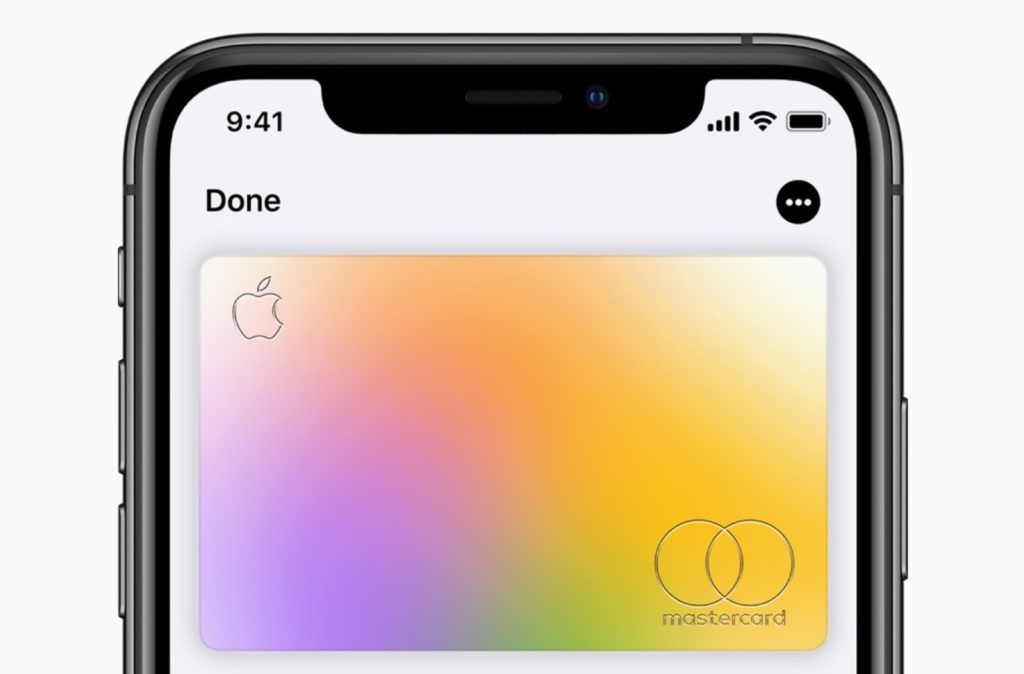
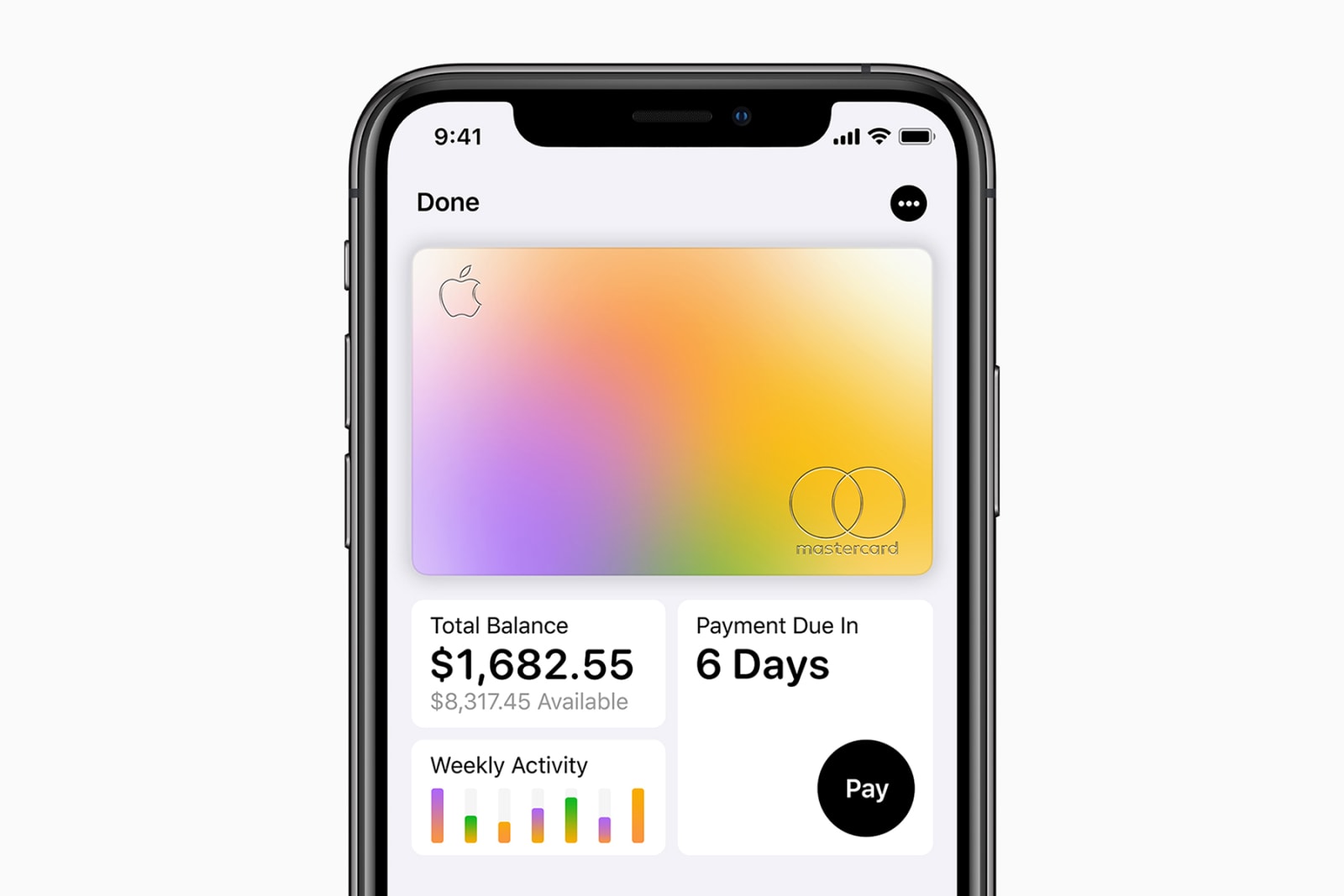
Basically, it’s a credit card. But it’s different from conventional cards in that you don’t need a piece of plastic before you can start using it. You can sign up from your iPhone, get approved in minutes and use it immediately via Apple Pay. The company will send you a physical card (which Apple crafts from titanium) for times when you need one, like for starting a tab at a bar or to pay a merchant that doesn’t take Apple Pay. You can get it for free, and it’ll arrive in the mail within two days.

This dramatically reduces the amount of time spent waiting on approval and access to your credit. Apple also promised not to charge late fees or international transaction fees or to even set a minimum payment. Interest rates are supposedly lower than on other cashback cards, ranging between 13.24 and 24.24 percent (current rates set by the Fed), and are determined by your creditworthiness.

What about those cashback offers?

Compared with existing cards, Apple’s rewards and cashback offers are underwhelming. Sure, the 3 percent return on Apple products is higher than the industry average, but it’s incredibly limited on where you can earn. Plus, the 1 percent on physical card purchases and 2 percent on Apple Pay transactions simply can’t compete. “[Those rates] won’t sway customers away from competing products, such as Citi Double Cash, which ultimately offers 2 percent back on every purchase,” according to Zach Honig, editor-at-large at The Points Guy.

Apple Card cash

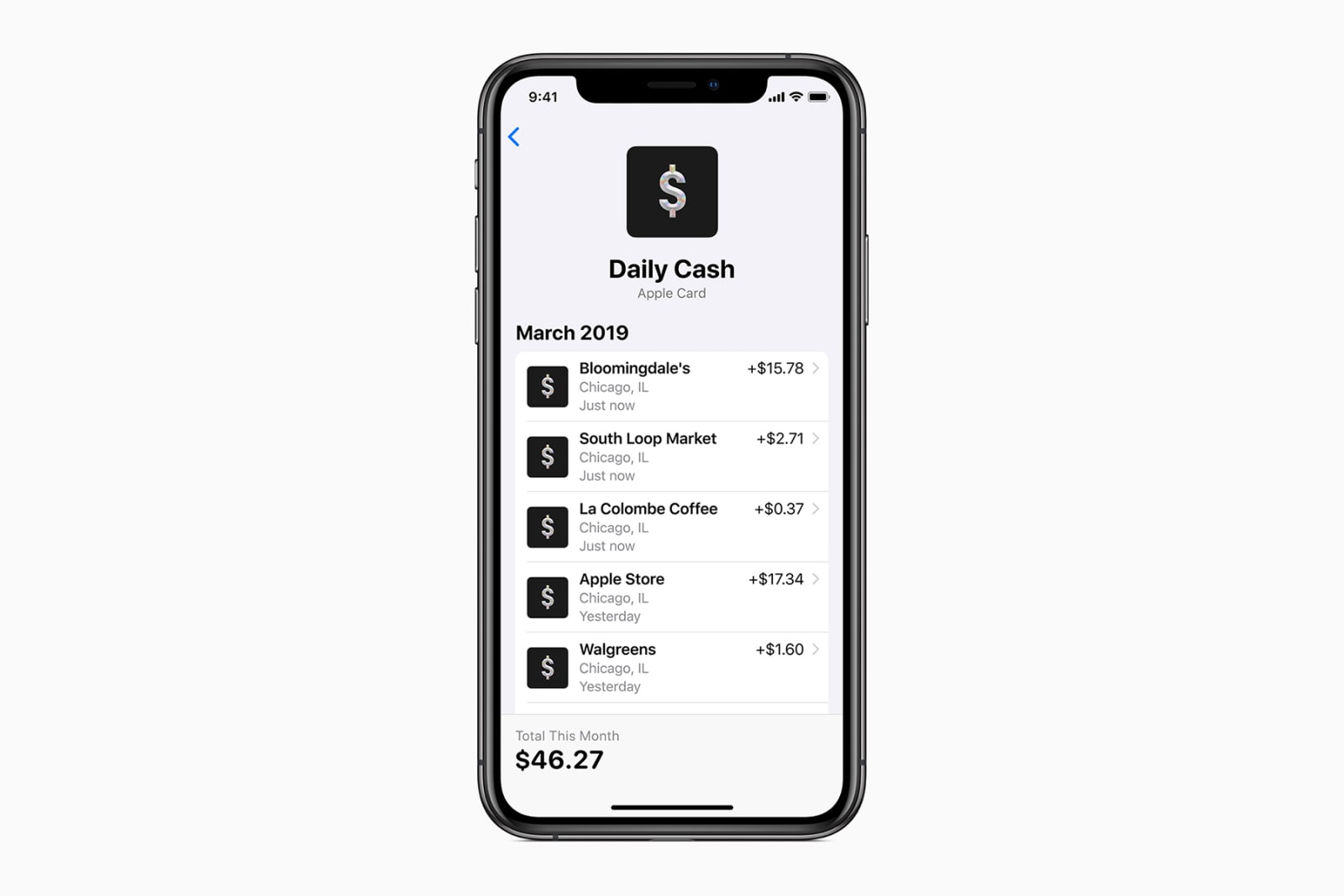
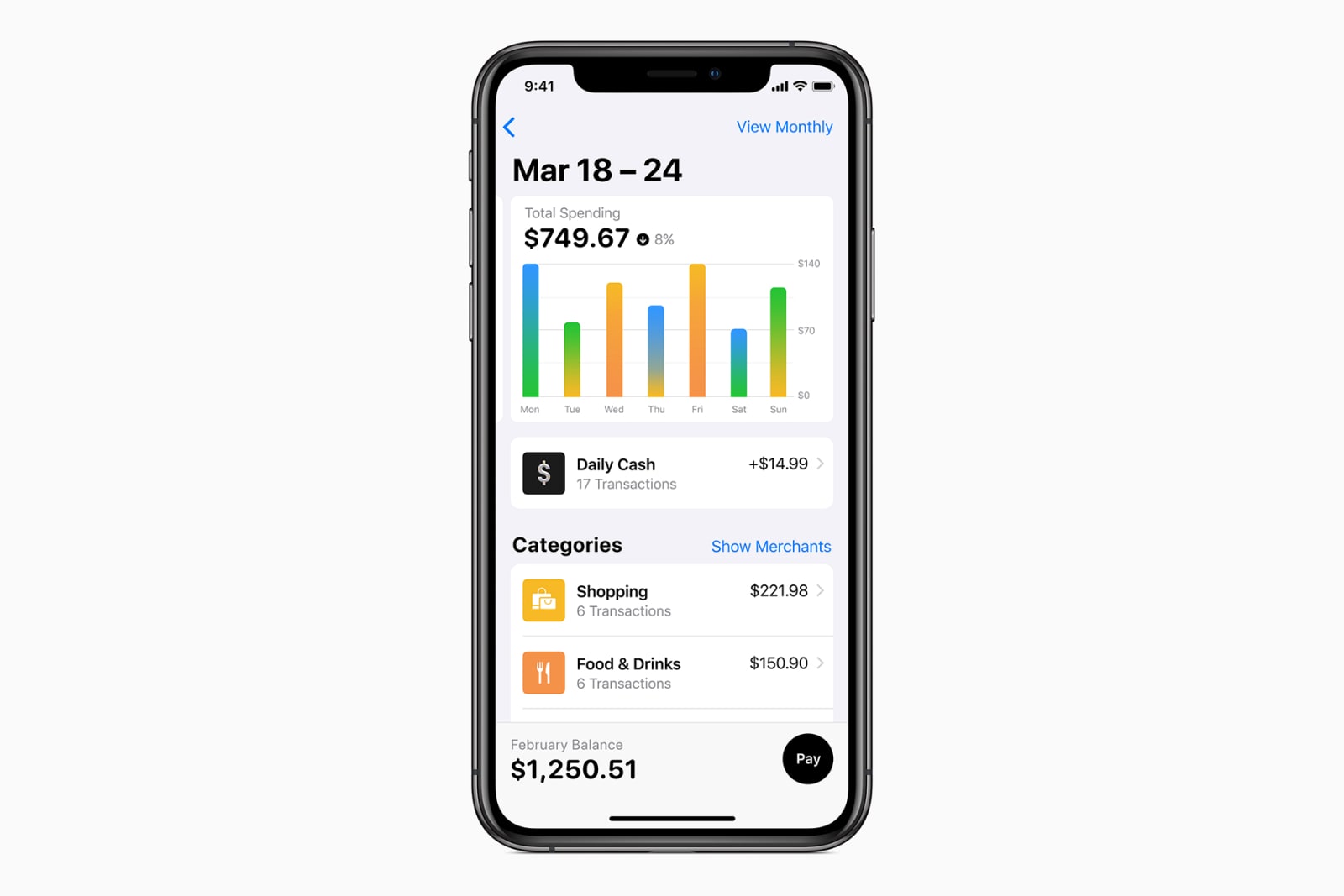
What is nice is about Apple’s Daily Cash program is that you can (basically) immediately use the money you get back. The rewards are collected on a cash card, and you can get this out via your bank account or use the dollars on things like apps, songs, movies and online shopping, or even pay your friends. The rewards hit the card daily, so you can accumulate money more quickly instead of having to wait weeks to spend what you’ve earned. There’s also no cap on how much Daily Cash you can accrue.

What happens when I lose that physical card or my iPhone?

Since the titanium card doesn’t show your credit card number, expiration date or signature, it makes it harder to steal your information. But because all it has is your name, anyone with your card could potentially take it and start spending. You’d have to be quick to lock your card when you realize it’s missing to avoid letting a thief rack up huge transactions. If you’ve only temporarily misplaced your card, you can unlock your account once you’ve retrieved it.

Compared with a traditional card, this is more convenient than calling your bank to get it canceled. But service providers like Capital One have already been making it easier to keep track of your card and suspend your account at will, so Apple isn’t breaking new ground here.

If you lose your iPhone, you’ll need to go to a computer and sign into your iCloud to find it. The good news is that Apple Pay transactions will still require your Face ID or fingerprint authorization, but payments with the physical card won’t. What’s also nice is that when your replacement phone arrives, all you have to do is sign into your Apple account, and your Card information automatically transfers over, too.

How will Apple help me lead a healthier financial life?

The most appealing thing about the Apple Card is its user-friendly dashboard. Apple said it will use on-device machine learning and GPS information to identify and categorize your transactions. It’ll also color-code your spending and use charts to show you where you drop the most money.

This isn’t new; there are plenty of services available to track your expenditures and make sense of your habits, Mint being the most well known. But at first glance, Apple’s interface appears to be easier to use and understand.

Having all this information in front of you might not change your behavior at all. As with Apple’s and Google’s digital well-being services that show you how much time you waste in certain apps, the goal is more about educating the user. It’s entirely up to you to limit how much money you spend drinking at bars, but at least you’ll have the data.

Apple Card spend

Another way Apple says it’s helping you make better financial decisions is by making your payments easier to understand. Since there are no late fees, finance experts are concerned that there’s nothing stopping people from taking forever to repay their debts. The only thing scaring you into paying on time is the fact that the longer you drag it out, the more you will owe.

The Apple Card dashboard should make this concept painfully clear. It’s supposed to show how small increases in your monthly payments can lower your overall interest owed via an interactive animated wheel. When you need help understanding how much you should pay, you can also text or call a support operator, which is pretty convenient.

One thing remains unclear, though. Since Apple hasn’t set a limit on how long you can go without making any payments, you could theoretically get away with never clearing your debt.

What about the security and privacy of these transactions?

It should be pretty clear to anyone by now that all our credit card purchases are being used to target ads to us. But Apple and Goldman Sachs said they won’t sell your information for advertising or marketing purposes. (Though that doesn’t mean they won’t use your data themselves or for other purposes.)

As for the security of the payments, the Apple Card uses technology similar to that of other mobile wallets like Apple Pay, Google Pay and Samsung Pay. Each transaction is tokenized, meaning the identifying number for your card is masked and changes every time you use it. Basically, the level of security here is similar to that of existing digital payment systems. The major difference is that since you won’t have a physical card to start with, Mastercard will have to send your phone the information remotely when you set up your account. It’s not yet clear if this introduces vulnerabilities that bad actors can exploit, but Mastercard has been powering credit cards for decades and likely has safeguards against such attacks.

Apple Card

Who, if anyone, should get the Apple Card?

For first-time credit card applicants or those heavily reliant on debit, the Apple Card might make sense. “Apple’s platform will give them an opportunity to get their feet wet in a familiar ecosystem, before they, hopefully, graduate to more rewarding products,” Honig said. It’s also a good way to get into the habit of paying more than the minimum each month.

The best thing about the Apple Card, though, is the spotlight it’s shining on the importance of financial literacy. Not only does the announcement drum up media interest around the topic, but it could also encourage users to educate themselves on things like student loans and mortgages.

Like every major financial decision you make, getting an Apple Card shouldn’t be taken lightly. Managing your credit requires a great deal of responsibility and some restraint. If you’re thinking about it as yet another credit line to use on things you won’t ever be able to pay off, don’t do it. Apple may not be offering much that existing credit card companies haven’t already, but its entrance into the space will at least create healthy competition that bodes well for consumers.

Two stocks To Watch For Long-Term Investors: American Express Company (AXP), WellCare Health Plans, Inc. (WCG)

American Express Company (NYSE: AXP) experienced a high price of $110 with a low value of $108.33 at the end of the last trading session, which followed after a loss of -0.47% and settled at $108.98 during the course of the last 24 hours for the day. Respectfully, the company now has 856.83M shares after the latest changes, so the present market capitalization sits at $93.38B. The trading volume of American Express Company shares went over 3,329,446 in a single day during the last trading session in comparison to the average volume of AXP, usually circulating around 3.56M.

During the course of the last year, the stock has touched a high of $114.55 and a low of $89.05, which as a result has the increased attention of top market experts who are tracking the progress of the asset as it is getting closer to a notable historic high price or low value.

Looking at the latest analyst forecasts, the current earnings-per-share (EPS) consensus estimate is sitting at $8.97 per share. In the preceding year, the company reportedly generated EPS of $7.32 per share of its common stock. The profitability indicators are showing that this organization has an operating margin of 19.50%, a profit margin of 16.30%, and a gross margin of 69.30%.

If we were to do a comparison between the current price and its previous movement in the market, we can easily conclude that the price went to a negative change, going down by -1.79 in the past five trading days, which resulted in a percentage change of -1.62% and a moving average of 109.76. In the past 20 days, its price changed by +1.56, which means that the stock’s moving average was 110.15. Looking back at a cycle of the last 50 days, shares of AXP changed by $+10.54 (which is +10.71%) and demonstrated a moving average of 106.28. Meanwhile, this stock’s MACD Oscillator was -1.86 over the past 9 days, and -1.67 over the past two weeks, also marking -0.98 in the period of the last 20 days.

WellCare Health Plans, Inc. (NYSE:WCG)’s shares demonstrated a change of 12.34% during the most recent trading session, ending the trading day at the price of $259.81 with a 24-hour trading volume that reached 11,377,221 – compared to its average trading volume of as 647.43K, as recorded over the past three months. With that closing price, the market capitalization of this company is now sitting at $13.43B. The moving average for last 20 days of WellCare Health Plans, Inc. is at 6.28%, while the average went down by -0.48% during the last 50 days with -3.00% recorded during the last 200 days. Additionally, this stock’s distance from its 52-week high price is currently down by -20.06%, while it’s sitting 37.96% away from its 52-week low price.

When you are considering investing in stocks, it is wise to consider counting in Wall Street analysts’ target prices, which should help you place a more profitable investment. The price targets can provide you with an idea of the predicted movement of stocks you are interested in. At the moment, the price target set for WellCare Health Plans, Inc. is $326.88. It’s also helpful to look at the average analyst recommendation score – which is provided on a scale of 1 to 5 where 1 is “strong buy”, 2 is “buy”, 3 is “hold”, 4 is “sell” and 5 is a “strong sell”. Right now, the average analyst recommendation for WCG stands at 1.80 , which indicates that analysts recommend investors to Strong Buy their shares of WCG until the stock approaches its target price.

Traders use the ATR to analyze potential exit and entry points, as it represents a useful tool in almost any trading strategy. ATR for this stock is sitting at 9.49. Beta tells us about a stock’s volatility, also known as its systematic risk, compared to the market overall. The current beta value for WCG is 1.20, while for the past seven days, this stock’s volatility was 4.08%, also recording 3.70% for the past 30-day period.

Professionals on Wall Street also frequently check the Relative Strength Index (RSI) of a potential investment, which tells us the speed and change of a stock’s price movement in the market. RSI is expressed on a scale of 0 to 100. If the indicators are set higher above 70, then the RSI factors are indicating that the stocks are overbought. The factors will indicate that a stock is oversold if the result is set below 30. Right now, WellCare Health Plans, Inc. (WCG) has an RSI of 55.19 – indicating that the asset is being neither overbought nor oversold.