Archives for March 15, 2019

Airlines swamped with calls

Canada’s largest airline was overwhelmed with calls as travellers scrambled to rebook flights after Ottawa joined dozens of countries in grounding the Boeing 737 Max 8 aircraft yesterday.

Calls to Air Canada’s customer service line Wednesday and today prompted a recording that said call volume has temporarily exceeded the company’s capacity to answer or even place callers on hold.

The message cites “unforeseen circumstances,” and directs callers to Air Canada’s website.

Kimberly Yetman Dawson, visiting family in Ontario, says she booked a second return flight to Halifax this Saturday at double the cost due to confusion over whether her original trip — scheduled initially on a Max 8 — would go ahead.

Maninder Singh, the owner of InterSky travel agency in Montreal, says the Max 8 ban will cost him cash as he refunds money to passengers whose flights have been cancelled.

Transport Minister Marc Garneau said the decision to ground the planes was a precautionary move made after a review of the available evidence in the wake of the Ethiopian Airlines disaster that killed all 157 people on board, including 18 Canadians.
Another costly federal IT glitch gets resolved — 10 years later

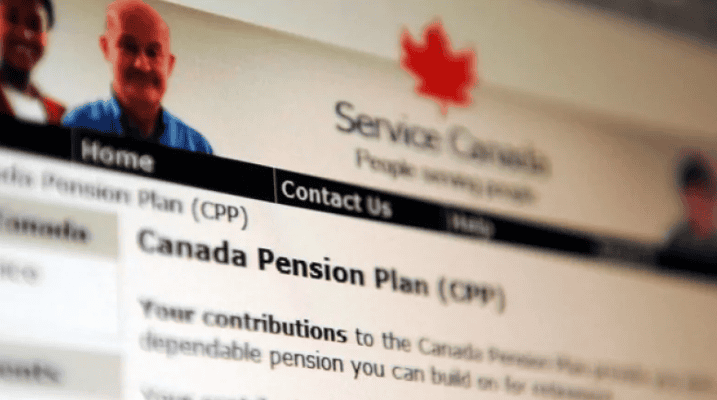
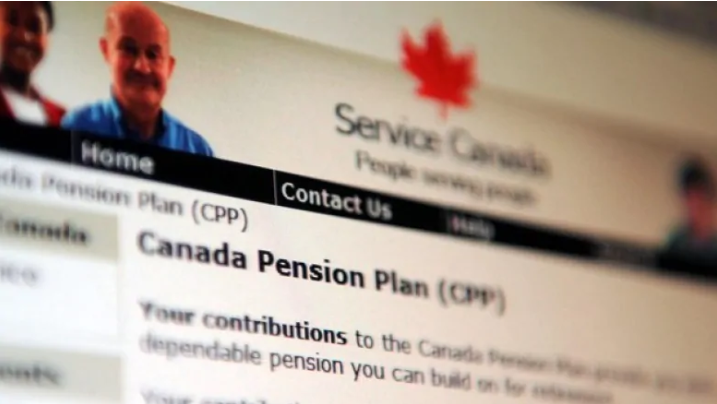
The federal government has finally fixed a 10-year-old computer glitch and is again chasing down people who owe $66 million in Canada Pension Plan overpayments.

About $66 million in CPP debt owed to Ottawa has gone uncollected because of a technical bug

A computer glitch dating back to 2009 has been fixed at last, allowing the federal government to resume chasing down thousands of Canadians who owe the Canada Pension Plan (CPP) about $66 million due to erroneous overpayments.

Employment and Social Development Canada (ESDC) reinstated the collection of these old debts last November, going after 15,000 individuals or their estates after almost a decade of inaction.

“[T]he collection of debts on inactive accounts receivable stopped due to systems-related issues following the implementation of a new IT platform in 2009, which prevented an accurate determination of amounts owing,” says an Oct. 4 memo for Families, Children and Social Development Minister Jean-Yves Duclos.

Children and Social Development Minister Jean-Yves Duclos.

“ESDC has resolved these issues and will reinstate the collection of debts …”

A parallel technical glitch is also preventing the collection of Old Age Security (OAS) overpayments on inactive accounts, something which the department is still working to resolve.

Dormant debt debacle

CBC News obtained the memo and other information about the dormant debt problem through the Access to Information Act.

ESDC currently claws back CPP and OAS overpayments for individuals who are still receiving their monthly benefits. In 2016, for example, the department recovered about $134 million of the $233 million in outstanding overpayments.

But since 2005, the department has left to the Canada Revenue Agency (CRA) the job of collecting overpayments that were made to people who are no longer receiving any benefit cheques — the so-called “inactive” accounts.

Once all of the system issues have been resolved, collection will begin …

– ESDC spokesperson, on plans to resume collections of Old Age Security overpayments after technical glitches prevented any activity

Some of these people improperly received CPP disability benefits or children’s benefits under the program — and some estates continued to cash cheques even after the intended recipients had died.

After 2009, the CRA was unable to collect anything — and could no longer accurately calculate the amounts owed — because the department had migrated its CPP system to a new IT platform.

Most of the 15,000 people who still owe the government CPP money received a notice in the mail over the last two years about their debt, but there’s been no active collection — until now.

ESDC estimates that 95 per cent of the individuals owe less than $25,000 each, and most owe less than $5,000.

Magali Picard, National Executive Vice-President of the Public Service Alliance of Canada, leads a protest on the three-year anniversary of the launch of the Phoenix pay system on Laurier Avenue in Ottawa on Thursday, Feb. 28, 2019.

The department says it has an “undue hardship” policy to deal with people in financial difficulty, and can arrange to spread out payments over a longer term.

The newly resumed collections, which are being phased in, will ensure “equity” with other Canadians who paid back government benefits they weren’t supposed to get, says the memo.

A spokesperson for the department, Josh Bueckert, said the first wave of fresh collection notices has reached 1,730 people since November, and 266 of those notices resulted in repayments worth just over half a million dollars.

No date provided

Bueckert did not offer a date for the resumption of debt collection for OAS overpayments in inactive accounts.

“Once all of the system issues have been resolved, collection will begin in a similar way [to how] CPP inactive accounts are being collected,” he said in an email.

The long-unresolved IT glitch is one of many that have dogged the federal government for years. The Phoenix payroll system fiasco, which started in 2016, continues to leave thousands of public servants overpaid, underpaid or not paid at all.

CBC News recently reported on internal government documents indicating it may take a decade to achieve “overall stability” for the Phoenix system.

Transat reports losses

An Air Transat sign is seen in Montreal.

Transat A.T. Inc. reported a loss of $49.6 million in its latest quarter compared with a loss of $3.2 million a year earlier as it was hurt by rising costs.

The travel company says the loss amounted to $1.32 per diluted share for the quarter ended Jan. 31 compared with a loss of nine cents per share a year ago when its results benefited from the sale of its Jonview subsidiary.

Revenue in what was the company’s first quarter totalled $647.6 million, down from $648.4 million.

The company says it was hurt by a rise in operating costs due to the weakening of the loonie against the U.S. dollar, higher fuel prices and additional costs related to the transition and optimization of its fleet.

On an adjusted basis, Transat says it lost $36 million or 96 cents per share in its most recent quarter compared with an adjusted loss of $32.2 million or 87 cents per share a year earlier.

Analysts on average had expected a loss of 78 cents per share and revenue of 760.7 million, according to Thomson Reuters Eikon.

Household debt growing

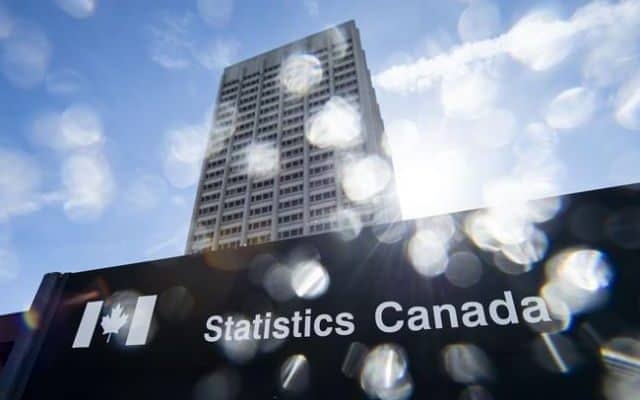
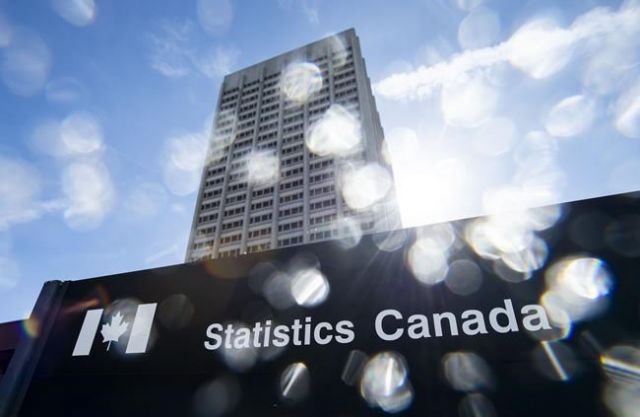
Statistics Canada’s offices at Tunny’s Pasture in Ottawa are shown on March 8, 2019.

The amount Canadians owe relative to their income ticked higher in the fourth quarter of last year as the growth in debt slightly outpaced income growth, Statistics Canada said Thursday.

The agency reported that seasonally adjusted household credit market debt, as a proportion of disposable income, increased to 178.5 per cent in the fourth quarter. That compared with a revised reading of 178.3 per cent in the third quarter.

That means there was roughly $1.79 in credit market debt for every dollar of household disposable income in the fourth quarter.

Josh Nye, senior economist at Royal Bank, said the figures highlight the challenge consumers face.

“It will take a long period of household incomes outpacing credit growth to deliver meaningful improvement in the debt-to-income ratio,” Nye wrote in a report.

“We’re not seeing that yet.”

Nye noted the debt service ratio increased for a fifth consecutive quarter and matched a record-high.

The household debt service ratio, the total obligated payments of principal and interest on credit market debt as a proportion of household disposable income, increased to 14.9 per cent in the quarter compared with revised reading of 14.7 per cent in the third quarter.

“While we expect the BoC won’t be raising rates again until later this year, the DSR is still likely to edge higher in the coming quarters as homeowners renew fixed rate loans at higher interest rate,” Nye wrote.

Helping fuel the rise in the two key debt ratios was a increase in borrowing in the fourth quarter.

On a seasonally adjusted basis, Statistics Canada said households borrowed $21.2 billion in the fourth quarter as mortgage loan demand rose $2.3 billion to $12.3 billion.

However, despite the increase in the fourth quarter, on an annual basis, household credit market borrowing fell 19.5 per cent to $84.6 billion in 2018, the lowest level of borrowing since 2014.

Credit market debt, which includes consumer credit and mortgage and non-mortgage loans, totalled nearly $2.21 trillion in the fourth quarter.

Mortgage debt reached nearly $1.44 trillion, while consumer credit and non-mortgage loans combined to total $769.4 billion.