Archives for January 6, 2019

Apple took out a CES ad to troll its competitors over privacy

Apple never attends CES, but it’s here in spirit.

Historically, Apple hasn’t had an official presence at CES. It’s not surprising given the company’s success at hosting and hyping its own product launch events — long before the iPod and iPhone brought Apple to the top of the technology mountain, Steve Jobs keynotes were can’t miss events. The company is also very deliberate about its marketing campaigns; when I see Apple billboard ads, they focus on new product close-ups with minimal messaging.

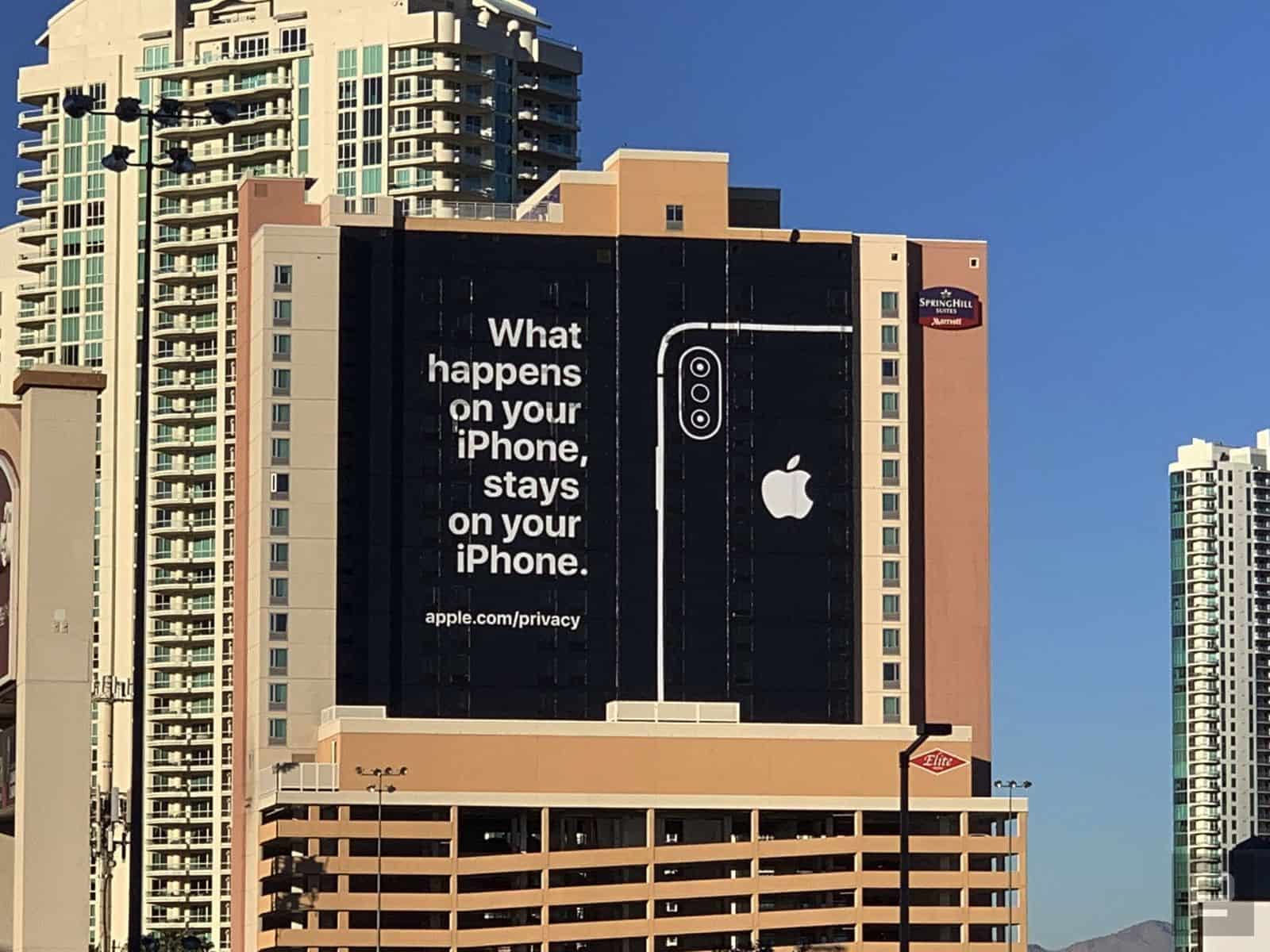
This is why the giant ad banner I saw when I arrived in Las Vegas yesterday for CES 2019 caught my eye. Positioned not far from the convention center where CES takes place, the sign is a cheeky riff on the old “what happens in Vegas stays in Vegas” slogan — and with just a few words, it casts an Apple-shaped shadow over the convention.

Apple’s focus on privacy is nothing new — the company has long said that it doesn’t make money from its users’ personal information, but from selling people hardware and software. That privacy priority came into clear focus three years ago when Apple refused to assist the FBI in unlocking an iPhone that belonged to a suspected terrorist in San Bernardino, CA. And throughout 2018, new security scandals seemingly emerged every week (with Facebook almost always leading the way) and the government took a major interest in what technology giants like Google are doing with our personal data.

In a world where privacy is on everyone’s mind, Apple is saying to the technology industry that it stands alone. “Do whatever you want in the city of sin,” the billboard barks, “we’ll never know.”

The ad’s placement takes on extra irony when you notice that Google’s CES presence is even bigger than it was last year — the company once again wrapped the Las Vegas monorail with “Hey Google” ads and once again it is building a huge playhouse in the convention center parking lot. For the second year in a row, Google will be unavoidable at CES even though it probably isn’t launching any new products of its own. But this year, Apple will literally be reminding everyone of 2018’s privacy scandals, asking CES visitors how comfortable they are saying “hey Google” to a growing raft of products.

It doesn’t hurt that this helps Apple change the conversation a little bit from the tough week it just had, either. Yes, iPhone sales are slowing down — but if you want a Vegas-proof smartphone, Apple is ready to sell you one.

Ultimately, this is just one ad (I haven’t seen it elsewhere in Las Vegas yet) that just builds on a message Apple has been crafting for years. But the company is nothing if not deliberate with its messaging. This probably isn’t the start of a large-scale, national ad campaign — but touting its focus on privacy for all the tech industry to see makes a statement that goes way beyond a single billboard.

We’ve reached out to see if Apple has any comment on its advertising here at CES and will update this post if we hear anything.
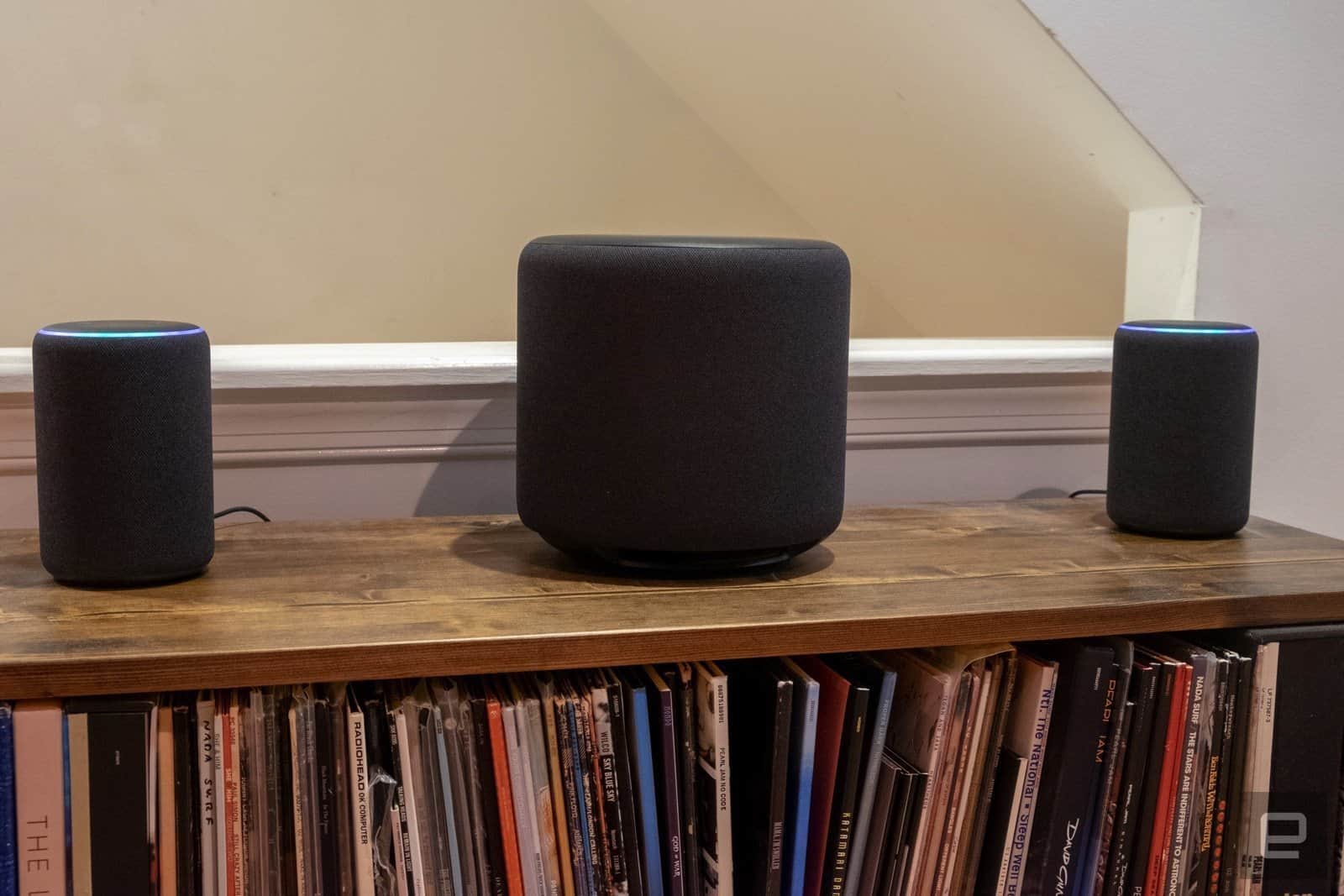
Amazon reports over 100 million Alexa devices sold

It’s a big figure, but it doesn’t tell the whole story.

Amazon is notoriously reluctant to share how well Alexa is doing in the marketplace — at best, you get vague boasts about its devices being the “most gifted.” Now, however, it’s providing more meaningful figures. The company’s Dave Limp told The Verge in an interview that over 100 million Alexa-equipped devices have sold to date. It wouldn’t say how many of those are its own devices or break products down by category, but the data suggests plenty of people have Alexa-capable devices in their homes.

The company is sold out of Echo Dots through January, Limp added.

The stats don’t provide a full picture of Alexa’s reach. It’s not clear how many of these devices exist in a given household, or how many people actually use the AI helper. Just because you bought an Alexa washing machine doesn’t mean you’re barking commands at it — you might not even know that Amazon’s assistant is an option. When there are over 28,000 Alexa-capable smart home devices as of this writing, there’s a good possibility that some of them will go underused.

Then there’s the question of the competition. It’s harder to measure a rival like Google Assistant, since many Android phones ship with Assistant available but aren’t built with it mind like smart speakers or other connected home devices. Unless Google offers its own data, it’ll be difficult to know whether Alexa is dominant or facing a stiff challenge.

Airports seeing rise in TSA screeners calling off work

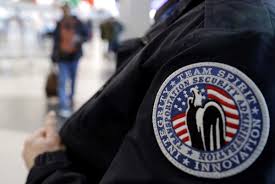
The Transportation Security Administration (TSA) acknowledged an increase in the number of its employees calling off work during the partial government shutdown. Employees at the agency are expected to work without pay during the shutdown because their jobs are considered essential.

The TSA said in a statement Friday that call outs that began over the holiday period have increased. The agency did not say how many of its employees have called out, but it said the call outs have had “minimal impact given that there are 51,739 employees supporting the screening process.”

The statement said wait times “may be affected” but so far “remain well within TSA standards.”

“TSA is closely monitoring the situation,” the statement said. “Security effectiveness will not be compromised.”

The Department of Homeland Security (DHS) and President Trump pushed back Saturday on suggestions that the absences represented a “sickout” that was having significant consequences on U.S. air travel. White House officials and congressional aides were in talks Saturday to end the shutdown, which entered its 15th day. Negotiations are at an impasse over Mr. Trump’s demands for $5.6 billion to fund a wall at the U.S.-Mexico border.

TSA spokesman Michael Bilello tweeted that 5.5 percent of the TSA workforce at Dallas/Fort Worth International Airport called out Friday, compared with 3.5 percent on a normal day. He said wait times “may be affected” but that all passengers would be screened as normal.

Hydrick Thomas, president of the national TSA employee union, told CNN that up to 170 TSA employees at New York’s John F. Kennedy Airport have called out each day this week. Airport officials said there no screening delays at JFK, Chicago’s O’Hare and Midway airports, or Miami International Airport.

“This will definitely affect the flying public who we (are) sworn to protect,” Thomas told CNN.

Union officials did not return requests for comment.

Weekend shutdown talks led by Pence to go into a second day

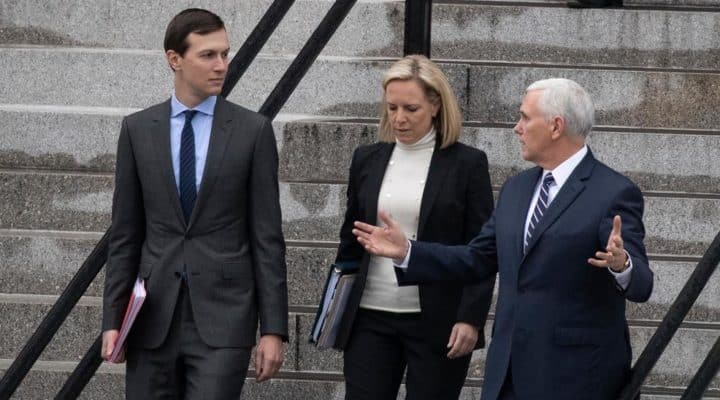
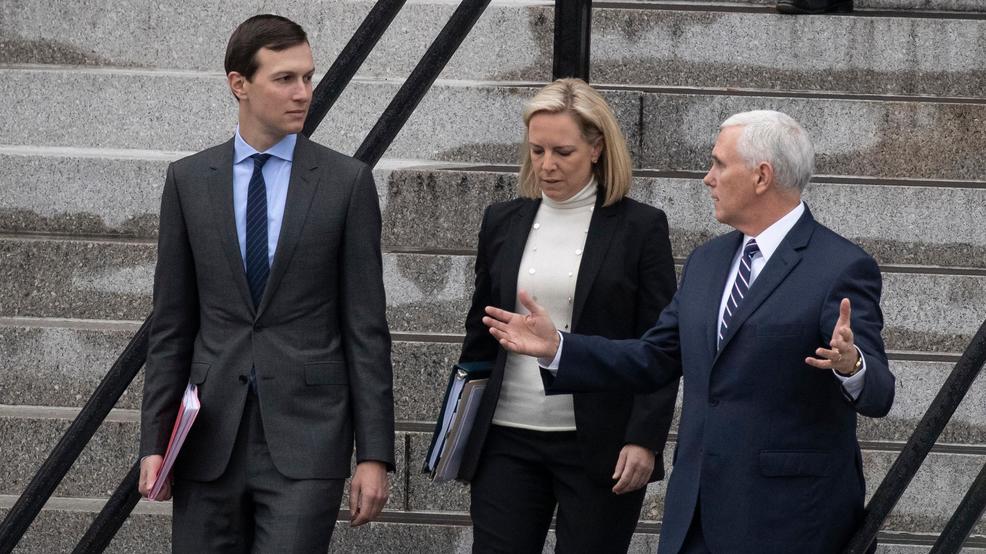
White House officials and congressional aides kicked off weekend talks Saturday aimed at ending a partial government shutdown that has dragged into a 15th day. Vice President Mike Pence, who led the conversation, described Saturday’s session as “productive” on Twitter, although no breakthrough was reached.

“Productive discussion w/ Congressional leadership staff at @WhiteHouse. @SecNielsen gave a full presentation on crisis along Southern Border. We reaffirmed @POTUS’ commitment to secure the border, build the wall, keep Americans safe & reopen gov’t. Discussions continue tomorrow,” Pence tweeted.

However, President Trump tweeted on Saturday that after being briefed by Pence on the meeting, he concluded that there was “not much headway made today.” The White House aides and Democratic and Republican staffers planned to return to the talks on Sunday.

Mr. Trump and congressional Democrats have been at an impasse over demands for $5.6 billion to fund a wall at the U.S.-Mexico border.

A White House official said Saturday’s meeting included a briefing on border security by Homeland Security Secretary Kirstjen Nielsen. Democrats restated their request to reopen government while border security talks continue, which the White House rejected. Democrats also sought written details on Department of Homeland Security needs, and specifically on the budgetary breakdown of the requested $5.6 billion, which the White House said it would provide.

Mr. Trump, who did not attend the discussions, spent the morning tweeting about border security.

Showing little empathy for the hundreds of thousands of federal workers furloughed or working without pay, Mr. Trump declared — without citing evidence — that most are Democrats. He also asserted: “I want to stop the Shutdown as soon as we are in agreement on Strong Border Security! I am in the White House ready to go, where are the Dems?”

One Democrat, Maryland Sen. Chris Van Hollen, said in his party’s weekly radio address that the shutdown “is part of a larger pattern of a president who puts his personal whims and his effort to score political points before the needs of the American people. … He is pointing fingers at everyone but himself.”

Mr. Trump and Democratic leaders met for roughly two hours Friday, but gave differing accounts of the session. Democrats reported little progress; Trump framed the weekend talks as a key step forward.

According to a source familiar with the Friday meeting, Mr. Trump initiated the talks – held for the second time this week in the White House Situation Room – by lambasting the shutdown impasse and again demanding $5.6 billion for border security, which he declared to be the minimum figure he needed to build the southern border wall he has been promising since his presidential campaign.

But Democratic leaders, House Speaker Nancy Pelosi and Senate Minority Leader Chuck Schumer, again refused to consider that number. The president then told them he was willing to continue to the shutdown “for months or even years” unless the Democrats agreed to what he says is crucial funding for the southern border.

“I did say that. Absolutely, I said that,” Mr, Trump later confirmed at a press conference, when CBS News’ Major Garrett asked him if he had in fact told them that he’d keep the government shut for “years.”

Mr. Trump also tried unsuccessfully to appeal to Pelosi’s Roman Catholic faith in arguing for wall funding.

“The Vatican has walls. The Vatican has walls surrounding the city,” Mr. Trump said, according to the source. “You like the Vatican, Nancy?”

“Let’s change the subject, sir,” Pelosi replied.

It was not the first time the president has brought up the Vatican walls as a comparison in their discussions, administration sources said. The president mentioned the Vatican during their meeting earlier in the week, too.

A source familiar with the exchange said the president respects Pelosi and was just kidding with her to make a point. But she seemed to take the comment “not well.”

As the shutdown drags on, some Republicans are growing increasingly nervous. Some GOP senators up for re-election in 2020, including Cory Gardner of Colorado and Susan Collins of Maine, have voiced discomfort with the shutdown in recent days. Sen. Thom Tillis of North Carolina penned an op-ed for The Hill, arguing that Congress should end the shutdown and make a deal on border security and immigration reforms.

In calling on Mr. Trump to reopen government while negotiations on border security continue, Democrats have emphasized families unable to pay bills due to absent paychecks. But Mr. Trump has repeatedly said he will not budge without money for the wall.

Mr. Trump asserted on Friday that he could declare a national emergency to build the wall without congressional approval, but would first try a “negotiated process.” Mr. Trump previously described the situation at the border as a “national emergency” before he sent active-duty troops; critics described that as a pre-election stunt.

“I can do it if I want,” Mr. Trump told reporters Friday about declaring a national emergency. “I may do it.”

If Mr. Trump called a national emergency, he would have the unilateral authority to build the wall. Although he has repeatedly claimed that Mexico would pay for the wall to be built, the money would come from American taxpayers if wall funding is approved by Congress or if it is used in a national emergency.

A national emergency is one of the conditions under which Pentagon funds could be used to build the wall. It’s unclear how much of the Pentagon budget could be used for a national emergency. One option would be to have the Army Corps of Engineers build it. Despite its name, the Corps is made up almost entirely of civilians who administer construction contracts, so troops wouldn’t actually be building the wall.

Mr. Trump said the federal workers who are furloughed or working without pay would want him to “keep going” and fight for border security. Asked how people would manage without a financial safety net, he said: “The safety net is going to be having a strong border because we’re going to be safe.”

Federal agencies directed to hold off raises for top officials during shutdown

Federal agencies have been directed to hold off enacting pay raises for top administration officials that were reportedly set to go into effect on Saturday as 800,000 federal workers remained furloughed or were working without pay.

Departments were told in a memo issued Friday from the acting director of the Office of Personnel Management to hold off on enacting the raises during the partial government shutdown.

The raises — an additional $10,000 a year — were set to go into effect because a pay freeze for top federal officials, including Vice President Mike Pence and cabinet secretaries, was reportedly due to expire Saturday, January 5. The 115th Congress had included an extension of the pay freeze in bills funding the government, but those bills failed to pass before that Congress expired and the 116th Congress was seated, according to The New York Times.

The scheduled raises appeared to be an unintended consequence of the government shutdown, The Associated Press reported.

The latest guidance on the pay raises was issued Friday in a memo from Margaret Weichert, the acting director of the Office of Personnel Management (OPM).

“In the current absence of Congressional guidance,” OPM “believes it would be prudent for agencies to continue to pay these senior political officials at the frozen rate until appropriations legislation is enacted that would clarify the status of the freeze,” Weichert wrote in the memo.

Earlier Friday, White House Press Secretary Sarah Sanders called the raises “another unnecessary byproduct of the shutdown” and put the onus on Congress, saying it “can easily take care of this by funding the government and securing our borders.” She had said the administration was “exploring options to prevent this from being implemented while some federal workers are furloughed.”

Mr. Trump also told reporters at a press conference Friday that he “might consider” asking cabinet secretaries and other top officials to forgo the raises after he was asked about them. Pence committed to doing so.

Mr. Trump and congressional leaders met on Friday to try to hash out a resolution to the ongoing government shutdown, but came no closer to a deal. Mr. Trump is demanding billions of dollars for his long-promised wall along the southern border, and Democrats are refusing to give him the money. White House and congressional staffers are set to meet again Saturday to continue negotiations.

Tesla Urges Tariff Exemption for Chinese-Made Car Computer ‘Brain’

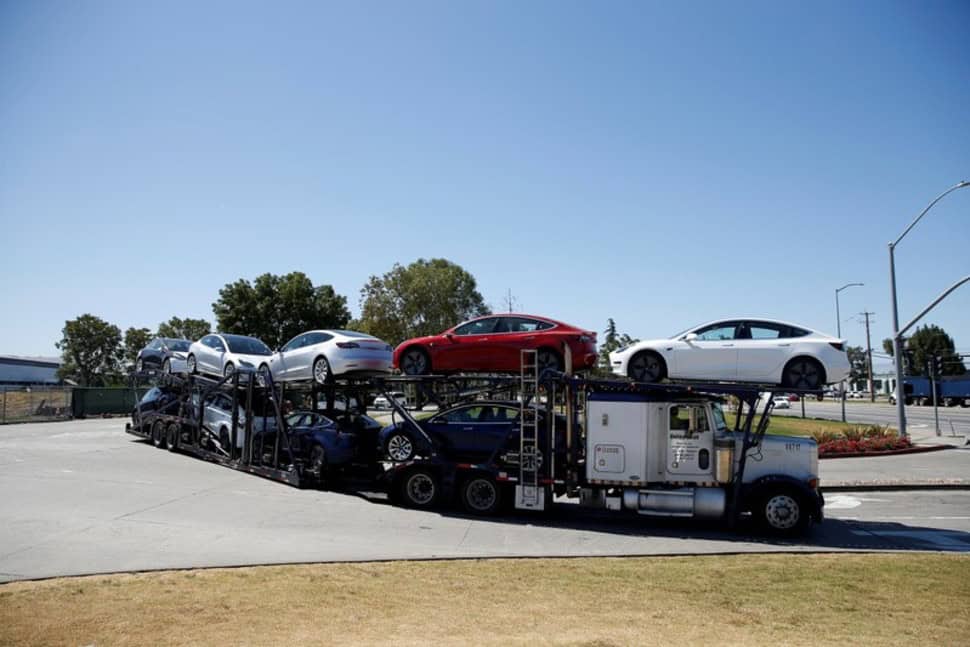
FILE PHOTO: A car carrier trailer carries Tesla Model 3 electric sedans, is seen outside the Tesla factory in Fremont, California, U.S. June 22, 2018.

WASHINGTON- Tesla Inc has asked the Trump administration to exempt the Chinese-made car computer “brain” of its new Model 3 sedan from 25 percent tariffs imposed in August, saying they threaten the electric carmaker’s bottom line.

“Increased tariffs on this particular part cause economic harm to Tesla, through the increase of costs and impact to profitability,” the company said in a previously unreported request for tariff relief from the government.

Led by tech billionaire Elon Musk, Tesla is among a host of companies, including No. 1 U.S. automaker General Motors Co, to warn of growing costs related to the tariff war between the world’s two largest economies.

The Chinese-made computer, used by Tesla in the car assembled in Fremont, California, was among $16 billion in imports that were hit with 25 percent tariffs by the United States Trade Representative’s Office in 2018.

In a redacted request posted on a government website by the USTR on Dec. 17, Tesla did not identify the supplier of the computer. But it said it had been unable to find another manufacturer “with the required specifications, at the volume requested and under the timelines necessary for Tesla’s continued growth.”

Tesla, which called the Model 3’s computer “the brain of the vehicle,” added that “choosing any other supplier would have delayed the (Model 3) program by 18 months with clean room setup, line validation, and staff training.”

Using a new supplier “substantially increases the risk of poor part quality that could lead overall vehicle quality issues that would impact the safety of our vehicles and the consumer acceptance of the final product,” Tesla added in its request for tariff relief.

Tesla declined to comment on the tariff matter on Friday. But it has been aggressively cutting costs as it works to meet production goals for the Model 3, which has become a top-selling luxury sedan on the U.S. market alongside the larger Model S.

Other automakers have sought similar exemptions but have not yet received an answer.

GM in late July sought an exemption to a 25 percent U.S. tariff on its Chinese-made Buick Envision sport utility vehicle. The Envision accounted for nearly 15 percent of U.S. Buick sales last year, even as sales fell by 27 percent.

In October, GM also sought exclusions for about two dozen parts, including push button ignition switches and transmission bearings. Nissan Motor Co and Fiat Chrysler Automobiles NV have also filed exclusion requests for parts, while Uber Technologies Inc [UBER.UL] asked for an exclusion for electric bikes rented through the Uber app.

The Trump administration has imposed 25 percent tariffs on a total of $50 billion in annual Chinese exports and 10 percent tariffs on an additional $200 billion in Chinese exports. The tariffs were in response to what the Trump administration calls China’s unfair trade practices.