
Archives for January 6, 2019

Investing in These Stocks Now Could Make You a Millionaire Retiree

The past decade has been enormously rewarding for stock investors. Even after the recent drop, which still has stocks down almost 15% from the peak in early October, the S&P 500 has delivered an incredible 244% in total returns over the past 10 years. Here’s the thing: While it has been a great decade, it’s actually relatively normal for the stock market to deliver big gains over a 10-year period.

Simply put, stocks have proven, time and again, to be the best, most-accessible tool for the average person to build long-term wealth with.

Furthermore, the recent sell-off has created some excellent opportunities to buy top-notch stocks at big markdowns. This includes two leading financial growth stocks, Axos Financial Inc. (NYSE:AX)and Square Inc. (NYSE:SQ), as well as two top-notch infrastructure and energy stocks, NV5 Global Inc. (NASDAQ:NVEE) and TerraForm Power Inc. (NASDAQ:TERP).

All four trade for big discounts to their recent stock price peaks, with three down more than 30% at recent prices despite having excellent long-term prospects. Keep reading to learn why now is an excellent time to invest in these potential millionaire-making stocks.

Two big-growth financial stocks on sale

As of this writing, shares of both Axos Financial and Square are down more than 40% over the past six months. And while it’s arguable that both stocks may have gotten a bit overheated earlier this year, I think there’s also a solid argument that they’re oversold at this point, and represent excellent buys at current prices.

Let’s start with Axos Financial. Formerly known as BofI Holding, Axos has grown from being primarily a Southern California jumbo mortgage lender and online bank to a full-service commercial bank. Home loans are still its bread and butter (as is the case for most banks), but expansion of its other lending lines and services has pushed residential mortgages below 50% of its lending book. This diversification of its lending, as well as the growth of its other banking services, should continue to serve it well in terms of delivering continued growth.

Lastly, Axos is just dirt cheap. At recent prices it trades for 10.6 times trailing earnings per share, and 1.6 times book value. I’ve already called it my best growth stock idea for 2019, and it’s 10% cheaper today. With multiple decades of growth ahead, and one of the best CEOs in banking calling the shots, Axos is a “buy now” growth stock that should deliver years of market-smashing returns.

Square’s stock is also down more than 40%, but I’ll hesitate to call it a value stock because it has yet to generate a GAAP — generally accepted accounting principles — profit as a public company. But it has steadily proven it can generate positive operating cash flows — a decent proxy for sustainable operations, especially for a high-growth company like Square. Furthermore, those cash flows are growing at a very high rate, as is the rate it is cutting its losses and moving toward GAAP profitability.

While it’s not exactly a value, the price-to-potential ratio is very, very good. Few companies are growing anywhere close to as quickly as Square, and its business is so compelling, one of my colleagues named it his “one stock to buy” this year. To sum it up, Square is growing revenue over 50% per year and growing its cash flow at a strong clip, but its stock is down 40%. That’s a wealth-building opportunity if I’ve ever seen one.

Building the future

Between aging infrastructure and the growth rate of the world’s urban middle class, nearly $90 trillion will need to be spent on infrastructure modernization and expansion over the next few decades, and one small U.S. engineering and consulting company, NV5 Global, is already taking more market share from its bigger competitors.

With trailing revenue of less than $400 million, NV5 Global is a veritable drop in the infrastructure ocean, but it’s growing quickly through both acquisitions and organic expansion, taking a steadily bigger bite out of the global pie. Over the past year, NV5 has grown revenue by 19%, and earnings almost 25% per share.

And that pie is enormous, giving the company a potentially very bright future as high-growth countries add more infrastructure to support their burgeoning middle-class populations and rapidly expanding economies. Furthermore, slower-growth economies like the U.S. are faced with aging infrastructure that must improve to maintain quality of life for its citizens and to remain relevant and competitive for business and industry.

After the big sell-off, NV5 shares trade for less than 22 times trailing earnings and less than 16 times projected 2019 earnings. Compare that to the 19 times earnings the S&P 500 trades for at recent prices and you have a very fair price for a company that’s growing earnings at over double the rate of the market — and with the potential to keep it up for many years to come.

Powering the future

Many of the same macro things boosting infrastructure needs are a big tailwind for renewable energy. Aging coal and nuclear power plants will need to be retired and replaced in the decades ahead, and technological improvements point toward wind and solar replacing much of it. Furthermore, global middle-class growth means global power production will have to expand, and cheap wind and solar will be major sources of this growth.

TerraForm Power is well positioned to be a huge winner from this trend. TerraForm has transitioned from a top-heavy company that failed to deliver good returns to a far more efficient energy producer that’s turning more and more of its incoming revenues into profitable cash flows.

With a dividend yield of 6.8% at recent prices and a cash flow trajectory that makes that payout sustainable and likely to increase in coming years, it’s already a solid income investment. But the global demand for more energy — and the reality that wind and solar are becoming global low-cost sources — sets it up for potentially decades of growth ahead. Investors who buy TerraForm Power today and hold for the long term should be able to count on it as a key part of a millionaire-maker retirement portfolio.


How We’re Recovering From the Holidays

Though the holidays are a pretty spectacular time of the year, they can also be pretty stressful. From gift-giving obligations to social plans, it can be hard to avoid overspending and stick to a solid work schedule. The latter especially applies when you’re a freelancer who doesn’t get paid time off. As such, my colleagues and I are currently in what we’ll call recovery mode as we kick off the new year. Here’s what we’re doing to get back on track.

1. Preparing to work

Selena Maranjian: The holidays are over, and I didn’t get as much work done as I’d hoped. That’s not good for a contractor or freelancer, as we get paid by the piece, not on a salary. Still, it’s a new year, and like many people, I’m full of good intentions for a fresh start. One thing I’m doing is preparing to work — tying up loose ends and ridding myself of some distractions.

For example, I’ve got a long to-do list that often distracts me from concentrating on work. So I’ll aim to knock out as much of it as possible in order to minimize that nagging feeling that I should be doing something other than working. (On my list, as examples: setting up a new computer, looking into back-up systems, researching healthcare options for my mom, and so on.)

I’ll tidy up my work station, too, as a clean and uncluttered desk can make me feel better as I work. A Harvard study found that messy desks can hurt productivity, and other studies have reached similar conclusions. (A different study, though, found that many geniuses thrive with cluttered work stations.)

Finally, I’ll fill my calendar with dates that I need to remember and will set up folders for 2019 tax-related papers (receipts, records, trade confirmations, etc.). Once all my ducks are in a row, I’ll feel ready to hit the ground running.

2. Working extra

Daniel B. Kline: Over the holidays, I have the added challenge of having my 14-year-old son home from school while my wife still has to work. Florida’s students get over two weeks of winter vacation, and if I don’t want my son to spend that entire time playing video games, my work volume suffers.

To make up for that, I work extra whenever possible. That includes working seven-day weeks during his breaks. Since I almost never get to put in 8-9 hours at my desk while he’s out of school, I grab work hours on the weekends — sometimes before anyone else in the family has gotten up.

Once school vacation ends, I plan to keep up a seven-day schedule for a few weeks. That means I’ll work a normal day during the week and keep putting in 3- to 4-hour days on Saturday and Sunday.

I’ll keep that up as long as my schedule allows through January and maybe some of February. I won’t be militant — if an event comes up where it makes sense to take a day off, I will — but I’m pretty dedicated to getting back on track.

That’s the blessing and the curse of being self-employed. You get an enormous amount of freedom but also must have a lot of discipline. And that’s why I’ll be working extra once school vacation comes to an end.

3. Reducing my spending temporarily

Maurie Backman: The holidays were expensive for me this year, partly because I hosted several gatherings, and partly because I chose to be generous with certain key people I felt were worthy of being rewarded (like my kids’ teachers and babysitter, to name a few). The end of the holiday season also culminated in school being out of session for about a 10-day stretch, and so I spent some money keeping my children entertained.

All told, I spent way more than expected in December, and I also worked less than usual because of the aforementioned school break. And so I’m attempting to recover now by reducing my spending in the coming weeks.

Thankfully, I didn’t end up taking on debt during the holidays. But due to the amount I spent, I didn’t meet certain financial goals I’d set for myself, and so to compensate, I’m going to reduce my spending in January. Namely, I’m going to avoid all non-essential purchases (like clothing or electronics I don’t need right away) and cut back on restaurant meals, which are often a budget-buster for me. With any luck, these changes will get me back on course. At the same time, I’ll hopefully do a better job of planning for the holidays the next time around so that I’m not caught off-guard by how much they wind up costing me.

This Social Security Proposal Is Terrible, but a Growing Number of Americans Support It

There simply isn’t a social program in this country that has more importance to the financial well-being of our nation’s retired workforce than Social Security. Each month, more than 43 million retired workers receive a Social Security benefit check, and three out of five rely on their payout to account for at least half of their income. Without this financial foundation, an analysis from the Center for Budget and Policy Priorities estimates that the retired worker poverty rate would more than quadruple.

And yet, even with the program’s importance, Social Security faces an uncertain future.

A big benefit cut could be looming

According to the newest annual report from the Social Security Board of Trustees, released in June 2018, the program was set to hit an inflection point in 2018 (although we’ll need to wait until the 2019 report to find out if that actually happened). More specifically, Social Security was estimated to expend more than it collects in revenue for the first time since 1982, creating a nominal net cash outflow of $1.7 billion. I say nominal because the program has almost $2.9 trillion in its assets reserves.

However, these outflows are expected to grow in size in 2020 and each subsequent year. By 2034, the Trustees project that Social Security’s $2.9 trillion in asset reserves will be completely exhausted.

The silver lining for seniors is that Social Security doesn’t need any excess cash in its coffers to continue to make payouts. This means, barring Congress adjusting how Social Security is funded, there’s no chance of the program going bankrupt.

But it does clearly suggest that the current payout schedule isn’t sustainable. By 2034, an across-the-board benefit cut of up to 21% may be needed to sustain payouts through the year 2092. That would be devastating to the aforementioned majority of retired workers who depend on their benefit as their primary income source.

A new petition offers a radical solution

It’s no secret on Capitol Hill that Social Security is facing a challenging future, and lawmakers in Washington have proposed no shortage of fixes for the program. Unfortunately, the political divide between Democrats and Republicans is as wide as ever, meaning there’s little chance of the two sides compromising and coming to a middle-ground agreement.

In lieu of this stalemate, The Seniors Center, a Washington, D.C.-based nonprofit organization, has released a radical plan that calls for three substantive changes to the Social Security program. These changes would:

  1. Create a true trust account that would ensure all payroll contributions are deposited for the payment of Social Security retirement benefits.
  2. End the practice of allowing the federal government to borrow Social Security’s surplus to finance general expenditures.
  3. Legally require the U.S. Treasury to begin accelerated payments of funds taken from Social Security.

Essentially, this would transform the way the Social Security Administration invests the nearly $2.9 trillion in assets reserves — special-issue Treasury bonds are currently purchased with Social Security’s surplus cash — and provide improved clarity on payroll tax dollars from paycheck to Social Security payout.

The Seniors Center has begun a Trust Fund Emergency Petition, which aims to collect 1 million signatures, of which, according to a Dec. 6 press release, 373,000 Americans had already signed.

Despite growing support, this is a genuinely bad idea

Although I can appreciate grassroots movements and a new perspective on resolving the Social Security stalemate, the solution offered by The Seniors Center is a genuinely bad idea. Let’s break this down point by point.

To begin with, the creation of a “true” trust account is unnecessary given that every cent that works its way into the Social Security program is accounted for. Less than 1% of all revenue collected is used for administrative expenses, meaning over 99% of collected revenue via payroll taxes, the taxation of benefits, and interest income winds up in the hands of eligible beneficiaries, which is where it belongs.

Furthermore, even though Social Security’s annual expenditures are included in federal spending budgets, the program is its own separate entity. Funds collected via payroll tax, the taxation of benefits, and interest income, along with its nearly $2.9 trillion in asset reserves, are the only accessible funds that the Social Security Administration can use when disbursing payments. No “true” trust accounts need to be created, because they already exist.

As for the second point, ending the ability of Congress to borrow money from Social Security’s asset reserves, which is a legal requirement, might I add, would be very bad. In 2017, Social Security generated $85.1 billion in interest income as a result of this borrowing. Over the next decade, more than $800 billion in interest income is forecast to be collected. If this borrowing source were suddenly removed, Social Security’s problems would be further magnified, with a good likelihood that its asset reserve depletion date would be moved forward. In other words, it would just mean pain even sooner for retirees reliant on Social Security.

The third point, which calls for accelerated payouts of funds taken from Social Security, is also a poor idea. Aside from depriving the program of much-needed interest income, requiring the government to suddenly repay its legally required net surplus borrowing would mean issuing more debt. Already facing nearly $22 trillion in national debt, such a plan could balloon the national debt level and remove a readily available source of funding for general federal expenditures.

There’s no doubt that a fix is needed to support Social Security for future generations, but it would be best served if it were of the bipartisan variety and tackled some of the biggest problems with the program.

3 Reasons You Might Wind Up Hating Retirement

Many workers look forward to retirement and the chance to get a break from the daily grind. Unfortunately, the harsh realities of retirement tend to sneak up on seniors and cause them to wind up less than satisfied.

Case in point: An estimated 26% of seniors who have been retired for 10 years or more, along with 27% of recent retirees, say their lives are worse at present than they were during their working years, according to the Nationwide Retirement Institute. Here are three reasons why you might end up hating retirement — and what you can do about them.

1. You don’t have enough income to live comfortably

As a general rule, you can expect to need about 80% of your pre-retirement income to live comfortably as a senior. Now there’s some wiggle room with this formula, which means that if you’re willing to downsize your living space or relocate to a less expensive area of the country, you might manage to get by on more like 65% or 70% of your former earnings. But for the most part, you should plan on that 80% income replacement rate.

The good news is that Social Security will cover some of your bills as a senior — but it’ll be on you to come up with the rest. Therefore, take a look at your savings and see if they’re adequate before moving forward with retirement. If you end your career earning $80,000 a year and expect to collect $2,000 a month in Social Security, you’ll need another $3,333 a month to have a total annual retirement income of $64,000, which is 80% of $80,000. That amounts to about $40,000 a year from savings.

Now as a general rule, you can expect to withdraw about 4% of your nest egg’s value each year and not have to worry about running out of money in retirement. Therefore, if you think you’ll need $40,000 a year from savings, you’ll want to retire with about $1 million. Allow yourself to leave the workforce with considerably less, and you’ll risk struggling financially later in life.

2. You’re plagued by medical bills

Healthcare is a major burden for seniors, so much so that the typical 65-year-old man today who lives an average lifespan is expected to spend $189,687 on it throughout retirement, while the typical 65-year-old woman will spend $214,565. And if you enter retirement with known health issues, or problems develop once you stop working, it can make for an expensive — and stressful — existence.

Thankfully, there are steps you can take to lower your healthcare spending in retirement. First, be smart about Medicare. Original Medicare won’t cover many common expenses, like dental and vision care, so it might pay to sign up for a Medicare Advantage plan instead. Shopping around for the right drug plan will also help keep your costs down, so plan to evaluate your prescription needs on a yearly basis and choose plans that offer the best coverage. Keep in mind that Medicare Advantage will serve as your drug plan as well if you sign up for it.

Of course, it’s always a good idea to get ahead of health issues before they escalate to keep their associated costs down. And getting regular checkups is a good way to go about that. In fact, under Medicare, you’re entitled to a free wellness visit each year, so plan to use it — it’ll save you money and stress.

But most importantly, go into retirement with adequate savings. This way, if health issues do end up costing more than expected, you’ll have a well to tap.

3. You’re bored

There’s a reason retirement increases the likelihood of suffering from clinical depression by 40%: Having too much free time on your hands can easily lead to feelings of boredom and worthlessness. And if you don’t have enough savings to entertain yourself adequately, you could wind up miserable in a matter of months.

That’s why it’s crucial to think about how you’ll spend your days in retirement before pulling the trigger, and then make sure your savings are such that they’ll support the activities you have planned. For example, you might intend to take classes at a community college or work on improving your golf swing, but if you can’t afford the cost of tuition or a country club membership, you’ll need a less expensive backup plan (either that, or more savings).

If you know you’re coming into retirement with limited money to spend on leisure, be sure to come up with a list of options for free or low-cost entertainment before leaving your career behind. Outdoor activities like hiking and backpacking are generally free, and often, you can visit museums as a senior at a fraction of their normal entry fee. Either way, make sure you’ll really have enough to do with your time before moving forward with retirement, because you might find that it makes more sense to work an extra year or two, save up some additional money, and then retire at a point where you can do the things you want to do.

You deserve to enjoy retirement to the fullest. Save appropriately, plan for medical expenses, and figure out how you’ll spend your days, and with any luck, you’ll do just that.

The FTC’s antitrust trial against Qualcomm has begun

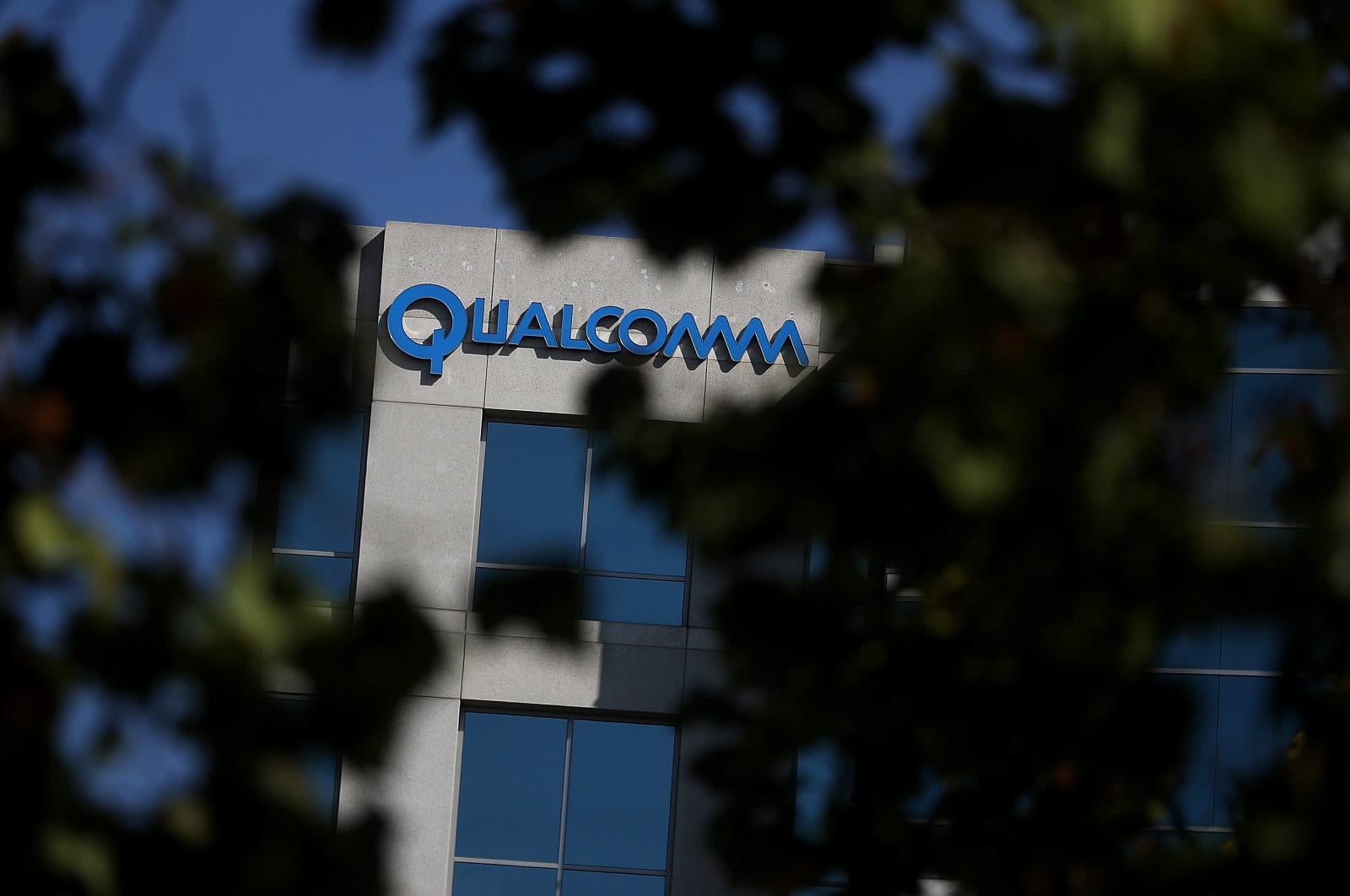
SAN JOSE, CA – NOVEMBER 01: A sign is posted at a Qualcomm office on November 1, 2017 in San Jose, California. As Apple and Qualcomm remain locked in a lengthy legal battle over patents and royalties held by Qualcomm, Apple is beginning to design prototypes of iPhones and iPads that will use Intel modems instead of Qualcomm modems. (Photo by Justin Sullivan/Getty Images)

The chip maker claims it’s not as dominant as regulators think.

After two years, the FTC’s antitrust lawsuit against Qualcomm has reached the courtroom in earnest. The two sides made their opening arguments in a San Jose court on January 4th as part of a 10-day, no-jury trial that could force Qualcomm to alter its wireless chipset practices and, potentially, affect the company’s legal battle with Apple. The initial salvos weren’t completely shocking, although Qualcomm suggested at one point that it wasn’t influential enough to warrant an antitrust case.

The FTC maintained its view that Qualcomm strongarmed phone makers into accepting its terms, and gave Apple financial incentives to squeeze out competing chipsets from companies like Intel. Qualcomm’s attorney Robert Van Nest, however, insisted that it was on fair terms and that the company was just involved in “hard bargaining” with heavyweight phone makers that had plenty of their own clout. The lawyer added that Qualcomm only provided a minority of wireless chips to some of the bigger companies. Huawei only uses Qualcomm modems in 22 percent of its phones, Van Nest said, while Samsung uses those modems in 38 percent of its devices.

Whether or not the court accepts Qualcomm’s defense isn’t clear. As Reuters noted, the FTC’s case revolves around high-end chips where Qualcomm has a much larger slice of the pie. Samsung’s minority use of Qualcomm parts might not matter that much if most of them are in higher-end devices like the Galaxy S line. And then there’s the other antitrust cases against the company. The EU, South Korea and Taiwan have all slapped Qualcomm with penalties or settlements over its allegedly anti-competitive behavior, and there’s no guarantee the US FTC will feel differently.

Elon Musk teases final look of SpaceX’s Starship test vehicle

It’s borrowing a page from the 1950s.

It’s no secret that SpaceX has been constructing its Starship test vehicle — it’s easy for curious onlookers to snap photos. But what will it look like when it’s finished? You don’t have to wonder. Elon Musk has posted concept artwork showing what the completed vehicle will look like. It’s surprisingly pretty for a prototype, if borrowing more than a few cues from 1950s sci-fi with its gleaming stainless steel body.

The test mule will be 30 feet across like the completed Starship, but it’ll be shorter and will unsurprisingly go without windows. It’s intended to fly suborbital ‘Grasshopper’ flights and prove that the basic formula is sound before moving on to orbital missions in 2020.

You might not have to wait long to see how well the concept lines up with reality. SpaceX currently expects to fly the test craft sometime in March or April, or about half a year earlier than first thought. While you’ll still have to be patient before you have a glimpse at the finished Starship, this is a good a sign as any that SpaceX’s plans are solidifying.

View image on Twitter