Archives for November 1, 2018

5 technologies agencies need for mission optimization

Car owners understand the importance of wheel alignment. Keeping tires in alignment helps them perform better, minimizes wear and tear, and spares drivers from unnecessary repair expenses.

The same applies to the federal government. Often, federal organizations fail to optimize productivity, enhance operational effectiveness and minimize costs. With the daily responsibilities of social, political and economic pressures on federal employees, it is difficult to collaborate and focus staff on the mission at hand.

With about 2.5 quintillion bytes of data created each day, government technology leaders have rightfully been focused on how to collect, aggregate, cleanse, analyze and make use of all that information. Then comes the question of data retention. It is a Herculean task, and one that vexes the private sector as well. Data quality, integration and analytical tools have exploded over the past few years. Emerging technologies can alleviate some of these issues.

As agencies begin wrapping their arms around big data, they will also need to embrace other innovations for better mission optimization. Here are five emerging technologies every federal agency should watch for:

1. Artificial Intelligence

Cognitive technologies such as artificial intelligence (AI) and its subcategory of machine learning help automate repeatable work, recognize repeatable patterns and recommend optimal solutions, allowing staff to focus on more mission-critical tasks.

While AI has been all the rage in both the private and public sectors the last few years, we have only started to scratch the surface of its possibilities. A recent Deloitte survey found 63 percent of public sector respondents believe AI will have some impact on their workforces by 2020. Yet only 31 percent of government agencies are using it today.

Deloitte says AI could save hundreds of millions of staff hours and billions of dollars annually with an appropriate level of investment in the technology, and could free up 30 percent of government worker time within five to seven years. While deployment has been slow to this point, the benefits of cognitive technologies for mission optimization are too great to ignore, leading some lawmakers to suggest the government needs to “urgently speed its adoption of AI.”

2. Blockchain

Many government leaders and legislators probably know blockchain as the enabling technology behind cryptocurrency. But the technology can also serve as a way of sharing and validating information among various departments, faster and more securely than ever.

Blockchain is a distributed database. Gartner defines blockchain as an expanding list of cryptographically signed, irrevocable transactional records shared by all participants in a network. Each record contains a time stamp and references links to previous transactions. There are flexible and various ways to implement blockchain. The value of this technology or tool is that it enables secure movement of information between agencies in an agile manner without having to re-enter data. Government agencies are considering it for this type of efficiency improvement. For instance, this year the Office of Personnel Management issued a request for information for an employee digital record solution, which was seen as a move to use blockchain for managing employee digital records. Other agencies such as the Food and Drug Administration are launching blockchain projects, suggesting the technology could gain a larger foothold in government. The Joint Chiefs of Staffs have conducted an experiment in logistics using the technology,

3. Quantum Information Science

In September, the U.S. House of Representatives passed a bill to authorize an investment of more than $1.2 billion in one of the most intriguing and powerful innovations being explored today: quantum information science. The Senate and White House are supporting the QIS investment.

QIS includes multiple factions of applications using quantum properties of particles or ions to manipulate information. This includes quantum sensors, quantum cryptography, quantum key distribution, hybrid computers and even quantum computers. QIS is the next major technological revolution, where quantum characteristics such as particle entanglement and superposition will be used to produce exponentially more powerful computational systems, significantly more secure encryption and enhanced sensors that far exceed what they are today. Through one QIS application, quantum computing, the amount of information that can be processed instantaneously could lead to breakthroughs in drug development, cancer treatment and in information security.

A Space Race rivalry is forming between the U.S., China and other economic powerhouses to lead the way with research into this technology. Its potential for radically accelerating mission optimization cannot be overlooked.

4. 5G

Another global race is on to be the first country to have an effective strategy for the widespread implementation of 5G cellular networks. U.S. carriers plan to begin staged deployments of the technology this year, while China is aiming for nationwide rollout by 2020. South Korea and Japan are also vying for 5G global leadership.

So what does this mean for government agencies? 5G will enable workers to communicate and share much more information, faster with far less lag time. They will be able to connect more internet of things devices and sensors and enable the communications necessary for autonomous vehicles and smart city infrastructure.

Of course, adoption will depend on the emergence of 5G capable devices and the build-out of nationwide 5G networks. But investment is already underway, and government agencies should already begin strategizing about how they will put the technology to use.

5. Endpoint Security

Nothing will hamper mission optimization more than a disruptive cybersecurity incident. Yet many government agencies are at risk of being attacked because they are still applying yesterday’s countermeasures to today’s problems.

Hackers will invariably attack the points of the weakest link – the soft underbellies of networks. With organizations doing a better job of fortifying their network perimeters, cybercriminals are increasingly targeting endpoints, such as desktop computers, laptops, smartphones and network printers. According to the 2018 Government Cybersecurity Report from Security ScoreCard, the government sector is second to last among U.S. industries in securing endpoint devices. Unsurprisingly, more than half of agency IT officials worry about cyberattacks from endpoint devices.

All device manufacturers are aware of this situation, and some have made significant strides building optional security features into the hardware of their endpoint devices. As cyberattacks continue to grow in frequency, complexity and severity, you should expect to see more government agencies embrace these options as they continue down the path of mission optimization.

These emerging technologies are providing government agencies with the ability to completely reimagine how they operate. It will take time before all of them are mature enough for widespread deployment, but agency leaders should begin investing time and funding now to optimize their current operations.

How Hungry Harvest Uses Technology To Combat Food Waste

An employee arranges a box of bananas on display in the fresh produce aisle.

To the growing agritech industry, the food system is filled with problems best solved by the latest technology. That includes food waste, a problem agritech insiders argue is ripe for a blockchain solution, while critics say blockchain is no magic bullet. But it turns out food waste can already be tackled with existing tech solutions: Hungry Harvest began with nothing more than an Excel spreadsheet.

Hungry Harvest, the Baltimore-based company that rescues excess produce from farmers and wholesalers to sell to consumers, began its operations not by investing heavily in technology, but by scrutinizing the ins and outs of the food supply chain.

Evan Lutz, the company’s founder and CEO, says the company gets its excess produce from four different types of sources: farmers, produce packers, wholesalers and retail distribution centers. The “rescued” produce isn’t expired or defective, but it would otherwise be tossed because there’s too much of it or it’s considered too “ugly,” off-color or misshapen for most supermarket retailers.

“There’s 20 billion pounds of produce that kind of gets wasted across all four of those pillars,” explains Lutz, though the exact amount of food wasted throughout the system is the subject of some debate. “We started this company based on the premise that we can capture it and sell it to consumers at a discount.”

An employee checks royal gala apples before packing.

“I always knew technology was going to be helpful in [becoming] more efficient, but that wasn’t the first place where we invested,” admits Lutz. The first step, actually, was figuring out the logistics, making sure the company had the right data to plug into that initial spreadsheet.

The starting point was a closer look at supply and demand — from the excess in the supply chain to the preferences of the customers willing to buy it. “What farmers are we buying from? What’s the pricing strategy? What’re the ideal box contents? And how are we delivering that to our customers?” By answering those questions, Lutz says the company was able to begin predicting both sides of the supply and demand equation and create a successful business.

Bushels of asparagus sit inside a shipping box.

Now Hungry Harvest is moving to a more sophisticated e-commerce platform called Magento, which Lutz says will allow them to “spit out exactly what we need to order [so] our suppliers can plan a lot better and reduce waste on their entire supply chain as well.”

Customers are an important driver in the food waste calculation, says Lutz. Their ability to make swaps in their produce boxes is used to inform how much and what kinds of produce to order.

Data measuring customer interest has also driven the company’s growth into new markets, as Hungry Harvest has expanded from its original Baltimore and Washington, D.C. delivery areas to a number of other regions including Philadelphia, South Florida, Detroit and parts of North Carolina. The company chose its new locations by measuring survey responses, social media interest and requests made through the Hungry Harvest website.

Most of Hungry Harvest’s produce comes from farms that are about 300 to 500 acres in size, says Lutz. Though efficiency is often raised as an argument in favor of industrial-scale farming, Hungry Harvest has made itself an efficiency solution for small farms too, by providing a market for the excess produce these farms can’t sell elsewhere.

A worker stacks boxes of cherries to be shipped.

Despite Hungry Harvest’s simple spreadsheet beginnings, Lutz says he welcomes new technologies like blockchain. “It’s not that far out, right? I think [blockchain’s] gonna really help reduce waste across the entire supply chain if we’re able to introduce that level of transparency.”

The challenge, says Lutz, or at least one challenge, is figuring out how to get an aging population of farmers on board. And age isn’t the only barrier. The company works with an Amish farmer, for example, who Lutz says calls in his orders from a phone booth. Staff at Hungry Harvest enter the harvest data — “guy has sweet potatoes that are like three pounds each” — and the driver in turn delivers the handwritten purchase orders.

Lutz says no matter how the data is entered, what’s crucial is capturing how much is available and with increasing frequency. “With farmers, it’s usually every day [that they’re entering data],” says Lutz. “Based on the weather…the harvest schedule…their demands.” But that doesn’t mean the world of surplus produce is inconsistent, he cautions, “they can predict, you know, months in advance if they’re going to have a surplus, exact amounts of that and the harvest dates.”

While getting farmers on board with technology might be a challenge, it turns out that produce packing companies were more than tech-ready for Hungry Harvest. Produce packers, explains Lutz, were already using sensors to automatically sort out what they can’t sell to retailers — carrots or apples, for example, that aren’t the right size or color. “They’re not bad or moldy or rotten,” he says. “The only thing wrong with them was their shape or the color.”

Before Hungry Harvest, Lutz says those packing companies were paying a truck to take that produce to the dump, but now all of those fruits and vegetables go to Hungry Harvest’s consumers, people eager to do their part to combat food waste and rescue ugly produce from a once inevitable landfill.

Vancouver anti-drone company granted injunction against competitor in technology case

Ken Lin is a founding advisor of SkyCope Technologies, a Vancouver based anti-drone technology company that keeps airspace safe, Vancouver, October 31 2018.

Victor Tsao, the lawyer for the defence, said Justice Voith’s ruling was a “preservation of the status quo until fulsome review of the evidence can occur from both sides.”

A Vancouver anti-drone technology company has been granted an injunction against a competitor and former employees it claims stole its technology.

SkyCope Technologies has spent $1.5 million to develop technology that allows users to redirect rogue drones in unauthorized zones such as airports or helipads — a valuable technology given the rise in private drone use. The company plans to market its product in North America and China.

In August, SkyCope filed a civil suit against Bluevec, a company started in 2018 by one of SkyCope’s founders and former chief technology officer, Junfeng Jack Jia.

Jia was terminated from SkyCope in December, 2017, after a disagreement with CEO Eric Liu. He started his own company, and allegedly lured employees from SkyCope and used its confidential technology to develop and market its own anti-drone technology, said the civil claim.

The case is ongoing, but last week, B.C. Supreme Court Justice Peter Voith granted an injunction against Bluevec, Jia and three other defendants, ordering them to deliver the source code it uses to the plaintiff’s counsel in sealed form for safekeeping.

The order barred Bluevec from competing in the anti-drone industry until Dec. 14, which marks the end of a non-competition clause between SkyCope and Jia.

It also ordered Bluevec to stop developing any anti-drone source code or software based on SkyCope’s source code pending a trial.

“I’m very pleased the court has issued this injunction order,” said Ken Lin, a founding adviser of SkyCope. “It demonstrates that our courts protect intellectual property and the laws in place. That’s very good news for the tech industry in Vancouver.”

According to court documents, SkyCope became aware in June that Jia and other former engineers who left the company in early 2018 — Leyuan Michael Pan, KunYu Eric Zhang, and Qianqi Tim Zhuang — were developing anti-drone software for Bluevec, allegedly breaching their employment contracts which include a non-competition clause for one year.

The contract also requires employees to keep SkyCope’s intellectual property and business plan

A drone flies as an airplane is seen in the background

The civil claim was filed after SkyCope hired a private investigator to conduct a covert operation, renting office space across from Bluevec’s Burnaby office and posing as a fictitious consulting company with a client concerned about drones flying over their property.

According to the civil claim, during a demonstration of the technology at Adanac Park in Vancouver, the investigator was able to capture images from the computer, which a SkyCope engineer later identified as using coded entries that were identical to parts of SkyCope’s source code.

In their response filed in court, the defendants dismissed the allegation they used SkyCope’s source code as “patently false,” adding its code was “developed from scratch.”

The defendants also denied the employees were lured away and argued the plaintiff’s civil claim was, in effect, “a restraint of trade.”

Victor Tsao, the lawyer for the defence, said Justice Voith’s ruling was a “preservation of the status quo until fulsome review of the evidence can occur from both sides.”

He noted that after Dec. 14, Bluevec and its employees are free to compete in the anti-drone industry using their source code and software. The company is still barred from developing software or source code based on SkyCope’s source code, “but Bluevec maintains that at no time did they ever use the source code or technology of SkyCope,” Tsao said.

Jia and the other Bluevec employees assert they were promised certain bonuses and stock options which never materialized, said Tsao.

Jia has also filed a counterclaim seeking to recover damages for “wrongful termination.”

TECHNICITY 2018: The technology showcase for the City of Toronto

ITWC’s December flagship event, Technicity, will celebrate the power of information technology to transform the public service and the citizen experience in Canada’s largest city.

Reimagined to showcase the technology acumen of the City of Toronto – and all its board and agencies – Technicity 2018 will feature panels and presentation from senior City of Toronto leaders on issues ranging from open data and big data analytics to artificial intelligence and the role of emerging technologies in improving service delivery.

The power of partnership

“We recognize our strength in the technology ecosystem and realize the importance of having strategic partners,” said Rob Meikle, Chief Information Officer at the City of Toronto. “Which is why we are excited to collaborate with industry and institutional partners to help solve big civic issues and drive innovative solutions that make our city a great place to live, work and visit.”

The public sector is often accused of taking a wait and see attitude to technology because they don’t face the competitive pressures that drive innovation in the private sector, said Fawn Annan, President of ITWC. “The City of Toronto’s embrace of AI, blockchain and IoT, shows that does not have to be the case.”

Projects to explore

Some of the specific issues to be explored during the December 12 event include the use of big data to mitigate the City’s traffic issues, the use of drones and “smart” balls by Toronto water to monitor previously difficult to access areas, and innovative procurement systems. A series of digital displays will allow attendees an additional “peek behind the curtain” at additional projects that demonstrate how the City’s commitment to modernization through innovation is fuelled by the technology and systems it deploys.

“This is a unique opportunity to strengthen your public-private sector partnerships and develop powerful relationships with key decision-makers across the City of Toronto and its many associated agencies,” said Annan.

New home for the City’s IT Awards

For the first time, the conference will be home to City’s annual IT awards program, Toronto’s Got IT Awards of Excellence. A total of 10 awards for the best team-led IT initiatives will be presented by and in front of the city’s senior leadership.

More than 250 private and public sector technology leaders with an interest in public sector digital transformation and emerging technologies are scheduled to attend. The event is being held at Arcadian Court on Bay Street, 9 a.m. – 3 p.m.

Mayor-elect John Tory has been invited to speak.

Nikkei lags, but other Asian markets gain to open November
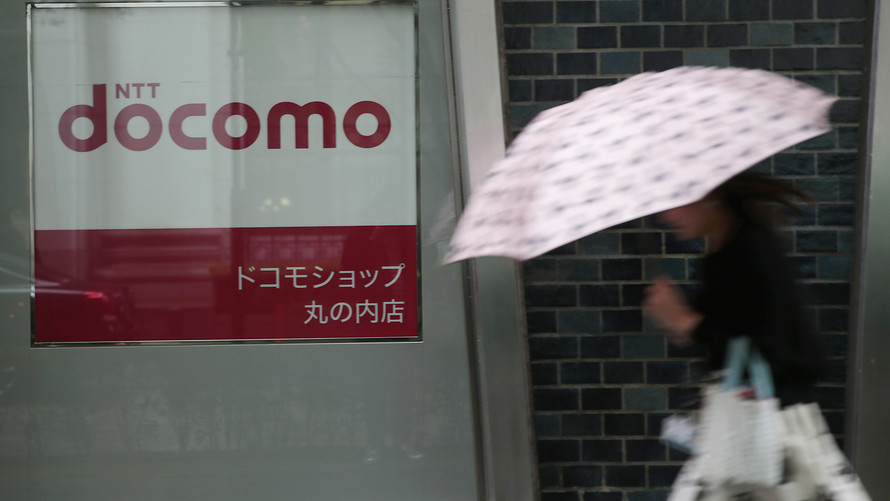
Telecom stocks dive in Japan; Chinese stocks surge

After a roller-coaster October, Asian stock markets started November with widespread gains.

Japan was the notable exception, with the Nikkei NIK, -1.06% down 0.5% amid caution over U.S. trade policies and the upcoming midterm elections. The telecom sector fell 6.3%, by far the worst among 33 Topix sectors, after NTT DoCoMo said it would cut mobile service charges. NTT DoCoMo 9437, -14.71% was down 11% while fellow telecom KDDI 9433, -16.15% dropped 15% and SoftBank Group 9984, -8.16% sank 6.9%. Panasonic 6752, -5.64% was also sharply down.

Meanwhile, Chinese stocks surged Thursday, with Hong Kong‘s Hang Seng Index HSI, +1.58% jumping 1.4%. Apple Inc. AAPL, +2.61% suppliers Sunny Optical 2382, +5.44% and AAC Tech 2018, +6.54% , rose 3.6% and 3.8%, respectively, a day after Apple unveiled new computers and iPads. Country Garden 2007, +8.22% and China Overseas Land 0688, +4.68% rose 8.2% and 3.2%, respectively, after what UOB Kay Hian analyst Ivan Ip called an upbeat assessment on mainland China’s construction recovery from yesterday’s PMI reading. Among the losers, CLP Holdings 0002, -1.65% was down 1.3% and Power Assets 0006, -1.43% slipped 1.1%.

Mainland China benchmarks continued higher, as the latest Politburo meeting called for “healthy development” of the capital market, with Shanghai Composite SHCOMP, +0.05% gaining 1.1%. The smaller-cap Shenzhen Composite 399106, +0.83% was up 1.5%, following its seventh straight monthly decline. Some AI-related names popped, boosted by President Xi Jinping’s pep talk, while infrastructure stocks outperformed the boarder market.

Australia’s ASX 200 XJO, +0.18% rose 0.3%, as BHP Billiton BHP, +2.79% rose after announcing a plan to give $10.4 billion from its shale sale to investors via an equally split buyback and special dividend. Stocks in New Zealand NZ50GR, +1.05% rose as well.

Taiwan’s Taiex Y9999, +0.43% gained 0.5% despite fears that the country’s economic slowdown could be worse than it seems, after third-quarter GDP grew 2.28% year-over-year, slower than the previous quarter’s 3.3% expansion. Benchmark indexes in South Korea SEU, -0.26% , Singapore STI, +1.20% and Malaysia FBMKLCI, -0.34% all posted solid gains.

Stocks end an ugly October on an up note as S&P 500 suffers biggest monthly fall in 7 years

Facebook shares are on the move.

Nasdaq’s 9.2% monthly fall is biggest since November 2008

Stocks climbed Wednesday to close out an ugly October on a positive note as solid earnings from high-profile brands cheered investors and revived strong buying interest in equities.

However, main benchmarks were not able to avoid recording sizeable losses for the month, leaving doubt as to whether the rally heralded a more permanent attitude in the market or if it was more of a short-term reaction to decent quarterly results.

How did benchmarks fare?

The Dow Jones Industrial Average DJIA, +0.97% gained 241.12 points, or 1%, to 25,115.76, the first time for the blue chip index to finish above 25,000 since Oct. 23.

The S&P 500 index SPX, +1.09% advanced 29.05 points, or 1.1%, to 2,711.68, climbing for two days in a row, something it had not done since its three-day winning streak that ended on Sept. 20.

The Nasdaq Composite Index COMP, +2.01% rose 144.25 points, or 2%, to 7,305.90.

For October, the S&P 500 shed 6.9% for its biggest monthly decline since September 2011, while the Dow dropped 5.1% in its biggest monthly percentage fall since January 2016. The tech-heavy Nasdaq was the worst-performing major benchmark, dropping 9.2% in October for the biggest fall since November 2008.

What drove the market?

Facebook’s quarterly results may have provided some optimism after the social-media giant delivered a report that wasn’t as scary as Wall Street feared. That is notable because so-called FAANG names, an acronym of technology and internet-related stocks, among which Facebook is a member, have been at the heart of stock gains over the past 18 months. The other members of the group include Amazon.com Inc., Netflix Inc., Apple Inc., and Google-parent Alphabet Inc., which have all seen their shares bludgeoned over the past few weeks amid doubts about the ability of these companies to consistently produce earnings growth, while managing user security.

Stock markets globally were also bouncing back, signaling a pivot from a risk-off mode that had gripped much of the investing world during a volatile month that has left the Nasdaq in correction territory, defined as a drop of at least 10% from a recent peak, with the Dow and S&P 500 points, at one point, flirting with tumbling into correction for the second time in 2018.

Fears of trade wars, a policy misstep by the Federal Reserve as the central bank attempts to normalize monetary policy from crisis-era levels and worries about contracting growth outside of the U.S. have been key elements of a erosion of confidence among investors.

The Bank of Japan kept its ultra-easy monetary policy in place as concerns grow about the impact of U.S.-China trade tensions on the Japanese economy, but did warn of the adverse impact of protectionism and the U.K.’s efforts to exit from the European Union on global markets and economies.

Meanwhile, China’s manufacturing and services PMI data for October showed the slowest growth in activity in over two years, coming in at 50.2 from 50.8 in September, according to data released by the National Bureau of Statistics. A reading of at least 50 indicates improving conditions. The report provides further evidence of a slowdown in the world’s second-largest economy.

What data were in focus?

Private-sector employers added 227,000 new jobs in October, according to payroll firm Automatic Data Processing, above expectations for 202,000 new jobs.

Labor costs rose 0.8% in the third quarter, according to the Labor Department’s employment cost index report, topping the consensus forecast for a 0.7% jump. Year-over-year, compensation growth remained at the 2.8% level seen in the second quarter, a 10-year high.

Chicago-area PMI came in at 58.4, down from 60.4 and below the consensus estimate of 60.0, according to FactSet. While a reading above 50 indicates expanding activity, this was the lowest reading of the index since April.

What were analysts saying?

“We’ve been trading on things that aren’t fundamental in nature, and now we’re back to looking at the fundamentals, which are very attractive,” Brent Schutte, chief investment strategist at Northwestern Mutual Wealth Management Company, told MarketWatch.

Schutte pointed to Wednesday’s employment-cost index release as evidence that wage growth is accelerating while inflation remains moderate. “We’re hiring more people and we’re paying them more, and that’s great news for the economy,” he said.

Tom Essaye, president of the Sevens Report, said in a note to clients that recent gains show that the “shock of last week’s earnings disappointment is behind us,” and that investors are realizing the market is undersold.

“For now, we remain in the bottoming process, although barring any deterioration in the [macro outlook], I don’t expect a continued waterfall decline,” he said.

What stocks were in focus?

Shares of Facebook FB, +3.81% rose 3.8% after the company beat third-quarter profit forecasts, while continuing to warn investors that costs would rise.

General Motors Co. GM, +9.09% shares jumped 9.1% after third-quarter earnings and revenue came in above expectations.

Shares of Clorox Co. CLX, -2.86% declined 2.9% after the consumer products company lowered its profit outlook for 2019, though it did beat profit and revenue expectations for the third quarter of 2018.

Estée Lauder Cos.’s stock EL, +4.74% climbed 4.7% after the beauty products company approved a buyback and lifted its quarterly dividend.

Shares of eBay Inc. EBAY, +5.87% surged 5.9% following earnings that met analysts’ expectations. However, the stock is down more than 27% year-to-date.

Qualcomm Inc. QCOM, -0.46% fell 0.5% after Bank of America downgraded the stock from “buy” to “neutral.”

Shares of Arconic Inc. ARNC, +3.20% rose 3.2% after Reuters reported that private-equity firm Apollo Global Management would acquire the aluminum products manufacturer.

Yum Brands Inc. YUM, +4.60% advanced 4.6%, following a Wednesday morning earnings report that surpassed analyst expectations.

Baxter International Inc. BAX, -8.96% stock tumbled 9% after the company released third-quarter earnings.

Kellogg Co. K, -8.88% shares skidded 8.9% after the cereal company reported lower revenue in the third quarter.

Shares of T-Mobile US Inc. TMUS, +7.24% popped 7.2% following quarterly earnings that showed a surge in new customers.

How were other markets trading?

Asian markets finished the day higher, with the Nikkei NIK, -1.06% up more than 2% and European stocks are also rose.

Oil futures CLZ8, -0.47% were weaker, while gold prices GCZ8, +0.79% settled lower, and the ICE dollar index DXY, -0.37% traded mostly flat.