Archives for October 14, 2018

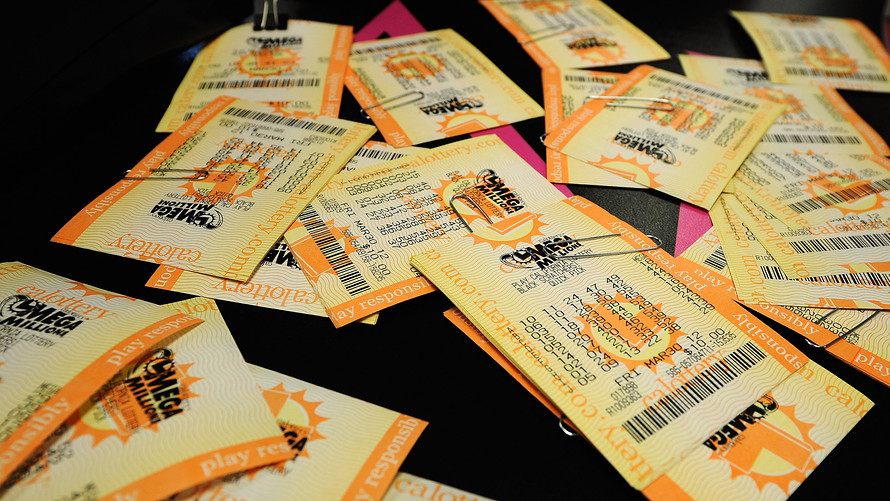
Mega Millions jackpot soars to $654 million after no one wins Friday drawing

Tuesday’s Mega Millions drawing could set a record.

The upcoming drawing Tuesday is expected to be the second largest in Mega Millions history

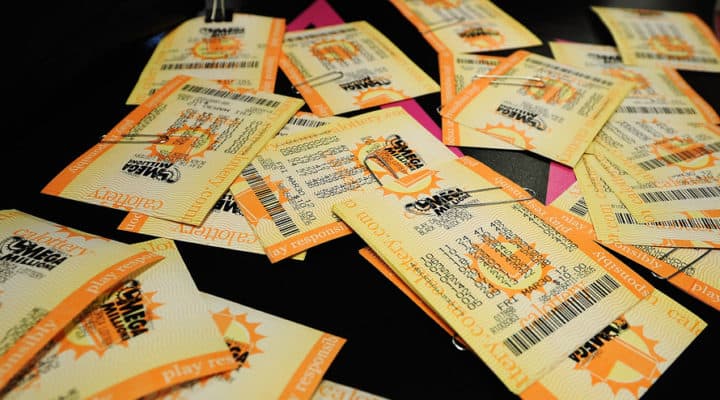
After Friday’s drawing came and went without a big winner, the Mega Millions jackpot is set to grow to $654 million.

If the jackpot exceeds those estimates, it could easily become the largest jackpot in Mega Millions history by the next drawing on Tuesday. The current record was set in March 2012 when a $656 million prize was split among three tickets.

If someone had won Friday’s drawing, it would have been the third-largest in Mega Millions history. The largest lottery jackpot ever won though was worth $1.586 billion on Jan. 13, 2016.

The winning numbers for Friday night’s drawing were 4, 24, 46, 61 and 70, plus the gold Mega Ball 7 and the 3x Megaplier. A ticket sold in Arkansas won the game’s second prize after matching five balls — worth $3 million rather than the standard $1 million in this case because the buyer had decided to include the optional Megaplier.

Another 55 tickets matched four balls to win the $10,000 third prize. Of those, seven tickets included the Megaplier, raising their winnings to $30,000.

The Mega Millions jackpot’s current run began back in July after a winning ticket was purchased by a group of 11 Wells Fargo WFC, +1.30% employees from San Jose, Calif.

Winners can accept the prize as an annuity to be paid out over nearly three decades, or they can choose to receive a lump-sum cash payment. The lump sum is the current value of the jackpot in cash — for Tuesday’s drawing, that figure is expected to be nearly $373 million.
Vanguard customers livid over website, phone problems amid market volatility

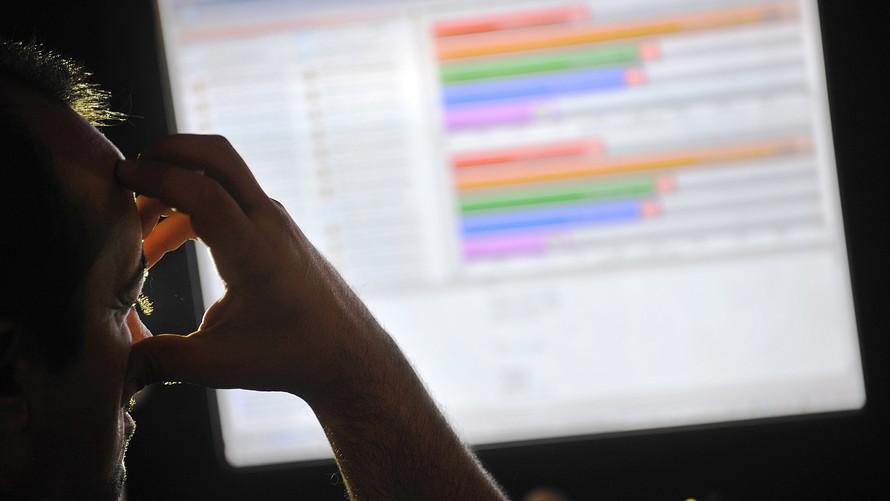
Some Vanguard customers complained that they couldn’t access the asset manager’s website on Thursday as the Dow Jones Industrial Average was sliding.

The giant asset manager says it’s fixed the connectivity issues — and they were unrelated to heavy trading

Of all the times for a massive money manager to glitch out, Thursday was not one of them.

That’s what happened at the giant Vanguard Group, as the Dow Jones Industrial Average DJIA, +1.15% dropped more than 540 points, following Wednesday’s 831-point plummet.

Some Vanguard customers fumed on Twitter TWTR, +3.67% that they couldn’t get through on the phone or online to make trades. “I can’t even see straight I’m so livid. Just plain unacceptable,” one client tweeted

The company, which has $5 trillion in assets under management, replied online to the locked out client, as it did with several others seeking more information to help them out.

Vanguard later said the connectivity outages were blips and people trying to log back onto the site a few minutes later usually were able to get in. “The issues were unrelated to yesterday’s U.S. equity market downturn, or associated call or online trading volumes,” a Vanguard spokeswoman said.

Another Vanguard client named Alice, who declined to give her last name but goes by the handle @UOATrader, told MarketWatch she saw Alibaba BABA, +3.80% stock prices dropping Thursday morning and wanted to sell her last five shares of the Chinese conglomerate at $143.

The woman, trading her own IRA, said she placed her first call at 9:39 a.m. only to hear a recorded message about phone lines being down for maintenance. “I figured this must be a glitch,” she said.

She got through to a representative about 20 minutes later and had to sell the stock at $140.80 instead, and was informed that service agreement terms barred sales at higher prices that are missed because of technical difficulties.

The representative let Alice pay the cheaper online trade fee, about $8, instead of the slightly costlier phone fee around $25 to $30, she noted. The price difference didn’t make up for a big dent in her payout, the woman acknowledged, but the small differences could add up.

“I’m not trying to beat up on Vanguard, but I think I got the short end that day,” she said.

Alibaba closed Thursday at almost $142 a share. It was up more than 3% at $146.46 mid-morning Friday.

The Vanguard spokeswoman added, “We know that it is frustrating when clients don’t get the high standards of service they expect from us, and we’re very sorry. We are investing considerably in technology to improve the client experience and ensure the accessibility of our sites and mobile platforms.”

Stock stumble, not a plunge

Woah, what was that?

After months of relative calm, Wall Street has been jolted by a sudden run of turbulent trading.

The swoon wiped more than 1,300 points from the Dow Jones Industrial Average over two days and dragged the benchmark S&P 500 index down more than 5 per cent. The VIX index, which measures how worried traders are about a decline in stocks, climbed Thursday to its highest level since February, when the S&P last had a correction, or a 10 per cent drop.

What now?

Experts say this new eruption of market volatility should not be surprising, especially after the long stretch of relative calm investors have enjoyed.

Over the summer, traders set aside worries about the escalating U.S.-China trade dispute and instead focused on more encouraging developments: solid economic growth and record corporate earnings. It helped that stocks were on the rise — the S&P 500 hit an all-time high just four weeks ago.

So after several months of gains, a pullback would be expected, said John Lynch, chief investment strategist at LPL Research.

“Volatility is back and it may require more active strategies on the part of investors to pursue their long-term goals,” Lynch said. “Volatility is also not to be feared, but embraced, as varying data points will cause bouts of market anxiety. But remember that fundamentals are still strong.”

The economy is indeed quite strong by many measures — consumer spending is growing, unemployment is low and manufacturing surveys are near record levels. And many experts say that is more important than the market’s daily ups and downs.

So what’s behind this week’s upset?

Investors have grown concerned about a recent, steep drop in U.S. government bond prices and an ensuing upward move in bond yields, which makes bonds more attractive relative to stocks. The market is also worried about rising interest rates, which tend to climb on expectations of future economic growth and inflation and can increase costs for business — slowing growth and dampening corporate profits.

“There’s some concern that third-quarter earnings could be maybe a little bit less robust than they were in the second quarter and there could be more pressure on profit margins,” said Willie Delwiche, investment strategist at Baird.

Worries about a slowdown in the global economy and the escalating U.S.-China trade dispute also have contributed to investors’ unease. And markets typically see increased volatility in months preceding midterm elections.

“We are not surprised by the uptick in volatility toward more normal levels,” market strategists at Wells Fargo Investment Institute wrote in a report Thursday, adding that “it’s too soon to say that the pullback is over.”

Having bonds and equities selling off may feel like the worst of both worlds for investment portfolios, but the market’s shift isn’t as bad as it might seem, said Michael Crook, head of institutional strategy at UBS Global Wealth Management.

He notes that the S&P 500 is basically back to where it was during the summer, and only down slightly from its all-time high. In addition, the negative return in bonds barely registers when one considers how bonds have performed this year.

“That’s very normal volatility, and while it has been acute — like all market drops — it only erases a few weeks of gains,” Crook said.

The market’s stability in 2017 may have given investors a false sense of security too, said Nationwide Chief of Investment Research Mark Hackett. The fundamental strength of that year resulted in historically low volatility and market pullbacks.

One natural reaction to increased volatility is the inclination to get off the wild ride and sell. If you have a lengthy time horizon for the investment, say a decade, the general recommendation is to resist that temptation. Stocks have historically offered some of the biggest returns over the long term for investors.

For investors who want less volatility, bonds, savings accounts or other investments offer less risk. The trade-off is that returns over the coming decade will likely be lower.

Remember that what is happening in the headlines is not necessarily what is happening in your portfolio, said Judith Ward, a senior financial planner at T. Rowe Price.

Still feeling jumpy? Review your portfolio and make sure your holdings are where you want them to be and that they’re on course to meet your goals. Rebalance the portfolio, if needed, but resist the urge to flee.

Any financial adviser will remind you that those who sold in the depths of the global financial meltdown missed out on big gains in years that followed.

Major Toyota recall

Toyota is recalling nearly 188,000 pickup trucks, SUVs and cars worldwide because the air bags may not inflate in a crash.

The recall covers 2018 and 2019 Tundra pickups and Sequoia SUVs as well as 2019 Avalon sedans.

Toyota says the air bag control computer can erroneously detect a fault when the vehicles are started. With a fault, the air bags may not deploy in a crash. The company wouldn’t say if the problem has caused any injuries.

Toyota will notify owners and dealers will update the air bag control software. The recall is expected to begin Oct. 22.

Toyota says the recall covers about 185,000 vehicles in North America and 2,600 in other markets.

Airbnb Experiences boon for business

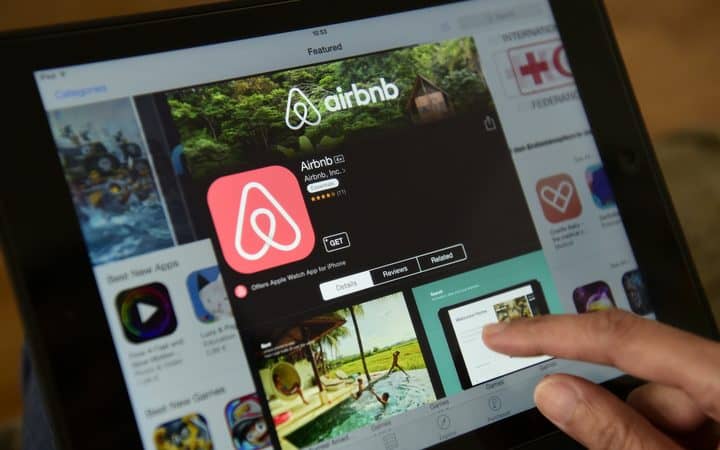
Joining the Airbnb Experiences platform has been a boon for the business.

Traditional tourist operators are looking to Airbnb Experiences to help boost their businesses.

The service enables New Zealanders to create bespoke tours they can guide other Airbnb users on.

Base Camp Adventures managing director Loz Ogle said joining the Airbnb Experiences platform had proved a boon for the business.

The adventure company operates Climbing Queenstown, which also uses other avenues to market itself.

It helped to market the business to a different and growing market, particularly over the slower winter months, Mr Ogle said.

Airbnb might cause issues for traditional accommodation providers, but it has been useful for the business, he said.

“They’re [Airbnb] very keen to have it as a hosted experience where they have an interaction with a person, not a company.”

It was easier to keep guests safe as guides have already interacted with them to set up the experience, they know who they are and what they look like, he said.

Culture walks, surfing, soul astrology and art classes are among the bespoke tours available in New Zealand.

And Airbnb Experiences is expected to become increasingly popular into the summer months.

It was launched as a trial in Queenstown earlier this year, expanding across New Zealand at the end of August with more than 100 experiences on offer.

Airbnb Australia and NZ manager Sam McDonagh said the success of the Queenstown trial encouraged the company to expand.

“One of the things that we love about Airbnb Experience is that it provides the opportunity to make travel magical again by allowing travellers to immerse themselves in a local culture,” Mr McDonagh said.

The process to become a guide was simple, but stringent, he said.

“You can’t just post an experience to Airbnb, we’ve got to go through that with you and understand that you’re well-qualified to do what you’re doing.”

There were more rigourous processes for higher risk bespoke tours, Mr McDonagh said.

Canadian company at forefront of VR’s push into sports world

Virtual reality could shake up the way sports fans view games and matches.

From training with Major League Baseball pitchers to bone-jangling racing on board an F1 car, technology’s potential to revolutionize sport was the hot topic as industry leaders met in London this week.

“It’s going to disrupt all aspects of sport that you can imagine,” virtual reality expert Michael Ludden told the two-day Leaders Sport Business Summit at Chelsea’s Stamford Bridge stadium.

Ludden said that virtual and augmented reality — together known as mixed reality (MR) — would transform sport for professionals, amateurs and spectators.

“American footballers are already using VR to better train their minds, read the field,” allowing quarterbacks to hone their skills without risking injury, he said.

“You can train with a real baseball bat that’s tracked in virtual reality against real pitchers using data from those pitchers… giving you advanced analytics on how the swing is,” added Ludden, who has worked for IBM and Google.

With the price of headsets such as Facebook’s Oculus Rift falling, MR also promises to allow amateurs the experience of facing a 100 mph pitch from the safety of their living room.

While MR immerses the user aurally and visually, other developing technologies are beginning to recreate the physical reality of top-level sports, opening up a whole new world of spectator experience.

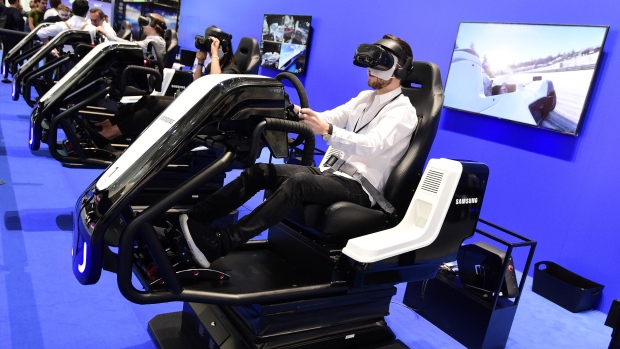
Canadian company D-BOX Technologies, which designs and manufactures moving seats found in cinemas and theme parks, is now moving into sports, showing off their Formula One simulator at the London event.

The seats mimic the G-Force and every judder as F1 champion Lewis Hamilton races around the Monaco circuit.

The simulation seat uses pre-programmed data but could use real-time information sent by the car, allowing spectators to pick their driver and experience their full Grand Prix adventure, said Veronique Maheu, director at D-BOX.

“You would need… data sent straight from the car — tyre slip ratio, suspension, acceleration — we can take this minimal information and transform it.

“They could broadcast live content through a network in pop-up theatres around the world,” she said, adding that the company intended to roll out the experience at fan zones on the F1 circuit.

Augmented stadiums

The technology can be adapted to help train athletes in other sit-down sports such as rowing, and Maheu said she had received interest from members of the horse-racing industry.

Telemetric sensors could also be placed on sports fields, balls and on players to remotely recreate the visceral reality of NFL, football or baseball, or even enhance reality.

“If you want to have the stress of the baseball player while he gets to the plate, you can have a heartbeat added to the sensation on the seat and then you can feel it, boom, boom,” she explained.

“When he swings and hits the ball, you can have an impact.”

The seats currently cost $10,000 each, putting them out of the reach of the armchair fan.

However, headsets and the development of VR suits hold out the possibility that fans around the world could one day physically experience every tackle, touchdown and goal from their favourite player in real time.

VR expert Ludden also said that current and near-future technology could create “augmented stadiums” for live spectators.

Panasonic pitched their “Smart Venue” plans at the CES technology fair in Las Vegas, which included the overlaying of graphics, advertisements, player statistics and replays on the field of play at an NFL game.

“If you are sat in the nose-bleeds (cheap seats), I can see this being really useful,” he said.

MR could also revolutionise half-time entertainment by allowing fans to join in stadium-wide games, using the pitch as a platform, he added.