Archives for October 14, 2018

Amazon’s sexist A.I. reveals broader weaknesses of technology

Technology’s only as good as its imperfect human programmers.

That’s been the general rule of thumb for climate-change modeling. That’s been the talked-about challenge for artificial intelligence development for years.

And now, given a new report from Reuters that revealed how Amazon’s employment recruitment A.I. disregarded and dismissed qualified candidates based solely on sex — they were women — that’s the apparently unfixed, unchanged challenge of the technology world.

Amazon scrapped its algorithm-based program. But that’s like putting a Band-Aid on a long-festering wound.

Bias in A.I. has been a long-studied, long time problem. So far, the solution’s proven elusive.

In May of 2016, ProPublica found that COMPAS, an algorithm used to estimate how likely a criminal was to re-offend, was racially biased and predicted blacks, much more so than whites, were at higher risks for recidivism.

Also in 2016, the policing tool PredPol, revered for its so-called ability to predict crimes before they occur — and in so doing, enable local law enforcement to better utilize and manage budgets, manpower and resources — was outed by one human rights’ group for unfairly targeting neighborhoods with large racial minority populations. Part of the technological bias, critics said, came from the fact the A.I.-fueled software based its predictive powers solely on reports from police, not on true crimes and actual arrests.

In February of 2018, researchers with the Massachusetts Institute of Technology discovered that three emerging facial recognition programs, all of which were commercially available, were prone to skin and gender biases.

“In the researchers’ experiments,” MIT News reported, “the three programs’ error rates in determining the gender of light-skinned men were never worse than 0.8 percent. For darker-skinned women, however, the error rates ballooned — to more than 20 percent in one case and more than 34 percent in the other two.”

These statistics are hardly insignificant.

They reflect how police respond, how minorities are regarded, how women are perceived — and, as Amazon’s recruitment tool showed — how certain demographics of society can nab the offers and opportunities that are outright denied others.

That’s no to say AI isn’t helpful to humanity, but it has to be seen in a realistic light.

Bias in A.I. isn’t simply a catchphrase to talk up at a techie conference. It’s a modern-day dilemma that brings real consequences onto real people.

Machine bias is simply reflective of human bias. Human bias, meanwhile, is a complicated matter that can lead one analyst to conclude a black man’s arrest is racist and another, analyzing that same incident, as warranted. Reconciling such discrepancies to design and fuel an artificially intelligence predictive police program, therefore, might prove problematic.

So let’s be honest here: Obtaining zero bias, in man or machine, is going to be an impossibility.

Technology has its limits, but that’s because humankind does, as well.

That’s why, in the end, the best A.I. should always be a partner to humankind, not a replacement.

Technology’s fine as an alert, an aid, a red flag, a compass, a support system — but it should never be allowed to take the place of a human to be the decider, the chief executive, the commander, the cop, the judge or the jury.


Launch of Second Annual GB Technology Summit

Bahamas – Minister of State for Grand Bahama, Senator Kwasi Thompson, one of the pioneers of the Grand Bahama Technology Summit, said during the second such summit, focus will be on showcasing education programs and highlighting the efforts and achievements of government and the Grand Bahama Technology Hub Steering Committee over the last year.

“In particular, we will highlight the Ministry of Education’s ICT plans for our schools, which recently signed a deal for technology upgrade and provision of tablets for teachers and students across the nation,” said Minister Thompson.

“We will also highlight BTVI’s ICT courses and certificates, which are now offered to Bahamians free of charge. And we will see the first ICT trained high school students who completed the first phase of their summer certification course, and our new programme with the YMCA to provide coding certification to 100 young Grand Bahamians.”

The Minister’s remarks came during an official launch of the Second Annual Grand Bahama Technology Summit in a grand affair press conference at Pelican Bay resort on Wednesday, October 10, 2018. The Tech Summit is slated to take place in Freeport, Grand Bahama, November 14-16, 2018 at the Grand Lucayan.

During the press conference, Minister Thompson noted that one of the most exciting aspects will be the unique opportunity for registered participants to take part in certificate courses offered by high-level international technology companies.

Availability for these courses will be limited based on prerequisite training, as well as class size capacity.

“We will be hosting executives from tech giant CISCO Systems, which is another global technology company with over 70,000 employees,” said Minister Thompson. “We will have the benefit of CISCO Networks Academy Training Modules which will provide training in the area of Networks and Programming.

“In addition, we will also have a team from CompTIA which is the Computing Technology Industry Association, a non-profit trade association, issuing professional certifications for the information technology (IT) industry. It is considered one of the IT industry’s top trade associations. They will be providing Training modules in Corporate Digital Transformation and Cyber Security.

“We are further pleased to partner with local title sponsors ALIV and GIBC, Our special innovation partner sponsor Grand Bahama Power Company, and our gold sponsor the Grand Bahama Port Authority.”

Exhibitors expected to be at this year’s convention include FowlCo Logistics, Buckeye Bahamas Hub, Hutchinson Ports, Freeport Container Port, Grand Bahama Airport Company, Freeport Harbour Company, Seagrape Inc. (Nassau) and Unified Technologies (USA).

Minister Thompson said he was particularly pleased to note that during the summit, he, along with all Grand Bahamians, will get to hear from one of the summit’s innovation partners, GB Power Company, which will unveil its renewable energy plan for Grand Bahama and will highlight and showcase the use of electric vehicles on the island.

“We are also hoping to hear how Grand Bahama Power will bring down the cost of electricity on Grand Bahama,” quipped Minister Thompson. “So I’m sure that everyone in Grand Bahama will be attending the Second Annual Tech Summit.

In addition to the impressive line-up of international speakers expected at this year’s summit, Minister Thompson said, there will also be a lineup of well-versed, professional Bahamians in the field of technology from around the globe who will also be presenters.

Registration for the Second Annual Grand Bahama Technology Summit is now opened, and interested persons can log on to grandbahamatechsummit.com or visit the official Facebook Page, Grand Bahama Technology Summit, to register.

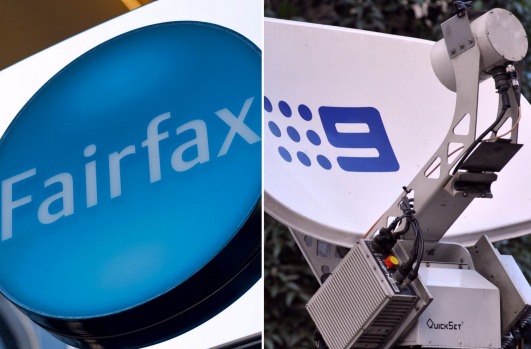
Nine-Fairfax merger to target savings in technology, media sales, lifestyle content sharing

Fairfax shareholders will vote on the merger on November 19. Joel Carrett

The merged Nine Entertainment and Fairfax Media will find $50 million of annual savings in technology, product, media sales and back office costs, and by sharing lifestyle content, but has again vowed that none of the cuts will come from journalism jobs or combining newsrooms.

About $45 million in savings, in tranches of $15 million each, will come out of the technology and product divisions, for example by using and developing common tech platforms, the media sales teams and commercial operations divisions, and corporate and support functions, which include roles such as management, audit, head office, human resources, marketing, property services and ASX compliance.

A further $5 million will come from the sharing of “lifestyle-oriented” content used by different but similar brands run separately across the combined Nine and Fairfax. This would mean similar brands such as Daily Life and Honey would continue to exist with their own editorial teams, but the back office and others costs of running them above editorial could be combined.

“None of the cost synergies expected to be realised depend on the consolidation of Nine’s and Fairfax’s newsrooms or reducing the number of journalists employed in the newsrooms,” the scheme booklet, released on Friday evening to the Australian Securities Exchange, states.

The synergies are expected to be achieved within two years of completion of the merger, which independent advisory firm Grant Samuel & Associates, which reviewed the scheme, backed as in the best interests of Fairfax shareholders.

The documents further reiterate this point when outlining the future for employees of the combined Nine and Fairfax. Nine will try to find new jobs for those employees found to be in roles where there is “duplication” but conceded it will not be possible for all.

“In circumstances where duplication of employee roles is identified, the present intention of Nine, where practicable and possible to do so, is to seek to allocate alternative responsibilities to those affected employees within the Combined Group.

“However, it will not be possible for Nine to offer suitable alternative roles in all instances. Where affected employees are unable to be allocated alternative responsibilities, those employees will receive payments and other benefits to which they are entitled on departure under their terms of employment. There are no current plans to consolidate the newsrooms of Nine and Fairfax.”

The documents also note opportunities for further benefits from the greater offering for advertisers, potential to promote Domain and the simplified ownership of subscription video on-demand service Stan. However, Nine and Fairfax did not put a cash number on potential upside.

Upon completion of the deal, Nine will review all the assets across the portfolio. Fairfax’s New Zealand business and Australian regional publishing are believed to be the first divisions which could potentially be offloaded, as revealed by The Australian Financial Review. The future of Fairfax’s events business is also believed to be under the microscope.

The scheme documents again noted Nine’s commitment to Fairfax’s Charter of Editorial Independence.

“Fairfax’s Charter of Editorial Independence, which establishes conditions for producing news and journalistic content, with a view to enshrining editorial independence, has been unanimously endorsed by the Nine Board,” it said.

“Consistent with Nine’s strategy to “create great content, distribute it broadly, and engage audiences and advertisers”, it is intended that the combined group will continue to produce content under Fairfax owned brands which will appeal to audiences who may be different to the audiences who currently engage with Nine’s content.”

The booklet said Nine will use its existing platforms to promote Fairfax content to find new audiences, growing consumers across the group and improving the advertising appeal.

Prior to the documents being released on Friday, Nine and Fairfax shares collapsed after trading updates revealed weaker-than-expected numbers for real estate classifieds and services business Domain. Investors heavily sold off all three stocks, with Nine dropping 12.4 per cent to $1.84, Fairfax falling 13.6 per cent to 67¢ and Domain collapsing 13.4 per cent to $2.77.

House prices have been falling across the country, but especially so in Sydney and Melbourne. This has weighed on the number of auctions and on auction clearance rates.

Don’t believe the World Bank – robots will steal our wages

Germany’s chancellor Angela Merkel greets a robot at the Hanover Fair in April

Automation will bring growth, but history tells us labour’s share of national income will decline

The World Bank has a reassuring message for those fearful of being made obsolete by automation. The robot age is nothing to be worried about. Just like all previous waves of technological advance, the fourth industrial revolution will create rather than destroy jobs, so fears of mass unemployment are largely unfounded.

Nor should we be concerned that the arrival of the new machine age is going to widen the gap between rich and poor, because the idea that the world is becoming a less equal place is more perception than reality.

Automation, according to the bank’s World Development Report, is an opportunity not a threat. Sure, some jobs will go but others will be created to meet a range of future needs of which we are currently unaware. Since automation cannot be stopped, governments need to do two things. Brain-up their populations through investment in education so that they have the necessary skills for the robot age, and reduce the burdens on business by getting rid of harmful labour laws and restrictions. The need for greater deregulation to prevent companies choosing to use robots rather than humans is a constant theme.

In essence, the World Bank has come up with a rehashed form of trickle-down theory that Margaret Thatcher would happily have endorsed. Private companies should be allowed to do whatever they consider is in their own best interests, and politicians should get out of the way.

Here’s a taste of what it says: “A formal wage employment contract is still the most common basis for the protections afforded by social insurance programmes and by regulations such as those specifying a minimum wage or severance pay. Changes in the nature of work caused by technology shift the pattern of demanding workers’ benefits from employers to directly demanding welfare benefits from the state. These changes raise questions about the ongoing relevance of current labour laws.”

The criticism the report has received from trade unions and anti-poverty campaigners is well merited, not just for its ideological obsession with deregulation but for its lack of historical awareness. Previous waves of technological change caused such deep social tensions that policymakers were forced to intervene. That meant more regulation, not less.

In the 19th century, the development of trade unions, the extension of the franchise, the involvement of the state in education and pressure for higher welfare spending were all attempts to inject equality into the system. Despite what the World Development Report says, without a similar attempt to embed technological change in a political framework that shares the benefits of robot-driven growth, there is the potential for serious trouble ahead.

Why? Because it is not true that inequality is a figment of the imagination. The bank’s evidence is that inequality either fell or remained the same between 2007 and 2015 in 37 of 41 sample developing and developed countries.

Even leaving to one side that this sample relates to only about 20% of the World Bank’s member countries, the period chosen is significant because it begins with the year when the global financial crisis began, and between 2007 and 2009 high net-worth individuals lost a packet.

Russia is used as an example of a country where the share of national income of the rich fell, as indeed it did. The bank is quite right to say that the top 10% of Russians took 52% of the pie in 2008 and only 46% in 2015. What it fails to mention is that oil prices plummeted between 2008 and 2015. That was not good for the oligarchs.

It’s hard to avoid the conclusion that the World Bank has been selective with its use of statistics in order to make a point. The idea that inequality is a matter of perception runs counter to work by others, including the Organisation for Economic Co-operation and Development and the International Monetary Fund. The IMF’s managing director, Christine Lagarde, said at the start of this month that “since 1980, the top 1% globally has captured twice as much of the gains from growth as the bottom 50%.”

The IMF also has a rather different take on the automation debate from that of its sister organisation. It released a working paper in May with a self-explanatory title: Should we fear the robot revolution? (the correct answer is yes).

The authors concluded that the current technological revolution was different from those of the past. Robots will be able to do a range of tasks that have hitherto been the preserve of humans, and do them more quickly and more cheaply. Productivity will go up but wages will go down, the IMF says. The owners of the robots will gain but workers will not. “Our main results are surprisingly robust: automation is good for growth and bad for equality.”

Nor does the IMF think investment in human capital is a magic bullet to counter the march of the robots. Education, it said, can be seen as a way of converting workers from unskilled to skilled, which would strengthen the demand for unskilled workers.

“But can it offset the huge, real wage cuts unskilled labour suffers and the decrease in labour’s overall income share at an acceptable cost? And if the answer is yes, how long will it take for wages to increase for those who remain unskilled?”

The IMF said that eventually stronger growth does translate into higher wages but, even then, labour’s share of national income would decline and inequality would increase. What’s more, “eventually” has echoes of Keynes’s statement that in the long run we are all dead. By “eventually”, the IMF means up to 50 years. In their current angry mood, it is unlikely voters will wait that long.

Amazon could suffer 5% income drop if proposed U.S. Postal Service price hikes go into effect

The U.S. Postal Service has proposed an increase in shipping costs that could ding Amazon’s retail operating income

Amazon will already see declines due to the $15 minimum wage hike, analysts say

Amazon.com Inc.’s retail operating income could take a 5% hit from shipping cost inflation if the U.S. Postal Service’s proposed price hikes go into effect, according to calculations by Barclays analysts.

On Wednesday, the USPS suggested raising the price of sending a small flat-rate box to $7.90 from $7.20; increasing a medium flat-rate box to $14.35 from $13.65; and charging $19.95 to send a large flat-rate box, up from $18.90.

“Our math …suggests Amazon will have 5% lower retail operating income from this shipping cost inflation, if we assume there are no offsetting factors,” Barclays said.

The changes would go into effect on Jan. 27, 2019.

“Specifically, the USPS shipping rates for small and medium boxes, typically used by e-commerce companies, are proposed to be increased by 10% and 5% respectively,” Barclays analysts led by Ross Sandler wrote. “[T]he price increases for packages suggested by USPS this year are higher than in prior years.”

“If other Amazon shipping partners like UPS UPS, +1.65% , FedEx FDX, +1.65% , On-Trac, etc. raise their prices, which has happened in the past (but we are currently not factoring in), every 5% hike for last mile would weigh down operating income by an additional 3%, all else constant,” the note said.

President Trump said the USPS is Amazon’s AMZN, +4.03% “delivery boy” in a tweet earlier this year, and blamed the e-commerce giant for its billion-dollar-plus losses in the second fiscal quarter.

However, the USPS said it’s actually government policy that’s hurting the group’s finances. The USPS said “legislative and regulatory changes” would be necessary for financial stability.

“To be clear, our current estimates already factor in [a] shipping cost increase by a modest level, consistent with prior years,” Barclays said. “However, the steeper increase proposed for 2019 could weigh further on Amazon’s FY19 profitability.”

In a separate note, Barclays forecast that Amazon shares could take a hit after third-quarter earnings if they are in line with guidance and forecast below expectations. And in the fourth-quarter, the $15 minimum wage hike will add about $310 million to expenses.

Barclays analysts think the minimum wage hike is just one of a few coming initiatives that could impact operating margin expansion.

Barclays rates Amazon shares overweight with a $2,100 price target.

Amazon stock has rallied 53% for the year to date. The Amplify Online Retail ETF IBUY, +3.38% has gained 11.5%, while the S&P 500 index SPX, +1.42% is up 3.5% for 2018 so far.

Does stock-market volatility make CDs tempting? Read this first

The stock-market sell-off might make investors want to run for safe haven, but they might want to think twice before investing in a CD.

In a rising rate environment, certificates of deposit are increasingly competitive for short-term investing, but there are risks

Certificates of deposit might be thought of simply as a safe haven for cash. But they can pack a punch in the right circumstances.

Since 1967, certificates of deposit (CDs) have outperformed the stock market about 30% of the time on the basis of a 1-year return period, said Brian Karimzad, co-founder and senior vice president of research at MagnifyMoney, citing an upcoming research report from the personal-finance website. The longest period when that occurred was in the early 2000s after the dot-com bubble burst.

That lesson might be of some comfort to investors right now. The Dow Jones Industrial DJIA, +1.15% shed 831 points Wednesday amid the worst sell-off since the market correction that took place back in February. On Thursday, stocks continued their descent, prompting concerns of another correction before regaining positive ground on Friday.

Rate of return notwithstanding, CDs carry another benefit that can make them more attractive than bonds: The deposits are FDIC insured. You can’t lose the money you initially put into a CD, even if you withdraw early. Whereas when selling a bond before it matures, an investor does run the risk of losing some of their principal depending on the market’s conditions at that time, Karimzad said.

Meanwhile, rates on CDs have benefitted from the Federal Reserve’s interest-rate hikes over the past year, making them a more attractive tool for consumers seeking a safe haven for their money.

‘Putting new cash into a CD in response to short-term market volatility is a little bit like yelling ‘Look out!’ to someone right after they’ve been run over by a truck.’
Ben Birken, an advisor with Woodward Financial Advisors in Chapel Hill, N.C.

But that doesn’t mean people should necessarily jump on the CD train just yet. “The lesson isn’t to go and put all your money in CDs when the stock market declines,” Karimzad said. “It shows that you need to have a balanced portfolio.”

In short-term CDs can be advantageous, but they are no replacement for long-term stock market investments. Pulling money out of stocks now would only seal losses in. And funds ear-marked for long-term goals such as retirement are still better off in stocks — if anything, investors can get a bargain by putting money in the market now.

“Putting new cash into a CD in response to short-term market volatility is a little bit like yelling, ‘Look out!’ to someone right after they’ve been run over by a truck,” said Ben Birken, an advisor with Woodward Financial Advisors in Chapel Hill, N.C. “You look to reduce risk before things get bad, not after.”

But when the dust settles on this sell-off, consumers should turn their focus back to CDs, depending on what their investing goals are.

How CDs stack up today

Many online and community banks and credit unions are now offering 12-month CDs with rates at or above 2.50%.

Whether a CD is a worthy investment vehicle will depend on what the money is being used for. For consumers who need easy access to their money, a high-yield savings account or money-market account from an online bank is a better bet, even though their interest rates are lower.

‘For all the gnashing of teeth over the stock market, the stock market is still positive for the year, but the bond market is not.’
Greg McBride, chief financial analyst for personal-finance website Bankrate

After putting money into a CD, consumers are penalized if they may early withdrawals — they won’t be charged on the principal they initially deposited, but will be docked some of the interest accrued. Penalty-free CDs exist, but come with lower, less competitive rates.

However, CDs are becoming more competitive with bonds. “For all the gnashing of teeth over the stock market, the stock market is still positive for the year, but the bond market is not,” said Greg McBride, chief financial analyst for personal-finance website Bankrate US:RATE “So for a lot of investors, their perceived safe-haven is in the red. That’s what makes cash an appealing vehicle for diversification.”

The yield on a 1-year Treasury bill TMUBMUSD01Y, -0.32% currently stands at 2.672%. Meanwhile, online bank VirtualBank has a 12-month CD that carries an annual percentage yield of 2.68%. And other banks’ CD rates are not far behind.

Not all CDs are created equally

While CDs have become more competitive, some are still worth skipping.

Large, national brick-and-mortar banks generally do not offer competitive rates on CDs — because they don’t have to. “They don’t have to pay higher returns on deposits because they already have a pile of deposits,” McBride said.

Consumers should also consider holding off on longer-term CDs, including 3-year and 5-year CDs, even though they offer a slightly better rate of return than shorter-term ones.

“The worry with CDs is that with interest rates going up in the near term, so will CD rates,” said Ashley Foster, a financial adviser at Nxt: Gen Financial Planning in Houston. “You do not want to lock yourself into a long term CD if you anticipate rates to go higher.”

A CD ladder can help consumers reduce their risk

With the Fed expected to raise interest rates as many as four times over the next year, there is a risk of locking in a low interest rate even with 1-year CDs. That’s where ladder strategy can come in handy, said Arielle O’Shea, an investing specialist at personal-finance website NerdWallet.

Set aside a chunk of cash and then deposit it into a number of CDs with varying term lengths. As they mature, the consumer can then re-deposit them into a new CD at hopefully a higher rate.

Consumers can also consider bump-up and step-up CDs as opposed to traditional CDs that carry a fixed rate. Bump-up CDs allow depositors to opt to adjust their interest rate (typically once) during the term, while step-up CDs will move the rate higher at set intervals depending on the market conditions. The drawback: They typically come with lower introductory rates than the average 2- or 3-year CD.

Ultimately, when choosing a CD term, it comes down to one question, O’Shea said: “Is that 0.5% premium worth giving up access to your money for a year?”