Archives for May 25, 2018

3 Top Tech Stocks to Buy Right Now

The tech sector is always bubbling over with interesting investment ideas, but how do you separate the ones that can truly be strong performers for your portfolio from the has-beens and never-weres? You can start by asking the experts.

So we did exactly that, and asked a handful of your fellow investors here at The Motley Fool to share their picks for the best tech stocks to buy today. Read on to see why they chose Universal Display (NASDAQ: OLED), Micron Technology (NASDAQ: MU), and Shopify (NYSE: SHOP).

Closeup shot of a businessman’s hand, picking out one of three golden eggs from a nest.

The memory specialist

Ashraf Eassa (Micron Technology): My tech stock pick for the middle of May is memory maker Micron Technology. It’s one of a mere handful of chip players that manufacture both DRAM and NAND flash memory — both hot commodities these days as computing devices from smartphones to data center servers are increasingly requiring more of these technologies.

Micron’s position in DRAM has strengthened dramatically over the last several years, which has allowed it to really capitalize on a boom in demand. Moreover, based on the technological progress that Micron discussed at its most recent analyst day, its competitive position should continue to improve in the years ahead, positioning it to capture additional share in this highly lucrative market.

Additionally, while most of Micron’s revenue comes from sales of DRAM, the computing industry is shifting away from traditional hard disk drives to storage drives based on non-volatile memory technologies. Micron has a strong position in the most common type of non-volatile memory, known as NAND flash, and it’s one of only two companies that build 3D XPoint, a type of memory that Micron co-developed with Intel, and which is faster and longer-lasting than NAND flash.

As our data storage needs grow and as non-volatile memory storage supplants mechanical storage, Micron looks extremely well positioned to benefit. And, as icing on the cake, Micron currently trades for around 7.4 times trailing 12-month earnings — which, frankly, is downright cheap for such a great company.

The misunderstood iPhone component supplier

Anders Bylund (Universal Display): Apple (NASDAQ: AAPL) giveth and Apple taketh away. That’s the story behind the huge volatility in Universal Display’s stock price over the last year and a half. Currently, the organic light-emitting diode developer’s shares are sitting at the lower end of one of those roller-coaster hills.

For all the wrong reasons, I might add.

You see, landing Apple as a major client at long last was certainly a nice bonus, but it wasn’t the game-changing event that Mr. Market made it out to be. Share prices nearly quadrupled in less than 52 weeks after the rumor mill started reporting that the iPhone X would launch with a large OLED screen. Then, after Apple experienced component supply issues, and demand for the notch-bearing flagship phone turned out to be a bit lighter than expected, Universal Display crashed right back down. Today, the stock trades 53% below the yearly high it reached in January — at the peak of iPhone X mania, and just before Apple reported its holiday-quarter results.

However, Universal Display can lean on many growth engines, and Apple is far from the most important one. Android phones from many manufacturers already provide it with a large entry point into the smartphone world, after all. And its greater opportunities include big-screen OLED TV sets and an upcoming foray into everyday lighting products. Letting the fortunes of Apple draw this company’s stock chart is a mistake, whether Cupertino’s influence happens to be positive or negative.

Right now, though, that market quirk translates into a wide-open buying opportunity.

Woman in a red blouse smiles at her phone while holding a credit card in her other hand.

Image source: Getty Images.

The fast-growing e-commerce play

Chris Neiger (Shopify): Shopify’s e-commerce platform helps businesses of all sizes — but primarily small ones — set up and run online stores, accept payments, and even manage shipping. The beauty of its cloud-based software is that it works with popular platforms like Facebook and Amazon.com, making it easy for businesses to sell their products and services on the internet’s biggest marketplaces.

Shopify reported its first-quarter results at the beginning of this month, and they show it continuing to grow at a torrid pace. Revenue spiked 68% year over year to $214.3 million, driven by improved sales in both its merchant solutions (up 75%) and subscription solutions (up 61%) segments.

That growth has come from the company’s ability to attract new merchants to its platform. Currently, more than 600,000 business use its e-commerce tools, up from 243,000 two years ago. And while small business customers are Shopify’s core clientele, it’s also doing a great job of adding larger customers. In Q1, Monster Electronics, HarperCollins U.K. and Colgate-Palmolive joined Shopify Plus, the company’s high-end service. Because these businesses spend significantly more on the company’s platform, Shopify Plus customers now account for 22% of the its monthly recurring revenue, up from 17% in Q1 2017.

It’s important to note that Shopify isn’t profitable on a GAAP basis right now, but on a non-GAAP basis (excluding expenses like stock-based compensation) it earned $4.2 million in adjusted net income, or $0.04 per share in Q1, up from an adjusted loss of $0.04 per share in the year-ago quarter.

This is still a young company that’s growing quickly, and it has only begun to tap into the vast e-commerce market. Investors can expect some volatility from Shopify’s stock as the company grows, but once this e-commerce player starts turning sales into hard profits, I think investors could be rewarded nicely.

Why General Motors Will Build a 4-Cylinder Pickup Truck

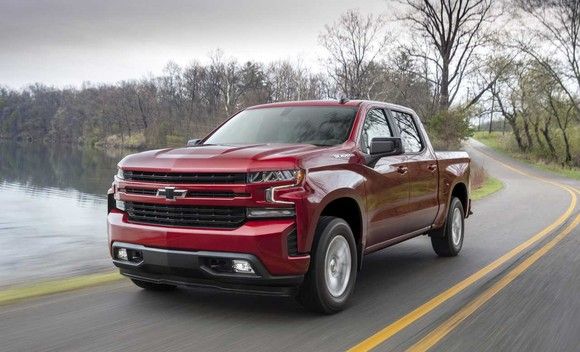
General Motors (NYSE: GM) says that its upcoming all-new 2019 Chevrolet Silverado will be offered with an option unique among full-size American pickups: a four-cylinder engine.

To be clear, this four-cylinder isn’t the usual econobox motor. It’s an all-new, big turbocharged gasoline engine that incorporates GM’s latest power- and efficiency-maximizing technologies.

But still, putting a four-banger in a full-size pickup sounds like something GM might have tried back in, say, 1979, when Detroit was trying desperately to compete with fuel-efficient imports. Does GM really think that truck buyers in 2018 will go for four cylinders?

GM pickup

Mass-market LT and RST versions of the all-new 2019 Chevrolet Silverado will come standard with a new four-cylinder engine developed specifically for trucks. Image source: General Motors.

Taking a page from Ford’s playbook

Here’s one word that explains why GM thinks they might: EcoBoost.

EcoBoost is archrival Ford Motor Company’s (NYSE: F) trademark for its line of turbocharged engines. Most truck fans know that the 2.7 liter and 3.5 liter V-6 EcoBoost engines have become popular options on Ford’s F-150 pickup.

But it wasn’t always so. Back in 2011, when Ford first added an EcoBoost V-6 as an option on the F-150, the idea seemed nearly outrageous. At the time, aside from low-cost entry-level models, nearly all full-size American pickups were sold with V-8 engines.

Ford’s EcoBoost engines did a lot to change that. Truck buyers who chose them got horsepower and torque comparable to a traditional V-8, with improved fuel economy. Once the engines proved durable, they became widely accepted, and Ford added a second EcoBoost option in 2015. Today, about 72% of F-150s are ordered with one of the two EcoBoost V-6s, according to a Ford spokesperson.

I think GM is taking a page from Ford’s playbook with its new four-cylinder.

Ford pickup

Ford’s EcoBoost V-6s have become so well regarded by truck buyers that Ford chose an EcoBoost engine for the latest version of its high-performance F-150 Raptor pickup. Image source: Ford Motor Company.

GM’s new four-cylinder was designed for trucks
GM said that its new four-cylinder will replace the 4.3 liter V-6 it offers on the mass-market LT version of the current Silverado. The new engine, developed specifically for trucks, is a 2.7 liter unit that makes 310 horsepower and a hearty 348 foot-pounds of torque — considerably more than the 4.3 liter V-6.

And it’s no slug: GM said that a 2019 Silverado with the 2.7 liter four-cylinder will go from 0 to 60 miles per hour in less than seven seconds. The total package will weigh 380 pounds less than the current Silverado with a 4.3 liter V-6, and it will have payload and towing capabilities comparable to the V-6 entry-level versions of the F-150 and Fiat Chrysler Automobiles’ (NYSE: FCAU) Ram 1500, GM said.

In other words, GM is saying that the new 2.7 liter four-cylinder will have all the capabilities of a V-6, but with better fuel economy. Doesn’t that sound familiar?

A tightly-packaged four-cylinder engine, with all accessories mounted.

GM’s all-new 2.7 liter turbocharged four-cylinder was developed specifically as a truck engine. Image source: General Motors.

Of course, V-8s will still be optional

GM said that the 2.7 liter four-cylinder will be standard on LT and RST versions of the all-new Silverado. GM will offer updated versions of its 5.3 liter and 6.2 liter V-8s as options, along with an all-new diesel engine that will debut next year.

But the 2.7 isn’t replacing the old 4.3 liter V-6 entirely. At least at first, GM will continue to offer the old 4.3 liter V-6 on the most basic Silverado trims, the ones most often sold to fleet customers. That may be about costs — the V-6 is probably less expensive to produce — and it might also be to assuage possible concerns among fleet buyers about the reliability and longevity of an all-new turbocharged engine.

But I suspect that if the new 2.7 liter engine proves to be reliable, it’ll become the default for fleet buyers as well. And don’t be surprised if GM offers it in the upcoming all-new version of its big truck-based Chevrolet Tahoe SUV as well.

Long story short: As long as the new engine proves durable, it’ll sell fine — and it should help keep GM’s big gasoline-powered pickups and SUVs rolling off of production lines for a while longer.

3 Stocks That Could Make Your Grandkids Rich

Billionaire investor Warren Buffett has said that his “favorite holding period is forever.” He approaches every investment as if he’s going to own it forever and never sell.

While this is certainly a great mindset for long-term investors, the reality is that not all stocks make great “forever stock” candidates. The ideal forever stock is in an industry that’s growing and will be around for decades no matter what happens and has a business with identifiable competitive advantages that should protect its market share for the foreseeable future.

With that in mind, here’s why Digital Realty Trust (NYSE: DLR), Berkshire Hathaway (NYSE: BRK-A) (NYSE: BRK-B), and Goldman Sachs (NYSE: GS) could be excellent additions to your portfolio, as well as those of your children and grandchildren, for decades to come.

Grandparents reading to two young grandchildren.

Real estate for the next 100 years

You’ll notice that there are no tech stocks on this list, and there’s a good reason for it. There’s no way to know how computers, tablets, mobile devices, and other connected equipment will evolve over the next century, so it’s tough to call any specific tech company a “forever stock.”

While we don’t know how technology will evolve, we certainly know that it will evolve. That’s why I’d rather invest in technology through Digital Realty Trust, a real estate investment trust, or REIT, focused on data center properties. As of the latest information, Digital Realty owns 203 data centers with over 32 million square feet of space that’s rented out to more than 2,300 customers, including particularly large tenants such as IBM, Facebook, and Oracle, just to name a few.

Digital Realty has grown tremendously over the past decade or so, and shareholders have been handsomely rewarded. Even so, there’s reason to believe that the growth still is in the relatively early stages.

Specifically, the number of connected devices worldwide is expected to explode in the coming years. “Internet of Things” connected devices are growing at a 34% annual rate, and certain types of data-heavy devices, such as autonomous vehicles, are expected to grow even faster. This should translate to a surge in the need for ways to reliably and securely house servers and other networking equipment, which should give Digital Realty a very bright future, no matter what specific gadgets come out on top.

A winning business model, even in the post-Buffett era

While Warren Buffett has advised investors that Berkshire Hathaway won’t be able to replicate its stunning performance record in the future (Berkshire is up more than 2,000,000% over the past 54 years), that doesn’t mean Berkshire isn’t a great forever stock with potential to beat the market. As Buffett has explained, Berkshire has a key competitive advantage when it comes to finding new businesses to acquire — specifically, companies want Berkshire Hathaway to invest in them.

The reasons he feels this is true is because of Berkshire’s excellent reputation, nearly unmatched financial flexibility, and reputation for leaving the business’ existing management teams in place to run the operations as they see fit. As Buffett said at a Berkshire Hathaway shareholder meeting years ago:

Our checks clear. We will always have the money. People know when we make a deal, it will get done, and it will get done as fast an anybody could do it.

The key takeaway is that Berkshire’s most important competitive advantage these days has little to do with Buffett, so the stock should do just fine after he’s no longer running the show. At Berkshire’s most recent meeting, Buffett pointed out that he’s been “semi-retired” for some time, and Vice Chairman Charlie Munger advised shareholders to keep their Berkshire shares after he and Buffett are gone.

Who knows where this bank’s consumer business could go?

There are plenty of reasons to like investment-banking giant Goldman Sachs. Its investment-banking business is the industry leader in several key areas, the investment-banking division has an impressive $1.5 trillion in assets (and growing), and the bank’s profitability is well above industry benchmarks, just to name a few. However, there’s one potential growth catalyst that could make Goldman Sachs one of the best-performing bank stocks over the coming decades — the still-in-its-infancy consumer-banking operation.

If you’re not familiar, Goldman Sachs ventured into consumer banking in late 2016 through its Marcus lending platform, which has since expanded to offer online savings accounts and certificates of deposit with industry-leading interest rates on its products. The Marcus platform originated $1 billion in loans faster than its competitors did and has already surpassed $3 billion in lending volume.

There’s still lots of room to grow. The unsecured consumer-lending market in the U.S. is estimated to be over $1 trillion in size, and this assumes Goldman doesn’t branch out into other kinds of lending, such as auto loans, mortgages, and student loans.

Speaking of branching out into other areas of lending, one particularly exciting piece of recent news is that Goldman is gearing up to enter the credit card industry in partnership with Apple to launch an Apple Pay credit card. Details are light at this point, but it’s tough to imagine a better co-branding partner to have an immediate impact on Goldman’s revenue.

The bottom line is that Goldman’s consumer-banking business still is very much in the early innings — in fact, I’d say it’s still the first inning if I had to put a label on it. There’s massive potential here, and it could take decades before it’s fully realized.

Apple Changing Gears Yet Again on Autonomous Driving

It’s been a while since investors have heard anything regarding Apple’s (NASDAQ: AAPL) autonomous driving ambitions, known as Project Titan. Since the project’s inception, Apple has changed gears numerous times, including deciding about a year and a half ago that actually manufacturing a car was too tall of an order to fill. Manufacturing dominates the operations of all auto companies, and Apple outsourced production of its own devices long ago. CEO Tim Cook has since acknowledged that the company is now “focusing on autonomous systems,” and has been prototyping modular roof-mounted lidar systems.

The Mac maker has now reportedly tapped a new partner for a new direction.

Front and back view of VW T6 Transporter van

A self-driving shuttle for employees

The New York Times reports that Apple has inked a new partnership with Volkswagen (NASDAQOTH: VLKAY), after negotiations fell through with other luxury carmakers like BMW and Daimler’s Mercedes-Benz. Apple was unable to secure deals with other automakers due to disagreements over who would own and effectively control the user experience and relationship, which also includes the resulting user data that is generated.

Apple is now looking to develop a self-driving shuttle that could be used to transport employees, built using VW’s commercial T6 Transporter vans, which aren’t sold in the U.S. The effort is already behind schedule, with the company’s entire car team working on it, according to the report. The iPhone maker is using the T6 Transporter frame, wheels, and chassis, but Apple is customizing other parts of the electric vans, such as the interior and battery. Apple still needs to get the autonomous driving software right first before deploying it on these vehicles.

The report includes some fresh details about how Project Titan has evolved over the years, as well as Apple’s strategic thinking. It echoes how Apple did initially have manufacturing ambitions before realizing just how difficult auto manufacturing can be. It then wanted incumbent automakers to manufacture a vehicle that was designed by Apple, but then thought maybe it could develop a car on top of a third-party chassis. Most recently, Apple is interested in retrofitting its own suite of sensors onto existing vehicles, which could help explain those aforementioned modular systems.

Apple had even developed some prototype cabins that had passengers facing each other, an idea that other automakers have explored as well for autonomous concept cars.

Idling forward

The new partnership sounds similar to one that Alphabet (NASDAQ: GOOG) (NASDAQ: GOOGL) subsidiary Waymo inked with Fiat Chrysler a while back, which was just recently extended, with Waymo agreeing to purchase “thousands” more Pacifica hybrid minivans. One of the most practical applications for autonomous cars will be shuttling larger groups of people, which is why some companies are focusing on minivan form factors.

As tumultuous as Apple’s automotive ambitions have been (and continue to be), the company isn’t giving up quite yet. After all, Cook considers autonomous driving to be a “core technology” that it views “as very important.” The company has the resources to pursue developing such technologies, even without a clear go-to-market strategy.

Charge your phone wirelessly while you’re driving

Sorry to get all grim here, but when you get behind the wheel, you become responsible for your life, your passengers’ lives, and the lives of your fellow drivers. So don’t be mucking around with your phone while you’re speeding down the highway, ok?

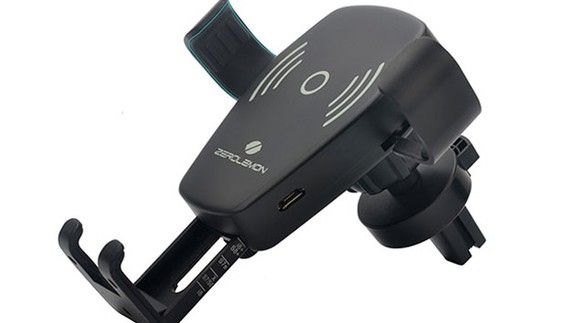
Get yourself a Fast Wireless Car Charger mount and keep your phone front and center — no fumbling around between the seats required.

This secure charging mount clamps onto your air vent, wires into your car’s 9V power outlet, and adjusts to accommodate any Qi-compatible device between 58mm and 88mm, and up to 10mm thick (including the iPhone 8, Samsung Galaxy, and Samsung Note).

Once cradled safely, your phone or tablet will regain battery power at top speed, thanks to the charger’s Qualcomm Quick-Charge 3.0 technology. And to ensure a clear line of sight without distractions, the Fast Wireless Car Charger rotates left to right and pivots vertically to provide the ideal viewing angle for following along on the GPS.

Save 35% on this wireless charger, bringing the price of $39.99 down to only $25.99.

Google and LG Display have made the highest resolution VR screen yet

Google and LG Display have joined forces to design the clearest OLED display to date. The 4.3-inch screen, which Google recently revealed at Display Week, is designed to push the boundaries of VR image quality with an incredible 1,443 ppi resolution. For comparison, Japan Display Inc unveiled its slightly smaller 1,001 ppi LCD screen earlier this month, which outclassed both the Oculus Go (538 ppi) and HTC’s Vive Pro (615 ppi).

The display offers an impressive 120Hz refresh rate, which is also a step up from the 90Hz achieved on Oculus Rift and Vive Pro. Measuring in at 4,800 x 3,480 pixels per eye, these numbers indicate a serious jump in visual fidelity, but it’s still nowhere near to matching human optics. In a research paper, Google’s Staff Hardware Engineer Carlin Vieri said humans are capable of seeing 9,600 x 9,000 pixels per eye, and that our field of view can reach roughly 160 degrees horizontally and 150 degrees vertically. Google’s prototype screen can manage 120 degrees.

To bridge that gap, Google researchers have implemented a technique called “foveated rendering.” It processes whatever image the user is looking at in high resolution, and allows objects in a viewer’s peripheral vision to lose focus. One benefit of this technique is that it shrinks the amount of data processing placed on the GPU.

At this stage, consumers will need to wait for Google and LG Display to eliminate issues such as lag, latency, and motion-blur before making their prototype available to everyone.

This article originally appeared on Engadget.