Archives for May 16, 2018

Is Apple on the Verge of Major Profitability Growth?

Apple (NASDAQ: AAPL) sells computers of all different shapes and sizes, from high-performance desktops all the way down to the Apple Watch, a computer that fits on our wrists.

Every computer that Apple sells includes two key components: Dynamic Random Access Memory (DRAM), which can be thought of as the workspace for a computer processor, and storage, which is where all programs and data are kept. Virtually all of Apple’s computers use a type of memory known as NAND flash for storage.

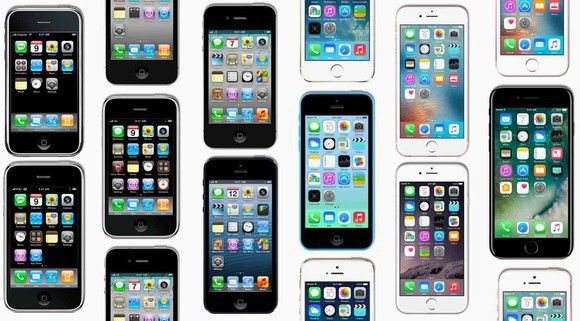
Apple’s iPhones arranged in a mosaic pattern

Since DRAM and NAND are such important parts of Apple’s computers, and since the amount of DRAM and NAND that the company offers in its key products tends to increase over time, the profitability of Apple’s products depends substantially on market pricing for these components. When they’re cheaper, Apple can either enjoy higher profitability or pass its savings onto the consumer (which could lead to higher unit demand). When they’re pricier, either Apple’s gross profit margin suffers, or it has to price products high enough to protect profitability at the expense of potential unit demand.

High demand and relatively low growth in supply of both DRAM and NAND in recent years has led to price increases for both; this has affected all buyers of these components, Apple included. However, according to Apple CFO Luca Maestri on the company’s most recent earnings call, the situation could improve soon.

Peak NAND

“On the memory front, we feel that for NAND, we’re going to be turning the corner very soon,” Maestri said. Although he didn’t elaborate further, a look at what’s going on in the industry would seem to support his optimism.

NAND, like any commodity, sees pricing fluctuations based on supply and demand. NAND demand has continued to grow because many computing applications, from smartphones to data center servers, are incorporating more NAND flash.

As an example, Apple’s iPhone 7 series came in storage configurations of 32 GB, 128 GB, and 256 GB, which represented increases from the 16 GB, 64 GB, and 128 GB configurations of the prior-generation iPhone 6s series, respectively. The iPhone 8 series and iPhone X shook things up further, coming in 64 GB and 256 GB configurations.

Some smartphone vendors are already introducing devices with 512 GB of storage, and I wouldn’t be surprised to see Apple’s upcoming iPhone lineup include a 512 GB option as well.

Although NAND demand continues to grow, many NAND flash producers are bringing additional supply online. Micron (NASDAQ: MU), for example, recently began construction of another NAND flash factory, and Samsung (NASDAQOTH: SSNLF) is reportedly considering building another one as well.

With supply set to increase — potentially dramatically — there’s reason for Maestri to be optimistic that NAND flash pricing could be headed in the right direction to boost Apple’s profits: down.

DRAM is “near the peak”

While Maestri’s comments that NAND could be “turning the corner very soon” indicate that management expects NAND prices to start falling, his commentary around DRAM seems a little less optimistic: “For DRAM, we also think that we are near the peak, possibly at the end of the year,” he said.

Although the situation in NAND hasn’t been great for buyers, the situation in DRAM has been even worse. There are fewer major DRAM makers than there are NAND flash makers, and the DRAM market is much larger than the one for NAND. On top of that, the few DRAM vendors have been extremely careful about the amount of capacity they put in, lest they find themselves in a situation where overall industry supply outpaces industry demand, leading to DRAM price cuts.

In fact, they’ve been so careful that law firm Hagens Berman recently filed a lawsuit against the major DRAM makers, accusing them of illegal price fixing.

Although Maestri doesn’t seem to be predicting DRAM price declines in the near term, he did suggest that DRAM prices would peak by the end of 2018. If DRAM prices might start coming down in 2019, that wouldn’t help boost Apple’s profit margins for the remainder of the calendar year (if anything, the situation could actually get worse). But it could lead to more favorable comparisons for gross profit margin, and ultimately net profit margin, in the coming calendar year.

3 Dividend Stocks to Fund Your Nest Egg

While dividend investors often look for the highest yields they can find, smart investors know that there’s a lot more to successful dividend investing than just capturing a big payout. And when we asked three Motley Fool investors to help identify three dividend stocks that are top candidates for anyone looking to grow their nest egg, their results put the proof to that statement. After all, two of the stocks they recommended — Walt Disney Co. (NYSE: DIS) and American Express Company (NYSE: AXP) — only pay investors 1.57% and 1.36%, respectively, at recent prices.

But that’s not to say that no higher-yielding investment is worth it. After all, one healthcare-steeped Fool made a solid case for investing in AstraZeneca plc (ADR) (NYSE: AZN), with its nearly 4% yield at recent prices one of the highest in the sector and far above the average.

Which is the best fit for you? In part, that depends on your goals. If near-term income is more important, the higher yield from AstraZeneca could be best, but if it’s long-term nest egg growth you’re after, Disney or AmEx might be right up your alley. But don’t stop here. Keep reading below to gain the unique insight three real-world investors have to offer on these companies.

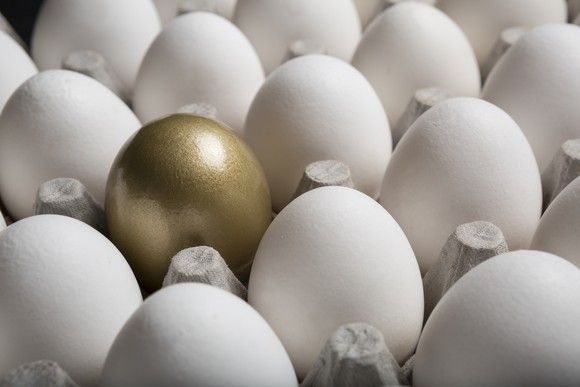
White eggs in a carton with one golden egg.

The comeback is finally here

George Budwell (AstraZeneca): Although AstraZeneca’s bout with the patent cliff hasn’t been kind to its top line, the company has still managed to create considerable value for shareholders over the last five years. The trick, if you will, is a top-flight dividend that yields 3.9% at recent prices. That’s among the richest payouts in all of biopharma, and close to the top for the healthcare sector in general.

The good news is that the risk that Astra will suspend or drastically reduce its payout is starting to wane, thanks to the breakout success of new cancer medicines like Imfinzi and Tagrisso. While Imfinzi’s fate in the all-important frontline setting for lung cancer has yet to be decided, Tagrisso has continued to rack up new approvals for high-value indications like metastatic non-small cell lung cancer in patients whose tumors express epidermal growth factor receptor mutations.

As a result, Astra’s growing footprint in oncology, combined with its already strong diabetes franchise, are set to return the company to mid-single digit revenue growth by next year — perhaps marking the end of the company’s protracted battle with the patent cliff. Specifically, Wall Street is forecasting Astra’s annual revenues to growth by a healthy 6.4% in 2019.

That being said, Astra’s projected levels of top-line growth won’t be enough to radically alter the company’s elevated payout ratio that presently stands at 118%. But that shouldn’t matter all that much in the big scheme of things. Management, after all, has stuck by its progressive dividend policy during the worst of times, showing a deep commitment to rewarding loyal shareholders. So this big pharma stock is arguably worth a deeper look by investors on the hunt for a reliable dividend and sustainable levels of capital appreciation.

The entertainment titan with a voracious appetite for growth

Chuck Saletta (Disney): Savvy dividend investors know that the best dividends are ones paid by businesses that have the opportunity to grow their profits — and thus future dividends — over time. On that front, few dividend-paying companies are quite as well positioned as media and entertainment titan Disney.

The house that the mouse built has grown through both organic expansion and through acquisitions to be an incredible powerhouse in its industry. Movie blockbuster after blockbuster ranging from Star Wars and the Avengers to its own traditional princesses are all within its wheelhouse. Add in some of the world’s most popular theme parks and the large — even if currently challenged — ABC and ESPN networks, and you have an entertainment behemoth with incredible long-term potential.

Disney’s dividend gets paid twice a year, and while its yield is currently a mere 1.7%, its payout represents less than a quarter of its earnings, giving it room to continue increasing it over time. Last year, Disney increased its dividend by a respectable 7.6%. With its earnings expected to grow by around 11% annualized over the next five or so years, Disney certainly looks capable of handing its investors more cash over time.

Despite Disney’s incredible strength and overall growth potential, continuing challenges in its television businesses are weighing on its shares. Those worries are what allow investors to buy a stake in that solid and still-growing company at around a mere 13.5 times expected earnings. Combined with its growth potential, that adds a reasonable valuation to the reasons to consider owning its stock.

When it comes to Disney, the investment magic encompasses a solid, well-covered dividend, a reasonable valuation, and strong growth potential. That’s exactly the combination you want in a dividend stock that you’d like to use to fund your nest egg.

Don’t let the small yield make you miss out

Jason Hall (American Express): With a yield below 1.5% at recent prices, many dividend investors will skip right past American Express. And if your goal is to build the biggest nest egg you can over the long term, I think that’s a big mistake. The bottom line is, American Express has both a strong track record of dividend increases while also possessing incredible long-term growth prospects.

American Express has paid a dividend since the mid-1980s, and has been aggressive at raising it. Over the past 20 years, the payout has increased 367%, while the yield has stayed relatively low due to the strong performance of its stock over that same period. Since 1998, AmEx has delivered 408% in total returns, sharply higher than the 310% delivered by the S&P 500 over the same period. Furthermore, it was able to maintain its dividend during the Great Recession, while many other lenders cut — or even eliminated entirely — their payouts.

Looking forward, AmEx has great prospects, as the global middle class continues to expand at a high rate, and more consumers and businesses look for sources of credit and financing. With a track record of low-risk lending practices, high profitability, and regular dividend increases, American Express should be on your list. Considering that shares trade for a very cheap 14 times the midpoint of 2018 earnings guidance, it should probably be at the top of your list.

How Warren Buffett Decides It’s Time to Sell a Stock

Warren Buffett’s favorite holding period is forever, as he often remarks, but it doesn’t always work out that way. In reality, the Oracle of Omaha and his team sell stocks regularly, and for a variety of reasons. In fact, of the nine major stock positions in Berkshire Hathaway’s (NYSE: BRK-A) (NYSE: BRK-B) portfolio 25 years ago, only three remain today.

However, there are right and wrong reasons to sell stocks, and Warren Buffett’s past comments, as well as Berkshire’s actions, can help guide you in the right direction.

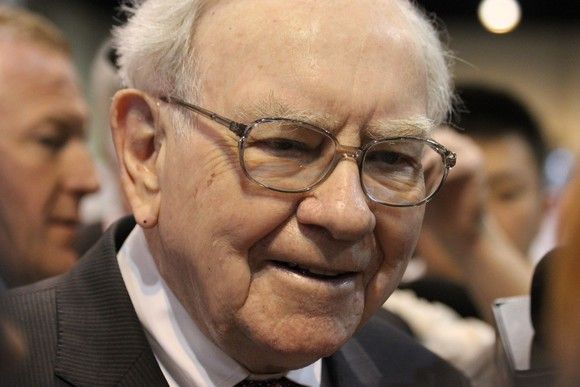
Warren Buffett speaking to shareholders.

How Warren Buffett decides it’s time to sell

At Berkshire Hathaway’s 2002 shareholder meeting, Buffett responded to a question about when he’ll decide to sell a stock. At the time, Berkshire had recently sold McDonald’s (NYSE: MCD) and Disney (NYSE: DIS) stock after holding them for uncharacteristically short time periods.

Buffett mentioned two main reasons he’ll sell a stock. The first is when he feels Berkshire needs the money for a more attractive opportunity. “We would sell if we needed money for something else — I would reluctantly sell something terribly cheap to buy something even cheaper,” said Buffett. This doesn’t happen to Berkshire too often these days — after all, the company has more than $100 billion in cash. However, it does happen, and I’ll discuss a specific, recent example in the next section.

The second, and more common, reason Buffett sells stocks is because of changing fundamentals, or a changing competitive landscape. As Buffett said:

We sell really when we think we’re reevaluating the economic characteristics of the business. We probably had one view of the long-term competitive advantage of the company at the time we’ve bought it, and we may have modified that. That doesn’t mean that we think the company is going into some disasterous period, or anything like that. We think McDonald’s has a fine future, we think Disney has a fine future, and there are others. But we don’t think their competitive advantage is as strong as we thought it was when we initially made the decision.

Real-world examples of stocks Buffett has sold

To illustrate some of these points, as well as some other reasons Buffett and the rest of Berkshire’s team may be inclined to sell stocks, here are a few examples from the company’s history:

  • IBM (NYSE: IBM): Berkshire had been gradually unloading its IBM stake for some time, and Buffett confirmed that the last of the shares were sold during the first quarter of 2018. In a nutshell, Buffett says he misjudged IBM’s competitive challenges, and as a result, it has revalued the stock lower. This is a prime example of the concept of “when your original thesis no longer applies, get out.”
  • Wells Fargo (NYSE: WFC): Berkshire has sold some of its Wells Fargo stock in recent quarters, and you might assume it has something to do with the bank’s infamous “fake accounts” scandal. But you’d be wrong. Buffett has said several times that he intends to stick with Wells Fargo, but regulatory rules prevent him from owning more than 10% of the bank’s shares. The recent sales were solely to remain under that threshold.
  • Freddie Mac (NASDAQOTH: FMCC): Many newer Berkshire investors are surprised to hear that Buffett was ever a fan of mortgage giant Freddie Mac, but Berkshire owned 9% of the company’s shares in the late 1990s. Berkshire made lots of money on the investment, but Buffett started to see troubling signs — specifically, the company was taking on far too much risk to keep its earnings growing at a double-digit rate. Buffett ended up selling all of Berkshire’s Freddie Mac shares by 2000, and we all know what happened during the mortgage meltdown — there’s a reason Freddie Mac is a penny stock today.
  • ExxonMobil (NYSE: XOM): Until late 2014, Berkshire was one of ExxonMobil’s largest shareholders. However, Buffett realized that oil prices weren’t likely to stay as high as he originally thought, so Berkshire’s entire stake was abruptly sold.
  • Goldman Sachs (NYSE: GS): Warren Buffett’s preferred uses for Berkshire Hathaway’s capital are to acquire entire businesses and buy common stocks — in that order. So, when Buffett sold 13% of Berkshire’s Goldman Sachs shares a few years ago, he cited his reason as raising capital for the pending Precision Castparts acquisition. This makes sense — if you feel your capital can be deployed more effectively elsewhere, it can make perfect sense to sell.

Bad reasons to sell

To be thorough, there are some bad reasons to sell a stock that investors should avoid. These include, but aren’t necessarily limited to:

  • Because the stock’s price plunged: This is perhaps the worst possible reason to sell a stock. If your original reasons for buying still apply, and the price has gone down significantly, it should be looked at as an opportunity to buy, not to sell.
  • Because the stock’s price increased sharply: I’ve been guilty of this one a few times, and at first, this might not sound like a bad reason to sell. For example, I sold Tesla after shares roughly tripled from its IPO price, even though all signs were pointing toward dramatically improved vehicle sales and a path to long-term profitability. In the years since, shares have increased another 300% or so from where I sold it.
  • Because a billionaire sold: This applies even if that billionaire is named Warren Buffett. Now, if a billionaire sells a stock, it could be a good time to do a little digging and find out why. However, I’m saying that you shouldn’t sell just because a billionaire did. For example, I mentioned that Buffett sold some Goldman Sachs a couple years ago, but a little research would show that this was mainly to finance an acquisition rather than because of fears about the stock itself.

The bottom line: Selling stocks is fine — if you do it for the right reasons. Sell because a company has fundamentally changed, or because you can deploy your money more effectively somewhere else. Don’t sell just because everyone else is, or to lock in a quick profit.

3 Stocks You Can Safely Own Until 2030

Every stock comes with some risks. Even the most dominant company can fade into irrelevance over the long term if too many things go wrong, or if its competitive advantages disappear. Predicting the future is hard, and getting it wrong can be disastrous for your portfolio.

There are some companies, though, that have better shots than others at continuing to thrive over the next 12 years. These companies have durable competitive advantages that are unlikely to vanish, making their stocks safer than most. Here’s why you should consider Mastercard (NYSE: MA), United Parcel Service (NYSE: UPS), and Boeing (NYSE: BA) if you’re looking for safety.

A highway sign that reads Safety First

Low risk, high return potential

Neha Chamaria (Mastercard): You need to have a solid forward-looking thesis to hold a stock with a conviction for as long as 12 years. Think about products and services shaping trends today that could become a way of life a decade from now — say, online transactions and cashless payments.

Sure, you might have already adopted cashless modes of payment, but do you know that nearly 80% of consumer transactions across the globe are still cash-driven? That won’t last forever, given rapid advancements in technology and e-commerce, which is why a stock like Mastercard is unlikely to disappoint you over the next decade or more.

Mastercard and Maestro are global brands in credit cards and debit cards, respectively. As of Dec. 31, 2017, Mastercard had issued 2.4 billion Mastercard- and Maestro-branded cards around the world. Because the company earns fees every time someone swipes its cards, its business can generate strong margins even as it banks on the “network effect” economic moat to expand its reach. Mastercard’s returns on invested capital have also been incredibly strong, at 35% or above over the past decade, reflecting a sustainable and lucrative business model.

To keep up with rapid technological advancements, Mastercard is now increasingly focused on future technologies like biometrics, QR codes (a type of two-dimensional bar code), mobile payments, and artificial intelligence. In its most recent quarter, Mastercard’s revenue and net income hit record highs. As digitization is the likely future of payments, Mastercard looks well-placed to not only be around in 2030, but also to have earned investors solid returns over time.

Betting on e-commerce

Tim Green (United Parcel Service): All signs point to online retail continuing to grow much faster than retail as a whole over the coming decade. Amazon is a driving force behind this trend, but traditional retailers like Walmart and Target have been investing heavily in their online businesses as well. One way to invest in e-commerce is UPS, a company that provides the fast shipping now expected by online shoppers.

UPS has enjoyed rising package volumes, thanks to Amazon and now other online retailers, but this growth presents its own challenges. The company has been forced to increase its capital expenditures to keep up with demand, and the peak holiday season has proven to be especially challenging. During the first quarter of 2018, operating profit for the U.S. package segment tumbled more than 20% year over year, even as revenue jumped 7.2%.

While these bottom-line challenges are something that investors need to take into account, the growth opportunity for UPS is vast. There are risks, including Amazon’s push to handle portions of its own deliveries. But there’s little reason to believe UPS won’t enjoy growth in package volume for years to come. The stock will react to short-term developments, but it looks like a solid investment for the long run.

Flying safely

Rich Smith (Boeing): I don’t think Boeing stock will set the world on fire, exactly, over the next dozen years. After all, the stock is already up 77% over the last dozen months, so a lot of upside has already been priced in. But do I believe Boeing is safe to own until 2030? Yes.

First and foremost, the business is quite safe. Boeing came into this year with a backlog of 5,864 planes ordered and waiting to be built. That was enough work to keep Boeing busy for nearly eight straight years if it ceased booking new orders immediately — getting you two-thirds of the way to 2030 right off the bat.

Of course, Boeing has not stopped taking orders. In fact, through the end of last week it had booked 221 net new orders in 2018, and made 184 deliveries. Thus, Boeing not only kept orders coming in fast enough to replace the orders it fulfilled, maintaining its backlog; it actually grew its backlog to 5,904 planes. If that keeps up, I see no difficulty at all with Boeing remaining in business through 2030.

As for the “safety” of owning the stock, and not seeing it collapse, that looks pretty secure to me as well. With $12.7 billion in trailing free cash flow (FCF) and an enterprise value (EV) of $197 billion (according to S&P Global Market Intelligence), Boeing trades for an EV-to-FCF ratio of 15.5. The company’s projected growth rate is likewise 15.5%, resulting in a perfect 1.0 EV-to-FCF-to-growth ratio — the very definition of a fairly priced stock.

Assuming Boeing keeps up its growth rate — which the backlog should ensure — I think this stock should easily be safe to own until 2030.

Google’s AI-powered News app arrives on iOS

A redesigned Google News for iOS was a notable inclusion at the Google I/O keynote last week. Today it rolls out officially, replacing the existing Google Play Newsstand, which launched on iOS in 2104 as a news and magazine subscription hub. The app has been completely reimagined, designed to handle the ever-evolving way we consume news, and leveraging existing AI and machine-learning technology to create a personalized and curated experience. Most importantly, it draws from a variety of sources to deliver packages of opinion, analysis and fact-checked articles focused on specific newsworthy events, giving users a solid platform from which to make up their own minds about current affairs.

The app comprises three main components: “For You”, “Full Coverage” and Newsstand. “For You” gives you a quick overview of five stories, based on your past reading habits, although you can edit this by telling the app to show you more or less content on a specific topic. “Full Coverage”, as you’d expect, digs deeper into news events, displaying stories from a variety of sources (although you can’t set preferences for these), as well as timelines for ongoing issues. Newsstand gives access to pay-walled news outlets. Simply subscribe to a publication and view its latest content in Google’s mobile-optimised AMP standard. The app is available in the iOS App Store now.

This article originally appeared on Engadget.

Logitech’s G305 is an affordable, no-lag wireless gaming mouse

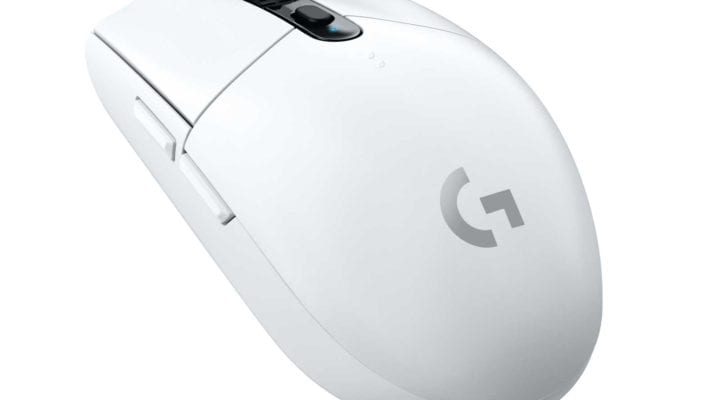
Logitech’s extremely-low-latency Lightspeed technology was largely reserved for well-heeled gamers when it first hit the scene last June, but it’s a much different story a year later. The peripheral maker has unveiled the G305, a Lightspeed-equipped mouse that costs $60 — much more justifiable than the pricier G703 and G603. You won’t get a particularly exotic design (this is a standard six-button mouse), but you also won’t have to compromise on lag just because you’re using a mid-tier mouse. It uses Logitech’s newer 12,000DPI HERO sensor, too, so it promises to be as responsive as it its more expensive counterparts.

How long it lasts depends on how much you value that all-out performance. Use the G305 at full performance and you can expect 250 hours (aka just over 10 days) of continuous input with an AA battery. If you’re willing to dial back to an 8ms report rate, though, you can stretch the battery life to nine months.

The G305 should be available worldwide later in May in black and white variants. It might not have RGB lighting or an abundance of controls, but Logitech is undoubtedly betting that this is part of the appeal. This is a no-frills design for people who care only about the raw performance of their mouse and are willing to sacrifice flashiness if it leaves more money in their pockets.

This article originally appeared on Engadget.