
Archives for May 8, 2018

Volvo is bringing Google Assistant to your car, even if you don’t use Android

It doesn’t matter if you’re an iPhone enthusiast or part of the Android Army — if you buy a Volvo car in the next few years, you’ll have access to the Google universe, including Google Assistant, Maps, and the Google Play Store. Thanks to an ongoing partnership between the carmaker and the tech giant, Volvo will be introducing Google services into its next-generation Sensus infotainment system, which is built upon Google’s Android operating system.

This announcement follows last year’s revelation at Google I/O that Volvo would be working with Google to create some new features for its automobiles, and now we’re learning that even Volvo owners without Android phones will be able to access some of Android’s most well-loved features. Within Sensus, customers will be able to access apps and services developed through the Google and Volvo partnership, meant specifically for these new vehicles. But they’ll also be able to check out thousands of other apps through the Play Store that have been “optimized and adapted for Android-based car infotainment systems,” Volvo noted in its announcement.

As apps and software are released and updated, Sensus will allow drivers to download the most recent versions in real-time, and automatically apply any improvements or fixes.

“Bringing Google services into Volvo cars will accelerate innovation in connectivity and boost our development in applications and connected services,” said Henrik Green, senior vice president of research and development at Volvo Cars. “Soon, Volvo drivers will have direct access to thousands of in-car apps that make daily life easier and the connected in-car experience more enjoyable.”

Perhaps the most useful of the new integrations will be Google Assistant, which will give drivers a hands-free method of controlling various aspects of their cars. By way of simple voice commands, Assistant can help control a variety of functions, including air conditioning, music selections, and messaging. And with Google Maps integrations, you’ll also be privy to refreshed map and traffic data in real time, so you always have the most up-to-date information about road conditions and alternate routes.

“The Google partnership is an important strategic alliance for Volvo Cars,” Green continued. “The Android platform, Google services, and Google’s working relationship with app developers in-house and worldwide will help us further improve the Volvo car experience.”


Scientists discover male-only gene that protects against leukaemia

Scientists have discovered the first example of a gene that is only found in one sex and provides protection against cancers including an aggressive form of leukaemia.

The gene is only found on the Y chromosome which, until today, was thought to only carry genetic information that leads to an embryo developing as a male, rather than a female, foetus.

It appears to offer an extra layer of protection against acute myeloid leukaemia (AML), a development researchers at the Wellcome Sanger Institute and the University of Cambridge said changed the way the Y chromosome was viewed and could lead to new treatments.

Each year, about 2,600 people in the UK are diagnosed with AML, an aggressive blood cancer that develops in cells of the bone marrow and leads to life-threatening infections and bleeding.

Mainstream treatments for the condition have remained unchanged for decades and just 20 per cent of patients survive for five years after diagnosis.

Women have two X chromosomes whereas men have one X and one Y chromosome. The X and Y chromosomes share many genes, but a small number of genes, including UTY, are only found on the Y chromosome.

The team studied the X-chromosome gene UTX in human cells and in mice to try to understand its role in AML.

They found the loss of the UTX, which is known to be mutated in many tumours, hastens the development of AML. This is because the healthy gene performs a key function in coordinating cellular proteins and the gene expression.

The researchers also found that UTY, a related gene on the Y chromosome, protected male mice that were lacking UTX against developing AML, because it can stand in and perform the role of UTX in preventing the unchecked growth of cells.

The study, published in Nature Genetics, showed that in AML and in several other human cancers types, loss of UTX is accompanied by loss of UTY, meaning the cancer-suppressing role of UTY extends beyond AML.

Lead author Dr Malgorzata Gozdecka, of the Wellcome Sanger Institute, said: “Previously it had been suggested that the only function of the Y chromosome is in creating male sexual characteristics, but our results indicate that the Y chromosome could also protect against AML and other cancers.”

Professor Brian Huntly, of the University of Cambridge and a consultant haematologist at Cambridge University Hospitals NHS Trust, said: “It is known that men often lose the Y chromosome from their cells as they age, however the significance of this was unclear.

“Our study strengthens the argument that loss of the Y chromosome can increase the risk of cancer and describes a mechanism for how this may happen.”

Dr Alasdair Rankin, director of research at the charity Bloodwise, said: “Survival rates for AML remain tragically low, with current treatment that involves intensive chemotherapy, often combined with a stem cell transplant, only curing a small proportion of patients.

“This important research helps build a fuller picture of what goes wrong genetically as this highly aggressive leukaemia develops. Understanding this process is key to developing targeted drugs for AML, allowing us to move away from gruelling and often ineffective chemotherapy-based treatments.”

CBC’s FM radio signal in Sarnia to undergo upgrades

Starting tomorrow (Tuesday May 8), CBC is upgrading its radio transmission systems at its Sarnia, Ont. site. The work will last until May 19 and involves removing and replacing FM antennas and transmission lines.

In respect of safety codes, radio service will be at reduced power or shut off completely at various times throughout the day as we operate on a temporary antenna with reduced coverage. Every effort will be made to maintain power of the service whenever it is possible and safe to do so, especially during our weekday and weekend morning shows.

– MORE SARNIA NEWS | Sarnia high school uncovers history embedded in cornerstone | Cheeky Monkey, Sarnia’s last record shop, prepares for Record Store Day

Aside from CBC’s terrestrial radio frequency of 90.3 FM in Sarnia, listeners can find live and uninterrupted programming via our website audio stream or CBC Radio app (iTunes App Store or Google Play).

Once this extensive work is complete, listeners to 90.3 FM (Radio 1 CBEG FM) should experience better FM reception in Sarnia and Lambton County.

If you have any questions or comments, please contact CBC Audience Services at 1-866-306-4636.

‘Dream come true’: Irish woman reconnects with P.E.I. host family after 30 years

‘I prayed to God all my life that I would find them,’ says Julie Holland

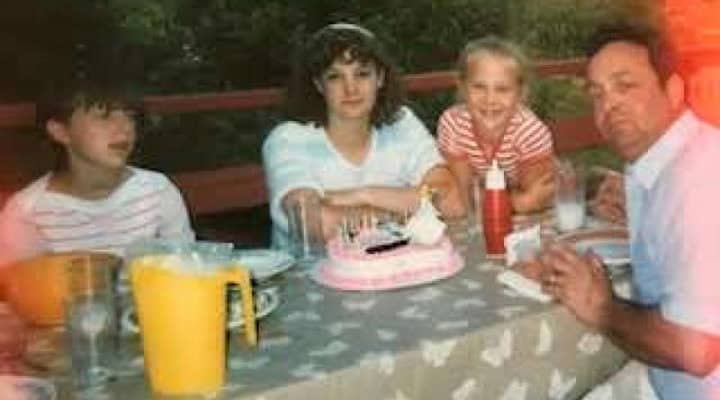
Julie Holland, left, and Nancy Fullarton, known as Nancy Mawle in 1987, are shown celebrating Nancy’s 16th birthday. (Submitted by Nancy Fullarton)

Julie Holland, of Belfast, Northern Ireland, visited P.E.I. for just four weeks in 1987 and never forgot it.

She took part in a program that brought 12 children from Northern Ireland — six Catholics and six Protestants — to the Island.

Wanting to reconnect with the family that hosted her all those years ago, she reached out to CBC News for help.

It was a long shot that paid off. And quickly, too.

I’m absolutely delighted. I’ve been messaging non-stop all morning and afternoon and I can’t believe it.
— Julie Holland

Holland had only a few details to go on.

She knew the family lived near a mall and near an airport. About the only other concrete detail she had to go on was the host family had two daughters — Nancy and Rebecca.

As it turned out, that’s all she needed.

After CBC published her story Sunday morning, Holland received a response within moments from Nancy Fullarton.

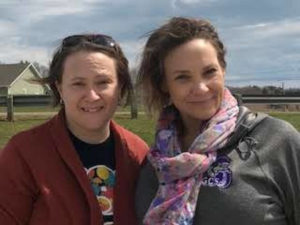
Rebecca, left, and Nancy are sisters in the family that hosted Julie Holland over 30 years ago. (Submitted by Nancy Fullarton)

She was a member of the family Holland had been looking for.

It all happened so quickly that Holland thought it was a hoax.

“I wasn’t sure whether it was true or not, but once she gave me the information and all their Facebook [profiles], I knew right away that it was her,” the woman said.

“I talked about them for years and I really longed to contact them again and now that it’s happened, I think I’m still in shock.”

‘It was like a dream come true’

When Fullarton, who was known to Holland by her maiden name, Mawle, read the story, she recognized Holland’s name and face right away.

“There she was!” Fullarton said with a laugh. She couldn’t believe it.

“She had remembered … almost all of the details of my family right down to the names and where we lived. It clearly meant so much to her so I reached out,” Fullarton said.

And how did the first conversation go after all this time?

“Amazing. Amazing!” Fullarton said. “She was shocked that it was happening and she couldn’t believe she got such a quick response.”

Just like that, old friends were reunited after 30 years. Holland couldn’t be any happier.

“They do remember me and they’re looking to talk to me,” she said. “I’m absolutely delighted. I’ve been messaging non-stop all morning and afternoon and I can’t believe it.”

“It was like a dream come true, it really was … I prayed to God all my life that I would find them, so God’s good.”

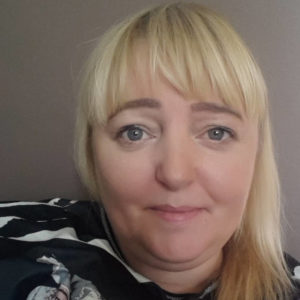
Holland, now 43, says her holiday in P.E.I. was one of the best experiences of her life. (Submitted by Julie Holland)

‘Maybe Belfast is just a skip away’

Fullarton and Holland have already urged each other to visit.

Although Holland said she won’t be able to return to the Canada in the near future, Fullarton said her family was already planning a trip to Scotland and France and that the two could soon cross paths again.

“Who knows, in a year or two, you never know we might end up seeing each other again,” she laughed.

“Maybe Belfast is just a skip away on our way there.”

New IWK specialist helping kids achieve life goals — like going to the mall

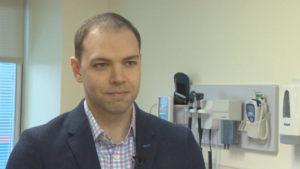
Dr. Jordan Sheriko is the first in his field to work at the children’s hospital

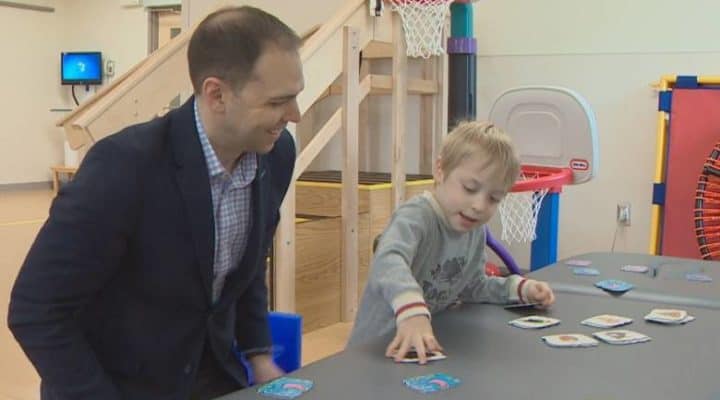
Dr. Jordan Sheriko plays with Elliot Little at the IWK Health Centre’s rehabilitation clinic. (Robert Guertin/CBC)

In a large room filled with stairs, a basketball net and railings, four-year-old Elliot Little plays cards as Dr. Jordan Sheriko looks on.

Elliot beams as he matches two pictures of fish.

This isn’t how many people would picture a rehabilitation session. But Sheriko isn’t here to do conventional therapy.

“It’s very much life goals, it’s very much function-based,” he said of his work. “Moving away from the specifics of the diagnosis and moving toward, ‘What is it that you want to do?'”

Sheriko became the first pediatric physical medicine and rehabilitation specialist at the IWK Health Centre when he started last summer. He’s one of a small but growing field in Canada, where he estimates there are fewer than two dozen who have finished the subspecialty.

Treat the person, not the disease

While his title may be a mouthful, his work follows a simple concept — treat the whole person, not the disease.

“It’s less about, ‘Can I move my arm?’ and more about ‘Can I learn to play certain things with my friends?’ or ‘I want to go to the mall’ or ‘I want to go hiking with my friends.’ So we want to look at how their illness or disability influences that.”

The IWK rehab clinic follows as many as 600 patients with a wide range of conditions. Sheriko works with children with everything from cerebral palsy to spinal cord injuries to brain trauma.

There are fewer than two dozen pediatric physical medicine and rehabilitation specialists in Canada, even though the career has existed to treat adults for years. Sheriko says it’s about time children received the same level of care. (Robert Guertin/CBC)

He says by setting life goals, the children have different motivation and respond differently to the idea of rehabilitation therapy.

“For a lot of patients and families, that’s a difficult journey to go on, the various stages of understanding and accepting those differences that they may have,” he said.

“We’re not necessarily going to cure or get rid of your disease, but we can certainly move things a lot further forward in terms of what you want to achieve with your life.”

New career in pediatrics

The career has existed to treat adults for years, but pediatrics are playing catch-up.

Sheriko says it’s an exciting time to be a part of the field, thanks to the evolution of technology. Many of his patients live in rural parts of the Maritimes and don’t have access to services such as transit.

But he says smart homes and vehicles are opening the options for those with disabilities and their rehabilitation.

“Even looking at our power wheelchairs, where we were 10 years ago compared to where we are now is really looking at, ‘How do we maximize that independence for patients and families?’ And it’s really quite exciting.”

Unique Ottawa midwife programs get funding boost

Funding announced for 17 new midwives as well as additional dollars for midwifery programs

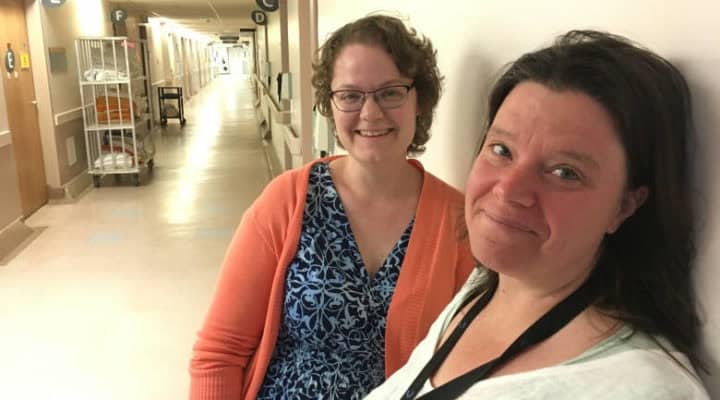
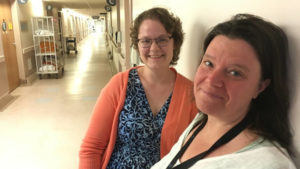
Dr. Laura Gaudet and midwife Amy McGee started the Oracle midwifery program two years ago. (Hallie Cotnam/CBC)

Soon-to-be and new mothers in Ottawa who want to receive medical care from midwives outside of a hospital or clinic have a few more options for prenatal and postnatal care.

The provincial government recently announced 17 new midwives for the Ottawa area as well as additional dollars for midwifery programs in the city.

A unique midwifery program that helps expectant mothers in high risk or special care situations is one of the programs getting new life with the funding.

The program is called Oracle and started with just one midwife, Amy McGee, who meets with an expectant mother outside a clinic when she doesn’t show up for her prenatal appointments.

Reaching out to pregnant women on the streets

“I’ll see people at the shelter, I’ll see people at their homes, I’ll see people at the jail. I’ll see people sometimes in Tim Hortons or I might even just chat with them on the street,” McGee told CBC Radio’s Ottawa Morning.

Oracle was launched in 2016 by McGee and Dr. Laura Gaudet when they noticed women weren’t keeping appointments.

There are a lot of reasons why an expectant mother might not show up for a medical appointment, but many of them deal with substance use or sometimes severe mental health disorders, they said. Some are worried their child will be taken away, so they try to stay under the radar.

“They feel that the hospital is not a welcoming place for them,” McGee said. “They might have a lot going on in their life where it’s hard for them to keep appointments. They might not have a telephone, so clerks here might have done their best to reach this person but the phone is no longer in service. Or they might not have money for bus fare.”

Sometimes there’s just these small little things that make a huge difference.
– Amy McGee, midwife

Gaudet told Ottawa Morning that pregnant women need to make sure they’re getting medical care.

“These women, for a whole host or reasons, are at exceptional risks for pregnancy complications for themselves and for their baby,” she said. ” A lot of the babies are very small because the mothers are not taking as good care of themselves as they’d otherwise be able to.”

Funding from the province has allowed the team to hire on another midwife, taking some of the load off McGee’s shoulders. It’s also letting McGee help clients in small, but meaningful, ways.

“What it means is that I have a little fund of money I can use to buy bus tickets, to buy food for people, to buy prescription medication that’s not covered, or diapers or formula or whatever, whatever it is,” she said.

“Sometimes there’s just these small little things that make a huge difference.”

Midwives on staff at the Montfort

Another program to receive funding is out of the Montfort Hospital.

Typically, a new mom who is under the care of a doctor will stay in hospital for up to two days after a baby is born, if the birth is low risk, and will return to the hospital for postpartum care.

With funding courtesy of the Ministry of Health and Long-Term Care, the Montfort Hospital will let mom and baby leave the hospital hours after birth and receive midwife care from home, as long as they’re given the go ahead from doctors, with up to three visits from the midwife in the first week after delivery.

It’s slated to start by June 1 with two midwives working out of the hospital serving an expected 250 families.

The program idea came from survey results that suggested new mothers wanted to head home earlier and get more supports for the transition from hospital to home, said Montfort midwife Laurence Tsorba in an interview with CBC Radio’s All in a Day.

“It’s to give … options for a woman,” Tsorba said.

She explained that if a woman wants to be part of the program, she’ll go to an information session before giving birth — the first contact between mom and midwife, she said.

Tsorba said she hopes that more midwives can be part of the program at the Montfort if it proves to be popular and that other hospitals follow suit.

“That’s a very good option for parents and families. So we hope that it could be imported to other hospitals,” she said.