Archives for April 3, 2018

Reddit’s first redesign in years is a major one

Reddit has looked pretty much the same these past years, barely changing from the time it first introduced subreddits in 2008. Now, it’s finally rolling out its first major redesign in a long time — it’s now available to one percent of the website’s population and will make its way to more people in the coming months. The social network has been working on a redesign over the past year, making sure not to stray too far from what it currently looks like, while making things much easier to use and navigate.

According to Wired, two people from the team Reddit formed for the project surveyed random people at San Francisco’s Union Square. The two researchers asked them whether they understand how the website works and found that while most people “get” the concept behind Reddit, they can’t figure out how to use it or what to use it for. Clearly, that’s something they should fix for Reddit to truly become “the front page of the internet.”

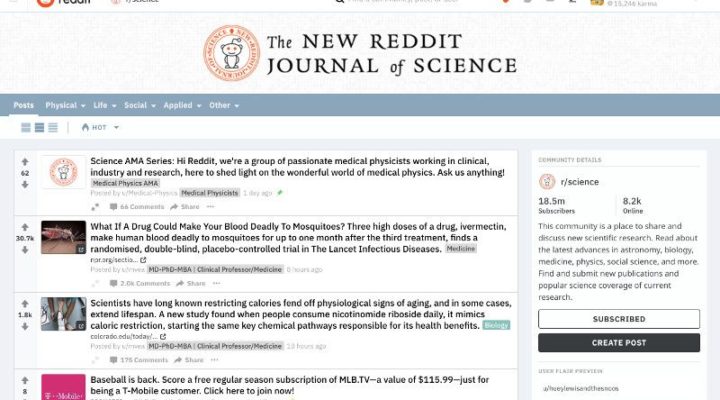
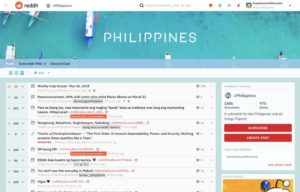
In the end, the team came up with three views you can choose from: the Card layout pictured above puts each post in its own card à la Facebook, while the Classic layout looks similar to the current Reddit with a few pleasant design tweaks. Finally, the Compact view squashes posts closer together, so you can scroll through them more quickly.

You can switch between the three views by toggling your choice on using the new buttons underneath the menu near the top of the page. When you click a post, it’ll now open in a lightbox without taking you away from the page you’re on. You’ll also get new fonts, clearer distinction between external links and links to other Reddit posts, a more prominent button for creating new posts (which takes you to a content interface where you can choose whether to submit a text, an image or a link post), as well as a new version of Reddit mascot Snoo.

Ben Rush, the redesign team’s user interface design lead, told Wired that they’re “making [Reddit] simpler and more efficient, making it more accessible, but not altering the scaffolding.” But since the company knows that redesigns could be poorly received — looking at you, Snapchat — you can still use the old interface even if the new one comes your way.

Classic redesign:
Compact redesign:
This article originally appeared on Engadget.
Google Drive will help you figure out who needs access to a file

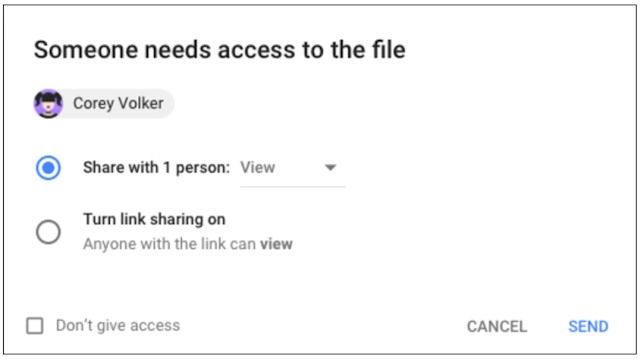
One of the tricky things about coordinating an email chain is always making sure everyone has access to the right files, but Google said it’s making that easier in Drive. The next time you go to share a document or other file through email or a calendar invite its built-in access checker will be updated to show the names and email addresses of anyone you’re including who doesn’t already have permission to view it. Apparently it also “will anticipate who needs access to a file and intelligently default to sharing with those recipients only.”


Then you’ll see the new prompt above, or choose a different option. The key thing, though, is that now it won’t default to sharing via link, so hopefully making it smarter about specifying access will prevent any embarrassing leaks.

This article originally appeared on Engadget.

Alberta woman tracks down lost dogs after losing her own

‘You’ve heard of the crazy cat lady. I’m the other side of the fence,’ says Kim Taylor

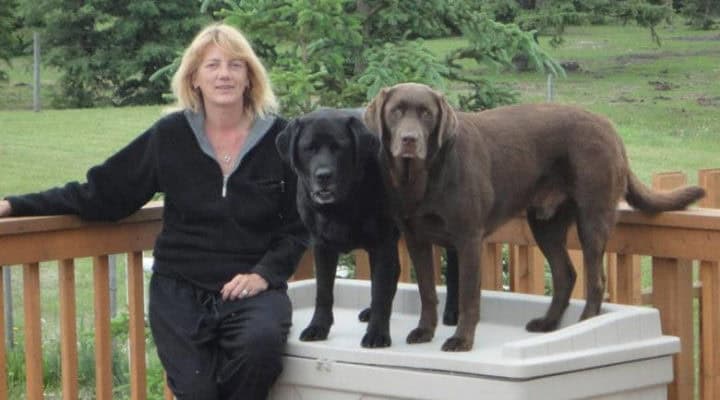
Kim Taylor of Sundre, Alta., with her two dogs, one of which is trained to track missing pets. (Kim Taylor)

Every time Kim Taylor tracks down another lost dog, she always thinks of her own.

Her chocolate brown lab, named Ryley, went missing one day in the woods without a trace more than five years ago. Taylor learned to track dogs, and when she couldn’t find her own, she channelled her heartbreak into helping other pet owners.

“Every time I bring one back alive and safe, honestly, after I leave I have a little tear because I wish it was Ryley. I always wish it was him,” Taylor said.

“But I’m happy. I’m relieved because it’s kind of a legacy. It’s kind of a lemons-to-lemonade moment.”

Taylor lives in the rural Alberta town of Sundre, about 100 kilometres northwest of Calgary, in the foothills of the Rocky Mountains. She’s become adept at navigating the variety of landscapes in the area, sometimes tracking a dog for six months at a time.

“You’ve heard of the crazy cat lady. I’m the other side of the fence,” she said.

When Taylor’s on a new case, she packs up her truck with a heat-sensing drone, a quad, a pet-tracking dog and traps. She’ll walk in 10 kilometre grids through fields and woods, wade in streams and hike mountains.

“Sometimes we can use the quad but most times you need to go on foot because you have to be moving like a ninja, so you don’t frighten the dog further,” she said.

She knows how to tell if prints or feces are fresh and what they say about the dog’s health.

“It’s not a glamorous job but now here I am, over five years later,” Taylor said. “I’ve reunited dozens and dozens and dozens of dogs.”

Taylor has made such a name for herself in Sundre as a dog detective that she’s routinely flooded with lost dog ads and often must partner with local rescues and volunteers for bigger searches.

Dogs that get lost are often spooked from loud noises by gunshots or fireworks, she said, or are left in unfenced yards and go exploring. Smaller ones can be attacked by predators.

Taylor found one dog that had been “rag-dolled” by a bigger animal. She took it to surgery at a local veterinary clinic.

“He made a full recovery — and this was like a five-pound dog. It’s amazing what animals can put up with when they’re lost,” Taylor said.

Other searches end more tragically.

“I always bring back something to show the owners that the search is off,” she said. “That is, for me, the worst when I have to come back with remains, or less than remains.”

Kim Taylor help find Tika, a five-month-old puppy, on the five-year anniversary of her own dog going missing. (Kim Taylor)

But she says to never give up on your lost dog. Animals have instincts to survive in the wild, even in the winter, whether you have “a three-pound Chihuahua or a 140-pound dane.”

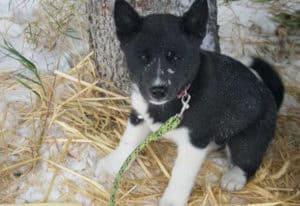
Clinton Leussink thought he’d lost his five-month puppy for good this winter, when he connected with Taylor. She explained how best to track the Karelian bear pup. They found Tika, who had a hurt paw.

“[Taylor] was happy. You could tell she was just satisfied,” Leussink said. “We were reunited and that was all that mattered to her.”

Taylor wouldn’t take any money, Leussink said, but she said she does take payment for her services for longer searches or to cover gas. She said she knows people don’t have a lot of money but care a lot for their pets.

Regardless, she said she sees herself tracking lost dogs for years to come.

“It’s just so horrible we had to lose our boy to put myself on this path, but if that’s what it took to get all these dogs back home, then OK,” she said. “It’s the only way I can settle it in my heart.”

Island woman knits teddy bears for kids visiting the hospital

Anna MacDonald has made over 200 bears

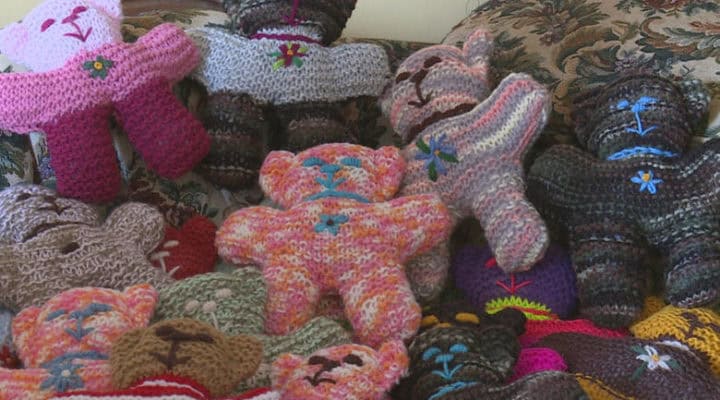
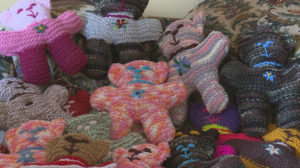
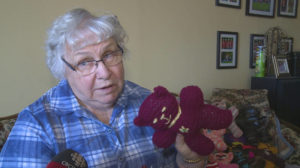
Anna MacDonald has been making teddy bears for kids visiting the O’Leary Community Hospital for over a year. (Brittany Spencer/CBC)

When Anna MacDonald started knitting decades ago, she never thought that teddy bears would become her signature pattern.

It all started when her great-granddaughter had to go to the O’Leary Community Hospital to have blood taken.

MacDonald says what might have been a traumatic experience for her granddaughter was a pleasant one, all because she was given a teddy bear.

MacDonald has high standards for her bears. ‘If the little fella isn’t happy, I’m not happy so I have to take it apart and do it over again. I try to make sure I have happy teddies,’ she says. (Brittany Spencer/CBC)

Since then, MacDonald has dedicated her knitting needles to creating what she calls “comfort teddies,” which she donates to the hospital’s lab to give to children who come in for testing.

“The girls that work in there … they say it’s just wonderful that they have the teddy bears to give to the little people,” she said.

“I really don’t want praise and glory for my work, I want these for the kids, that’s what it’s all about.”

200 and counting

Over a year later, MacDonald said she’s made over 200 of the bears, and the staff at the hospital are always happy when she comes in to drop off more.

Each bear is unique and MacDonald said she makes up to 25 bears a month from yarn that people in the community have donated.

Even though she is making so many bears, she holds her quality standards to a high level.

“If the little fella isn’t happy, I’m not happy, so I have to take it apart and do it over again,” she said.

“I try to make sure I have happy teddies.”

All in a day’s work

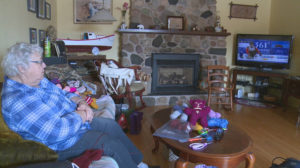
MacDonald said she has combined knitting the bears with watching curling which actually helps her finish her work faster.

“It takes me about a day. It all depends on how much curling is going on. I’m a great Brad Gushue fan and whenever he’s curling, I am here watching him,” she said.

“It gives me an excuse, I’m actually doing something…. We’re not people that can sit idle.”

MacDonald hopes more people take up the practice as a way to give back to their communities.

Anna MacDonald loves to watch curling while she makes her teddy bears. (Brittany Spencer/CBC)

She said one of her granddaughters is currently working toward becoming a lab technician.

“I hope that someone at whatever hospital she goes to work at will have somebody who will knit teddy bears for that hospital.”

MacDonald says she’s knit so many teddy bears she knows the pattern instinctively now.

And with all the yarn that’s been donated to her, she’ll continue making teddies for the kids visiting the hospital for a very long time.

Federal gov’t announces $7M for child care in Northwest Territories

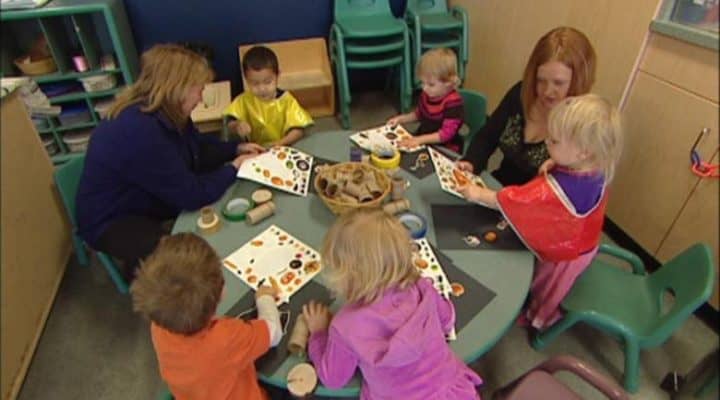
Investments include new diploma through Aurora College and training for 220 early-childhood educators

The money announced Thursday is part of the federal government’s $7.5-billion investment over 11-years towards improving child-care services across the country.

On Thursday the federal government announced more than $7 million for early-childhood education and child care in the Northwest Territories.

The money is spread out over the next three years, and comes from the 2016 and 2017 federal budgets.

The investments include:

  • $2.4 million for up to 59 existing day homes and daycare centres in the territory
  • $1.5 million toward a new two-year early-childhood learning and child care diploma through Aurora College
  • $1.2 million to deliver more training for up to 220 early-childhood educators
  • $350,000 to help open up 100 new child-care spaces in licensed family day homes and daycare centres
  • 20 annual scholarships, worth $5,000, for students studying early-childhood development

“We believe all children in the Northwest Territories deserve the best possible care, nurturing and support right from the start,” stated N.W.T. MP Michael McLeod in a news release.

The money is part of the federal government’s $7.5-billion investment — over 11 years — toward improving child-care services across the country.

Winnipeg woman on her 21st mission to help people smile

Operation Smile speech pathologist has helped kids with cleft palates all over the globe

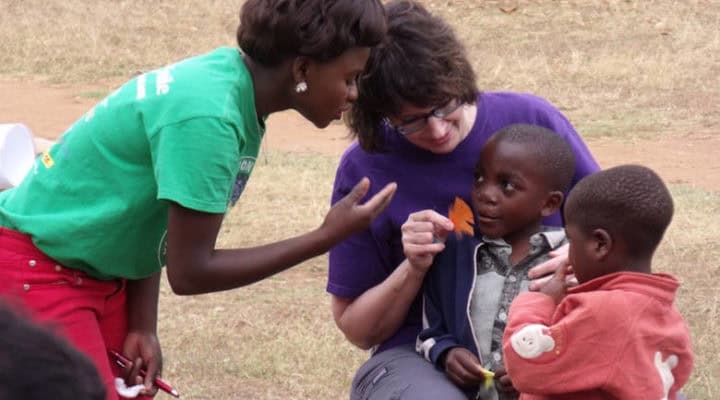
Myers helps a boy with his speech on an Operation Smile trip to Malawi in 2016. (Submitted/Candace Myers)

Candace Myers is heading out for her 21st medical mission to help people smile — something she’s been doing all over the world for over a decade.

“It’s a really incredible experience,” she said.

Myers is a speech language pathologist with CancerCare Manitoba but she takes time off to volunteer with Operation Smile. The organization provides free surgery to kids and adults born with cleft lips or cleft palates.

She’s been doing at least one trip a year, since she started volunteering with the organization about 12 years ago. This time Myers is headed to Ghana.

“I think it’s the least I can do really,” said Myers.

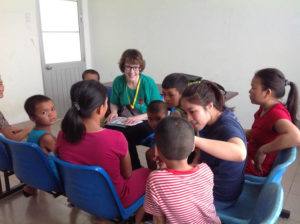
Candace Myers in a speech therapy class in Vietnam in 2017. (Submitted/Candace Myers)

On these medical missions, Myers screens children and adults to help determine their needs for therapy including intervention, education and training. This includes teaching families how to ensure that their children are getting the proper nourishment, as cleft palates can cause babies to struggle while feeding, she said.

She also helps teach parents how to take over the therapy once the speech pathologists are gone.

“Because for many of these kids this will be the only opportunity they will ever have to work with a speech therapist,” said Myers.

Medical missions are extremely busy for all involved. Myers is not involved in the actual surgery, but she screens each patient to help figure out their specific needs.

During one mission, Myers saw more than 400 patients in just four days.

“I always describe the experience as exhausting but exhilarating,” said Myers.

“It’s so incredibly satisfying to be able to help people and the families are so incredibly appreciative and grateful for the help.”

Even though Operation Smile is all about helping children and adults with cleft palates, Myers often sees children who have other speech issues.

Sometimes families learn about speech therapists in the area and want their children to bee seen too, said Myers. She’s worked with deaf children, children with Down syndrome or other medical conditions that might have been overlooked. Myers is able to help educate the family to better understand the needs of their child.

She focuses on kids who aren’t going to school because of their cleft palates, often because they’re being bullied or the teacher can’t understand them.

Most of the time, speech improvement starts almost as soon as speech therapy starts, she said.

“It’s such a basic thing, so many kids, all they want to do is to be able to go to school and do the same thing as their siblings and their friends do,” said Myers.