Archives for March 29, 2018

Electric vehicles ‘front and centre’ at Vancouver auto show

Vancouver International Auto Show organizers say electric vehicles fill more floor space each year

Mitsubishi had a couple of its Outlander PHEV SUVs on display at the Vancouver International Auto Show. (Rafferty Baker/CBC)

The supercars with huge, gas-guzzling engines are still among the show-stoppers at the Vancouver International Auto Show, but electric cars are now also prominently displayed, and they’re edging out their fossil-fuelled counterparts.

The auto show kicked off Wednesday with more than 400 shiny vehicles for enthusiasts and consumers to check out at the Vancouver Convention Centre.

Blair Qualey, president and CEO of the New Car Dealers Association of B.C., which puts on the show, said 115,000 people took in last year’s event, and he expects even more this year.

He said the trend toward more and more electric offerings from car makers is still going strong.

“We have the biggest number of electric vehicles we’ve ever seen at the show, and ones that you can actually do a ‘ride and drive’ in,” said Qualey.

Electric test drives

Charlotte Argue manages the program that makes the electric test drives available at the Convention Centre throughout the show. She’s the program manager of Plug In BC, an organization that promotes electric vehicles (EVs) and infrastructure.

“It’s just growing exponentially,” said Argue of the EV market.
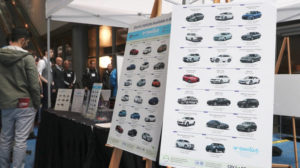
Plug In BC had a variety of electric vehicles from different car makers at the Vancouver Convention Centre for people to take out for a test drive. (Rafferty Baker/CBC)

“For a lot of the auto makers, they’re choosing to put the electric vehicles front and centre … and I think that’s partly in response to consumer demand and interest out there,” she said.

“If they don’t have an electric vehicle available on market, then they’re missing out on a large group, and a growing group,” she said, adding that there are about 9,000 EVs registered in B.C. Across the country, that number is closer to 50,000.

Ford had a prototype gas-fuelled Ranger pickup truck and a new Mustang Bullitt to show off, along with the usual range of heavy pickups, but you had to first pass by its electric hybrid cars to get to them.

To check out the array of Ford trucks at the Vancouver International Auto Show, you had to first pass by the company’s electric offerings. (Rafferty Baker/CBC)

Over at the Mitsubishi area, the company was promoting its Outlander PHEV, which it calls “the first and only plug-in hybrid SUV with 4WD in all-electric mode.”

Spokesperson Michelle Lee-Gracey said the SUV is a “game-changer,” with a base-model price around $43,000. She said “electrification is at the core of our business at Mitsubishi Motors,” calling the Outlander PHEV a pillar in the company’s growth plan.

Niche car makers

But it’s not just the big car makers touting EVs. There were smaller companies at the show as well, including Vancouver-based Meccanica, which has been marketing its three-wheeled, single-passenger Solo.

Meccanica also used the opportunity to unveil most of a new electric roadster, the Tofino. It had a chassis to roll out, with completion expected toward the end of this year. Meccanica says said the Tofino will be able to travel 400 kilometres on a single charge, hitting a top speed in the 200 km/h range.

Meccanica VP Chris Koch said EVs will keep getting more space at the auto show.

“Electric cars are coming. You know it, they know it and everybody else will know it,” he said. “You will see more and more.”
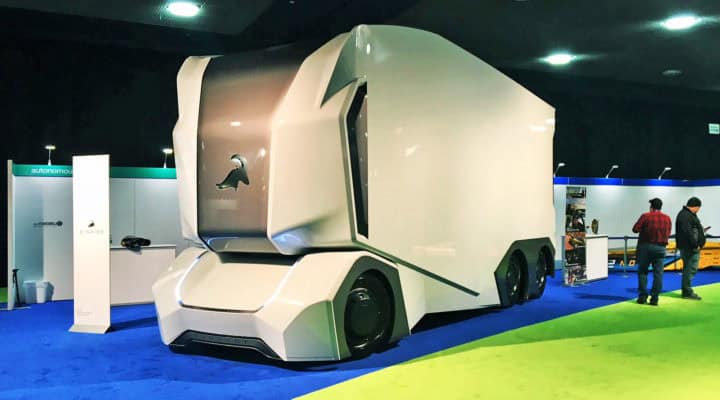
Einride’s self-driving cargo trucks hit the highway this fall

Einride’s autonomous T-Pod may look like a giant freezer on wheels, but it’s likely to be on the road fairly soon. According to TechCrunch, the company announced today that the first customer deliveries of the self-driving transport vehicle will begin this fall.

The T-pod can transport standard cargo pallets and travel up to 124 miles on a single charge. It can drive itself on highways, but a human will take over on main roads via remote. TechCrunch says that the trucks will use the Nvidia Drive AI platform to plan driving paths and intelligently sense the environments. Einride also hopes to have a fleet of 200 with an initial route set between Gothenberg and Helsingborg in Sweden.

This article originally appeared on Engadget.

Developer proposes his land for new school next to Centennial Park in Moncton

The school would replace Bessborough and Hillcrest schools in west end

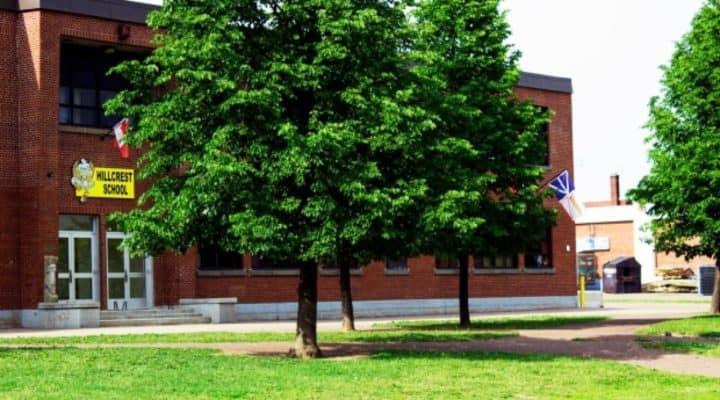
Last month, Premier Brian Gallant announced Moncton would be getting a new Kindergarten to Grade 8 school in the city’s west end. (Hillcrest School, Moncton NB/Facebook)

A Moncton developer hopes that the province will choose his land next to Centennial Park for a new school.

Last month, Premier Brian Gallant announced Moncton is getting a new kindergarten to Grade 8 school in the west end.

Although there’s no word yet on when the school will be built or where, the province has put aside $1.5 million to begin planning the new school, which will replace Hillcrest and Bessborough schools.

Romeo Goguen, who owns Mapoma, a development company in Moncton, owns vacant land along the north edge of Centennial Park, directly across the street from the CN Sportplex, a large recreational facility in the west end, which planners feel is an easy location to drive to.

“He said, ‘Listen, if it made sense for the community and the community was interested in putting a school there … I think it would be a great piece of land because it borders the park and right across the street are the best fields in the city,'” said Bill Whalen, owner of Hawk Marketing, who is working with Goguen on the project.

What a great place to have recreation and social activities as part of your school mix.
-Bill Whalen , owner of Hawk Marketing

Goguen bought the land from a Crown corporation, Canada Lands Company.

He had a 10-year development plan, but he put it on hold about a year ago after he heard the two schools were closing down.

According to Whalen, the landowner has started playing around with plans to see what the school layout could look like and how the community could be improved.

“If my kids could’ve gone to a school that had the beautiful Centennial Park … and across the street had the fields of CN Sportplex — what a great place to have recreation and social activities as part of your school mix,” Whalen said.

But not everyone supports having a new school at that location.

Whalen and Jim Scott, president of Trace Planning and Design, recently met with committees from both west end schools. While parents at Hillcrest were for the idea, parents at Bessborough want a new school on the current site.

A broader vision

Whalen said the developer has also met with New Brunswick Finance Minister Cathy Rogers, members of the district education council and with the city.

“Romeo’s big thing was, ‘I don’t want this to be another Moncton High, where once the school decision is made, the old school gets left behind and nothing done with it.’

“He wanted to create a vision for the other two sites.”

The plan would include housing.

“In the end, this is the province’s decision … but let’s raise our hand and say, ‘We’ve got a piece of land that we think might make some sense for the parents, for the kids and for the community.'”

Scott said between 20 and 25 acres would be needed for a kindergarten to Grade 8 school but 15 acres would be OK.

There have not been any discussions between the landowner and the province. But the landowner will develop a proposal package, while continuing discussions with the city and going through a rezoning process.

“Romeo wanted to make it very clear that he wanted this to be a wonderful place for kids,” Scott said. “We want this to be a neighbourhood school.”

Liberals’ $11B pledge for high speed rail highlights long list of major infrastructure promises

Spending plan also includes new money for hospitals, schools, broadband internet

High speed trains at a maintenance station in Wuhan, China. The Liberal government wants to bring similar 200 km/h trains to Ontario. (The Associated Press)

The Liberal government is committing $182 billion to infrastructure projects over the next 10 years, including a major pledge towards the construction of Canada’s first high speed rail line.

The 2018 pre-election budget is promising an $11 billion “initial investment” to support construction of the long-discussed high speed rail connection that would link Toronto to Windsor, reducing travel times by as much as 60 per cent.

The funding is likely contingent on the Wynne government winning the June election and implementing the budget.

The proposed high speed line would include seven stops: Windsor, Chatham, London, Kitchener, Guelph and Toronto’s Union Station, with a connection to Pearson International Airport.

However, Ontario has not yet determined a price tag or timeline for the project, so it remains unclear how much of the line could be built with $11 billion, and when it might be operational.

The line is planned to open with a connection from Toronto to London, with the second phase reaching Windsor to be built sometime after.

The high speed line is projected to contribute “over” $20 billion in economic benefits to Ontario annually, according to the Ministry of Finance.

While the Liberals have focused on the expansions to social services included in the budget, Finance Minister Charles Sousa says the long-term commitments to infrastructure will benefit young Ontarians as well.

“These are important things for them too,” Sousa said. “That is the legacy we leave for future generations, making them more competitive.”

The total suite of infrastructure investments is forecast to support around 140,000 jobs per year.

Finance Minister Charles Sousa says the infrastructure spending will support 140,000 jobs annually. (John Rieti/CBC)

Transit and transportation

Under the new budget, the province’s total commitment to transit would rise to $79 billion in 2018-19, up from $56 billion last year.

In addition to high speed rail funding, the province is also promising $8.3 billion towards public transit infrastructure in the upcoming fiscal year.

Specific recipients of that funding have not been finalized, but contenders are expected to include Toronto’s relief line and Yonge North subways; Toronto’s Waterfront transit network; Durham’s rapid bus transit; Mississauga’s rapid transit along Dundas Street; and Brampton’s rapid transit along Queen Street.

The Wynne government would also invest $25 billion over 10 years to improve Ontario’s highways if the budget is passed following the election.

‘A good budget for the city of Toronto’

Mayor John Tory said: “In overall terms, a good budget for the city of Toronto.”

He applauded the province’s transit funding pledge, as well as a transit integration “game-changer.”

“I’ve had numerous conversations with Premiere Wynne and her ministers about the need to integrate regional and local transit systems under one fare so that riders are able to go to work and to school and back home again conveniently, efficiently and affordably ,” Tory said.

“I’m deeply gratified that Premiere Wynne listened and, under the plan in the budget, transit users in the 416 will soon be able to get on GO Transit and, eventually, SmartTrack for a TTC fare,” he added.

Tory also applauded funding commitments to mental health and housing.

Hospitals and schools

The budget also includes a 10 year, $19 billion commitment towards infrastructure projects at a variety of hospitals around the province.

The money will fund the redevelopment of Ottawa Hospital’s civic campus; an expansion of the emergency department at South Bruce Grey Health Centre; and the redevelopment of Lakeridge Health’s Bowmanville site.

Other recipients include Sick Kids, The Centre for Addiction and Mental Health, Scarborough and Rouge Hospital, and North York General Hospital.

While specific projects have been identified at each of the hospitals, the Liberals have not stipulated exactly how much each organization will receive over the next decade.

Another $16 billion of capital grants has been pledged to public education, including the construction of new schools and additional renovations.

A half-billion for digital infrastructure

The Liberals are also promising to expand broadband internet connectivity in Northern Ontario and rural communities with a $500 million investment over the next three years.

That includes $71 million to improve cellular service in eastern Ontario and $20 million to support a “low earth orbit” satellite, which would beam down internet services to rural and remote parts of the province.

Chester to open first walk-in clinic for patients without family doctor

Clinic set to open April 6, will be available 3 days a week

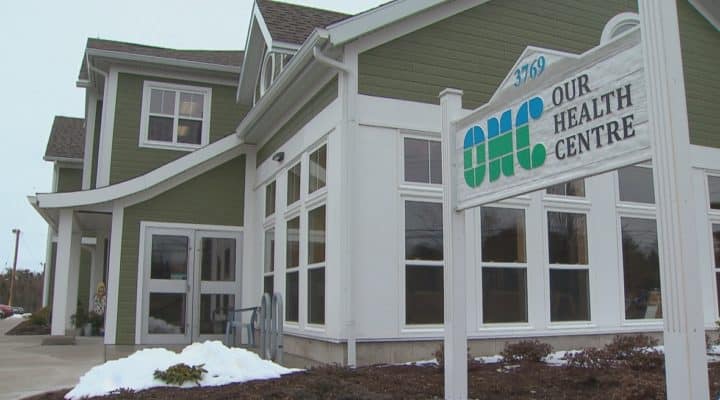
People in Chester, N.S., raised $4 million to build Our Health Centre, while the province chipped in $500,000. Volunteers then offered time and services to help construct the building, which opened in November 2016. (David Laughlin/CBC)

Thanks to a community drive that has been years in the making, Chester is putting the finishing touches on its first walk-in clinic to serve people who don’t have a family doctor.

The clinic is set to open on April 6, and will be available three days a week.

“We were anxious at the beginning whether we could pull this off,” said Thelma Costello, chair of Our Health Centre, which will house the walk-in clinic.

What is Our Health Centre?

Our Health Centre (OHC) is a health-care facility that was also built by community donations. The fundraising effort began 10 years ago, and the centre opened in November 2016.

The facility houses a family practice, which is operated by the Nova Scotia Health Authority, but it’s also home to support groups, health-care education programs and a blood clinic.

The municipality recently awarded OHC a grant for $15,000 to buy equipment for the walk-in clinic.

Costello said initially, staff didn’t think the centre would need a walk-in service.

The health authority’s family practice has three doctors, a nurse practitioner and a family practice nurse, she said.

“We were hoping that the family practice complement would be sufficient to cover the people on our wait-list but it isn’t yet. So because it isn’t, we’re opening our own walk-in clinic,” said Costello.

She said officially, there are about 400 people in the Chester area on the wait-list to have a family doctor, but OHC believes there are many more who aren’t registered.

Costello said some people aren’t aware the wait-list exists, so as part of the centre’s education effort, staff will be showing patients at the walk-in clinic how to sign up.

Home to 3 physicians

The clinic will be home to three physicians. Despite the doctor shortage, Costello said finding doctors willing to help out one day a week was surprisingly easy.

“We’ve had physicians approach us over the years looking for opportunities in Chester, and as you know, at one point there was some confusion about where doctors could or couldn’t practise, whether walk-in clinics could be permitted or not permitted,” she said, referring to the Nova Scotia Health Authority’s physician resource plan.

“All that confusion, I think, caused challenges for communities and doctors, and so we had names of people we knew were interested.”

Two of the physicians are based in Chester and a third is from the Halifax area.

Up until now, people in Chester have had to commute to Tantallon or Bridgewater if they wanted to visit a walk-in clinic and the only other alternative was to go to an emergency room.

“I think it’s great,” said Kelly Slade, a Chester resident who has been without a physician for a year. “It’ll save time in emergency rooms. They can go to the clinic instead of using emerge as a walk-in clinic.”

‘It’s so much closer’

Allison Mosher also expects to use the clinic. Her physician retired about four years ago and she’s been going to Tantallon ever since.

“It’s so much closer, especially where I don’t have a vehicle,” she said. “And I think the residents of Chester will appreciate it, too.”

Costello said she hopes more physicians will come to Chester so the need will diminish.

She said they have no idea what to expect in the first few weeks. While the clinic is primarily for orphan patients — those without family doctors — staff won’t turn anyone away, Costello said.

“If we find the need is overwhelming, we may have to recruit more physicians or open more hours.”

Regina police dogs involved in 190 arrests, bite 24 suspects in 2017

Report from the Board of Police Commissioners doesn’t mention 2 bystanders who were bit

Kruz, a police service dog for the Regina police, during a competition for detection skills. (Regina Police Service/Submitted to CBC)

Regina police service dogs bit 24 suspects in 2017, says a report from the Board of Police Commissioners.

That means the dogs bit people about one in eight times when the handler and their dog made an arrest.

It’s a reduction over the previous three years, when the average was one in seven suspects being bitten.

2017 Regina Police Canine Unit use at a glance:

  • 190 canine arrests made
  • 24 suspects bitten
  • 3813 total calls for service

There were fewer calls for service and arrests using the Canine Unit in 2017 compared to 2016.

The report says that’s because the unit wasn’t running at full strength through much of the year.

Police say canine teams are commonly dispatched when they expect to make an arrest.

There were several high profile cases where police service dogs bit people last year, and in two of those case, the victims were bystanders.

The report doesn’t mention these bystanders.

Two bystanders bit in 2017

In July 2017, two bystanders were bit by police dogs in one week: A police dog bit Marty Marin as he rested on his porch, and Linus Kaysaywaysemat said he was sitting outside his home with his children when a police dog attacked his arm.

Neither victim was a suspect in an investigation.

In Kaysaywaysemat’s case, the police dog was tracking a suspect during an investigation, and in Marin’s case, the dog and its handler was participating in a training/tracking exercise. Both dogs were on-leash at the time.

Police said that in both cases, the canine unit dogs were just doing what they were trained to do.

Following these incidents, there were calls for Regina police to examine the training and use of police dogs.

Dogs live with handlers after retirement

The Regina Police Service Canine Unit is made up of six handlers and police service dog teams.

On the Regina team there are six German Shepherds and two Belgian Malinois.

Service dogs work for seven to nine years, the report says. After that, they’re pets.

“In most cases, the Handler and the PSD [police service dog] retire from the Unit at the same time,” the report says. “The PSD continues to live with the handler as part of the family after retirement.”