
Archives for February 14, 2018

Bitcoin companies form first UK trade body as regulators circle

Exchanges like Coinbase will self-regulate in the UK – 2018 Chesnot

Seven of the largest crypto companies are forming a UK cryptocurrency trade body, bringing in the first self-regulation for the wild west sector worth £290 billion.

CryptoUK, whose members include the popular Coinbase exchange and trading platforms eToro and CryptoCompare, said it had produced the first code of conduct for the industry to abide by.

The companies said they hoped the regulations would form the first part of broader UK rules around volatile cryptocurrency trading.

Bitcoin’s rise last year has made it a popular phenomenon, with its value increasing to as much as $20,000 (£14,400) in December, before falling below $7,000 last week. While Bitcoin has made made some millionaires it has left many amateur investors out of pocket, while others have fallen victim of cryptocurrency scams.

CryptoUK chair Iqbal Gandham said there was a risk of “rogue operators”, but the new body had been established “to promote best practice and to work with government and regulators”.

The group, which is self-regulating, is also seeking buy-in from the government and official regulators such as the Financial Conduct Authority. The Treasury is currently working on amendments to international money laundering rules to include Bitcoin and cryptocurrencies with an update expected in the coming months.

The group said the new body did not include Initial Coin Offerings, or ICOs, which see investors buying digital tokens in startups, often with no guarantees for their investment.

Members are expected to sign up to a code of conduct, which CryptoUK said will ensure greater due diligence against illegal activities and ensure customer funds can pay out in the event of insolvency, as well as safeguards against hacking of customer accounts.

We hope it can form the blueprint for what a future regulatory framework will look like.

Iqbal Gandham, CryptoUK

The group includes Coinbase, one of the largest cryptocurrency exchanges with more than 10 million account holders worldwide. Coinbase UK chief executive Zeeshan Feroz said: “The fundamentals are engaging as a single industry with the government. Regulation is imminent and that’s a good thing.”

Mr Gandham added: “We hope it [the code of conduct] can form the blueprint for what a future regulatory framework will look like.”

The trade body will also include cryptocurrency companies BlockEx, CEX.IO, CoinShares and CommerceBlock.

Bitcoin | Your essential guide

Both the UK government and EU regulators have threatened to crack down on cryptocurrencies, with the EU issuing stark warnings that investors are at risk of a Bitcoin bubble.

On Monday, the EU’s top banking, securities and pensions watchdogs all issued a warning to cryptocurrency investors that they could lose all their money as Bitcoin enters a “pricing bubble”.

“[Cryptocurrencies] are highly risky, generally not backed by any tangible assets and unregulated under EU law, and do not, therefore, offer any legal protection to consumers,” the watchdogs said in a statement.


What is a blockchain? Here’s everything you need to know

Blockchain technology is commonly associated with Bitcoin and other cryptocurrencies, but that’s really only the tip of the iceberg. Some people think blockchain could end up transforming a number of important industries, from health care to politics.

Whether you’re simply looking to invest in Bitcoin, trade some Ethereum, or are just intrigued about what the heck blockchain actually is, you’ve come to the right place.

Blockchain isn’t just for Bitcoin

While blockchain technology isn’t simple when you dig into the nitty-gritty, the basic idea isn’t so opaque. It’s effectively a database that’s validated by a wider community, rather than a central authority. It’s a collection of records that has a lot of people give it the thumbs up, rather than relying on a single entity, like a bank or government, which most likely hosts data on a particular server.

Each “block” represents a number of transactional records, and the “chain” component links them all together with a hash function. As records are created, they are confirmed by a distributed network of computers and paired up with the previous entry in the chain, thereby creating a chain of blocks, or a blockchain.

The entire blockchain is retained on this large network of computers, meaning that no one person has control over its history. That’s an important component, because it certifies everything that has happened in the chain prior, and it means that no one person can go back and change things. It makes the blockchain a public ledger that cannot be easily tampered with, giving it a built-in layer of protection that isn’t possible with a standard, centralized database of information.

While traditionally we have needed these central authorities to trust one another, and fulfil the needs of contracts, the blockchain makes it possible to have our peers guarantee that for us in an automated, secure fashion.

That’s the innovation of blockchain, and it’s why you may hear it used to reference things other than Bitcoin and other cryptocurrency. Though generally not used for it yet, blockchain could be used to maintain a variety of information. An organization called Follow My Vote is attempting to use it for an electronic voting system that’s more secure than modern versions, and healthcare providers might one day use it to handle patient records.

Where did blockchain come from?

Although blockchain technology has only been effectively employed in the past decade, its roots can be traced back far further. A 1976 paper on New Directions in Cryptography discussed the idea of a mutual distributed ledger, which is what the blockchain effectively acts as. That was later built upon in the 1990s with a paper entitled “How to Time-Stamp a Digital Document.” It would take another few decades and the combination of powerful modern computers, with the clever implementation with a cryptocurrency to make these ideas viable.

In order to validate the blocks in the same manner as a traditional private ledger, the blockchain employs complicated calculations. That, in turn, requires powerful computers, which are expensive to own, operate, and keep cool. That’s part of the reason that bitcoin acted as such a great starting point for the introduction of blockchain technology, because it could reward those taking part in the process with something of financial value.

Bitcoin ultimately made its first appearance in 2009, bringing together the classic idea of the mutual distributed ledger, the blockchain, with an entirely digital currency that wasn’t controlled by any one individual or organization. Developed by the still effectively anonymous “Satoshi Nakamoto,” the cryptocurrency allowed for a method of conducting transactions while protecting them from interference by the use of the blockchain.

How do cryptocurrencies use the blockchain?

Although bitcoin and the alternative currencies all utilize blockchain technology, they do so in differing manners. Since bitcoin was first invented it has undergone a few changes at the behest of its core developers and the wider community, and other alt-coins have been created to improve upon bitcoin, operating in slightly different ways.

In the case of bitcoin, a new block in its blockchain is created roughly every ten minutes. That block verifies and records, or “certifies” new transactions that have taken place. In order for that to happen, “miners” utilize powerful computing hardware to provide a proof-of-work — a calculation that effectively creates a number which verifies the block and the transactions it contains. Several of those confirmations must be received before a bitcoin transaction can be considered effectively complete, even if technically the actual bitcoin is transferred near-instantaneously.

This is where bitcoin has run into problems in recent months. As the number of bitcoin transactions increases, the relatively-hard 10-minute block creation time means that it can take longer to confirm all of the transactions and backlogs can occur.

With certain alt-coins, that’s a little different. With Litecoin it’s more like two and a half minutes, while with Ethereum the block time is just 10-20 seconds, so confirmations tend to happen far faster. There are obvious benefits of such a change, though by having blocks generate at a faster rate there is a greater chance of errors occurring. If 51 percent of computers working on the blockchain record an error, it becomes near-permanent, and generating faster blocks means fewer systems working on them.

What’s the catch?

Blockchain technology has a lot of exciting potential, but there are some serious considerations that need to be addressed before we can say it’s the technology of the future.

Remember all that computing power required to verify transactions? Those computers need electricity. Bitcoin is a poster child of the problematic escalation in power demanded from a large blockchain network. Although getting exact statistics on the power requirements of bitcoin is difficult, it’s regularly compared to small countries in its current state. That’s not appealing given today’s concerns about climate change, the availability of power in developing countries, and reliability of power in developed nations.

Transaction speed is also an issue. As we noted above, blocks in a chain must be verified by the distributed network, and that can take time. A lot of time. At its worse, bitcoin’s average transaction time exceeded 41 hours. Ethereum is much more efficient, but its average time is around 15 seconds — which would be an eternity in a checkout line at your local grocery store. Blockchains used for purposes other than cryptocurrency could run into similar problems. You can imagine how frustrating it would be to wait 15 seconds every time you wanted to change a database entry.

These problems will need to be resolved as blockchain becomes more popular. However, considering we’re less than a decade on from the blockchain’s first implementation, and we’re already on the road to developing new uses for it, we remain optimistic that those involved will work out it.

Is Google working on an iMessage competitor?

Both iOS and Android have their strong suits, but one of the biggest selling points of Apple’s operating system is iMessage. The built-in message app allows users to seamlessly transition from their iPhones to Mac computers. There are plenty of third-party Android apps that provide similar features, but now there are rumors that Google may be developing its own.

Google has tried to compete with iMessage several times before. The company’s efforts have always fallen short, however. Perhaps this is due to the fact that Google has so many different messaging services, ranging from Android Messages to Google Hangouts.

However, Android Police found something interesting in its recent teardown of an upcoming Android Messages update. It looks like Google is working on a desktop version of Android Messages. Based on the reports, the desktop version of the app will work within a browser extension, though it looks like users won’t be limited solely to Chrome.

The project is currently going by the codename Ditto, but the launch title is expected to be “Messages for Web.” In order to make use of the service, users will simply use their Android phones to scan a QR code, which will then link their chosen laptop or desktop to their smartphone. This should allow users to carry their conversations between multiple their computers and smartphones.

Another upgrade that appears to be in the works is the ability for users to send texts over their Wi-Fi networks. This has long been a feature of iMessage and it looks like Android will be getting the same treatment in the future.

There is also evidence that Google is setting up a payment system to work within Android Messages. This feature looks to be a bit different than Google Wallet, which allows users to transfer money to friends and family. This new payment system will allow you to buy items from various companies within the Android Messages app.

Google has not made any official announcements regarding the future of Android Messages, so the above should be treated as informed speculation until Google officially confirms the existence of a web app for Android Messages.

Vancouver warming centres open as overnight low plunges

All warming centres welcome men, women, pets, bikes, and carts

A young man camps over a steam vent for heat on a cold night at the corner of Granville and West Georgia in Downtown Vancouver. (David Horemans/CBC)

The City of Vancouver will make three community centres available as overnight warming centres on Sunday to help people stay warm.

Environment Canada says the overnight low in the city will drop to —2C.

The city keeps community centres open as a life-saving response for people living on the street during the city’s coldest months.

Warming centres will be open at the following locations:

  • Britannia Community Centre at 1739 Venables St. from 9 p.m. to 8:30 a.m. PT.
  • Carnegie Community Centre at 401 Main St. from 11:15 p.m. to 7 a.m.
  • West End Community Centre at 870 Denman St. from 11 p.m. to 7 a.m.

The city says all warming centres welcome men, women, pets, bikes and carts. Hot beverages and snacks are available and no reservation is required.

Other community centres and public buildings are also available during open hours as spaces to warm up.

3 Things to Watch in the Stock Market This Week

SPX Chart

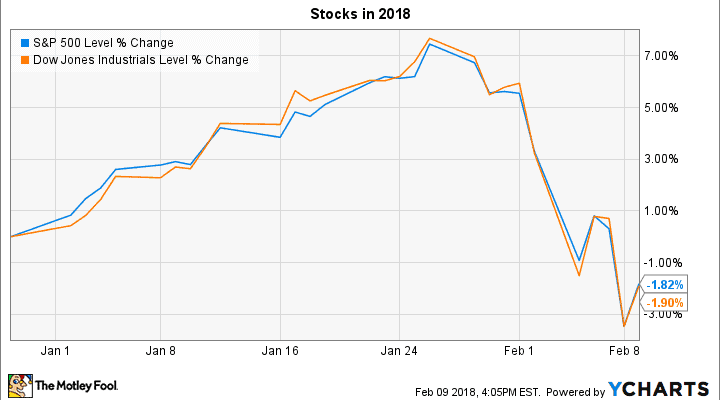
Investors endured their worst period of volatility in years last week. Both the Dow Jones Industrial Average (DJINDICES: ^DJI) and the S&P 500 (SNPINDEX: ^GSPC) lost about 5% by the end of the week and are now down by about 2% for the year.

While the market might gyrate in response to shifting investor attitudes, it’s earnings results that determine long-run stock price trends. With that in mind, let’s look at a few of the most anticipated reports set to publish over the next few trading days, from Under Armour (NYSE: UA) (NYSE: UAA), TripAdvisor (NASDAQ: TRIP) and Campbell Soup (NYSE: CPB).

Under Armour’s growth pace

Investors could hardly be more pessimistic about Under Armour’s fourth-quarter results, due out before the market opens on Tuesday. The sports apparel titan’s last report was a bust, with sales and profitability both shrinking because of a brutal sales environment in the core U.S. market. “We do not expect these conditions to improve,” CEO Kevin Plank bluntly warned investors in an earnings call in late October.

A game of outdoor pickup basketball.

Shareholders are expecting weak demand to drive heavy promotional activity over the holiday season, which should translate into nearly flat sales and another round of sinking gross profit margin. Rival Nike recently pointed to signs of a stabilization coming in the U.S. after over a year of contraction, but that optimism is mostly thanks to the fact that it is introducing dozens of new apparel and footwear products over the next few months. Investors will find out on Tuesday whether Under Armour believes it can engineer a rebound, too, when the company issues its first official forecast for fiscal 2018.

TripAdvisor’s hotel business

It boasts one of the biggest online travel communities around, but TripAdvisor can’t seem to find a way to turn that asset into a formidable business. Shares dramatically underperformed the market last year, after the company missed management’s growth targets in both the second and third quarters. That poor track record has investors feeling cautious heading into Thursday morning’s report.

TripAdvisor’s core hotel business has struggled to return to growth following last year’s switch to a new business model. Management had predicted that the shift would improve customer satisfaction and drive profitable long-term growth. That forecast hasn’t panned out, though. Instead, the hotel segment contracted in the most recent quarter despite a marketing blitz aimed at driving traffic to the website.

In addition to the hotel division, shareholders will be watching for signs of continued gains in the promising attraction-booking business. That segment has grown far more profitable recently, and TripAdvisor will probably need that success to continue if it’s going to avoid its third straight year of reduced earnings.

Campbell Soup’s outlook

Campbell Soup will post its fiscal second-quarter results on Friday morning. The packaged-foods specialist hasn’t impressed investors lately. In fact, organic sales ticked lower last year thanks to the combination of several negative trends, led by shifting food preferences on the part of consumers.

Campbell is hoping to change that dynamic in part by bulking up its brand portfolio through aggressive acquisitions like its purchase of pretzel and snack giant Snyder’s-Lance. Executives hope the new combined business will be both leaner and more profitable, with a stronger focus on snack foods.

Look for CEO Denise Morrison and her executive team to spend time on Friday discussing their plans for extracting value from this $5 billion purchase as they enter what could be the business’ third year of organic sales declines.

Nordstrom Slowly Revamps Its Full-Line Store Portfolio

A rendering of a Nordstrom store, with palm trees in the foreground

During the past five years, Nordstrom (NYSE: JWN) has invested aggressively in e-commerce and off-price stores, recognizing that consumer behavior is shifting rapidly. Nevertheless, the company’s full-line stores remain its biggest revenue driver, accounting for nearly half of Nordstrom’s sales.

These full-line stores aren’t going away anytime soon. Nordstrom sees its stores as a critical complement to its online business. Furthermore, all of its stores remain profitable on a “four-wall” basis.

That said, the company is continually refining its full-line store base to maximize its value. Some recent announcements from Nordstrom highlight its opportunities in this respect.

Closing stores that no longer fit

One way Nordstrom is adapting to the changing times is by shuttering some full-line stores. The company certainly doesn’t plan mass store closures as Macy’s (NYSE: M) undertook. There were nearly 800 Macy’s stores operating a few years ago, before the company’s downsizing initiative. Macy’s clearly didn’t need this big a physical footprint. By contrast, Nordstrom has a much more modest store base, with about 120 full-line locations.

Nordstrom has roughly the right number of full-line stores today. Image source: Nordstrom.

Still, Nordstrom has a handful of stores that it doesn’t need anymore. In the past two years, it has closed a pair of stores in Southern California and one in the D.C. metro area. The company recently announced plans to close another store in April, this time in Salem, Oregon.

While the Salem store was profitable, at just 60,000 square feet, it was less than half the size of a typical full-line store. Nordstrom has several larger stores in Portland, less than an hour away, which can offer a much broader range of merchandise. Between these Portland stores and its e-commerce business, Nordstrom will be able to retain some of the revenue it had been generating in Salem.

Furthermore, closing the Salem store will free up working capital and enable Nordstrom to sell the store building, which has an assessed value of nearly $9 million. This move should more than offset the value of the modest profits that the store had been generating.

Relocating stores to higher-potential sites

A second way for Nordstrom to protect its franchise is to relocate stores from time to time, to ensure that they’re in the most vibrant malls. For example, the company recently opened a new store at Westfield Century City in Los Angeles to replace an older store at Westside Pavilion, a nearby mall that’s in need of a facelift. (Westside Pavilion’s other anchor, Macy’s, is set to close in the next few months.)

By the end of 2017, Nordstrom didn’t have any more full-line store relocations planned for future years. However, earlier this month, it announced plans to relocate its Overland Park, Kansas, store to Country Club Plaza in Kansas City proper in 2021.

This relocation will move Nordstrom from a class-B mall to an “A” mall with significantly higher sales per square foot. The new store will be smaller, at 116,000 square feet, compared with about 200,000 square feet for the Overland Park location. This size seems to be the new sweet spot for Nordstrom, allowing it to carry a wide range of items without being overburdened with inventory.

Nordstrom is still opening a few stores, too

While most of Nordstrom’s store growth is coming on the off-price side of the business, there are still a handful of opportunities for new full-line stores. In the past few years, Nordstrom has opened six stores in Canada, entering that market for the first time.

The company’s next target is New York City. Last month, Nordstrom began hiring employees for its new men’s store in Manhattan, which is set to open in April. The much larger main store has been under construction for several years and should be ready for the 2019 holiday season. Management expects this to become the chain’s best-performing store.

Nordstrom will also open a new store in Norwalk, Connecticut, in 2019. This location will sit in the midst of an extremely wealthy area that doesn’t have an upscale mall today. Bloomingdale’s, Macy’s luxury subsidiary, has signed up to be the other anchor for this new development.

Nordstrom’s efforts to reposition its full-line store portfolio probably won’t drive meaningful sales growth in its full-line stores. However, just stabilizing the sales and profitability of its full-line stores would be a big win for Nordstrom. After all, its e-commerce and off-price businesses offer abundant growth potential for the next decade and beyond.