
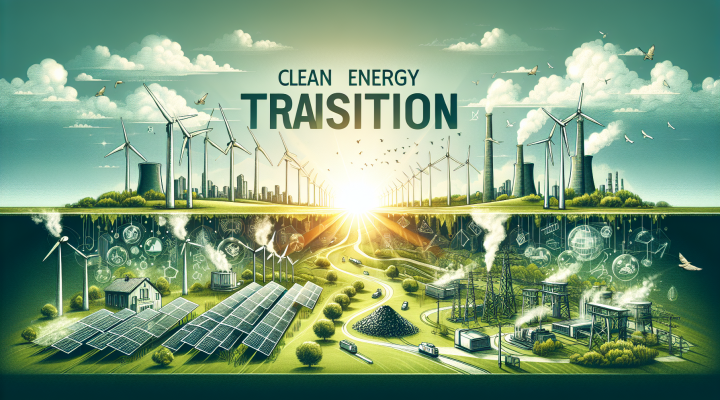
The global investment landscape is experiencing a fundamental shift as institutional investors, sovereign wealth funds, and private equity firms increasingly recognize the clean energy transition play as one of the most compelling opportunities of this decade. With over $2.8 trillion deployed into renewable energy and related infrastructure since 2020, this massive capital reallocation reflects not just environmental consciousness, but hard-nosed financial strategy based on long-term market fundamentals.
What makes the clean energy transition play particularly attractive to sophisticated investors is its multi-layered opportunity structure. Unlike traditional energy investments that focus primarily on resource extraction and processing, this transition encompasses everything from lithium mining operations in Chile to advanced battery manufacturing in Europe, from offshore wind farms in the North Sea to smart grid technology development across North America. This diversity creates multiple entry points and risk distribution opportunities that weren’t available in previous energy paradigm shifts.
The technology component of the clean energy transition play has evolved dramatically over the past five years. Solar photovoltaic costs have declined by another 35% since 2021, while wind energy efficiency has improved through larger turbines and advanced materials science. Battery technology, crucial for energy storage and electric vehicle adoption, has seen breakthrough developments in solid-state designs and alternative chemistries that reduce dependence on scarce materials like cobalt. These technological advances aren’t just improving performance—they’re creating entirely new investment categories and market opportunities.
Critical mineral investments represent perhaps the most overlooked aspect of the clean energy transition play. Lithium, rare earth elements, copper, and nickel have become the new oil in terms of strategic importance. Countries with significant reserves are leveraging their positions, while mining companies are seeing unprecedented demand for their products. The International Energy Agency projects that mineral demand for clean energy technologies could increase by up to 400% by 2040, creating a supply-demand dynamic that savvy investors are positioning themselves to exploit.
Grid modernization and energy storage infrastructure form another crucial pillar of the clean energy transition play. The intermittent nature of renewable energy sources requires sophisticated storage solutions and smart grid technologies to ensure reliable power delivery. Companies developing grid-scale battery systems, pumped hydro storage, and advanced energy management software are attracting significant venture capital and private equity investment. The U.S. alone has allocated over $65 billion for grid improvements and energy storage deployment through recent infrastructure legislation.
Geopolitical factors are accelerating investment flows into the clean energy transition play. Energy security concerns following recent global events have prompted nations to prioritize domestic renewable energy production and reduce dependence on fossil fuel imports. This has created favorable policy environments, including tax incentives, regulatory fast-tracking, and direct government investment that de-risks private capital deployment. The European Union’s REPowerEU plan and similar initiatives in Asia are creating predictable, long-term demand that institutional investors find particularly attractive.
Financial innovation is also supporting the clean energy transition play through new investment vehicles and funding mechanisms. Green bonds have evolved into a $500 billion annual market, while sustainability-linked loans tie borrowing costs to environmental performance metrics. Climate-focused private equity funds have raised record amounts, and even traditional oil and gas companies are redirecting capital toward renewable energy projects and clean technology acquisitions.
The clean energy transition play faces legitimate challenges that sophisticated investors must navigate carefully. Supply chain complexities, regulatory uncertainties in some jurisdictions, and the need for massive infrastructure buildout create execution risks. However, these challenges also create barriers to entry that protect established players and early movers from excessive competition. Companies and investors who can successfully navigate these complexities are likely to capture outsized returns as the transition accelerates.
Looking ahead, the clean energy transition play represents more than just an investment theme—it’s a fundamental rewiring of the global energy system that will define economic winners and losers for decades to come. As traditional energy markets face structural decline and renewable technologies achieve cost parity or advantages across most applications, the question for investors isn’t whether to participate in this transition, but how to position themselves most advantageously within its rapidly evolving landscape. The smart money is already moving, and the opportunities for those who act decisively continue to expand across this transformative sector.