
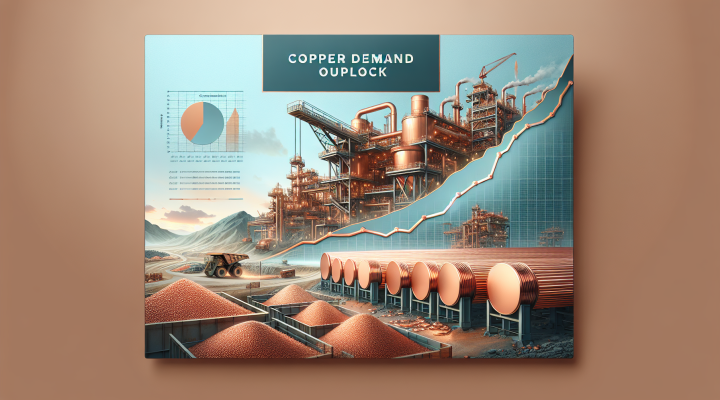
As the global economy undergoes an unprecedented transformation toward electrification and renewable energy, Canada has emerged as a pivotal force in reshaping the copper demand outlook. The nation’s unique combination of abundant natural resources, technological expertise, and forward-thinking policies has positioned it at the center of what industry experts are calling the “copper revolution.”
The numbers tell a compelling story. Canadian mining companies have invested over $4.2 billion in new extraction technologies since 2024, while tech firms across the country have developed breakthrough innovations in copper recycling and processing efficiency. This convergence of traditional resource strength and cutting-edge innovation is creating ripple effects that extend far beyond Canada’s borders, fundamentally altering how global markets view the copper demand outlook for the next decade.
At the heart of this transformation lies Canada’s remarkable ability to scale production while maintaining environmental standards that many nations struggle to achieve. Advanced mining techniques developed in British Columbia and Ontario are now being exported globally, with efficiency improvements of up to 35% compared to conventional methods. These innovations are particularly crucial given that copper demand is projected to increase by 70% over the next eight years, driven primarily by electric vehicle manufacturing, renewable energy infrastructure, and smart grid technologies.
Canadian technology companies have also made significant strides in addressing one of the industry’s most pressing challenges: sustainable supply chain management. Vancouver-based firms have pioneered AI-driven predictive analytics that can forecast copper demand fluctuations with 92% accuracy, enabling more efficient resource allocation and reducing waste. Meanwhile, Toronto’s financial district has become a hub for copper commodity innovation, with new trading platforms that provide real-time market intelligence to producers and consumers worldwide.
Green Technology Integration Drives Market Leadership
The integration of green technologies into Canada’s copper sector represents more than just environmental responsibility—it’s becoming a significant competitive advantage that’s influencing the global copper demand outlook. Solar-powered mining operations in Saskatchewan and wind-assisted processing facilities in Alberta are demonstrating that large-scale copper production can achieve carbon neutrality while maintaining profitability.
These developments have attracted international partnerships that are reshaping global supply chains. European automakers are increasingly sourcing copper directly from Canadian producers, citing both quality consistency and environmental compliance as key factors. This direct relationship model is proving so successful that it’s being replicated in markets across Asia and South America, fundamentally changing how copper moves from mine to manufacturer.
Canadian universities and research institutions have also contributed significantly to this transformation. Breakthrough work at McGill University has led to new alloy compositions that require 20% less copper while maintaining equivalent electrical conductivity. Similar research at the University of British Columbia has developed processing techniques that extract copper from previously unviable ore deposits, effectively expanding global reserves and providing greater supply security.
Strategic Partnerships Reshape Global Supply Dynamics
The collaborative approach that Canadian companies have adopted is creating new paradigms in global copper markets. Strategic partnerships between Canadian mining giants and international technology firms are producing innovations that address both immediate supply concerns and long-term sustainability goals. These alliances are particularly significant given the increasing geopolitical tensions surrounding critical mineral access.
Investment flows tell the story of confidence in Canada’s approach. Foreign direct investment in Canadian copper-related ventures has increased by 180% since early 2025, with major commitments from firms in Japan, Germany, and South Korea. These investments are not merely financial—they represent technology transfers and knowledge sharing that further cement Canada’s position as a global leader in copper innovation.
The downstream effects are equally impressive. Canadian-developed copper processing technologies are now being implemented in over 40 countries, creating a network of efficiency improvements that benefit the entire global supply chain. This technological diffusion is helping to moderate price volatility and improve supply reliability, two factors that have historically complicated long-term planning for copper-dependent industries.
As global markets continue to evolve toward greater electrification and sustainability, Canada’s integrated approach to copper innovation—combining resource abundance, technological advancement, and environmental stewardship—is proving to be a model that other nations are eager to emulate. The copper demand outlook remains robust, but Canada’s influence ensures that growth will be accompanied by innovation, sustainability, and strategic stability that benefits markets worldwide. This transformation represents not just an evolution in mining and technology, but a fundamental reimagining of how critical resources can drive economic growth while supporting global environmental goals.
