
Archives for December 25, 2019

Analysts Issue Forecasts for Edwards Lifesciences Corp’s Q2 2020 Earnings (NYSE:EW)

Edwards Lifesciences Corp (NYSE:EW) – Investment analysts at William Blair raised their Q2 2020 earnings estimates for Edwards Lifesciences in a research note issued on Friday, December 6th, according to Zacks Investment Research. William Blair analyst M. Kaczor now anticipates that the medical research company will post earnings of $1.53 per share for the quarter, up from their previous estimate of $1.51. William Blair also issued estimates for Edwards Lifesciences’ Q3 2020 earnings at $1.51 EPS, FY2020 earnings at $6.11 EPS, Q1 2021 earnings at $1.61 EPS, Q2 2021 earnings at $1.69 EPS, Q3 2021 earnings at $1.62 EPS and FY2021 earnings at $6.70 EPS.

Several other equities research analysts have also issued reports on the stock. Credit Suisse Group lifted their price target on shares of Edwards Lifesciences from $269.00 to $275.00 and gave the company an “outperform” rating in a report on Friday, December 6th. UBS Group raised their target price on shares of Edwards Lifesciences from $250.00 to $255.00 and gave the company a “neutral” rating in a research report on Friday, December 6th. Morgan Stanley boosted their target price on shares of Edwards Lifesciences from $248.00 to $270.00 and gave the stock an “overweight” rating in a research note on Friday, December 6th. Wells Fargo & Co increased their price target on Edwards Lifesciences from $262.00 to $270.00 and gave the company an “outperform” rating in a research note on Friday, December 6th. Finally, Piper Jaffray Companies raised their price objective on Edwards Lifesciences from $255.00 to $262.00 and gave the company an “overweight” rating in a report on Monday, December 9th. Two investment analysts have rated the stock with a sell rating, five have issued a hold rating and thirteen have assigned a buy rating to the company. The stock presently has a consensus rating of “Buy” and a consensus price target of $238.28.

Shares of EW opened at $235.79 on Monday. Edwards Lifesciences has a one year low of $140.51 and a one year high of $247.64. The firm has a 50 day simple moving average of $239.05 and a two-hundred day simple moving average of $217.79. The company has a debt-to-equity ratio of 0.17, a current ratio of 3.53 and a quick ratio of 2.74. The company has a market cap of $49.30 billion, a P/E ratio of 50.17, a P/E/G ratio of 2.85 and a beta of 0.80.

Edwards Lifesciences (NYSE:EW) last released its earnings results on Wednesday, October 23rd. The medical research company reported $1.41 earnings per share (EPS) for the quarter, topping the consensus estimate of $1.22 by $0.19. Edwards Lifesciences had a return on equity of 32.28% and a net margin of 18.64%. The company had revenue of $1.09 billion for the quarter, compared to analyst estimates of $1.04 billion. During the same period in the prior year, the firm posted $1.07 EPS. Edwards Lifesciences’s quarterly revenue was up 20.7% on a year-over-year basis.

In other Edwards Lifesciences news, VP Catherine M. Szyman sold 2,500 shares of the firm’s stock in a transaction that occurred on Friday, October 25th. The stock was sold at an average price of $227.19, for a total value of $567,975.00. Following the completion of the sale, the vice president now owns 19,605 shares of the company’s stock, valued at $4,454,059.95. The sale was disclosed in a legal filing with the Securities & Exchange Commission, which is available at this hyperlink. Also, CEO Michael A. Mussallem sold 22,850 shares of the business’s stock in a transaction that occurred on Wednesday, October 30th. The shares were sold at an average price of $238.79, for a total value of $5,456,351.50. Following the sale, the chief executive officer now owns 95,770 shares of the company’s stock, valued at approximately $22,868,918.30. The disclosure for this sale can be found here. Insiders sold a total of 136,670 shares of company stock valued at $32,080,185 in the last quarter. 1.63% of the stock is currently owned by company insiders.

Several institutional investors have recently added to or reduced their stakes in the business. Quest Capital Management Inc. ADV purchased a new stake in Edwards Lifesciences in the 3rd quarter valued at about $28,000. TRUE Private Wealth Advisors bought a new position in Edwards Lifesciences in the 2nd quarter valued at $26,000. Usca Ria LLC purchased a new stake in shares of Edwards Lifesciences during the 3rd quarter valued at $34,000. Next Capital Management LLC increased its position in shares of Edwards Lifesciences by 297.7% during the 2nd quarter. Next Capital Management LLC now owns 171 shares of the medical research company’s stock valued at $32,000 after purchasing an additional 128 shares during the last quarter. Finally, Tarbox Family Office Inc. increased its position in shares of Edwards Lifesciences by 48.7% during the 2nd quarter. Tarbox Family Office Inc. now owns 177 shares of the medical research company’s stock valued at $33,000 after purchasing an additional 58 shares during the last quarter. 80.73% of the stock is currently owned by hedge funds and other institutional investors.

About Edwards Lifesciences

Edwards Lifesciences Corporation provides products and technologies for structural heart disease and critical care monitoring in the United States and internationally. It offers transcatheter heart valve therapy products comprising transcatheter aortic valve replacement, and transcatheter mitral and tricuspid therapies for the nonsurgical replacement of heart valves.


Analysts Lower Earnings Estimates for Southwest Gas Holdings Inc (NYSE:SWX)

Southwest Gas Holdings Inc (NYSE:SWX) – Research analysts at Jefferies Financial Group lowered their FY2019 earnings per share (EPS) estimates for Southwest Gas in a research note issued to investors on Wednesday, December 18th. Jefferies Financial Group analyst C. Sighinolfi now expects that the utilities provider will earn $3.53 per share for the year, down from their prior forecast of $4.01. Jefferies Financial Group also issued estimates for Southwest Gas’ Q1 2020 earnings at $1.61 EPS.

Southwest Gas (NYSE:SWX) last posted its earnings results on Wednesday, November 6th. The utilities provider reported $0.10 earnings per share for the quarter, missing analysts’ consensus estimates of $0.26 by ($0.16). The company had revenue of $725.23 million for the quarter, compared to the consensus estimate of $229.10 million. Southwest Gas had a return on equity of 8.11% and a net margin of 6.26%. During the same period in the previous year, the firm posted $0.25 EPS. The business’s quarterly revenue was up 8.6% compared to the same quarter last year.

SWX has been the subject of a number of other research reports. Wells Fargo & Co set a $93.00 target price on Southwest Gas and gave the stock a “hold” rating in a report on Tuesday, September 3rd. Zacks Investment Research lowered Southwest Gas from a “hold” rating to a “sell” rating in a research note on Saturday. One investment analyst has rated the stock with a sell rating, three have issued a hold rating and two have assigned a buy rating to the company’s stock. Southwest Gas has a consensus rating of “Hold” and an average price target of $94.60.

NYSE SWX opened at $75.02 on Monday. The company has a market cap of $4.18 billion, a price-to-earnings ratio of 20.39, a price-to-earnings-growth ratio of 2.55 and a beta of 0.18. Southwest Gas has a twelve month low of $72.68 and a twelve month high of $92.94. The company has a quick ratio of 0.98, a current ratio of 0.98 and a debt-to-equity ratio of 1.02. The business’s fifty day moving average is $76.62 and its 200 day moving average is $86.36.

The firm also recently announced a quarterly dividend, which will be paid on Monday, March 2nd. Shareholders of record on Tuesday, February 18th will be issued a dividend of $0.545 per share. This represents a $2.18 dividend on an annualized basis and a yield of 2.91%. The ex-dividend date of this dividend is Friday, February 14th. Southwest Gas’s payout ratio is 59.24%.

In other Southwest Gas news, Director Robert L. Boughner purchased 5,000 shares of the firm’s stock in a transaction on Wednesday, November 13th. The stock was purchased at an average cost of $76.49 per share, for a total transaction of $382,450.00. Following the transaction, the director now owns 38,429 shares in the company, valued at approximately $2,939,434.21. The transaction was disclosed in a legal filing with the SEC, which is accessible through this hyperlink. Over the last 90 days, insiders acquired 5,450 shares of company stock valued at $416,561. Corporate insiders own 0.83% of the company’s stock.

Several large investors have recently modified their holdings of the company. Point72 Asset Management L.P. acquired a new stake in Southwest Gas in the second quarter valued at $54,000. Krane Funds Advisors LLC acquired a new stake in shares of Southwest Gas in the second quarter valued at about $60,000. Tower Research Capital LLC TRC increased its stake in shares of Southwest Gas by 6,708.3% in the second quarter. Tower Research Capital LLC TRC now owns 817 shares of the utilities provider’s stock valued at $73,000 after buying an additional 805 shares during the period. Yorktown Management & Research Co Inc bought a new position in shares of Southwest Gas during the third quarter worth about $200,000. Finally, Rikoon Group LLC acquired a new position in shares of Southwest Gas in the third quarter worth approximately $200,000. Institutional investors own 82.53% of the company’s stock.

Southwest Gas Company Profile

Southwest Gas Holdings, Inc, through its subsidiaries, purchases, distributes, and transports natural gas in Arizona, Nevada, and California. The company operates through two segments, Natural Gas Operations and Utility Infrastructure Services. As of December 31, 2018, it had 2,047,000 residential, commercial, industrial, and other natural gas customers.

Pessimism for climate targets

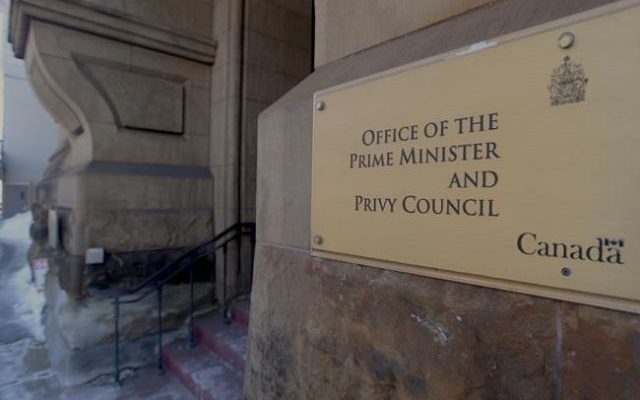
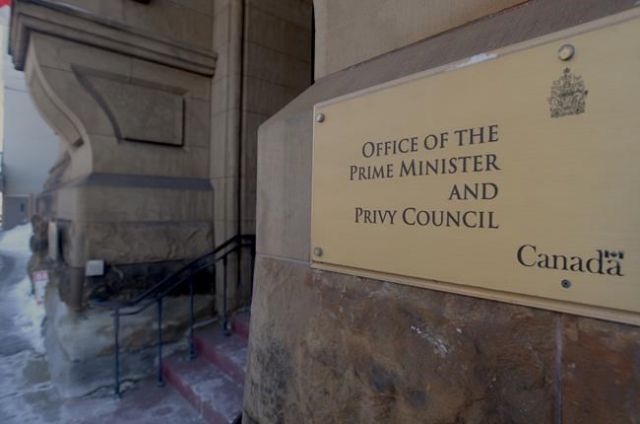
The main door to the Office of the Prime Minister and Privy Council office is seen in Ottawa, Monday, Feb.18, 2019.

Federal report says Canadians ‘doubtful’ on hitting emissions targets

The federal government was told just before the fall election campaign that many Canadians didn’t believe the country will meet targets for reducing its greenhouse-gas emissions.

Public-opinion research conducted on behalf of the Privy Council Office showed that most participants in the spring survey were “doubtful” Canada would reach its targets, with the rest “uncertain, or hopeful but not optimistic.”

Among the reasons people gave for believing Canada would fall short were the cost to the economy to do so, including job losses in sectors like oil and gas, and “political will.”

Under the Paris climate-change agreement, the Trudeau Liberals agreed to reduce greenhouse-gas emissions to a level 30 per cent below what they were in 2005 and to do it by 2030.

The polling report delivered in mid-August and made public in recent days suggested that participants wanted the government to at least try to meet the 2030 target even if efforts were doomed.

Last week, the Liberals said Canada’s emissions are forecast to be 227 million tonnes below what was projected in 2015, which would be 77 million tonnes short of the target Canada committed to under the Paris pact.

During the federal election campaign, Prime Minister Justin Trudeau vowed to boost efforts so Canada would exceed its 2030 goal and then achieve net-zero carbon emissions by 2050.

Among the measures the Liberals proposed was funding the planting of two billion trees, cutting energy waste and supporting zero-emissions clean tech companies — none of which were included in the updated forecasts released on the Friday before Christmas.

A key measure the Liberals have touted in their plan is the federal carbon price. Participants in the survey said they believed that the Liberals’ carbon tax had increased the cost of gas, food and home heating, and will eventually drive up costs for travel, public transit and consumer goods transported over long distances.

The Liberals say the carbon tax is designed to change habits so individuals reduce their own carbon footprints, and the report suggests this is happening to an extent.

Some participants told interviews they have opted to drive more fuel-efficient vehicles, be more strategic in running errands to limit car use, opt for public transit more or work more often from home. Others told interviewers they expect to drive less eventually, while the remainder said “they have no option but to drive as much as they do.”

Any funding collected through the carbon tax is returned through rebates at tax time, but most participants in the research believed they would receive less than what they paid.

That belief didn’t change when interviewers presented them with a parliamentary budget office report saying 80 per cent of tax filers will receive more in rebates than they pay in carbon fees.

Trudeau’s message

Taking care of each other is Canadian holiday tradition: Trudeau

Prime Minister Justin Trudeau is urging Canadians to do what they do best this time of year — lend a hand where a hand is needed.

In his annual Christmas message, Trudeau says it’s the season for giving, and for giving back.

And that, he says, means supporting those in need and reaching out to neighbours who might be alone for the holidays.

Trudeau says one of the greatest holiday traditions is taking care of each other — something Canadians do all year round.

The prime minister makes special note of Canada’s Armed Forces members.

In his message, Trudeau thanks them for their service, whether it’s at home or overseas.

New Air Force plane lands

Air Force accepts first new search-and-rescue plane

The Canadian military has accepted the first of 16 new search-and-rescue planes despite outstanding issues with the aircraft’s manuals.

The new plane was officially handed over by European manufacturer Airbus to the Royal Canadian Air Force in Spain last week.

It was supposed to have delivered on Dec. 1, but that date was pushed back due to disagreements between the company, the Air Force and the Department of National Defence over the contents of the aircrafts’ manuals.

The manuals are thousands of pages thick and provide pilots, aircrew and technicians with necessary instructions and references for safely operating and maintaining the aircraft.

Despite the plane’s successful delivery, Defence Department spokesman Daniel Le Bouthillier says the government is reviewing the manuals with the company to ensure they meet the military’s requirements.

He adds that the plane will remain in Spain until the middle of next year as Air Force members train on the aircraft and test it before flying it to Canadian Forces Base Comox in British Columbia.

“The acceptance of the first aircraft is one of many steps in this complex program to replace the current fixed-wing search and rescue fleets,” Le Bouthillier said in an email.

“We will continue to work with Airbus to ensure the acceptability of remaining work, including revision of technical manuals, completing training for the initial RCAF crews and conducting initial operational testing and evaluation in Spain in the first half of 2020.”

The federal government announced three years ago that it would pay Airbus $2.4-billion for 16 CC-295 aircraft to replace the Air Force’s ancient Buffalo search-and-rescue planes and an old version of the RCAF’s Hercules aircraft.

The deal, which includes an option to pay Airbus another $2.3-billion to maintain and support the plane for 15 years, had been held up as one of the few major successes for Canada’s beleaguered military procurement system in recent years.

War room being ‘Orwellian’

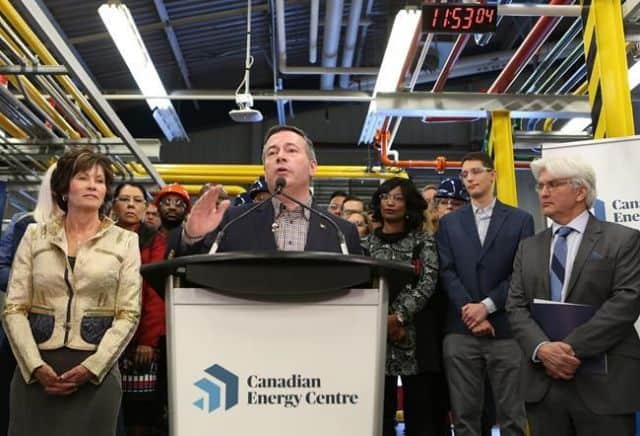
Alberta Premier Jason Kenney, centre, addresses attendees at a press conference to announce the launch of the Canadian Energy Centre at SAIT in Calgary, Alta., Wednesday, Dec. 11, 2019.

Journalist group protests Alberta war room’s use of term ‘reporters’

Staff in the Alberta government’s so-called war room should stop calling themselves reporters, says the president of the Canadian Association of Journalists.

“Don’t pretend that you’re doing journalism — because you’re not,” Karyn Pugliese said Tuesday from Winnipeg. “When the government hires its own PR firm, that’s fine. But when you pretend that PR firm is journalism, that’s positively Orwellian.”

Earlier this month, Alberta’s United Conservative government opened the Canadian Energy Centre, often referred to by Premier Jason Kenney as a “war room” for reacting to and correcting perceived misinformation on the province’s energy industry.

The centre has since published a series of articles on its website. Sources contacted for those stories have told media organizations, including The Canadian Press, that staff identified themselves on the phone as reporters.

The energy centre did not reply to a request for comment Tuesday, but spokesman Grady Semmens has said that staff are “not advised” to use that term.

Pugliese said using the word “reporter” is a dangerous attempt to blur the lines between truth and messaging.

At the very least, she said, journalism must be arm’s-length from government. The energy centre’s board consists of three provincial cabinet members and is run by a failed United Conservative candidate.

“The mission of journalism is to be a Fourth Estate, to question things, to try to get to the truth as fairly and balanced as you can,” Pugliese said. “It holds the government to account.”

She said the energy centre’s mission is quite different: “It’s trying to spin. It’s trying to win.”

Pugliese said using the term reporter deliberately misrepresents the writer and the intent of the work.

“When they’re approaching people and they’re saying, ‘We’re journalists,’ people are expecting them to behave the way journalists behave.

“That’s not what they’re doing.”