Archives for December 25, 2019

Apple will start enforcing its Mac app security policy in February

Apps will run otherwise, but you’ll need to jump through hoops first.

Apple warned that it would eventually want notarization for non-App Store software running on macOS Catalina, and now there’s a firm deadline for that request. The tech firm has informed developers that all of these apps will have to be notarized from February 3rd, 2020 onward if they’re going to run “by default.” Older apps will still run trouble-free, and you can still run non-notarized apps if you’re willing to jump through a few hoops — this will just prevent you from launching newer apps from beyond the Mac App Store without doing something else first.

The company has required notarization for apps (which gives them a Developer ID) since macOS Mojave 10.14.5, but warnings will soon become error messages for Catalina users. Apple had originally intended to clamp down when Catalina was available, but decided on a transition period to help developers adapt.

As you might imagine, this is all part of a push for greater security. The notarization not only prevents people from ‘casually’ running malware, but lets Apple take action if there’s a major security flaw or another serious problem. You’ll have to understand the risks if you want to run software without those safeguards.


Streaming won’t get easier or cheaper

At some point, companies need to start making money.

After years of declining cable subscriptions, the bundle is back. Smaller bundles at slightly lower prices, sure, but still bundles. While Netflix had some competition from Amazon and Hulu when it came to one-price-fits-all streaming in the past, the last quarter of this year has been a whirlwind of launches with just Disney+ and Apple TV+ alone.

And it won’t slow down in 2020, either — HBO Max and Peacock are right around the corner. Between those and existing streaming options, like CBS All Access, Sundance Now, Shudder, BET+, Crunchyroll and Funimation (did we miss any?), it’s getting expensive to keep up with TV and, naturally, piracy is roaring back into the mainstream.

As I look around, I see people wondering who asked for all of these options and the answer appears to be investors. Each backing company has different reasons to want to take a bite out of the video pie, but they’re pumping millions or billions into these services and the content for them, and the expansion won’t slow down until the bills are due.

The most telling revelation when Disney unveiled Disney+ wasn’t its $6.99 per month price or news that its app would include downloads and HDR — it’s that the company is prepared to lose a billion dollars by pushing the service next year. The losses won’t peak until 2022, and it’s not hoping to break even until 2024. AT&T’s plan for HBO Max? Investing $2 billion next year, all with the projection that it will be a money loser until 2025.

Tim Cook told investors in October that he considers TV+ “a gift” to Apple users, which should explain the free year that comes packed in with so many of the company’s new devices. Billion-dollar handouts will pay for a lot of Baby Yodas, dragons and episodes of Friends at the start, but beyond the hassle of figuring out which service is worth paying for, we’re staring down the prospect of paying a lot more in the future when some of these services need to start making money.

Netflix is easily the best example of this, and while it’s using some complex accounting strategies to keep up with deep-pocketed competition — what do you know about debt financing? — it’s raised prices four times going back to 2014. The math is fairly simple to follow. Even accounting for international expansion, Netflix can only sign up so many new people. Content isn’t getting any cheaper to license or make, and while creating original shows and movies means it has more control, it also requires a lot more money up front.

So how do you get more money without drastically increasing the number of subscribers? You raise prices. Or, at least, you introduce new services that are only available at higher prices. Netflix managed to keep its entry-level service at $7 until just this year, and it has started rolling out a cheaper mobile-only service in several countries. While having competition from so many services is bound to keep prices down for a while, inevitably the survivors of this battle royale will face the same pressure from parent companies and investors to find more money.

While shelling out for stuff from The Mandalorian to 6 Underground is already far from cheap, by the middle of the next decade, we might be wondering what happened to the days of just paying $6.99 for a Disney sub alone — imagine Pixar+, MCU+ and Star Wars+ VR 8K add-ons.

DJI patent imagines a drone that can’t fly

The rover-like vehicle and stabilized camera could rival the Freefly Tero.

DJI has quite a gamut of drones and gimbals, but most are either handheld or airborne. However, the company seems to have ground-based ambitions too, as a new Chinese patent seen by Weibo user “Machine Power” and others shows. The document shows a rugged looking land-based “all-in-one” vehicle with an elaborate suspension holding a stabilized camera. It might be a way for DJI to compete against Tero’s ground-based Freefly camera platform.

Unlike Freefly, the DJI vehicle seems to include its own camera and stabilizer, much like the Mavic and other drones. At the same time, the suspension seems to have a lot of travel that would allow it to operate smoothly on relatively rough terrain. That would no doubt make it simple to operate and relatively lightweight. Mero’s Freefly, by contrast, is a whopping big vehicle that can support a heavy RED camera with a stabilizer.

Such camera platforms can capture pretty cool ground-level shots that a drone just can’t, so it would make sense for DJI to turn this into a product. However, take it all with some salt — while patents can be fun, they’re by no means a guarantee that a company will ever build the product shown.

Samsung’s Galaxy Tab S6 with 5G is coming soon

At least according to a competition page on Samsung Korea’s website.

A version of Samsung’s Galaxy Tab S6 with 5G is likely to arrive in the coming months, according to the company’s Korean website. SamMobile has found a reference to the device on a page on Samsung’s Korea website, with the model number SM-T866. It confirms long standing rumors that Samsung had a 5G version of the S6 cooking after a device carrying the name was granted approval by Korea’s National Radio Agency.

As SamMobile points out, the listing uses the same picture as for the existing S6, so it’s likely that the specs and design won’t change too much. Or, you know, that Samsung’s page designers weren’t given access to an updated image, so did some copy+paste in the hope we wouldn’t notice. It’s likely that we’ll see the tablet drop at some point in the new year, perhaps at that big technology trade show that’s hurtling toward us in January.

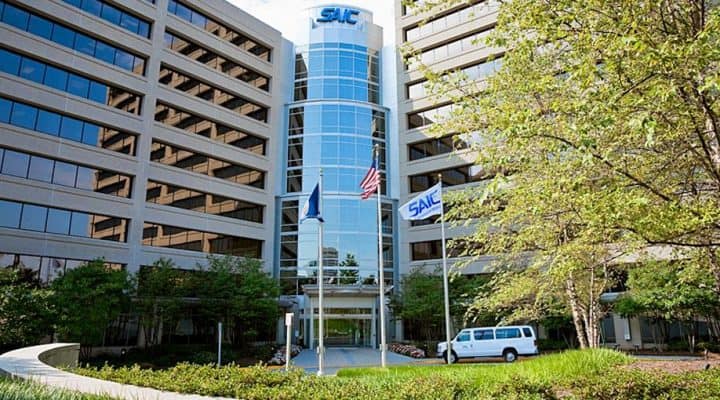
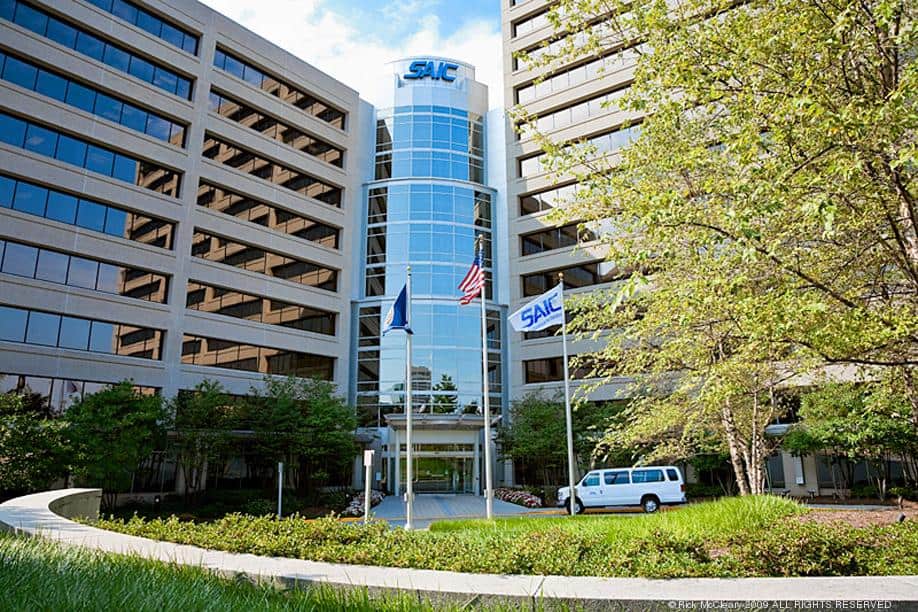
Analysts Set Expectations for Science Applications International Corp’s FY2020 Earnings (NYSE:SAIC)

Science Applications International Corp (NYSE:SAIC) – Stock analysts at SunTrust Banks cut their FY2020 earnings per share estimates for Science Applications International in a report released on Thursday, December 5th, Zacks Investment Research reports. SunTrust Banks analyst T. Sommer now forecasts that the information technology services provider will earn $5.42 per share for the year, down from their previous estimate of $5.48. SunTrust Banks also issued estimates for Science Applications International’s Q4 2020 earnings at $1.31 EPS, Q1 2021 earnings at $1.44 EPS, Q2 2021 earnings at $1.46 EPS, Q3 2021 earnings at $1.65 EPS, Q4 2021 earnings at $1.46 EPS, FY2021 earnings at $6.00 EPS, Q1 2022 earnings at $1.73 EPS, Q2 2022 earnings at $1.68 EPS, Q3 2022 earnings at $1.94 EPS and FY2022 earnings at $7.08 EPS.

Science Applications International (NYSE:SAIC) last announced its earnings results on Thursday, December 5th. The information technology services provider reported $1.39 EPS for the quarter, missing the Thomson Reuters’ consensus estimate of $1.43 by ($0.04). The company had revenue of $1.63 billion during the quarter, compared to the consensus estimate of $1.63 billion. Science Applications International had a net margin of 2.62% and a return on equity of 22.10%. The business’s revenue was up 38.5% on a year-over-year basis. During the same quarter in the previous year, the company earned $1.35 earnings per share.

A number of other analysts have also recently commented on SAIC. JPMorgan Chase & Co. assumed coverage on shares of Science Applications International in a research report on Tuesday, September 24th. They set an “overweight” rating and a $102.00 price target on the stock. Barclays assumed coverage on Science Applications International in a research note on Friday, September 20th. They issued an “overweight” rating and a $105.00 price objective on the stock. ValuEngine raised Science Applications International from a “strong sell” rating to a “sell” rating in a research note on Thursday, December 12th. Finally, Cowen reiterated a “buy” rating and issued a $102.00 target price on shares of Science Applications International in a report on Thursday, December 5th. One equities research analyst has rated the stock with a sell rating, two have issued a hold rating and nine have issued a buy rating to the company’s stock. Science Applications International has an average rating of “Buy” and an average target price of $98.50.

Shares of NYSE:SAIC traded down $1.15 during trading on Monday, reaching $88.34. The stock had a trading volume of 177,400 shares, compared to its average volume of 416,664. The stock has a market cap of $5.07 billion, a price-to-earnings ratio of 17.53, a P/E/G ratio of 2.95 and a beta of 1.31. The company has a debt-to-equity ratio of 1.35, a quick ratio of 1.07 and a current ratio of 1.20. Science Applications International has a 52 week low of $58.19 and a 52 week high of $92.49. The firm’s fifty day moving average is $84.10 and its 200 day moving average is $84.56.

The business also recently disclosed a quarterly dividend, which will be paid on Friday, January 31st. Stockholders of record on Friday, January 17th will be issued a dividend of $0.37 per share. The ex-dividend date is Thursday, January 16th. This represents a $1.48 annualized dividend and a dividend yield of 1.68%. Science Applications International’s dividend payout ratio is currently 29.37%.

In other news, Director John J. Hamre sold 10,000 shares of the stock in a transaction dated Friday, September 27th. The shares were sold at an average price of $86.43, for a total transaction of $864,300.00. Following the transaction, the director now owns 21,121 shares of the company’s stock, valued at approximately $1,825,488.03. The transaction was disclosed in a legal filing with the Securities & Exchange Commission, which is available through the SEC website. 1.64% of the stock is currently owned by corporate insiders.

Several large investors have recently modified their holdings of the company. BlackRock Inc. increased its stake in Science Applications International by 7.8% during the 2nd quarter. BlackRock Inc. now owns 6,213,830 shares of the information technology services provider’s stock valued at $537,868,000 after purchasing an additional 447,661 shares in the last quarter. Boston Partners increased its position in shares of Science Applications International by 111.1% during the second quarter. Boston Partners now owns 2,605,620 shares of the information technology services provider’s stock worth $225,565,000 after acquiring an additional 1,371,022 shares in the last quarter. Millennium Management LLC increased its position in shares of Science Applications International by 183.1% during the third quarter. Millennium Management LLC now owns 844,589 shares of the information technology services provider’s stock worth $73,774,000 after acquiring an additional 546,291 shares in the last quarter. Northern Trust Corp raised its holdings in shares of Science Applications International by 1.3% in the 2nd quarter. Northern Trust Corp now owns 833,725 shares of the information technology services provider’s stock worth $72,167,000 after acquiring an additional 10,388 shares during the last quarter. Finally, Point72 Asset Management L.P. raised its holdings in shares of Science Applications International by 4,190.5% in the 2nd quarter. Point72 Asset Management L.P. now owns 592,094 shares of the information technology services provider’s stock worth $51,252,000 after acquiring an additional 578,294 shares during the last quarter. 77.19% of the stock is currently owned by institutional investors.

About Science Applications International

Science Applications International Corp. engages in the provision of full life cycle services and solutions in the technical, engineering, intelligence, and enterprise information technology markets. It offers technology and equipment platform integration; maintenance of ground and maritime systems; logistics; training and simulation; operation and program support services; and end-to-end services such as the design, development, integration, deployment, management and operations, and sustainment and security of its customer’s information technology infrastructure.

Analysts Issue Forecasts for Baker Hughes Company’s FY2019 Earnings (NYSE:BKR)

Baker Hughes Company (NYSE:BKR) – Investment analysts at Piper Jaffray Companies lowered their FY2019 EPS estimates for Baker Hughes in a research note issued on Thursday, December 19th. Piper Jaffray Companies analyst B. Herbert now forecasts that the company will post earnings per share of $0.86 for the year, down from their prior forecast of $0.88. Piper Jaffray Companies also issued estimates for Baker Hughes’ Q4 2019 earnings at $0.30 EPS.

A number of other equities research analysts have also recently weighed in on BKR. ValuEngine cut Baker Hughes from a “hold” rating to a “sell” rating in a report on Monday, November 11th. Susquehanna Bancshares raised Baker Hughes from a “neutral” rating to a “positive” rating in a report on Friday, November 15th. Stephens started coverage on Baker Hughes in a research report on Wednesday, December 11th. They issued an “overweight” rating and a $28.00 target price on the stock. Deutsche Bank started coverage on Baker Hughes in a research report on Wednesday, November 27th. They issued a “buy” rating and a $32.00 target price on the stock. Finally, Zacks Investment Research downgraded Baker Hughes from a “hold” rating to a “strong sell” rating in a research note on Friday, November 8th. Two investment analysts have rated the stock with a sell rating and five have assigned a buy rating to the company’s stock. Baker Hughes presently has a consensus rating of “Hold” and a consensus target price of $30.50.

Shares of NYSE:BKR opened at $25.48 on Monday. The company has a 50 day moving average price of $22.87. Baker Hughes has a 52 week low of $20.09 and a 52 week high of $28.65. The firm has a market capitalization of $25.77 billion, a price-to-earnings ratio of 38.61, a P/E/G ratio of 3.56 and a beta of 0.98. The company has a quick ratio of 1.07, a current ratio of 1.58 and a debt-to-equity ratio of 0.18.

Baker Hughes (NYSE:BKR) last issued its quarterly earnings data on Wednesday, October 30th. The company reported $0.21 earnings per share for the quarter, missing the Thomson Reuters’ consensus estimate of $0.24 by ($0.03). Baker Hughes had a net margin of 0.89% and a return on equity of 1.19%. The firm had revenue of $5.88 billion during the quarter, compared to the consensus estimate of $6.11 billion. During the same quarter in the prior year, the business earned $0.19 earnings per share. The company’s revenue for the quarter was up 2.4% compared to the same quarter last year.

Several institutional investors have recently bought and sold shares of BKR. State Street Corp acquired a new position in shares of Baker Hughes during the third quarter valued at approximately $687,949,000. Point72 Asset Management L.P. acquired a new stake in Baker Hughes in the third quarter worth approximately $70,939,000. Millennium Management LLC acquired a new stake in Baker Hughes in the third quarter worth approximately $68,379,000. Sumitomo Mitsui Trust Holdings Inc. bought a new position in Baker Hughes during the 3rd quarter valued at $64,560,000. Finally, Parametric Portfolio Associates LLC bought a new position in Baker Hughes during the 3rd quarter valued at $46,880,000. Institutional investors and hedge funds own 97.58% of the company’s stock.

In other Baker Hughes news, insider William D. Marsh sold 5,857 shares of the business’s stock in a transaction dated Friday, November 22nd. The shares were sold at an average price of $22.65, for a total transaction of $132,661.05. Following the sale, the insider now directly owns 33,647 shares in the company, valued at approximately $762,104.55. The transaction was disclosed in a legal filing with the Securities & Exchange Commission, which can be accessed through this link. Also, insider William D. Marsh sold 6,136 shares of the business’s stock in a transaction dated Tuesday, November 19th. The stock was sold at an average price of $22.15, for a total transaction of $135,912.40. Following the sale, the insider now owns 39,504 shares in the company, valued at $875,013.60. The disclosure for this sale can be found here. Corporate insiders own 0.21% of the company’s stock.

About Baker Hughes

Baker Hughes Company provides integrated oilfield products, services, and digital solutions worldwide. Its Oilfield Services segment offers drilling, wireline, evaluation, completion, production, and intervention services; and drilling and completions fluids, completions tools and systems, wellbore intervention tools and services, artificial lift systems, pressure pumping systems, and oilfield and industrial chemicals for integrated oil and natural gas and oilfield service companies.