Archives for December 8, 2019

Carrizo Oil & Gas Inc. (CRZO) Soars 7.61%

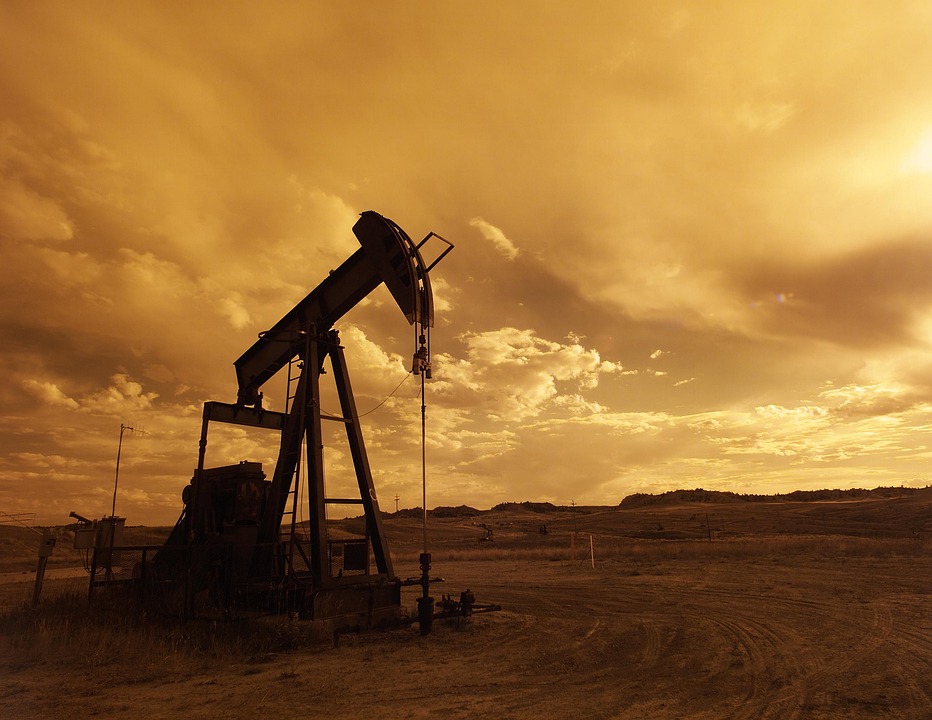
Carrizo Oil & Gas Inc. (CRZO) had a good day on the market for Friday December 06 as shares jumped 7.61% to close at $7.21. About 3.77 million shares traded hands on 19,491 trades for the day, compared with an average daily volume of n/a shares out of a total float of 92.61 million. After opening the trading day at $6.73, shares of Carrizo Oil & Gas Inc. stayed within a range of $7.21 to $6.73.

With today’s gains, Carrizo Oil & Gas Inc. now has a market cap of $667.72 million. Shares of Carrizo Oil & Gas Inc. have been trading within a range of $17.14 and $6.15 over the last year, and it had a 50-day SMA of $n/a and a 200-day SMA of $n/a.

Carrizo Oil & Gas Inc is engaged in the exploration, development, and production of oil and gas primarily from assets in the United States. The company aims to accumulate significant leasehold positions in areas with known shale thickness and thermal maturity in the proximity of knock or emerging pipeline infrastructures. Carrizo first identifies and acquires surface tracts of well pads from which multiple wells can be drilled. It attempts to acquire contiguous lease blocks in the areas immediately adjacent to the acquired well pads. Horizontal drilling and hydraulic fracturing programs are used to maximize production rate and recoverable reserves from a unit area. The company’s products are sold at the wellhead to unaffiliated third parties.

Carrizo Oil & Gas Inc. is based out of Houston, TX and has some 239 employees. Its CEO is S. P. Johnson.
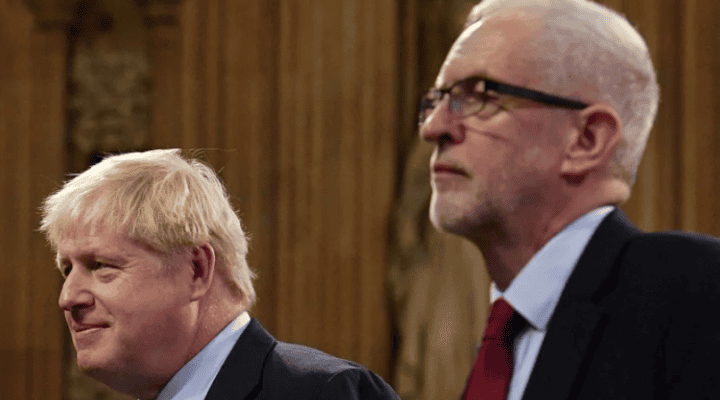
Canada’s cyber intelligence agency is helping the U.K. protect its election

Britain heads to the polls on Thursday

Canada’s foreign signals intelligence agency is on the lookout for threats to Britain’s election as the country heads into the final week of campaigning.

Communications Security Establishment spokesperson Evan Koronewski said the agency regularly shares information with its international allies “that has a significant impact on protecting our respective countries’ safety and security.”

“Regarding assistance to the U.K. election, CSE has a strong and valuable relationship with its Five Eyes alliance partners, including our intelligence and cyber defence counterparts in the United Kingdom,” said Koronewski in an email to CBC. The Five Eyes intelligence-sharing alliance includes Canada, the U.K., the U.S., New Zealand and Australia. 

“While we can’t offer specific details on the intelligence shared, we can tell you that threat information to help defend against cyber threats directed at democratic processes is regularly shared and acted upon.”

The U.K. election already has been marred by allegations of Russian interference.

The U.K. Conservative Party is also under a pall. Its leader, Prime Minister Boris Johnson, faces accusations of perpetrating a coverup after he delayed publication of an intelligence probe into possible Russian interference in British politics — including attempts to affect the outcome of the 2016 Brexit referendum — until after the Dec. 12 vote.

Even former U.S. presidential candidate Hillary Clinton weighed in to criticize Johnson.

“Who do they think they are that they would keep information like that from the public, especially before an election?” she said in an interview with The Guardian newspaper.

“Well, I’ll tell you who they think they are. They think that they are the all-powerful, strong men who should be ruling.”

Corbyn faces questions about NHS leaks

Late last month, Labour Leader Jeremy Corbyn obtained leaked classified British-U.S. trade documents and accused the governing Conservatives of planning to sell off the National Health Service as part of the bilateral talks. The NHS, the U.K.’s public health care provider, has again become the subject of heated election debate.

Since releasing those documents, Corbyn himself has been accused of pushing a Russian disinformation campaign, with Conservative MPs calling on him to “come clean” about his sources. (In intelligence circles, ‘misinformation’ is information that is false, while ‘disinformation’ consists of circulating false information with an intent to deceive or disrupt.)

The Communications Security Establishment leads Ottawa’s response to cyber security events and defends the federal government’s cyber assets. It’s also part of the intelligence team set up ahead of the recent Canadian election to watch out for and deter any foreign interference in the campaign.

Worried about a repeat of the sort of foreign interference seen during the 2016 U.S. presidential election, the Canadian government set up an internal team to sound the alarm if it saw anything similar in the lead-up to the fall election.

The Communications Security Establishment, the RCMP and the Canadian Security Intelligence Service helped advise that panel.

After the Oct. 21 election came and went, officials told CBC News that the federal government did detect attempts at misinformation or disinformation during the election campaign, but the attempts were not considered serious enough to compromise the election or spur the panel to alert the public.

The latest polls out of the U.K. show Johnson leading, with less than a week to go in the campaign.

A grim anniversary

Polytechnique anniversary – things haven’t changed enough

There were promises to end violence against women and solemn reflection Friday as ceremonies were held to honour the 14 victims of the Dec. 6, 1989, anti-feminist attack at Montreal’s Ecole polytechnique.

On the 30th anniversary of Canada’s worst mass shooting, the House of Commons fell silent as members of Parliament remembered the victims who were targeted because they were women.

Conservative MP Marilyn Gladu fought back tears as she listed the names of the 14 murdered women. Gladu said that as the first female engineer elected to the House of Commons, she feels a special bond to the victims.

“These women were my sisters,” she said. “I name them now to respect them for the strong women they are and they were.”

In Montreal, several dozen people gathered outside the school under a light morning snowfall as dignitaries and students placed bouquets of white roses in front of a commemorative plaque bearing the victims’ names: Genevieve Bergeron, Helene Colgan, Nathalie Croteau, Barbara Daigneault, Anne-Marie Edward, Maud Haviernick, Barbara Klucznik-Widajewicz, Maryse Laganiere, Maryse Leclair, Anne-Marie Lemay, Sonia Pelletier, Michele Richard, Annie St-Arneault and Annie Turcotte.

Members of the public also paid their respects in front of the campus, and among the first was Jean-Pierre Bernard.

Bernard, went to high school in the Gaspe region with one of the victims, Sonia Pelletier.

“I came for the 25th anniversary, and every year I wear my (memorial) pin. It’s very important for me,” Bernard said.

Later, families of the victims and survivors gathered inside for the launch of a book written by Montreal journalist Josee Boileau.

The book, “Ce jour-la — Parce qu’elles etaient des femmes” (“That Day — Because They Were Women”) is to be translated into English next year. It takes a broader look at the advancement of women in Quebec society.

The families and friends of the 14 women killed at Polytechnique were involved in the book, lending their voices to talk about the lives — determined and full of energy — cut down too soon.

“When people will read this — particularly young women of today — they will recognize themselves. They’ll say, ‘There’s very little difference between who I am and those women,’ ” said Serge St-Arneault, whose sister Annie was killed in the attack.

St-Arneault said he’s happy that people are no longer mincing words when it comes to what happened at Polytechnique — declaring clearly that it was an attack against women.

“I’m very touched by what I’ve heard today, it gives me some peace,” said St-Arneault, but his mind is not completely at ease. “We are still a society where too many women are being killed every year, especially by guns.”

In the House of Commons, Prime Minister Justin Trudeau said gender-based violence remains a threat.

“Each December, as we honour the memories of those 14 women, the survivors and the families, we promise to do better,” Trudeau said. “But the reality is that in 30 years, things haven’t changed enough.”

Trudeau highlighted the Liberal campaign pledge to ban semi-automatic assault rifles, including the weapon used in the Polytechnique killings, as evidence of his government’s commitment to action.

“These weapons, designed to kill the largest number of people in the shortest amount of time, have no place in our communities, in our streets, in our country,” he said.

Scheer champion of energy

Scheer isolated as lone champion of energy sector, carbon tax foe

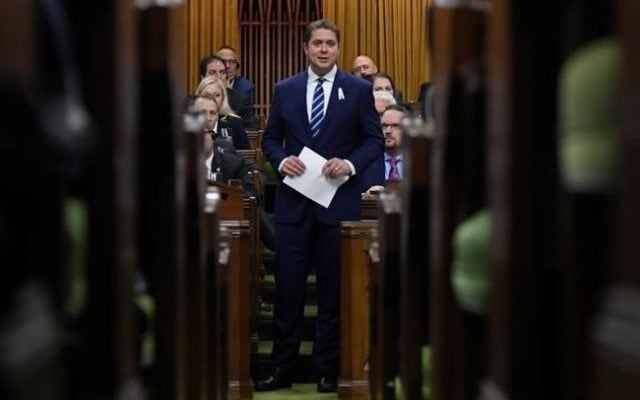
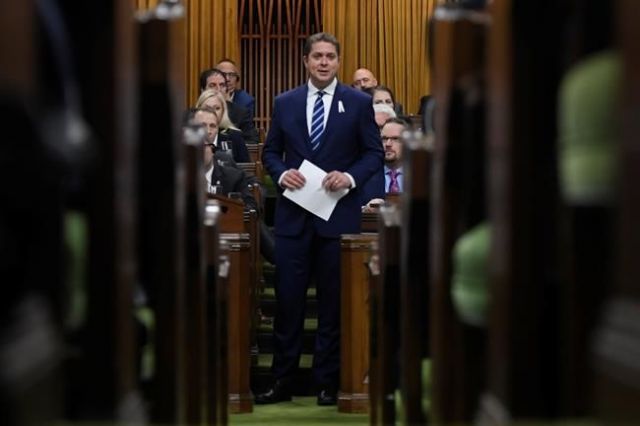
Canada’s new minority Parliament got down to work Friday with Andrew Scheer staking out the Conservatives’ ground as the only party that will unabashedly support the energy sector and never relent on its opposition to carbon taxes.

Responding to the Liberal throne speech that opened the new session of Parliament on Thursday, the Conservative leader proposed an amendment that would, among other things, commit the government to scrapping the carbon tax and stopping what Scheer called “the attack on the western Canadian economy.”

All the other parties in the House of Commons support the tax and advocate bolder action to tackle climate change making it virtually impossible for the Conservatives to find support for the amendment.

Scheer, who is fighting to retain his post as leader amid heavy criticism from some within his own party over his handling of the recent election campaign, appeared to be comfortable isolating his party in Parliament. He was dismissive Friday of those who blame his inability to defeat the Liberals in the Oct. 21 election, at least in part, on his failure to offer a credible plan to combat climate change.

“Over the past several weeks, there has been a chorus of voices from elite corners of Canadian high society demanding that our party endorse the carbon tax,” Scheer told the House of Commons.

“Let me be clear. We will always oppose a carbon tax because we know the real cost it imposes on the Canadian people.”

Scheer, who represents a Saskatchewan riding, cast himself as an unabashed champion of the two oil-producing western provinces, which delivered all but one seat to the Conservatives and spurned the Liberals entirely. He echoed Alberta Premier Jason Kenney in accusing “a network of foreign-funded activist groups” of trying to block pipelines and “permanently shut down Canada’s energy sector and drive hundreds of thousands of Canadians out of work.”

Scheer laid the blame for what he deems is a “national unity crisis” on the environmental policies adopted by Prime Minister Justin Trudeau during his first mandate.

In a later speech deconstructing Scheer’s remarks point by point, Trudeau noted that the Conservative leader bemoaned the impact of the carbon tax on families without mentioning that they will receive compensation from the federal government that, on average, will actually put more money in their pockets.

“If one wanted to truly bring down the temperature and the anxiety in the West, pointing out that fact might actually help,” Trudeau said.

Trudeau also noted that more than 60 per cent of Canadians voted for parties that support stronger action on climate change, while more than 60 per cent voted for parties that support expansion of the Trans Mountain pipeline — a balancing act between the environment and the economy that is at the heart of the Liberal government’s policy.

“That failed approach of blaming climate activists for not getting pipelines built does not work,” Trudeau said. “The Conservatives have been hurting the West by insisting on that kind of fear mongering.”

By and large, the tenor of the debate and the subsequent to-and-fro in the first question period of the new Parliament was civil and respectful, with none of the hyper-partisan, nasty personal attacks that fuelled the recent campaign.

In keeping with the collaborative tone of the throne speech, which reflected the minority government’s need to find common ground with opposition parties in order to pass legislation and survive confidence votes, Trudeau suggested the Conservatives might actually support the first bill to be introduced. It will implement the Liberal campaign promise to raise the basic personal income tax exemption to $15,000 for those earning less than $147,000.

Trudeau said the Liberal proposal is similar to a universal tax break proposed by Scheer but fixes one “small hiccup” in the Conservative plan that would have allowed the wealthiest Canadians to benefit the most — a feature the Liberals had lambasted during the campaign.

However, Scheer has signalled that the Conservatives are unlikely to support the government on much, if anything. The Liberals will, thus, need the support of the either the Bloc Quebecois’ 32 MPs or the NDP’s 24 MPs in order to survive.

At one point Friday, Trudeau thanked Bloc Leader Yves-Francois Blanchet, whose party intends to support the throne speech, for his “reasonable” approach to posing questions.

The sharpest exchange of the day was between Scheer and New Democrat MP Charlie Angus, who criticized the Conservative leader for peddling “conspiracy theories” about foreign radicals undermining the energy industry and threatening the unity of the country if Conservatives don’t get their way on climate policy.

Scheer retorted that it was “despicable and shameful” to suggest his talk of western alienation was “just idle rhetoric.” He taunted Angus in turn about the NDP being relegated to fourth party status in the House, behind the Bloc.

Kenney to meet Trudeau

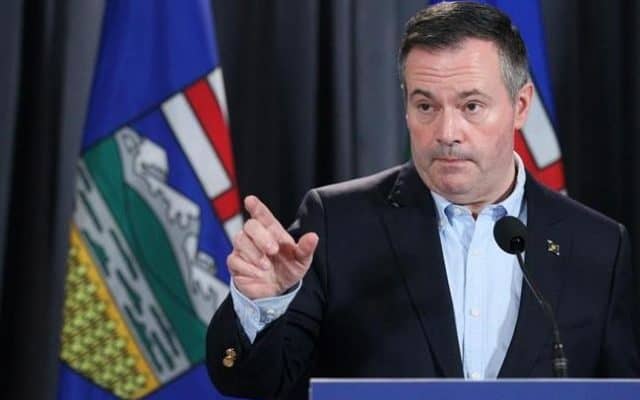
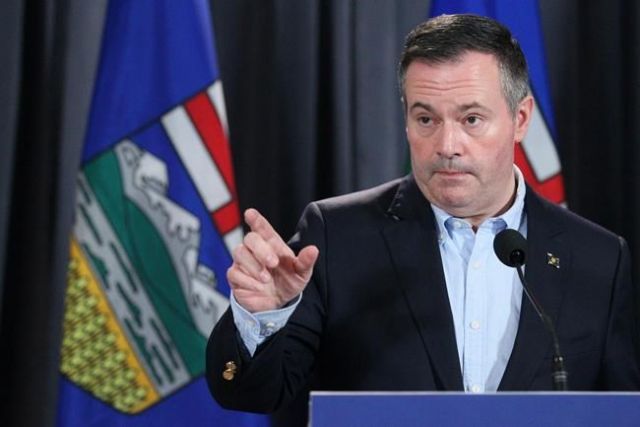
Kenney to meet Trudeau next week, talk pipelines, equalization

Alberta Premier Jason Kenney and Prime Minister Justin Trudeau are to hold their first face-to-face meeting since the federal election.

Kenney says he and eight of his cabinet ministers and other senior officials will be in Ottawa on Monday and Tuesday to discuss issues ranging from pipelines to equalization.

They will be “making the point that Alberta has been a massive contributor to Canadian jobs and prosperity, to social programs and social progress,” Kenney said Friday.

“And yet we are not getting a fair deal with the blockage of pipelines (and) with the lack of market access.”

Kenney said he is to meet Trudeau on Tuesday afternoon and will bring up a resolution passed unanimously at the recent meeting of provincial and territorial leaders to consider changes to the fiscal stabilization fund.

The fund helps provinces facing year-over-year declines in non-resource revenues, but Alberta contends it is being shortchanged due to caps tied to the size of its population.

Kenney said Alberta should receive about $2.4 billion going back to 2014. He said he’s optimistic there will be a policy change because the feds have promised to talk about it.

“We haven’t had anything like an assurance, but (we’ve heard) language that sounds like an openness to talk to us about this.”

Alberta NDP trade critic Deron Bilous said it’s ironic that Kenney, a former Conservative cabinet minister, is going to Ottawa to try to overturn changes to an equalization deal that was amended by former prime minister Stephen Harper’s government.

“I find it rich when you have a premier who is now going to save Alberta and Albertans’ tax dollars by equalization when he is the one who is responsible for making it worse,” said Bilous.

Kenney said he will also press Trudeau for a fixed completion date on the Trans Mountain oil pipeline expansion and again raise concerns on federal rules that ban tankers on B.C.’s northern coast and on approval criteria for energy megaprojects.

He is to make a noontime speech at the Canadian Club of Ottawa on Monday and meet with federal NDP leader Jagmeet Singh and federal Conservative Leader Andrew Scheer.

The meeting will be the next step in what has been a complex and, at times, highly strained relationship between Trudeau and Kenney.

Once adversaries in the House of Commons, Kenney, while United Conservative Party leader in Alberta in 2018, gratuitously dismissed the Liberal prime minister as an intellectual lightweight and a dilettante.

He campaigned against Trudeau in his successful Alberta election campaign last spring, painting then-NDP premier Rachel Notley as a willing glove puppet for what he termed Trudeau’s anti-oil efforts, despite the fact the federal government had purchased the multibillion-dollar Trans-Mountain project to keep it alive.

Kenney campaigned for Conservative Leader Andrew Scheer in the federal election, warning that a renewed Trudeau mandate would be catastrophic for Alberta’s oil and gas economy.

Trudeau was re-elected Oct. 21 with a minority mandate but his Liberals were shut out in Alberta and Saskatchewan.

Trudeau has since made overtures to work with Alberta and Saskatchewan, sending Deputy Prime Minister Chrystia Freeland last week to meet with Kenney and Saskatchewan Premier Scott Moe.

There remains a lot of work to do and animosity to overcome.

In Ottawa on Friday, Calgary Conservative MP Michelle Rempel Garner introduced a petition in Parliament, jointly with Alberta MLA Jeremy Nixon, calling on Canada to let Alberta take action to further its own interests and autonomy.

Rempel Garner said Trudeau has caused a unity crisis with hostile policies that damage the Alberta economy.

“Every Canadian needs to understand the consequences of the unity crisis that Justin Trudeau has put us in,” she said.