
Archives for October 22, 2019

Barnes & Noble Education Inc (BNED) Soars 6.43%

Barnes & Noble Education Inc (BNED) had a good day on the market for Monday October 21 as shares jumped 6.43% to close at $3.97. About 626,957 shares traded hands on 3,852 trades for the day, compared with an average daily volume of n/a shares out of a total float of 47.61 million. After opening the trading day at $3.75, shares of Barnes & Noble Education Inc stayed within a range of $4.12 to $3.75.

With today’s gains, Barnes & Noble Education Inc now has a market cap of $189 million. Shares of Barnes & Noble Education Inc have been trading within a range of $7.78 and $2.82 over the last year, and it had a 50-day SMA of $n/a and a 200-day SMA of $n/a.

Barnes & Noble Education Inc. is an operator of bookstores in college and university campuses across the United States and it also engaged in providing digital education services. It operates in three reportable segments: Retail segment, MBS Direct and Digital Student Solutions. Retail segment operates physical campus bookstores and also includes digital operations.

Barnes & Noble Education Inc is based out of Basking Ridge, NJ and has some 6,000 employees. Its CEO is Michael P. Huseby.

Barnes & Noble Education Inc is also a component of the Russell 2000. The Russell 2000 is one of the leading indices tracking small-cap companies in the United States. It’s maintained by Russell Investments, an industry leader in creating and maintaining indices, and consists of the smallest 2000 stocks from the broader Russell 3000 index.

Russell’s indices differ from traditional indices like the Dow Jones Industrial Average (DJIA) or S&P 500, whose members are selected by committee, because they base membership entirely on an objective, rules based methodology. The 3,000 largest companies by market cap make up the Russell 3000, with the 2,000 smaller companies making up the Russell 2000. It’s a simple approach that gives a broad, unbiased look at the small-cap market as a whole.
comScore Inc. (SCOR) Soars 11.54%

comScore Inc. (SCOR) had a good day on the market for Monday October 21 as shares jumped 11.54% to close at $2.03. About 625,352 shares traded hands on 2,871 trades for the day, compared with an average daily volume of n/a shares out of a total float of 69.83 million. After opening the trading day at $1.84, shares of comScore Inc. stayed within a range of $2.04 to $1.84.

With today’s gains, comScore Inc. now has a market cap of $141.76 million. Shares of comScore Inc. have been trading within a range of $23.89 and $1.43 over the last year, and it had a 50-day SMA of $n/a and a 200-day SMA of $n/a.

comScore Inc is a United States-based company that provides digital media analytics services to customers in the media, advertising, and marketing industries. Its products are primarily categorized into audience measurement products and services, advertising products and services, and enterprise solutions. The audience measurement products and services help clients measure the size and features of online users. The advertising products and services provide customers with solutions to optimize and assess digital advertising performance. The enterprise solutions help customers optimize businesses through digital media analytics. The company generates almost all its revenue from the United States, Europe, and Canada.

comScore Inc. is based out of Reston, VA and has some 1,800 employees. Its CEO is Dale L. Fuller.

comScore Inc. is also a component of the Russell 2000. The Russell 2000 is one of the leading indices tracking small-cap companies in the United States. It’s maintained by Russell Investments, an industry leader in creating and maintaining indices, and consists of the smallest 2000 stocks from the broader Russell 3000 index.

Russell’s indices differ from traditional indices like the Dow Jones Industrial Average (DJIA) or S&P 500, whose members are selected by committee, because they base membership entirely on an objective, rules based methodology. The 3,000 largest companies by market cap make up the Russell 3000, with the 2,000 smaller companies making up the Russell 2000. It’s a simple approach that gives a broad, unbiased look at the small-cap market as a whole.
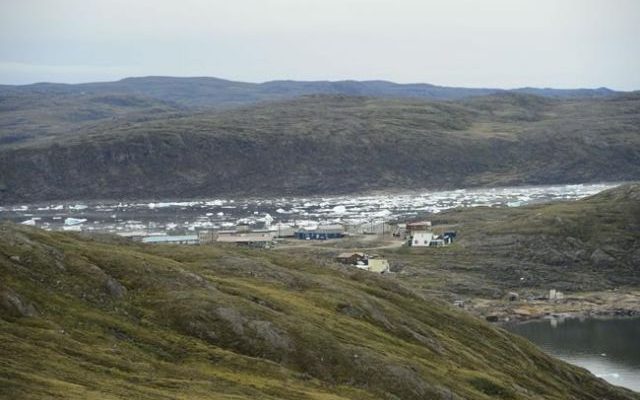
Arctic pumping out carbon

Permafrost emits more carbon in winter than plants absorb

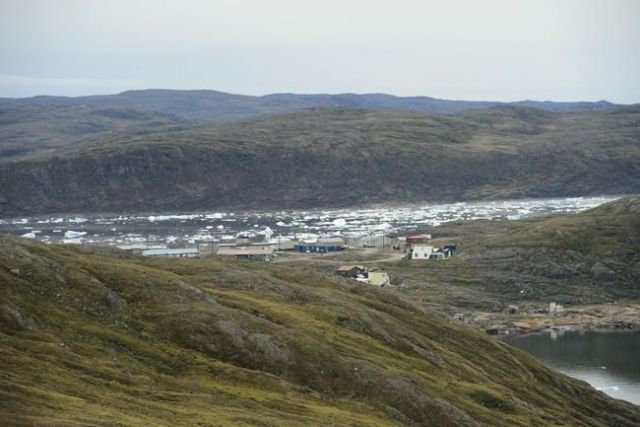
Research has found Arctic soil has warmed to the point where it releases more carbon in winter than northern plants can absorb during the summer.

The finding means the extensive belt of tundra around the globe — a vast reserve of carbon that dwarfs what’s held in the atmosphere — is becoming a source of greenhouse gas emissions responsible for climate change.

“There’s a net loss,” said Dalhousie University’s Jocelyn Egan, one of 75 co-authors of a paper published in Nature Climate Change.

“In a given year, more carbon is being lost than what is being taken in. It is happening already.”

The research by scientists in 12 countries and from dozens of institutions is the latest warning that northern natural systems that once reliably kept carbon out of the atmosphere are starting to release it.

Until now, little was known about winter emissions from permafrost and the soil above it. Even scientists assumed the microbial processes that release the gases came to a halt in the cold.

“Most people think in the winter, there’s no respiration, that the microbes eating the carbon that produce these emissions aren’t active, which isn’t actually the case,” Egan said.

The scientists placed carbon dioxide monitors along the ground at more than 100 sites around the circumpolar Arctic to see what was actually happening and took more than 1,000 measurements.

They found much more carbon was being released than previously thought. The results found carbon dioxide emissions of 1.7 billion tonnes a year are about twice as high as previous estimates.

Arctic plants are thought to take in just over one billion tonnes of the gas from the atmosphere every year during growing season. The net result is that Arctic soil around the globe is probably already releasing more than 600 million tonnes of CO2 annually.

Scientists previously thought carbon absorbed by tundra plants during the summer more or less made up for what was emitted in the winter as well as for what was released from melting permafrost during warm months.

That’s not what’s happening, said Egan.

“We’re seeing that the value emitted in the winter is larger than the net uptake for the growing season.”

What’s more, the pace of the emissions is likely to increase.

Under a business-as-usual scenario, emissions from northern soil would be likely to release 41 per cent more carbon by the end of the century.

But the Arctic is already warming at three times the pace of the rest of the globe. Even if significant mitigation efforts are made, those emissions will increase by 17 per cent, said the report.

West Fraser posts $45M loss

West Fraser Timber records Q3 loss on lower lumber production

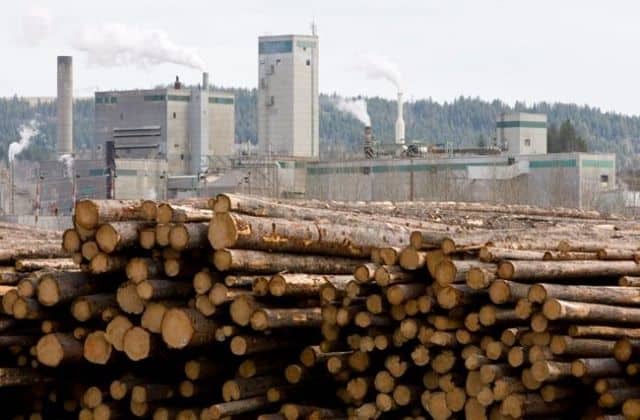
West Fraser Timber Co Ltd. is reporting a third-quarter loss as higher production from its U.S. south division failed to make up for reduced output in Canada.

The Vancouver-based company says it lost $45 million or 65 cents per share in the three months ended Sept. 30, compared with net earnings of $238 million or $3.25 per share in the year-earlier period.

West Fraser reported lumber production was down three per cent compared to the second quarter as it completed the permanent closure of its Chasm, B.C., lumber mill and eliminated the third production shift at its 100 Mile House, B.C., operations.

It says output in Alberta was affected by temporary weather-related log shortages.

Sales totalled $1.19 billion, down from $1.65 billion in the third quarter of 2018.

On an adjusted basis, it lost $15 million, or 22 cents per share for the quarter ending June 30, compared with earnings of $275 million or $3.76 a share a year earlier.

Sweetened bid for HBC

Board approves $1.9B deal to take Hudson’s Bay private

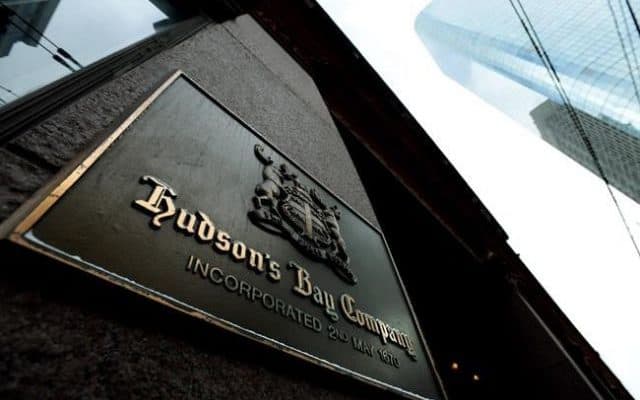
The Hudson’s Bay Co. board agreed Monday to a sweetened privatization offer that values the retailer at about $1.9 billion, but the deal will require support from minority shareholders if it is to be accepted.

The board said a group of shareholders led by HBC executive chairman Richard Baker, which holds about a 57 per cent stake in the retailer, has agreed to pay $10.30 per share in cash to take HBC private.

The bid is nine per cent higher than an earlier offer of $9.45 per share by the group, following objections from Toronto-based Catalyst Capital and Land & Buildings Investment Management of Stamford, Conn.

Catalyst and L&B didn’t immediately respond to requests for comment on the latest development.

The deal is subject to the approval by a majority of the minority of HBC shareholders, excluding the shareholder group and its affiliates, and approval by a 75 per cent majority vote at a special meeting of shareholders.

HBC’s board said the Baker-led group’s offer provides minority shareholders with “immediate and certain value” at a time of uncertainty as the retail industry evolves rapidly.

HBC’s management, which hasn’t commented publicly on the going-private initiative, reported last month that the owner of the Hudson’s Bay chain of department stores as well as the New York-based Saks Fifth Avenue luxury chain and Saks Off Fifth fashion outlets lost $984 million in the quarter ended Aug. 3.

The third-quarter loss amounted to $5.35 per share and compared with a year-earlier loss of $280 million or $1.45 per share.

HBC’s overall third-quarter revenue totalled $1.9 billion, roughly the same as a year ago, while comparable store sales fell 0.4 per cent, as comparable sales at the Hudson’s Bay chain fell 3.4 per cent in the quarter.

“Continued industry headwinds and the deterioration in operating performance have negatively affected the company’s financial results,” the board said in a statement Monday.

It added that “the company will be required to invest substantial capital and resources to remain relevant to its customers and successfully compete.”

That has been the main message of the Baker-led group, which includes Rhone Capital, WeWork Property Advisors, Hanover Investments (Luxembourg) and Abrams Capital Management.

However, opponents of the Baker group have argued that they will essentially be able to fund the privatization from proceeds of HBC’s sales of its European operations — announced the same day as the initial offer.

The Baker group’s revised offer represents a premium of 62 per cent compared with where the shares were trading before the shareholder group’s initial proposal announced June 10, according the HBC board.

Crude-by-rail shipments fall

Energy regulator says crude-by-rail shipments fell to 310,000 bpd

The Canada Energy Regulator says exports of crude oil by rail from Canada fell slightly in August to 310,000 barrels per day from 313,000 bpd in July.

The August number is up 35 per cent from 230,000 bpd reported in August of 2018 but still well below the record high of 354,000 bpd set last December.

The small change in crude-by-rail shipments came despite a threat by Imperial Oil Ltd. CEO Rich Kruger to throttle back the company’s rail movements in August and September to protest the ongoing Alberta oil production curtailment program.

He says the program damages the economic case for crude-by-rail by artificially lowering the difference in oil prices between Alberta and the end market on the U.S. Gulf Coast.

Imperial reported moving 80,000 bpd by rail in June. It co-owns an oil shipping rail terminal at Edmonton with capacity to load 210,000 barrels of crude per day.

Alberta has gradually eased the curtailment program designed to better align production with tight pipeline capacity from an initial withholding of about 325,000 bpd last January to 125,000 bpd in September.