Archives for October 22, 2019

Lilium proves its electric air taxi can fly

Until now, we’ve only seen the Lilium Jet hover.

Flying taxi startup Lilium has completed its first phase of flight testing. Its Lilium Jet is now flying at speeds over 100 kilometers per hour. Today, the company shared new flight footage and announced that it has completed its first dedicated manufacturing facility, a 3,000 square-meter space at its Munich, Germany, headquarters.

Lilium has been working on its vertical take-off and landing (VTOL) craft for a few years, and this spring, we saw the prototype hover above the ground. This new video shows that it can both hover and fly horizontally. According to the company, the VTOL jet has completed more than 100 ground and flight tests, including safety tests, and it will now move on to the second phase, which will test performance at high speeds.

Lilium Jet is powered by 36 electric engines that give it 2,000 horsepower and will allow it to cruise at up to 300 km/hour (186 mph). It has the potential to carry five passengers, and it will have zero operating emissions.

The company plans to begin commercial service in 2025, and by that time, it hopes to be manufacturing hundreds of aircraft each year. Lilium will soon add a second manufacturing facility, and it expects to create up to 500 new jobs between now and 2025.

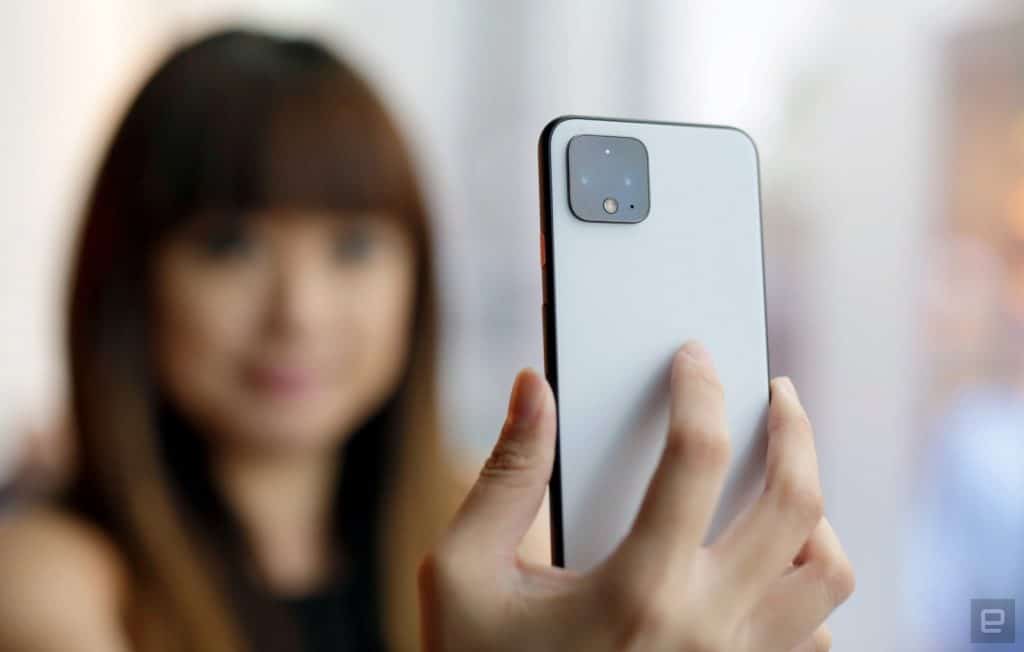
Faces are the Pixel 4’s kryptonite

Google needs to fix the selfie camera and Face Unlock.

One of the most controversial new features of Google’s latest flagship is its Soli radar sensor. It allows you to interact with the phone by swiping at the air in front of the display, and also enables Face Unlock. But, that login method has a glaring flaw — it will unlock your phone even if your eyes are closed. This means anyone near you can pick up your Pixel 4 and access your data by holding it in front of your face, even if you’re asleep.

Thankfully, Google is already working on a fix for that, saying it is adding mandatory eye-detection fix to Face Unlock in the coming months. The thing is, there are still several important issues Google needs to address to make Face Unlock a feasible authentication method. Until then, I can’t in good conscience recommend the Pixel 4 to anyone, no matter how amazing the cameras are.

My first issue with Face Unlock, aside from the soon-to-be-patched eye detection flaw, is that it only allows me to add one facial print. On the iPhone, you can have one alternate “look.” As my colleague Chris Velazco pointed out in his review, the Pixel 4 doesn’t recognize me as the same person with and without makeup on. When I set up Face Unlock with a bare face, I couldn’t get into my phone when I was done up. When I set it up with makeup on, I couldn’t log in after washing my face. This was a problem regardless of how much makeup I was wearing. The Pixel 4 had trouble recognizing me even when I used a smaller amount, and only logged me in about 50 percent of the time.

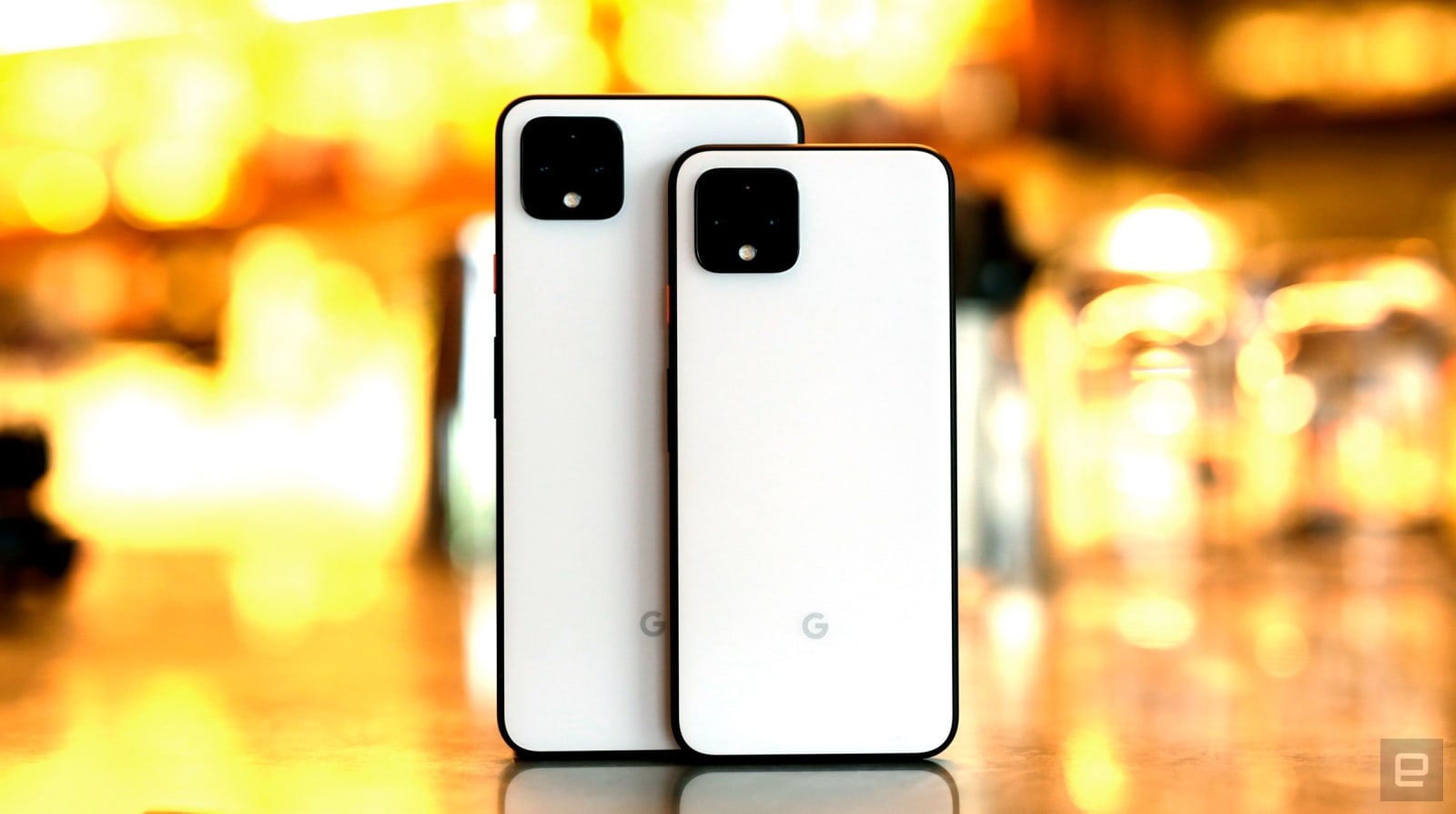
Pixel 4 and Pixel 4 XL

This might not seem like a problem to people who don’t use cosmetics, but if you’re ever going to alter the way you look at all, say for Halloween, your wedding night, or a killer Drag routine, you’ll probably have to rely on your pin instead.

That brings me to my second and biggest problem with Face Unlock — it’s the only biometric option on the Pixel 4. This wouldn’t be as huge an issue if not for the fact that many apps these days offer a fingerprint sign-in option to reduce the number of times you have to punch in a (hopefully) complicated password on a tiny phone keyboard. For things like financial services or Evernote, you’re often required to sign in each time you leave the app. That’s great: it makes it much harder for anyone who picks up your phone to get at your sensitive information. But it also gets annoying if you have to re-enter your excessively long and complicated alphanumeric password all the time.

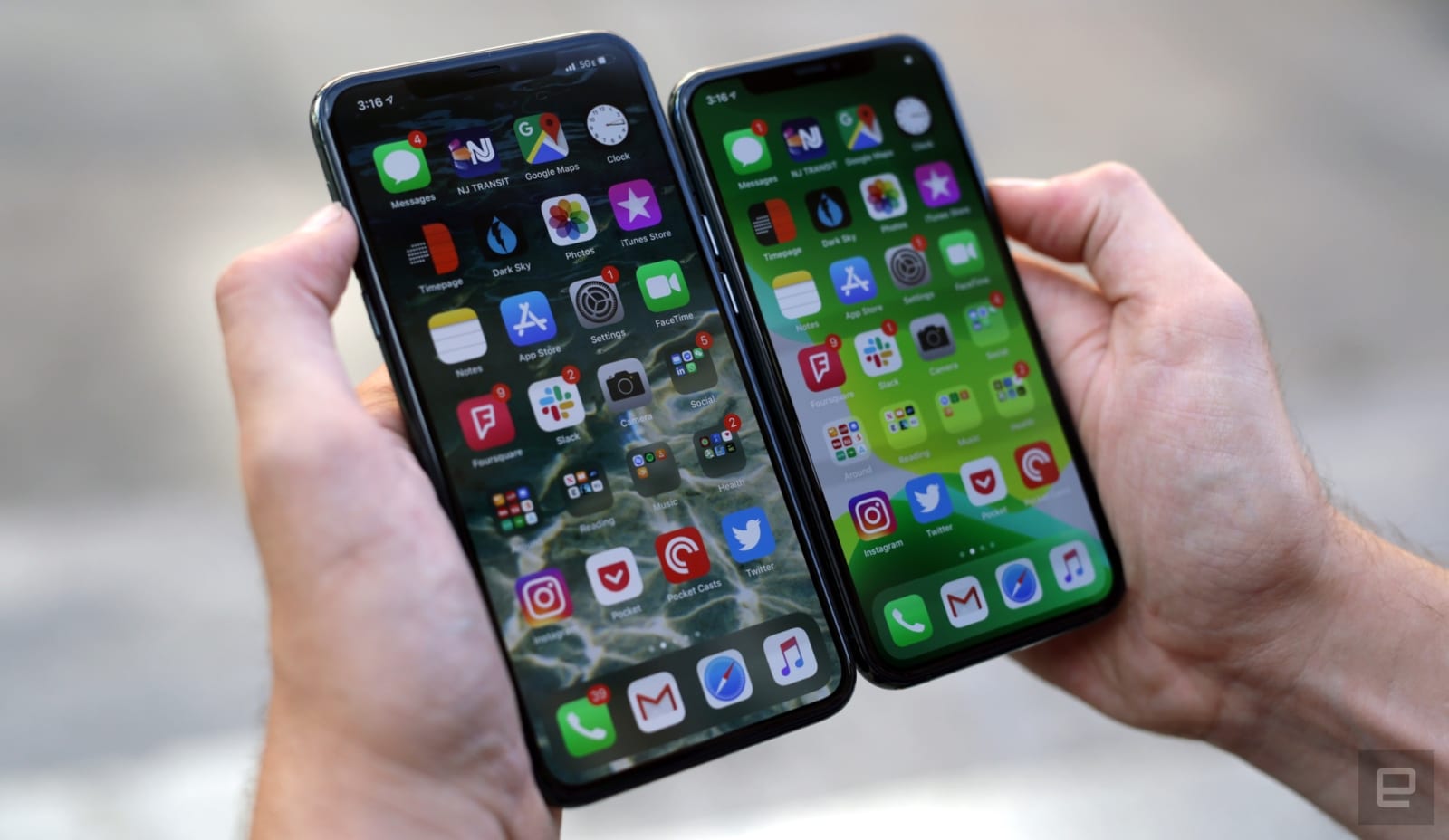
iPhone 11 Pro and 11 Pro Max

With a fingerprint scanner, this is less frustrating. The problem is that the Pixel 4 doesn’t have one, and Face Unlock doesn’t work as a stand-in here. When Apple replaced the fingerprint sensor with Face ID on the iPhone X, it solved this issue by making sure that all apps that supported Touch ID would also work with Face ID. Basically, the app asks your iPhone if you have the right fingerprint or face. It’s iOS that actually approves or denies your log in, so it doesn’t even matter which method you’re using.

On the Pixel 4, though, there is no such widespread integration of Face Unlock. Developers of individual apps will have to work to enable the feature. Meanwhile, you’ll just have to keep manually entering your password until Google finds a way to let you securely log in to these apps with your face.

My final gripe about the Pixel 4 specifically with regards to my face is its selfie camera. I’ve had issues with the Pixel 3 selfie camera app squishing my mug to look rounder and flatter than it really is. When I brought this up with Google back when I was reviewing the phone, the company explained this was a result of wide-angle distortion correction. I wasn’t happy with the explanation, but I was able to work around this by using a third-party app to snap my selfies.

On the Pixel 4, though, I can’t avoid this distortion. I was horrified to see, when recording an Instagram Story on the new flagship, that my face was distorted in real time. You can see it in this GIF above. It’s possible that the updates to the Pixel 4’s viewfinder interface that let you see HDR and exposure changes in real time are also causing this distortion to happen across all other apps. (Google hasn’t responded to our query about this.) Since I recorded that video, the distortion appears to have been reduced slightly, but it still squishes my selfies just enough to make me look more bloated than I am.

It appears that on the Pixel 4, the correction is happening at an underlying software level that also affects other apps. This means I can no longer use a third-party camera to capture a more-accurate snapshot of my face, and will have to find some creative means to do so on the new phone.

But even if I manage to figure that out, the Pixel 4 has too many inconveniences stacked against it, and poor battery life to boot. I don’t take pictures of stars in the night sky enough to warrant changing over to the Pixel 4, but I do snap plenty of selfies and front-facing videos on Instagram so for someone like me, this is important. Sure, some of my issues have to do with vanity, but I don’t want to buy a device knowing it will actually make my life harder. I want a phone that makes my life a little easier and makes me feel good about myself. Sadly, as much as I like the Pixel 4’s cameras, clean software and clever Assistant, I don’t think I can make the switch.

OmniVision wins Guinness World Record for its tiny medical image sensor

The ultra small device is cost effective and more comfortable for patients.

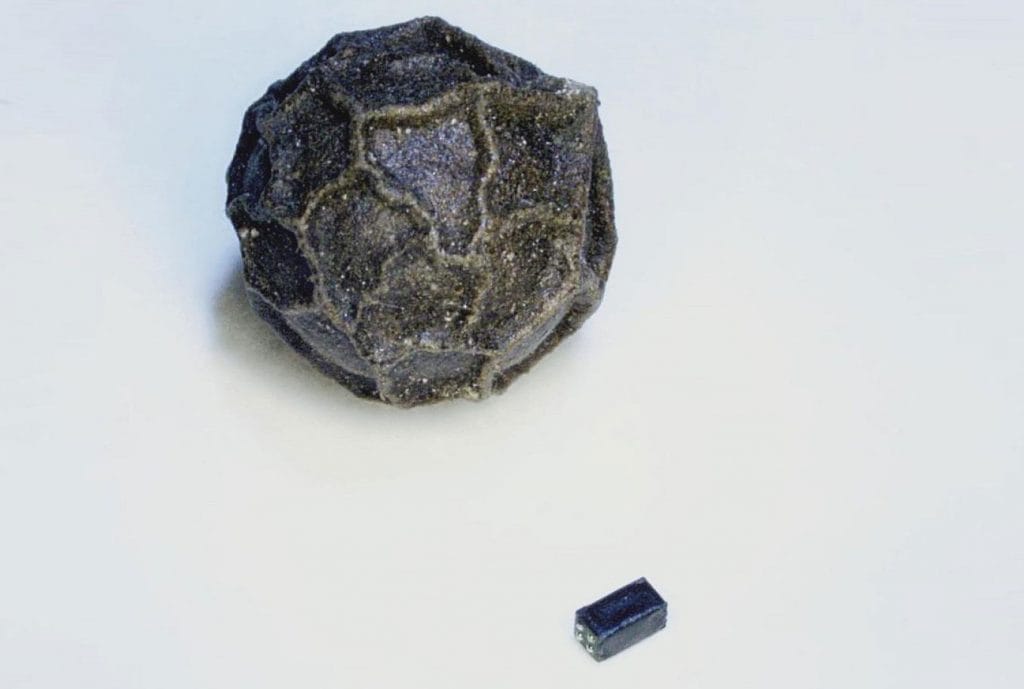
OmniVision is the new holder of the Guinness World Record for the smallest commercially available image sensor. The tiny device (pictured above in a camera module next to a grain of pepper) measures just half a millimetre squared, and will have a significant impact on the medical imaging landscape.

Traditionally, procedures in the body’s smallest anatomy — such as neuro, ENT, cardiac, spinal and gynaecology procedures — were performed blind or with low quality images from fiberscopes, because existing cameras were too big and reusable endoscopes were not cost effective. OmniVision’s tiny image sensor, used in conjunction with its 0.65mm x 0.65mm camera module, addresses these issues.

As OmniVision’s marketing director Aaron Chiang explains, the technology “offers a compact, high quality solution for disposable guidewires, catheters and endoscopes, which are experiencing growing demand because of their ability to reduce cross-contamination risks, downtime inefficiencies and costs associated with the repairs, preprocedural testing and sterilization of reusable endoscopes.”

The sensor is also the only ultra small “chip on tip” camera with backside illumination, which provides excellent image quality and better low-light performance to help reduce LED heat, along with improved sensitivity. Not only does that stand to improve cost effectiveness for hospitals, but it’s good news for patients, too, says Chiang, who notes that the compact disposable device “can improve patient comfort and shorten recovery time.”

Samsung patent application showcases AR headset design

For once, we see something more than a diagram.

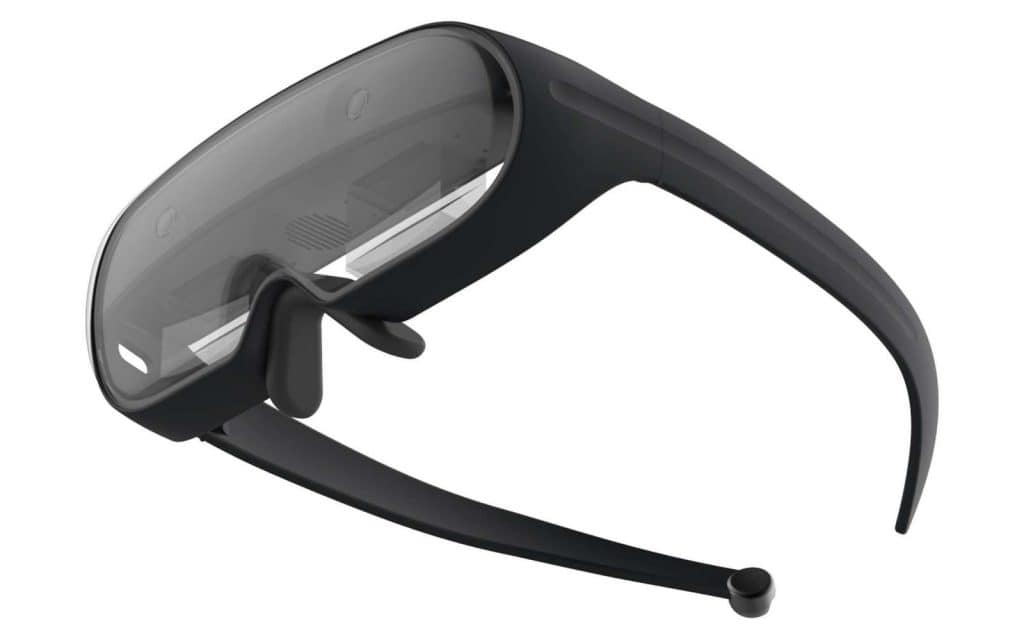
When websites like Engadget report on patents, typically all you see accompanying the applications are line diagrams that give a faint idea of what a tech company is working on. Not so with a recently discovered application from Samsung, which includes a 3D render of an augmented reality (AR) headset. According to Galaxy Club, which was the first to spot the patent, the headset features projection screens in each lens. Additionally, one diagram depicts a wire on the right side of the device — though the purpose of the cable isn’t clear.

Samsung AR headset patent

While the fact Samsung included a 3D render is unusual, it doesn’t mean the company is any more likely to release the pictured device than with any other patent application we’ve seen in the past. Still, the timing is interesting. After years of trying to position mobile VR as the next big thing, most smartphone companies, including Samsung and Google, have given up on the medium. Just this past summer, the Note 10 became the first Samsung flagship to not support the company’s Gear VR headset. The company also hasn’t released a new Gear VR headset since 2017.

Notably, Samsung isn’t the only company that looks like its working on an AR headset. In a report from earlier in the month, analyst Ming-Chi Kuo said Apple plans to launch an augmented reality device sometime in the second quarter of 2020. However, we’ll have to wait and see if AR devices fare any better than their VR counterparts.

United Natural Foods Inc. (UNFI) Soars 5.34%

United Natural Foods Inc. (UNFI) had a good day on the market for Monday October 21 as shares jumped 5.34% to close at $6.91. About 1.58 million shares traded hands on 11,029 trades for the day, compared with an average daily volume of n/a shares out of a total float of 53.43 million. After opening the trading day at $6.59, shares of United Natural Foods Inc. stayed within a range of $7.01 to $6.57.

With today’s gains, United Natural Foods Inc. now has a market cap of $369.23 million. Shares of United Natural Foods Inc. have been trading within a range of $26.38 and $6.56 over the last year, and it had a 50-day SMA of $n/a and a 200-day SMA of $n/a.

United Natural Foods is a wholesale distributor of natural, organic and specialty foods and nonfood products across North America. The company’s products consist of national, regional and private label brands grouped into grocery and general merchandise, produce, perishables and frozen foods, nutritional supplements and sports nutrition, bulk and foodservice products, and personal care items. United Natural Foods serves various retail formats including conventional supermarket chains, natural product superstores, independent retail operators and food service channels such as e-commerce platforms. The company’s operations are comprised of three principal divisions: the wholesale division; the retail division; and the manufacturing and branded products division.

United Natural Foods Inc. is based out of Providence, RI and has some 19,000 employees. Its CEO is Steven L. Spinner.

United Natural Foods Inc. is also a component of the Russell 2000. The Russell 2000 is one of the leading indices tracking small-cap companies in the United States. It’s maintained by Russell Investments, an industry leader in creating and maintaining indices, and consists of the smallest 2000 stocks from the broader Russell 3000 index.

Russell’s indices differ from traditional indices like the Dow Jones Industrial Average (DJIA) or S&P 500, whose members are selected by committee, because they base membership entirely on an objective, rules based methodology. The 3,000 largest companies by market cap make up the Russell 3000, with the 2,000 smaller companies making up the Russell 2000. It’s a simple approach that gives a broad, unbiased look at the small-cap market as a whole.

McDermott International Inc. (MDR) Plunges 13.19%

McDermott International Inc. (MDR) had a rough trading day for Monday October 21 as shares tumbled 13.19%, or a loss of $-0.31 per share, to close at $2.04. After opening the day at $2.84, shares of McDermott International Inc. traded as high as $3.03 and as low as $2.01. Volume was 61.03 million shares over 98,707 trades, against an average daily volume of n/a shares and a total float of 181.73 million.

As a result of the decline, McDermott International Inc. now has a market cap of $370.73 million. In the last year, shares of McDermott International Inc. have traded between a range of $14.35 and $1.44, and its 50-day SMA is currently $n/a and 200-day SMA is $n/a.

McDermott International Inc provides integrated engineering, procurement, construction and installation, and module fabrication services for oil and gas field developments worldwide. The company delivers fixed and floating production facilities, pipeline installations, and subsea systems for complex offshore and subsea oil and gas projects. Revenue is derived internationally, and customers include national, major integrated, and other oil and gas companies. Contracts are executed through a series of different methods, principally fixed-price, but also include fixed reimbursable, cost-plus, day-rate, and unit-rate basis.

McDermott International Inc. is based out of Houston, TX and has some 31,900 employees. Its CEO is David Dickson.

McDermott International Inc. is a component of the Russell 2000. The Russell 2000 is one of the leading indices tracking small-cap companies in the United States. It’s maintained by Russell Investments, an industry leader in creating and maintaining indices, and consists of the smallest 2000 stocks from the broader Russell 3000 index.

Russell’s indices differ from traditional indices like the Dow Jones Industrial Average (DJIA) or S&P 500, whose members are selected by committee, because they base membership entirely on an objective, rules based methodology. The 3,000 largest companies by market cap make up the Russell 3000, with the 2,000 smaller companies making up the Russell 2000. It’s a simple approach that gives a broad, unbiased look at the small-cap market as a whole.