Archives for October 14, 2019

Thousands without power

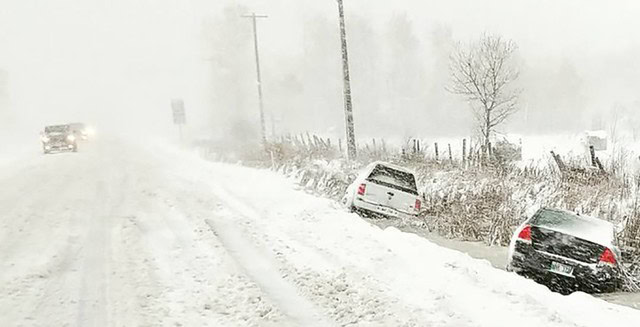
Thousands still without power after snow storm hammers Manitoba

WINNIPEG – Manitoba Hydro says it’s making good progress restoring electricity to customers blacked out by the snow storm that blasted southern areas of the province, but it still has a lot of work to do.

The utility’s website indicated that by early Sunday morning nearly 39,000 customers, including some 5,000 in Winnipeg, remained without power, and that it couldn’t say exactly when the lights and heat would be turned back on.

Portage la Prairie, about 90 kilometres west of Winnipeg, has been especially hard hit — tweeting that the city’s sewage lift stations were operating on backup power and that residents should not flush their toilets — at all.

Manitoba Hydro spokesman Scott Powell said in a news release that as the storm system tracked through Portage la Prairie, the Interlake region and farther north, the heavy snow was making it very difficult for crews to assess how much damage had been done, let alone begin to fix it.

Powell said there were reports of snowdrifts close to two-and-a-half metres high and in some cases crews were dealing with broken transmission towers, which he stressed were not quick fixes.

The province has asked people to restrict non-essential travel in order to facilitate snow-clearing for emergency response, to call 911 about downed power lines, and to ensure proper ventilation when using alternative combustible heat sources.


Elections Canada data shows 25% increase in advance voting compared to 2015

Two million voters cast ballots in the first two days of advance voting across the country

According to data provided by Elections Canada, two million Canadians cast votes in the first two days of advance voting across the country — a 25 per cent increase compared to the same period in 2015.

During the first two days of advance voting in the 2015 election, 1.6 million Canadians voted.

The numbers provided by Elections Canada do not include electors who voted in local offices, on campus, by special ballot or at additional service points.

For the first time this election, advance polls are open from 9 a.m. to 9 p.m.

To find the right polling station, would-be electors (that’s any registered Canadian age 18 and older) can check out the Elections Canada website or call 1-800-463-6868. The location is also written on the voter identification cards sent out to nearly 27 million Canadians.

Voters have to show identification that includes a home address, such as a driver’s licence.

Monday is the last day advance polls are open.

‘Definite uptick’: Global wave of ransomware attacks hitting Canadian organizations

Toronto dental clinic targeted last week, with hacker telling CBC he wants a $170,000 ransom

When a Toronto dentist learned last week that his office’s computer network had been attacked with ransomware, it felt like a “violation.” 

“It was terrible,” he said. “My wife was even nervous about sleeping at home.”

Staff were locked out of digital files for at least a day and had to take notes on paper. The dentist said files on 19 out of the clinic’s 22 computers became encrypted. 

CBC News has agreed not to identify the dentist to avoid making his clinic a potential target again.

A message left on the infected machines read “Ryuk,” identifying the ransomware as the same strain that recently hit three Ontario hospitals and health-care facilities in Alabama and Australia.

“We were really lucky,” the Toronto dentist said. “At least we had a good backup.”

Last Tuesday, patients started receiving so-called phishing emails — messages meant to trick users into giving hackers access to the recipient’s computer or data. 

This note, which CBC printed out, was left on computers at a Toronto dental clinic recently hit with Ryuk ransomware. 

Ransomware typically encrypts files, with attackers demanding a digital currency payment from victims in order to release the data.

Ryuk, a form of ransomware first reported in 2018, allows hackers to view a computer’s files and gather information for several weeks, unbeknownst to its victims.

‘Definite uptick’

The Toronto dental clinic is just the latest target in a series of ransomware attacks hitting Canadian networks, particularly in the health-care field. A string of the Ontario municipalities — including Woodstock, Stratford and The Nation — have previously fallen victim to ransomware.

Until recently, Canadians seemed “to have escaped” a wave of global ransomware attacks, said B.C.-based cybersecurity expert Brett Callow, with the global software firm Emsisoft. 

“Although that seems to have been changing in recent weeks,” he said. “There has been a definite uptick.”

A recent survey of Canadian organizations found the vast majority (88 per cent) experienced a data breach over the last 12 months. The research by the U.S.-based cybersecurity firm Carbon Black also found 82 per cent of Canadian companies surveyed reported an “increase in overall attack volume.”

Both figures represent a slight increase over Carbon Black’s previous Canadian threat report, released in March.

Ransomware, however, only accounted for 14 per cent of data breaches in the recent survey.

According to experts, health-care facilities are increasingly being targeted in ransomware attacks because of the sensitive files they manage. 

“The criminal syndicates of the world … are laser-focused on targeting hospitals and municipalities’ emergency management systems,” because of their importance in critical situations, said Tom Kellerman, Carbon Black’s chief cybersecurity officer.

“[Criminals] recognize that ransomware is far more impactful in these types of organizations due to their mission.”

The FBI also issued a warning recently, alerting U.S. organizations to the threat of “high-impact” ransomware. The agency said while the incidence of broad ransomware campaigns has declined since 2018, “losses from ransomware attacks have increased significantly.”

Hacker speaks

The hacker who targeted the Toronto dental clinic told CBC News he was not involved in the recent cyberattacks on the Ontario hospitals. CBC News briefly exchanged messages with him using the email address provided to the clinic.

The hacker initially told CBC that the cost to decrypt the dental office’s files would be nine bitcoins (nearly $100,000), but later increased the price to 15 bitcoins ($165,000). 

“To confirm our honest intentions,” he wrote, “we will unlock two files for free.”

The hacker — whose email address identified him as “Samuels Marques” — declined to say where he was located, or much money he had made from Ryuk attacks.

Cybersecurity researchers believe the malicious software was likely developed in Russia.

The widespread nature of Ryuk attacks may stem from the code’s availability on the dark web, a shadowy part of the internet not found on search engines that is difficult for everyday users to access.

The malware’s creators are leasing it online for about $200 US, plus a monthly “maintenance fee,” which ensures the code is updated with the latest data to circumvent security technology, said Kellerman

He said the malware’s creators provide it to other hackersso Ryuk can keep gathering information on computer system vulnerabilities, or “backdoors,” around the world.

“They’re outsourcing their colonization of infrastructure to other criminals,” he said.

It’s unclear why Canadian firms are increasingly being targeted, Callow said, but he has a theory.

“It could simply be that the bad actors are broadening their horizons,” he said. “They’ve had a lot of success in the U.S. and now they’re trying their luck in other areas.”

Free fix?

The RCMP discourages victims from paying ransom.

In many cases, organizations with small information technology departments may hire outside firms for help regaining access to files. An online service, likely little-known to Canadians, can also sometimes do the trick for free.

The No More Ransom Project — an initiative involving the European Union’s law enforcement agency, Europol — offers tools on its website to unlock files encrypted with malware. The service is available to users around the world, including in Canada.

New Zealand-based Emsisoft acts as a project partner, lending decryption tools to the initiative.

Europol’s European Cybercrime Centre is one of the partners involved in the No More Ransom Project. 

Callow said Emsisoft is mainly an anti-virus company, but it provides ransomware-fighting tools as a “public service.”

He stresses though that Ryuk often causes damage to files it encrypts, making them irrecoverable. “So data loss is very common in these cases, even if the ransom is paid.”

But for “the three to five per cent [of cases] in which we can help,” Callow said, “our services are provided at no cost whatsoever.”

The Toronto dentist said his clinic didn’t pay to regain its files, and despite the messages exchanged with CBC News, no specific amount was demanded. But he said if the price were right, he wouldn’t hesitate to pay.

“If someone said to me, ‘Pay $20,000 and you get your files back,’ I’d give them the money,” he said. “Because I need my files.”

The clinic is now taking steps, such as reinforcing firewalls and issuing new computer usage guidelines for staff, he said.

His message for others? Ransomware is a “real issue … and it’s bound to get worse.”

Wood and steel for icy roads

10,000 kms of roads that depend on freezing temps in Canada

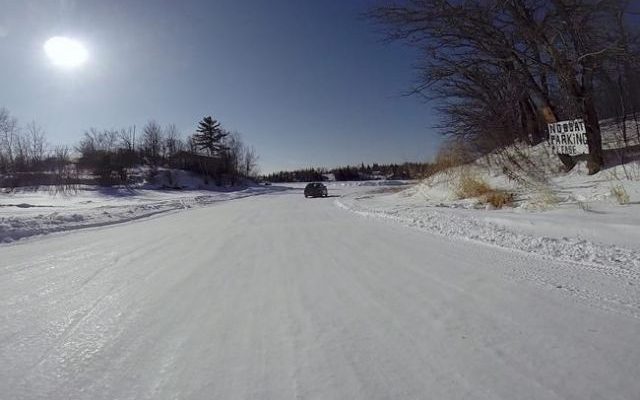
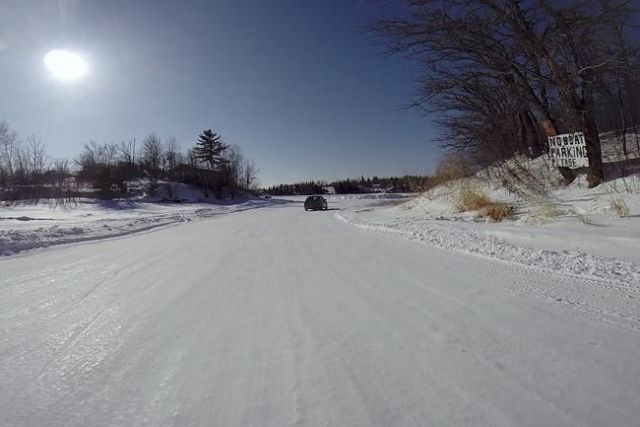
The road should have been frozen solid, but it was anything but.

When drivers tried to travel the Mackenzie Valley winter road in the Northwest Territories last March, it was an unpassable highway of muck well before its usual closure date. Four communities were left without vehicle access.

That’s what Paul Barrette — using everything from steel cables to wood pulp — is working to prevent.

“It’s the only time of the year, those two or three months, when northern communities can resupply their needs in fuel, construction material and other bulk goods,” said Barrette, who leads a National Research Council team that is developing ways to keep winter and ice roads passable in a warming climate.

“What we’re looking at is to ensure those roads remain operational throughout these warm winters.”

Across Canada, there are at least 10,000 kilometres of roads that depend on freezing temperatures. Most are in Ontario, but they exist in four provinces and two territories.

For dozens of isolated communities, they are the only way in and out that doesn’t depend on a boat or plane. They are a lifeline for many resource projects.

Improved construction methods have slightly lengthened openings for most winter and ice roads.

But the number of days with freezing temperatures is shrinking across the North. Yukon and the Northwest Territories have already warmed 1.5 degrees Celsius, nearly three times the global average.

A study of the winter road that leads from Yellowknife to the diamond mines of the Central Arctic predicts it will be unable to carry any heavy loads by the end of the century.

“If such a projection were to become reality, the (Tibbett-Contwoyto Road) and other winter roads in the region would no longer be viable to support the natural resource industry in northern Canada,” the study says.

Barrette said the problem is often the few hundred metres it takes to cross a river or a lake.

“The weakest link often happens to be over ice. When that happens, the road remains closed a whole winter so the community remains stranded a full year.”

In the past, operators have dropped logs onto the road and frozen them into the ice. But felling trees over the same spot year after year creates environmental issues. Besides, there are no trees further north in the tundra.

Barrette is looking to other materials. “Wood pulp is a possibility.”

Mixing wood pulp into ice hardens it. The blend was used during the Second World War to create an experimental aircraft carrier.

Laying steel cables into the ice is another possibility.

Most recently, Barrette has experimented with what are called “geotextiles” — in this case, a sheet of polypropylene mesh frozen into the road.

“They’ve got to be light enough, they have to be cheap enough, to be brought over on site,” said Barrette.

They also have to be environmentally sound. And they have to work. Barrette said none of the methods have yet been tested in the field.