Archives for October 14, 2019

Samsung’s Android 10 beta program is now available on the Galaxy S10

Get an earlier-than-usual Android taste on Samsung’s latest devices.

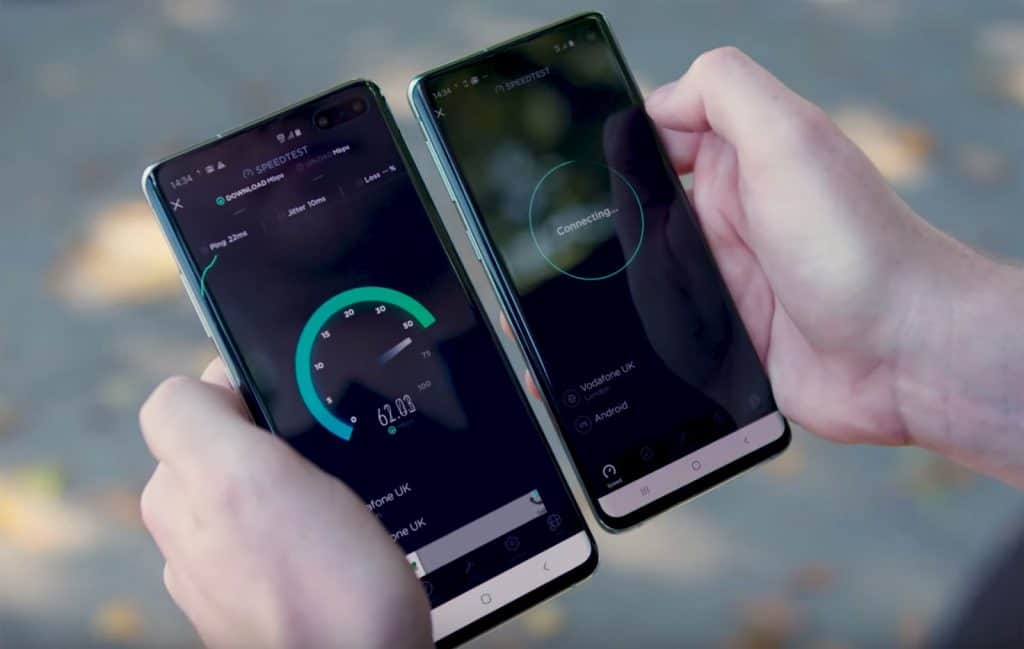
Android 10 was released in September, but so far, it’s only been available on Google’s own Pixel devices. Usually, it takes other manufacturers some months to catch up, however, as promised, Samsung has released a beta of its Android 10-based One UI 2.0 for Galaxy S10, S10+ and S10e devices. The program is now rolling out in South Korea, Germany, and the US, according to SamMobile.

The One UI 2.0 OS features a blend of Samsung’s features like smaller notifications and “enhanced Dark Mode” that adjusts the brightness of images and text at night, along with Android 10 perks like the new Focus Mode.

The app is supposedly available for folks with an unlocked phone or a contract with Sprint or T-Mobile. To find out if you have access, head to the Samsung Members app and check for notifications. If you manage to get it, you’ll be far ahead of Galaxy S9 owners who wanted Android 9 “Pie” last year. That app didn’t hit beta on Samsung devices until November 2018, four months after it was released.
Safari in iOS sends some Safe Browsing data to Tencent

You might not have to worry outside of China, but it’s still a concern.

Apple’s Safari browser has long sent data to Google Safe Browsing to help protect against phishing scams using its Fraudulent Website Warning feature, but it now appears Chinese tech giant Tencent gets some information as well. Users have discovered that iOS 13 (and possibly versions starting from iOS 12.2) sends some data to Tencent Safe Browsing in addition to Google’s system. It’s not clear at this stage whether Tencent collects any information outside of China — you’ll see mention of the collection in the US disclaimer, but that doesn’t mean it’s scooping up info from American web surfers.

The concern, as you might imagine, revolves over what Tencent might do with that data. Both Google and Tencent may log IP addresses in order for their anti-phishing systems to work, but Tencent’s frequent cooperation with the Chinese government raises concerns that its data could be used for surveillance or other nefarious ends. Johns Hopkins University professor Matthew Green noted that a malicious provider could theoretically use Google’s Safe Browsing approach to de-anonymize someone by linking site requests. So long as Tencent’s method is similar, it could have a way to identify users if the Chinese government pressures it to reveal dissidents.

We’ve asked Apple for comment.

You can turn Fraudulent Website Warning off (in Settings > Safari) as long as you’re willing to accept less vigilance against sketchy pages. The issue is really that Apple activates the feature by default without alerting users, and that it doesn’t specify just where Tencent operates. It doesn’t help that users are worried about China’s influence on tech, either. Between Apple’s decision to remove a Hong Kong protest app and Blizzard’s ban on a pro-Hong Kong Hearthstone player, it may be hard for Apple and Tencent to escape scrutiny regardless of their behavior.

Update 10/14/19 2:37AM ET: We should clarify that Apple integrated Tencent Safe Browsing into Safari for China users after the WWDC 2017 announcement, and now, it appears that this is being rolled out to non-China devices as well.

Uniti’s quirky three-seater EV costs less than $19,000

This bubbly vehicle has a range of up to 186 miles.

Swedish brand Uniti has announced the pricing and specs for its cute, quirky Uniti One, a crowdfunded electric car. With an affordable £15,100 ($18,970) price tag in the UK, this Scandinavian-designed ultra-compact has an unusual interior layout and offers a range of up to 186 miles.

To make the most of the vehicle’s tight footprint, it has a one-plus-two seating configuration with plenty of space for the driver by themselves up front and room for two adults in the back. The battery is located beneath the floor to save more space, and with three passengers on board there’s still enough room for 155 liters of rear cargo. The rear seats can be folded down as well to create a single-person cargo hauler.

There are two battery sizes available, 12 kWh and 24 kWh, and Uniti says the battery can be charged from 20 percent to 80 percent in seventeen minutes using a 50 kW CCS charger. The vehicle will come will modern connected features like integrated Android Automotive OS for navigation and entertainment, and the voice-activated interface can control lighting, heating and ventilation. Plus there’s keyless entry and Over-The-Air software updates.

Customers in Europe can order a Uniti One now, with those in the UK benefiting from a £3,500 government subsidy which brings the price down to just over £15,000. The first deliveries are planned in Sweden and the UK for mid-2020.

Here’s how Alexa learned to speak Spanish without your help

New tools helped create thousands of sentences.

Now that Alexa knows how to speak Spanish in the US, there’s a common question: how did it learn the language when it didn’t have the benefit of legions of users issuing commands? Through new tools, it seems. Amazon has revealed a pair of system that helped Alexa hone its español (and Hindi, and Brazilian Portugese) using just a tiny amount of reference material. Effectively, they gave the natural language machine learning model a jumpstart.

The first tool studies a handful of “golden utterances” (that is, reference commands suggested by the developers) to learn general syntax and semantics patterns. After that, it produces “rewrite expressions” that themselves create thousands of new yet similar sentences to work from. The system works quickly — you could move from 50 utterances to a fully operational linguistic set in less than two days.

Amazon’s other tool uses guided resampling to replace terms that can be safely swapped, further improving the AI’s training. The technique draws both on data from existing Alexa languages as well as media sources like the Amazon Music catalog, and it’s capable enough to be aware of context (it won’t swap a musician’s name for an audiobook, for example).

This doesn’t mean that Alexa will master every known language in a matter of weeks. There are other factors to consider beyond the linguistic structure, such as accommodations for cultural differences and customer support systems. Still, it suggests that Amazon might have an easier time adding languages than it has in the past. It might just be a matter of which Alexa device you get, rather than whether you can get one in the first place.

Transocean Ltd (Switzerland) (RIG) Rises 8.29%

Transocean Ltd (Switzerland) ($RIG), popping some 8.29% to a price of $4.57 a share with some 20.1 million shares trading hands.

Starting the day trading at $4.30, Transocean Ltd (Switzerland) reached an intraday high of $4.64 and hit intraday lows of $4.30. Shares gained $0.35 apiece by day’s end. Over the last 90 days, the stock’s average daily volume has been n/a of its 611.8 million share total float. Today’s action puts the stock’s 50-day SMA at $n/a and 200-day SMA at $n/a with a 52-week range of $3.76 to $13.42.

Transocean commands one of the largest deep-water and ultra-deep-water fleets in the world. Its rigs operate globally, but the major deep-water basins are in West Africa, Brazil, and the Gulf of Mexico. Transocean’s customers tend to be national oil companies, independents, and international oil companies.

Transocean Ltd (Switzerland) has its corporate headquarters located in Steinhausen, and employs 6,700 people. Its market cap has now risen to $2.8 billion after today’s trading, its P/E ratio is now n/a, its P/S n/a, P/B 0.22, and P/FCF n/a.

The Dow Jones Industrial Average (DJIA) is the most visible stock index in the United States, but that doesn’t make it the best. In fact, the industry standard for market watchers and institutional investors in gauging portfolio performance is the S&P 500.

The DJIA relies on just 30 stocks as a sample of large- and mega-cap firms, dwarfed by the 500 contained in the S&P 500, and it also weights its returns using an outdated and flawed price-weighting method. The S&P 500’s weighting is based on market cap, making it a much better representation of actual market performance for large- and mega-cap stocks.

Scientific Games Corp (SGMS) Soars 9.24%

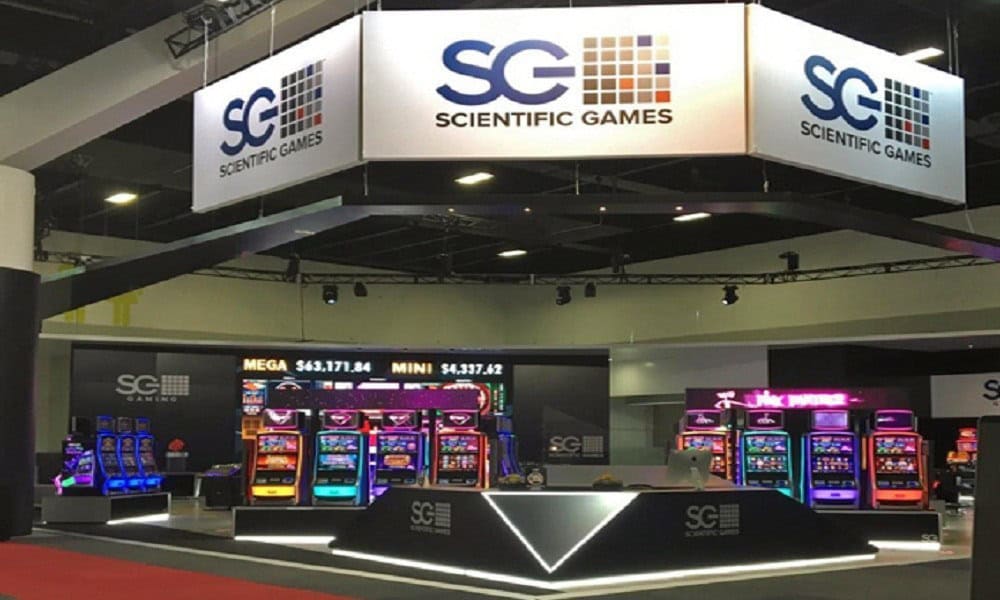
Scientific Games Corp is a provider of gaming products, systems, and services to the lottery and pari-mutuel industries. The firm is the producer of instant lotto tickets and prepaid phone cards, which make up more than 52% of sales. The firm also provides wagering systems, server-based gaming machines, and data communication services through its lottery systems and diversified gaming businesses. About 50% of instant lotto tickets are sold outside the United States. It has Gaming, Lottery and Interactive segments.

Scientific Games Corp is based out of Las Vegas, NV and has some 9,700 employees. Its CEO is Barry L. Cottle.

Scientific Games Corp is also a component of the Russell 2000. The Russell 2000 is one of the leading indices tracking small-cap companies in the United States. It’s maintained by Russell Investments, an industry leader in creating and maintaining indices, and consists of the smallest 2000 stocks from the broader Russell 3000 index.

Russell’s indices differ from traditional indices like the Dow Jones Industrial Average (DJIA) or S&P 500, whose members are selected by committee, because they base membership entirely on an objective, rules based methodology. The 3,000 largest companies by market cap make up the Russell 3000, with the 2,000 smaller companies making up the Russell 2000. It’s a simple approach that gives a broad, unbiased look at the small-cap market as a whole.