
Archives for September 29, 2019

3 Financial Habits That Can Help You Retire Rich

If you dream of retiring rich, you’re not alone. More than half (51%) of Americans believe they will be wealthy someday, according to a survey from personal finance website MagnifyMoney.

Exactly what “wealthy” means depends on the individual. For some, it might mean retiring a millionaire. For others, it could be defined as being able to pay all their bills and live a comfortable lifestyle.

Regardless of what retiring wealthy means to you, it’s not easy. Even if you have years left before you can even think about retiring, it takes loads of hard work and dedication to amass hundreds of thousands of dollars or more for retirement. But it can be done, especially if you get into the habit of doing these three things.

1. Start saving early

It’s never too early to start saving for retirement. The earlier you start, the easier it is to build a robust retirement fund. That’s because compound interest is on your side — that’s when you earn interest on your interest and your balance grows exponentially. So the more money you have in your retirement fund, the faster your savings can grow.

When you wait too long to start saving, your money doesn’t have as much time to grow, and you’ll need to save more each month to reach your goal.

Say you want to save $1 million by age 65. If you were to start at age 20, you’d need to save approximately $300 per month, assuming you’re earning a 7% annual rate of return on your investments. Wait until 35 to begin, and you’d need to stash away roughly $900 per month. And if you don’t start until 50, you’d need to save a whopping $3,400 per month to reach your goal.

Even if you don’t have much to save right now, saving just a little is better than saving nothing at all. It might not seem to make much of a difference, but give that money a couple of decades to grow, and it can be significant.

2. Set goals — and write them down

Saving without a goal is like taking a road trip without a GPS. You might end up where you want to be eventually, but there’s a good chance you’ll get lost along the way.

When you set a goal for yourself, it will help you figure out how much you should be saving now to achieve that goal by the time you retire. It also helps to set smaller, more achievable goals along the way so you don’t get overwhelmed by your overarching target. Instead of thinking about how much you need to save by retirement age, focus on what you should be saving each month or each week. That helps make your target less intimidating.

Also, once you have your goals set, write them down to hold yourself accountable. Nearly two-thirds of those who have a written financial plan say they feel financially stable, a survey from Charles Schwab found. In addition, 78% of those with a written plan are able to pay their bills and save each month, compared with only 38% of those without a written plan, according to the survey.

3. Prioritize saving for retirement

Once you have your goals in mind and a written plan to achieve them, prioritize that plan. It’s easy to shove retirement saving to the bottom of your priority list, especially if you still have decades left to save.

But rather than treating it as an afterthought and only saving whatever scraps you have left at the end of the month, think of it as an important bill that has to be paid every month. You can’t skip paying the mortgage or the electric bill because you’d rather spend that money elsewhere, so think of retirement saving the same way.

Make sure you dedicate at least some money every month toward your retirement fund. If you don’t have enough cash to meet your monthly goal, either make cuts in other areas of your budget or make up for it by saving extra the next month. Don’t get into a habit of not saving, because it can be much harder to catch up.

Retiring wealthy is an admirable goal, and it’s within reach even if you don’t consider yourself wealthy now. Getting into the habit of making smart financial choices will give you the best shot at a comfortable retirement.

‘Naive, but right to protest’

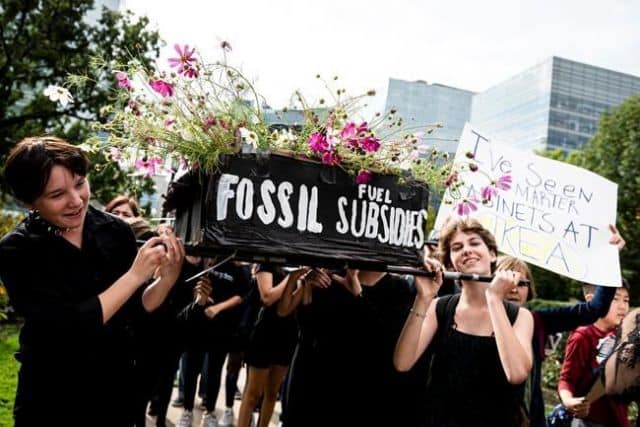
Oil and gas industry insiders say demands by organizers of Friday’s Global Climate Strike to transition swiftly away from fossil fuels to 100 per cent renewable energy are naive and unrealistic.

But the leaders reached on the sidelines of the Global Business Forum in Banff on Friday say they support the right of participants to draw attention to the issue and applaud their emotional commitment.

“The strikes in some ways raise the emotional urgency of the whole process,” said Hal Kvisle, chairman of ARC Resources Ltd. and former CEO of pipeline builder TransCanada Corp., now called TC Energy Corp.

“The strikes themselves are not offering any answers. The strikes are not addressing the question of how we reduce carbon demand.”

He said he doesn’t mind students missing school to take part in the protests but he would not support his employees missing scheduled work for that reason.

Activists who want to stop new pipelines aren’t considering the negative impact on Indigenous communities who are counting on oil and gas development to improve their lives, said Harrie Vredenburg, an executive board member for Project Reconciliation, an Indigenous consortium considering making a bid to buy the Trans Mountain pipeline from the federal government.

“Another issue (other than climate change) Canada needs to address is its relationship with its Indigenous people that has gone awry over the last 150 years that needs to be corrected,” said Vredenburg, who is also a professor at the University of Calgary’s Haskayne School of Business, in an interview at the business forum.

“And a way to do that is majority ownership of the Trans Mountain pipeline with the highest possible environmental standards.”

Young people taking part in the climate change strike are being manipulated and misled by radical environmentalists, said Earl Hickok, chairman and founder of Advantage Energy Services Ltd.

“Generally, emotionally, they want to make a change and I think that’s a positive thing,” he said.

“Now, do I believe they are right and we should strike and stop the world and stop our economy and stop our way of life? No, I don’t. But I think their intentions are good.”

Gary Mar, CEO of the Petroleum Services Association of Canada and a former Alberta Progressive Conservative environment minister, said some of his three grown children have taken part in environmental protests before and he supports their right to do so.

He said if one of his children wanted to skip school to attend the strike Friday he would “be OK with that.”

However, he said it’s unrealistic for the climate change strikers to demand the immediate end of oil and gas production.

“We’re not opposed to the environment,” Mar said of the energy industry.

“In fact, I would argue the environmental characteristics of the energy we develop in Canada are part of the brand of Canadian energy, that we are responsible about it, that we do support governments in their efforts to make this a cleaner environment and, someday, we will transition to different forms of energy. But that’s not going to happen in the next five or 10 or 15 years.”

Fiat Chrysler to pay $40M

Fiat Chrysler is paying $40 million to settle with U.S. securities regulators who say the automaker misled investors by overstating its monthly sales numbers over a five-year period.

The Italian-American company inflated sales by paying dealers to report fake numbers from 2012 to 2016, the U.S. Securities and Exchange Commission alleged in a complaint.

Fiat Chrysler agreed to pay the civil penalty and to stop violating anti-fraud, reporting and internal accounting control regulations, the SEC said Friday in a statement. The automaker did not admit or deny the agency’s allegations, the statement said.

“This case underscores the need for companies to truthfully disclose their key performance indicators,” Antonia Chion, associate director in the SEC’s Enforcement Division, said in the statement. She noted that the new vehicle sales figures give investors insight into the demand for an automaker’s products, a key to assessing the company’s performance.

Fiat Chrysler said it has reviewed and refined its sales reporting procedures. It said the payment will not have a large impact on its financial statements.

The agency said the automaker boasted about a streak of year-over-year sales increases into 2016, when the streak actually was broken in September of 2013.

When the company disclosed the sales scheme in 2016, it said that it had a “reserve” stock of cars that had been shipped to big fleet buyers such as rental car companies but not recorded as sales.

The SEC said employees called this database of actual but unreported sales the “cookie jar.” The company dipped into those sales to stop the streak from ending, or when it would have missed other sales targets.

Fiat Chrysler said it now records sales as soon as vehicles are shipped to customers. It has also take steps to ensure that a sale is immediately subtracted from its books when it finds out the deal was scuttled because the buyer backed out or couldn’t get financing.

The SEC probe is another in a long string of legal troubles for Fiat Chrysler. It also faces federal investigations into illegal payments to union officials through a training centre, and a criminal probe into allegations that its diesel-powered trucks were programmed to cheat on emissions tests. The company has denied cheating, but federal prosecutors charged an engineer earlier this week and said he conspired with others.

In June, Fiat Chrysler’s U.S. sales chief sued the company alleging that it withheld 90% of his pay package because he testified in the SEC’s inquiry into its sales reporting.

Reid Bigland alleged that Fiat Chrysler violated Michigan’s Whistleblower Protection Act, retaliating against him because of his testimony.

Bigland, who is still with the company, alleged in his lawsuit said that he inherited the sales reporting system when he took over the top sales job in 2011. When a dealer sued the company over the reporting system in 2016, Fiat Chrysler reported problems to the SEC, according to the documents.

The company, in its motion to transfer the case to federal courts, tried to cast doubt on Bigland’s whistleblower claims. It said Bigland acknowledges that Fiat Chrysler reported the problems itself and that he didn’t testify voluntarily before the commission.

Plane in spin before crash

An investigation has determined a fatal plane crash in Jasper National Park was caused when the aircraft stalled and went into a spin shortly after takeoff.

One passenger died and the pilot was severely hurt when the single-engine Cessna 150J went into the Athabasca River on July 21 north of the resort town.

The Transportation Safety Board says people at the nearby airfield and motorists on Highway 16 saw the plane go down and helped administer first aid until first responders arrived.

The investigation report says a review of the aircraft found it had been working normally before the crash.

The report says the plane stalled after losing airspeed while maintaining an altitude of 150 feet before it went into a spin.

The safety board says the investigation is now closed.

Vaping illness confirmed

Health Canada says a severe pulmonary illness recently diagnosed in Quebec is the country’s first confirmed case connected to vaping.

It says that while other cases are believed to be linked to the controversial practice, they are still under evaluation by provincial authorities and have not yet been officially classed as tied to vaping.

Health officials in Quebec provided no details about the age and condition of the patient.

Canada’s chief public health officer said last week that at least three reports of potential vaping-related illnesses were being investigated in the country. They included a local health authority’s report that a teen from London, Ont., who used e-cigarettes daily was on life support for a time due to severe pulmonary illness.

Word of the confirmed case in Quebec comes as the Centers for Disease Control and Prevention in the United States reported a surge of vaping-related illnesses and deaths.

New numbers released this week show 805 confirmed or probable illnesses and 13 deaths tied to vaping, prompting many states to impose short-term bans on all flavoured products geared towards young consumers.

Health Canada issued a statement saying it’s concerned about the rash of cases, but said it has not yet received official word on whether the “handful” of other suspected domestic instances can be conclusively tied to vaping.

It said those confirmations must come from provincial officials rather than local health authorities before they can be included in the national tally.

“As each incident report requires a full investigation by the jurisdiction, national authorities in Canada … will report only probable or confirmed cases after they have been officially verified and reported to the national level,” it said in a statement.

Health Canada said the list of criteria needed to confirm a qualifying condition include a history of vaping 90 days before onset, the presence of substances such as pus or blood in the lungs, symptoms like shortness of breath or chest pain, and lack of any other plausible explanation.

Quebec’s director of public health echoed a previous warning from Health Canada on Friday, advising people who vape to be vigilant and noting that the practice is not without risks and its long-term health effects are not yet known.