Archives for September 6, 2019

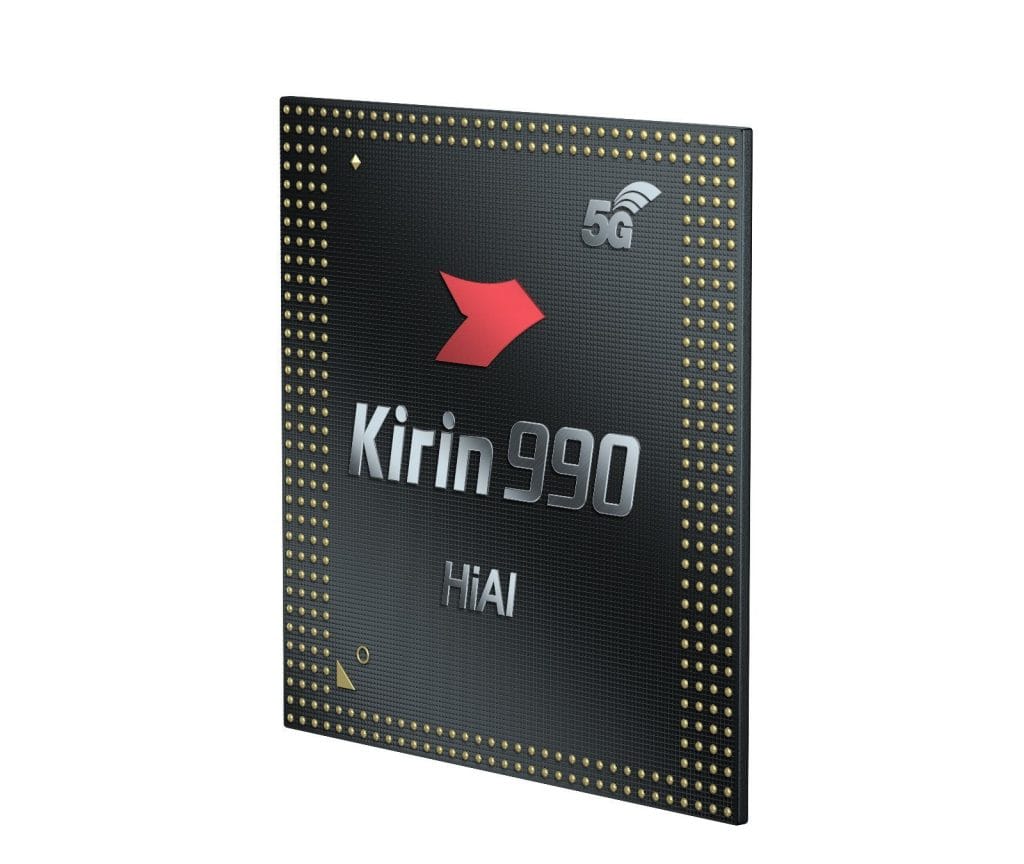
Huawei’s Kirin 990 is a mobile CPU with 5G built in

It won’t need a separate modem for 5G.

Let’s play a game of technicalities. A few days ago, Samsung announced the Exynos 980, the company’s first processor with an integrated 5G modem. In February, Qualcomm also sort of announced it had an integrated 5G mobile platform that supports millimeter wave (mmwave) technology. Today, at IFA 2019, Huawei is unveiling the Kirin 990 5G, which it is calling the “industry’s first 5G SoC.” The new chipset has, you guessed it, a radio onboard that makes it compatible with the networking standard that’s being lit up worldwide, although Huawei’s system doesn’t support mmwave.

Previous 5G-ready chipsets needed separate modems for the new standard. Qualcomm’s Snapdragon 855, for example, was compatible with the company’s 5G-friendly X50 modem, but had an LTE X24 modem onboard. This race to deliver the first mobile CPU with its own 5G radio is almost meaningless until networks and devices are more widely available, but that’s not stopping these companies from staking their claims on the title.

Huawei Kirin 990 5G CPU

The Kirin 990 5G is a 7nm octa-core chipset that has 10.3 billion transistors. It uses two big, two middle and four little cores to optimize multitasking, with clock speeds of 2.86GHz, 2.36GHz and 1.95GHz respectively. The 990 5G also packs a 16-core Mali G76 graphics processor which should offer plenty of power for mobile gaming, as well as smart cache built in to reduce bandwidth by up to 15 percent.

Huawei Kirin 990 5G speed

But Huawei wants to draw your attention to 5G and AI. Company reps told reporters at a recent briefing in Berlin that the Kirin 990 5G can achieve up to 2.3Gbps downlink and up to 1.25 Gbps uplink speeds. For comparison, the Snapdragon X55 modem can hit up to 7 Gbps, but Qualcomm’s chip supports the faster mmwave technology, whereas Huawei’s doesn’t. Plus, Qualcomm has yet to announce an actual CPU with integrated 5G.

Huawei Kirin 990 5G AI

Since AI is all the rage, Huawei also pointed out the Kirin 990 5G’s neural processing units (NPU) that can be used for tasks like face and voice recognition. The new SoC comes with a big dual-core NPU and a tiny core for low power applications.

Other components of the Kirin 990 5G include a 5th-generation image signal processor that enables new DSLR-level noise reduction technology that Huawei says is the first on a smartphone.

Huawei Kirin 990 5G size

Speaking of, the company hasn’t announced whether the new chipset will be in an upcoming phone yet, but presumably it will feature in the next flagship. Until we can see the Kirin 990 5G in an actual handset, it will be difficult to gauge the benefits promised today. As for who’s really the first to launch a mobile CPU with integrated 5G? It depends on your qualifiers.
Netgear’s WiFi 6 mesh router comes with a $700 price tag

The company announced a range of new WiFi products at this year’s IFA.

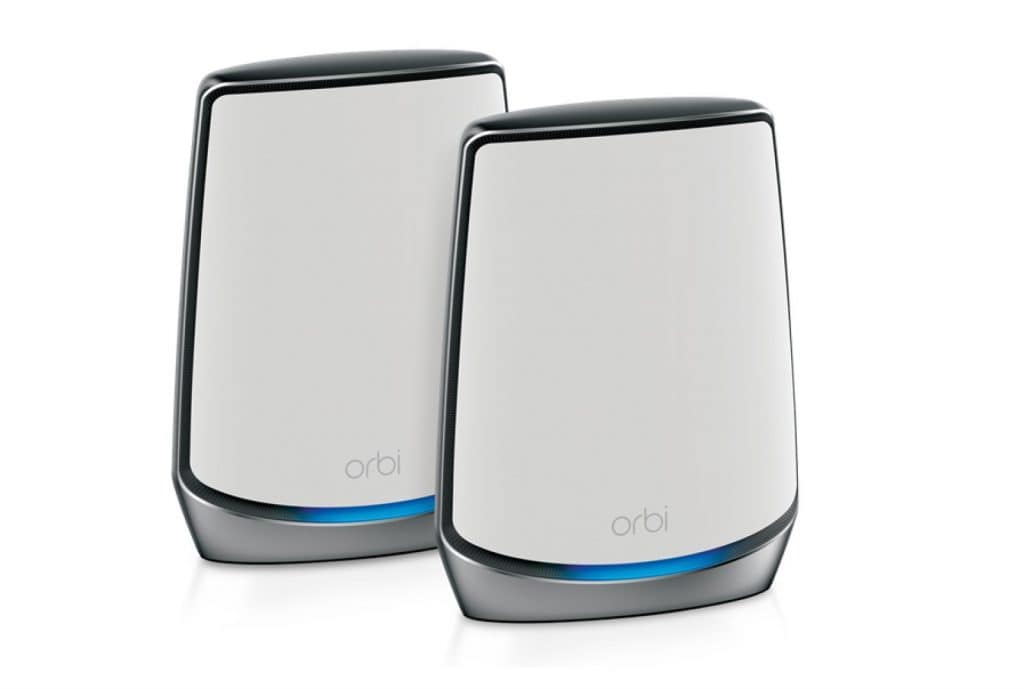
Netgear made a number of announcements at this year’s IFA tech show in Berlin, including details on a new WiFi 6 mesh extender, the first cloud-configurable commercial grade mesh network, and a new router that comes with an eye-watering price tag.

Netgear first debuted its Orbi routers in 2016, and now it’s had a WiFi 6 update, promising wider coverage and better transfer speeds that allow 4K and 8K streaming thanks to 4×4 radios, 2.4Ghz and 5Ghz fronthaul, as well as 5GHz backhaul. According to the company, the Orbi WiFi 6 — the first such mesh system on the market — promises to support your devices’ connections “for years to come.” At $700, though, will it be worth the price?

Meanwhile, the company also introduced the Nighthawk 8-Stream WiFi Mesh Extender, which supports WiFi 6 and works with your existing WiFi to beef up home mesh speeds to up to 6 gigabits a second and provide decent coverage in black spots. With support for eight streams — four in the 2.4GHz band and four in the 5GHz band — it touts a pretty seamless installation, as you will be able to use your existing network name and password. And if you’ve got Netgear’s Arlo security cameras they’ll automatically connect to the network, too. This will be available soon for $250.

Elsewhere, Netgear announced the first cloud-configurable commercial grade mesh network. Its Insight management solution now comes with a four-port integrated gigabit Ethernet switch WIFI mess access point, which means your work WiFi could soon become a lot faster, more reliable and easier to manage.

Vulnerability lets text messages steal emails from Android phones

Devices from Samsung, LG, Huawei and Sony are affected.

Bogus text messages aren’t just being used to send you to malicious websites or crash your phone — in some cases, they can hijack your emails. Check Point Research has discovered a vulnerability in phones from Huawei, LG, Samsung and Sony that lets attackers use custom SMS to intercept all email traffic on target devices. The attack uses the common Open Mobile Alliance version of over-the-air provisioning, a carrier technique for deploying settings to new phones, to access emails. The attacks require different methods depending on the phone and available info (such as IMSI numbers and requesting PIN codes), but the result is the same: intruders trick users into compromising their phones through messages that pose as network settings changes.

The problem stems in part from the way the provisioning works. While it supports provisioning through relatively secure methods like PIN codes, it doesn’t require them. And it’s usually down to individual vendors to decide how to implement this format rather than platform creators like Google, leading to inconsistent security. Affected Samsung devices, for instance, don’t need any authentication at all to fall victim.

This variety also affects how secure your device is. Some vendors have been better at addressing the problem than others. Samsung fixed the flaw through a May update, while LG released its patch in July. Huawei, however, said it wouldn’t deliver interface fixes until the next wave of Mate and P-series phones. You might have to wait weeks or months to get a solution, if you get one at all. Sony, meanwhile, reportedly “refused to acknowledge” the flaw and would only say that it followed the Open Mobile Alliance spec. Your Xperia might remain vulnerable unless there’s a change of heart.

This wouldn’t be as much of an issue if it weren’t for the scale of the issue and the relative ease of launching attacks. Combined, the vendors represent more than half of all Android phones. And all you need to instigate the attack is a GSM modem (or phone in modem mode) and basic software to compose the messages. You can protect yourself by refusing these messages, but this could be a significant problem unless more Android vendors fall in line.

Samsung confirms when you can buy Galaxy Tab S6, Watch Active2 and more

It’s latest product lineup will be available this month.

Samsung announced a bunch of new products over the summer, including the Galaxy Tab S6 and the second iteration of its Galaxy Watch Active. Now we know when to expect them, and how much they’ll cost.

First up, the Galaxy Watch Active2 — which is big on personalization — is available to pre-order from today, and will go on general sale on September 26th for $280 for the 40mm version, and $300 for the 44mm version. The Galaxy Tab S6, which features a redesigned S Pen and quad speakers, is available in stores and online now, starting at $649 — if you buy it before September 22nd you’ll get a 50 percent discount on the book cover keyboard.

The company has also made some useful tweaks to existing products. The AKG N700NC M2 wireless headphones (around $340) are now available in black, and the Galaxy A Series will be available unlocked in the US from September 20. Pre-orders for the A50 unlocked start today at BestBuy and Amazon, starting at $350. The A20 and A10e will both be available unlocked for $250 and $180 respectively.

Stocks to Watch: International Flavors & Fragrances (IFF)

Following shares of International Flavors & Fragrances (IFF), we have noted that the Percentage Price Oscillator is currently higher than the signal line. Traders watching this indicator will be looking for signs of bullish momentum.

Investors are constantly trying to set themselves up for success when dealing with the stock market. This may mean tracking the market from a variety of alternate angles. Keeping tabs on the overall economic climate can help provide valuable insight. Taking a look at the bigger picture can help investors filter down and sort out issues at the sector and individual company level. Making sense of the seemingly endless amount of data can be quite a challenge for the investor. Once investors become familiar with the data, they can start to devise a plan to help use the information to their advantage. Even though thousands of investors will have access to the same set of data, learning how to trade the data can be extremely important.

Moving averages can help spot trends and price reversals. They may also be used to help find support or resistance levels. Moving averages are considered to be lagging indicators meaning that they confirm trends. A certain stock may be considered to be on an uptrend if trading above a moving average and the average is sloping upward. On the other side, a stock may be considered to be in a downtrend if trading below the moving average and sloping downward. Shares of International Flavors & Fragrances (IFF) have a 7-day moving average of 109.96.

We can also take a look at the Average Directional Index or ADX of International Flavors & Fragrances (IFF). The ADX is used to measure trend strength. ADX calculations are made based on the moving average price range expansion over a specified amount of time. ADX is charted as a line with values ranging from 0 to 100. The indicator is non-directional meaning that it gauges trend strength whether the stock price is trending higher or lower. The 14-day ADX presently sits at 45.02. In general, and ADX value from 0-25 would represent an absent or weak trend. A value of 25-50 would indicate a strong trend. A value of 50-75 would indicate a very strong trend, and a value of 75-100 would signify an extremely strong trend.

Investors and Traders using technical analysis to review stocks may be focusing on the ATR or Average True Range. Currently, International Flavors & Fragrances (IFF) has a 14-day ATR of 3.01. The Average True Range is an investor tool used to measure stock volatility. The ATR is not used to figure out price direction, just to measure volatility. The ATR is an indicator developed by J. Welles Wilder. Wilder has developed multiple indicators that are still quite popular in today’s investing landscape. The general interpretation of the ATR is the higher the ATR value, the higher the volatility.

The RSI, or Relative Strength Index, is a widely used technical momentum indicator that compares price movement over time. The RSI was created by J. Welles Wilder who was striving to measure whether or not a stock was overbought or oversold. The RSI may be useful for spotting abnormal price activity and volatility. The RSI oscillates on a scale from 0 to 100. The normal reading of a stock will fall in the range of 30 to 70. A reading over 70 would indicate that the stock is overbought, and possibly overvalued. A reading under 30 may indicate that the stock is oversold, and possibly undervalued. After a recent check, the 14-day RSI is currently at 43.27, the 7-day stands at 61.59, and the 3-day is sitting at 89.84.

Looking at shares from a technical standpoint, International Flavors & Fragrances (IFF) presently has a 14-day Commodity Channel Index (CCI) of 147.21. Typically, the CCI oscillates above and below a zero line. Normal oscillations tend to stay in the range of -100 to +100. A CCI reading of +100 may represent overbought conditions, while readings near -100 may indicate oversold territory. Although the CCI indicator was developed for commodities, it has become a popular tool for equity evaluation as well.

Investors are frequently on the search for the secret to creating that winning portfolio. Many individual investors would agree that information is highly important when picking stocks. Possessing the correct information about a public company is of the utmost importance. Knowing how to interpret the information is another skill investors may need to master before becoming fully immersed in the stock market. Taking the time to properly examine a company before purchasing shares may be the difference between healthy profits and disappointing losses. If a company looks good after the research is complete, patience may still be desirable. Often times, a good stock will continue to be good in the future. Dealing with market volatility is normal, but exploring all aspects of a company may be a good way to combat day to day volatility.

Stocks to Watch: Blue Apron Holdings Inc (APRN)

Checking in on shares of Blue Apron Holdings Inc (APRN), we can see that the current opinion signal on the stock for today’s session is 88% Sell. Looking back at the last month, the opinion signal reads 72% Sell. This is the combined signal for the previous month when applying a wide array of studies based on price movement. Using these same guidelines, the signal for last week stands at 100% Sell. Investors may also be interested in the strength and direction of the opinion signals. The opinion direction is currently Weakening. This is a measurement over the past three trading sessions that provides an indication of whether the latest recent price movement is following the signal. A Buy or Sell signal with a “Strongest” direction indicates that the signal is gaining strength. The opinion strength signal is presently reading Average. This is a longer-term gauge verse the historical strength.

Stock market investing can sometimes cause investors heads to spin. Following stocks on a daily basis, it is plain to see the amount of coverage that follows certain companies. This non-stop barrage of information may eventually become overwhelming for the novice investor. Filtering through all the data may involve taking a look at a company or stock from multiple angles. There are many investors out there that preach strictly following fundamental data. There are others that swear by the technical analysis. Many investors will opt to employ a research strategy that involves pieces of the two approaches. Knowing every little detail about a company may not be overly necessary, but it may help provide a bit more direction when navigating the stock market maze. Investors who put in the time to study all the fundamentals may want to also start watching the charts on stock that they are thinking about adding to the portfolio. Making sure that no stone is left unturned when examining a stock may end up being the difference between a big winner and a big loser.

Shifting the focus to some medium-term indicators on company shares, we note that the reading from the 40-day commodity channel index is currently Hold. The CCI indicator is mainly used to identify oversold and overbought levels. Switching to the 50-day moving average vs price signal, the reading is measured at Sell. This indicator is used to watch price changes.

Tracking current trading session activity on shares of Blue Apron Holdings Inc (APRN), we can see that the stock price recently hit 7.38. At the open, shares were trading at 7.39. Since the start of the session, the stock has topped out with a high of 7.49 and bottomed with a low of 7.17. After noting current price levels, we can see that the change from the open is presently 0.14.

Many investors opt to keep a close watch on the views of sell-side analysts that cover the stock. The current analyst rating on Blue Apron Holdings Inc (APRN) is 3. This is based on a scale where a 5 would indicate a Strong Buy, a 4 would equal a Moderate Buy, 3 a hold, 2 a moderate sell, and a rating of 1 would indicate a Strong Sell. Traders and investors are constantly looking to develop a winning strategy when it comes to the equity markets. Some strategies may be simple, and others may be complex. Keeping emotions in check may not always be the easiest task when studying a particular stock. Figuring out what works and what doesn’t may take investors a lot of time including some trial and error. When a specific strategy doesn’t pan out, it may be necessary to reassess the position and find a new angle.

Traders may be using technical analysis to help spot ideal entry and exit points. One idea behind technical analysis is that historical price movement trends have the ability to repeat themselves. Technical analysis involves the use of chart patterns to examine market movements and to help define trends. Trends in the stock market are not always easy to spot. Many chartists will strive to determine whether the trend is up, down, or sideways. After defining a trend, the technical analyst may look to see what type of timeframe the trend encompasses. Some traders will look to identify whether the trend is major or long-term, short-term, or intermediate. Being able to decipher what the data is saying may assist the trader with finding potential entry and exit points on a particular trade. There are many different indicators that can be employed when undertaking technical analysis. Many traders will do numerous chart studies to find out which indicator or indicators tend to project the most relevant trading assistance. Learning how to spot these trends might help the trader develop specific charting skills that will hopefully lead to future market success.