Archives for September 5, 2019

USB4 devices are clear to roll out next year

The USB-IF has finalized the standard’s specifications.

The USB Implementers Forum (USB-IF) announced today that the organization has finalized the technical specifications for USB4. These specs will be making their way to designers, engineers and manufacturers shortly, meaning we can expect the first USB4 products to hit shelves some time in 2020. The highlight of the new standard is its dual-lane 40Gbps speed, matching Thunderbolt 3’s transfer rate and doubling that of USB 3.2’s.

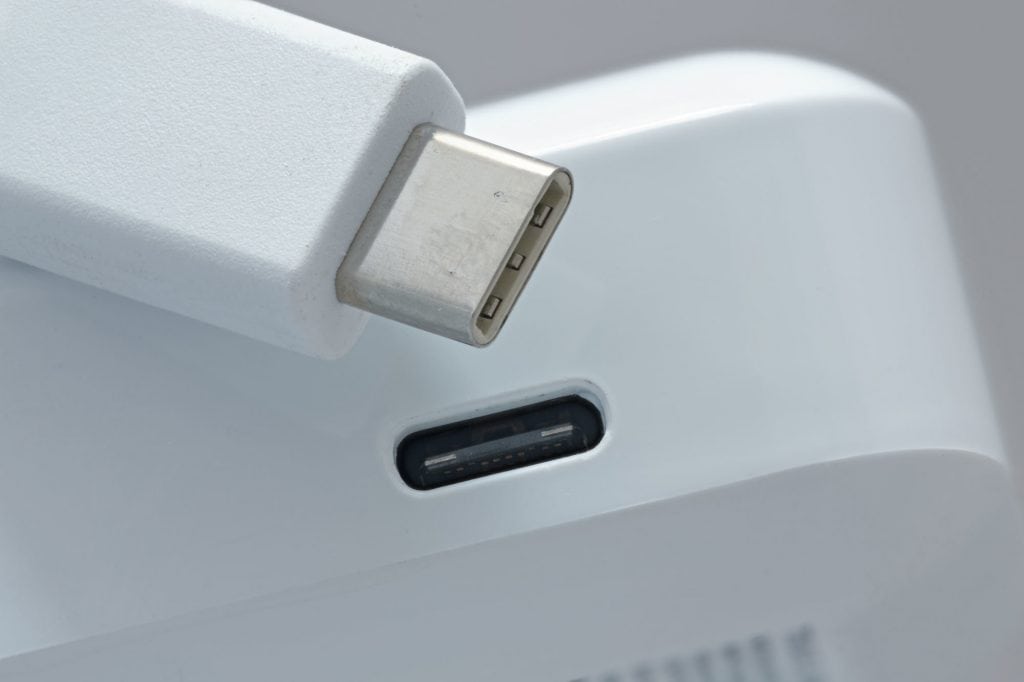
USB4 will use the same form factor as USB type-C and will be backward compatible with USB 3.2, USB 2.0, and Thunderbolt 3. In other words, you’ll be able to use just about any existing USB type-C device with a machine featuring a USB4 bus. The new connection will be similar to USB3 in that it will support both data and display protocols, so expect to see more monitors feature USB connections in addition to HDMI ports.

The dichotomy between USB3 and Thunderbolt 3 has been frustrating for consumers; while USB3 is a ubiquitous connection, it transfers data at half the speed (at best) of the rather elusive Thunderbolt 3. USB4 will essentially merge the two standards, creating a two-lane 40Gbps connection that will (hopefully) become a unified connection across devices and platforms.

The 40Gbps transfer rate of Thunderbolt 3 has been a boon for creative professionals and power users, allowing for streamlined video editing, animation and modeling workflows. It has also enabled the introduction of new product categories such as external GPUs. Having the speed of Thunderbolt 3 as a universal connection will bring these capabilities to everyday consumers, making data backups and transfers a faster and easier experience.
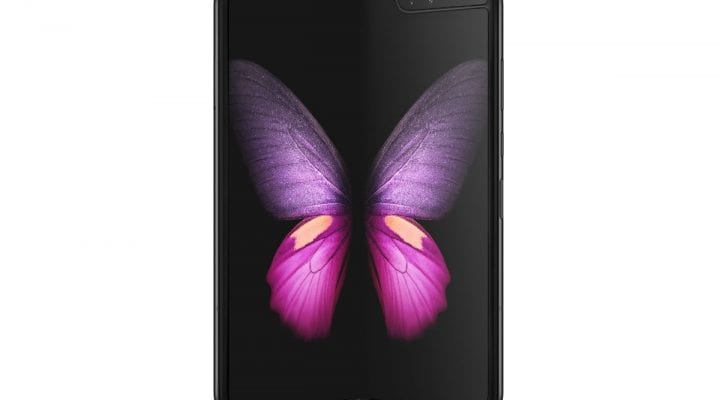

Samsung Galaxy Fold launches in Korea with 5G

Its Premiere Service adds 24/7 tech support for your new phone.

After its first attempt at a launch fizzled out in the spring, the Samsung Galaxy Fold is ready to try again at making a first impression. As promised, it’s ready for launch now and is available starting September 6th in South Korea. The surprise addition however is that “in select markets” the Fold will be 5G-ready, while others will only have an LTE-compatible version to snap open and closed.

In Korea, only the Galaxy Fold 5G 512GB model is available, with carriers like SK Telecom and LG U+ opening pre-sales today before devices are delivered Friday. The price is 2,398,000 won, or about $2,000 US, and there’s a Fold Advantage+ program that promises to cover 70 percent of display repair costs, once a year. In March there were rumors of a program to offer screen replacements if a visible seam forms across the display, and it appears that the Advantage+ program is what Samsung has decided to go with.

An announcement for the US reveals we can expect the device “in the coming weeks” in two colors — Cosmos Black and Space Silver — but doesn’t mention anything about 5G or screen replacements. What it does give additional info on, however, is the addition of a new Galaxy Fold Premier Service it’s launching along with the phone.

In a move that might help justify its nearly-$2,000 retail price, the Premiere Service adds 24/7 direct access to Samsung experts for “tailored guidance and support over the phone.” They can even help you set it up for the first time with a one-on-one session designed to highlight its special capabilities. The A spec list shows the Fold is still launching with Android 9 Pie instead of the just-released Android 10 OS that includes some Google tweaks made just for convertible devices. As revealed in July, the flexible phone has been redesigned to mitigate issues identified in review units that went out ahead of its original launch date. It has a tweaked protective layer across its 7.3-inch Infinity Flex screen, a reworked hinge that keeps debris out and some additional metal layers to reinforce everything.

We should get some hands-on time with the Fold v1.1 at the IFA trade show this week, so we can report on any noticeable differences before US buyers have to make a decision about jumping into the future, again.

Spotify’s Android widget will return in a future update

Back and better than ever, if Spotify is to be believed.

After stepping into a hornet’s nest of angry users, Spotify says it’s bringing back its Android home screen widget. The move comes just one month after the company retired the feature.

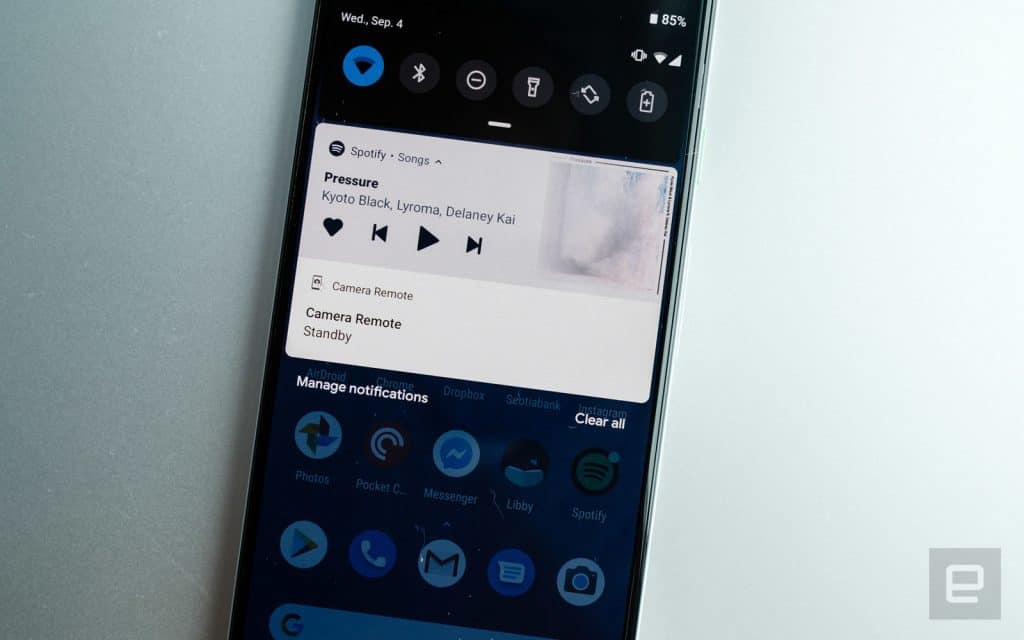
When it first removed the widget, the company said, “We always take retiring features in Spotify very seriously.” It went on to justify the removal by noting people could access much of the same functionality through the operating system’s notification shade (pictured above). Of course, none of that helped to defuse the situation.

In the aftermath, the community forum post where Spotify first shared the news was filled with 52 pages of response — none of them positive — and some 16,000 votes before the company closed the thread. As The Verge notes, one individual even said they moved their entire family to Tidal as a result. The decision was especially infuriating because all the other major music streaming services still offer an Android widget.

When the widget comes back in a future release, Spotify says it will add visual tweaks and performance enhancements. No word yet on when the company plans to release that update, however. That said, by way of apology, a manager said, “We value your input and ideas…” and invited users to continue providing the company with feedback.

Nanoleaf’s colorful wall tiles now act as Razer gaming controls

Take lighting to the next level.

Nanoleaf and Razer teamed up last year to making gaming an even more immersive experience. Thanks to integrations between Nanoleaf’s modular lights and Razer’s Synapse IoT platform, gamers could enjoy everything from event-based flashes and explosions to instant notifications when a spell is ready to fire, all in glorious technicolor across their gaming space. Now the partnership has expanded to bring game controls to the illuminated touch-tiles, too.

Nanoleaf’s funky tiles are already programmable with a range of controls, but now gamers will be able to use this feature during play. For example, while a tile may have previously lit up to indicate a weapon is ready to fire, players can now hit the tile to deploy it.

This is the latest in a line of partnerships for Razer, whose Chroma-equipped devices already work with Phillips’ Hue lights and the Vivaldi browser. Meanwhile, Nanoleaf is increasingly turning its attention to the gaming community — its die-shaped light controller was a big hit at CES last year — so further integration between the two is a no-brainer. Prices for Nanoleaf’s nine-panel kits starts at $215/£180.

The big retirement savings mistakes Americans are making

Americans are making key mistakes when it comes to saving for their retirement, according to a survey conducted by MagnifyMoney.

Nearly half of the people surveyed have withdrawn money from their employer-sponsored retirement savings account, and nearly one-fifth of those surveyed are not contributing the proper amount in order to maximize their employer’s match.

“The most damning finding of all is that 27% of those surveyed have never thought about how much they’ll need in retirement,” the survey report states. “And while ‘ignorance is bliss’ may hold true when it comes to some things in life, this expression should not apply to your retirement plans.”

The survey did not distinguish whether the people replenished their 401(k)s after withdrawing money from them by taking a loan.

Since retirement savings are intended to be used during retirement, withdrawing them earlier than intended can be detrimental down the line, which could lead to people working longer than expected in order to be able to financially support themselves.

Most of the people surveyed have withdrawn money from their retirement plan to either pay off debt or to help buy a home, and a fifth are not setting aside enough money to reap the benefits of an employer-sponsored match.

Buying a home

Experts still recommend people put down at least 20% in a down payment when it comes to buying a home in order to optimize your mortgage payments. Student loans and credit card debt loom over many younger generations, which is why some millennials are withdrawing their retirement savings in order to accomplish what they consider to be their dreams of owning a home or paying down their debt.

In general, more than one-third of millennials (36%) found it acceptable to withdraw from their retirement savings, versus only 26% of Gen Xers finding that to be an appropriate action. Not surprisingly, only 17% of baby boomers felt withdrawing from their retirement savings to be acceptable.

Withdrawing your retirement funds before the appropriate age to do so will inevitably result in financial penalties, including fees and taxes.

Maximizing employer matches

While 80% of those surveyed contribute the proper amount to their employer-sponsored savings plan, 20% admitted they don’t maximize the opportunity given to them by contributing enough money to earn employer-sponsored matches. Losing out on the “free money” your company gives you in their match program is a critical financial mistake.

Experts find it’s crucial to save early and save often in a person’s career in order to ensure retirement is financially achievable. Let’s say your employer matches 100% of your contribution up to 3% of your salary and matches 50% of your contribution up to 5% of your salary, maximizing that contribution can make or break someone’s retirement savings.

Using numbers to better understand these percentages, if you make $3,000 per paycheck and you contribute 10% of your salary to your 401(k), then $300 of your own money is put into your 401(k) and your employer would deposit an additional $120 per paycheck to your 401(k). This means if you don’t maximize how much your employer is willing to match, you are missing out on an additional 4% of so-called “free money” if you don’t contribute at least 5% of your salary to your 401(k).

This survey also showed other retirement savings mistakes, including 35% saying they aren’t saving enough for retirement. Financial experts reiterate it’s crucial to contribute to your retirement plan as soon as possible, as a smaller amount invested earlier will compound to a larger amount later.

And when changing jobs, instead of rolling over their retirement savings plan from one company to another, nearly one-third of people surveyed said they withdrew the balance.

This is when people start saving for retirement—and when they actually should

A significant portion of U.S. adults are delaying starting to save for retirement until a decade or more into their working career — far later than what financial experts advise.

Just 39% of adults who are saving for retirement started in their 20s, according to a recent report from Morning Consult, despite half of respondents saying that people should start saving during those years. Just over a quarter of Americans began saving in their 30s, 15% in their 40s and 6% in their 50s.

Plus, half of adults between 18 and 34 are not saving for retirement at all, compared to 42% of adults aged 35 to 44, and 40% aged 45 to 64.

Not starting early can impede or complicate your ability to build up an adequate retirement account, which Americans think should be at least $1.7 million at age 65, according to a recent survey from Charles Schwab, which looked at 1,000 401(k) plan participants across the nation. Here’s why.

When to start investing for retirement

Financial experts advise everyone to start saving and investing for retirement as soon as they can, ideally putting away at least 10% of your income each month. That way, your retirement funds have time to recover from any dips in the market and benefit from compound interest, which is when you earn returns on investments, as well as returns on those returns. This helps money grow at a faster rate than with simple interest.

To hit $1.7 million by 65, you would need to save $486.97 per month starting at age 25, assuming an 8% rate of return, CNBC Make It previously reported.

But if you waited a few years and started saving at 30, you’d need to contribute $741.10 per month to reach the same goal with an 8% rate of return. Starting early eases the savings burden significantly.

If you can’t afford to invest hundreds of dollars a month at the beginning of your career, start with as much as you are able to, even if it’s just $10 or $20 per month, experts say. If you increase your contributions gradually, you’ll still be able to build a healthy retirement account.

“If you spend the first half of your career not saving, you’ve got to do a lot of catching up later in your career, and you don’t have the time in the market to ride out any fluctuations,” Katie Taylor, vice president of thought leadership at Fidelity Investments, told CNBC Make It. “It’s always a good idea to get started as early as possible.”

How to start saving for retirement

While it’s ideal to start saving early, the next best time to invest for retirement is right now. Set up whatever auto-contribution you can afford today and take a look at your budget to see if there’s anywhere you can cut costs to save more.

If your employer offers a 401(k) plan, that’s the smartest place to start investing because of the tax benefits, experts say. The contribution limit is $19,000 for 2019, but if that is more than you can put away, contribute at least up to the employer match.

“If there is a match that’s 3%, make sure that you’re saving at least 3%,” Taylor said. “Otherwise, you’re leaving free money on the table.”

Nearly 20% of savers do not contribute up to the match, a recent report found, which is akin to taking a pay cut from your employer. After all, your 401(k) match is part of your overall compensation. The average employer 401(k) match is 4.7% this year, according to Fidelity.

You can also open a traditional IRA or Roth IRA (assuming you meet the income limits), which offer tax benefits and typically have more investments options than an employer-sponsored retirement plan. The contribution limit for these accounts for 2019 is $6,000 if you are under 50.

Once you have a retirement account in place, set up automated contributions from each paycheck, as well as auto-escalations each year, if you’re financially comfortable enough to do so. That way you won’t procrastinate or forget to save more.