
Archives for July 24, 2019

Where Americans are putting their money right now

Stocks have long been a favorite investment for Americans, but according to a new survey, they are putting their money elsewhere. Despite stocks’ great long-term returns averaging about 10 percent annually for decades, Americans are turning to real estate.

Years after a housing crash that left the economy hurting, many Americans still see real estate as their top pick. Thirty-one percent of survey respondents named real estate as their favored investment for money that they wouldn’t need for 10 years or more. It’s the best showing for real estate in the seven years that Bankrate has conducted the survey.

In 2018, stocks were the most popular investment Opens a New Window. . But this year they ran a distant second, with 20 percent of respondents naming stocks their top pick for holding periods of more than a decade.

Cash investments, such as savings accounts and CDs, finished third at 19 percent, while gold and other precious metals earned 11 percent. Americans picked bonds as their top long-term investment 7 percent of the time, while bitcoin and other cryptocurrencies were favored by 4 percent. Meanwhile, 5 percent of respondents said that none of these options were the best way to invest.

Millennials are most drawn to real estate investing

While commentators have widely bemoaned the trend that millennials seem unwilling to buy home, it’s not for lack of desire. Millennials in total scored the highest (36 percent) among all age groups in their preference for real estate as a long-term investment.

According to the survey, millennials are the most drawn to property, real estate still remained the most popular investment among all generations, from millennials to Generation X (31 percent), as well as baby boomers (30 percent) and the Silent Generation (23 percent).

“Millennials are higher on real estate than any other age group, have cooled a bit on cash, and still aren’t keen on the stock market when investing for more than ten years,” says Greg McBride, CFA, Bankrate chief financial analyst.

Strikingly, the preference for real estate is virtually identical in all four income categories surveyed by Bankrate. Between 32 and 34 percent of the time it was the top investment choice for those who reported earning more than $75,000 per year; between $50,000 and $75,000; between $30,000 and $50,000; as well as less than $30,000.

Home – or least, real estate – is where the heart is for Americans.

Stocks more popular among higher earners

While real estate outdistanced stocks in each age and income demographic, stocks were more popular with higher earners compared to those with lower incomes. In fact, stocks were two and almost three times as popular with the highest income groups in the Bankrate survey.

For the two groups with incomes of at least $50,000, stocks were their top pick 28 percent and 29 percent of the time, just behind real estate. For the two groups earning less than $50,000 annually, stocks were their top pick only 15 percent and 11 percent of the time.

In fact, the higher a respondent’s earnings, the more likely the choice of their favored investment was stocks.

Meanwhile, lower-income households showed a higher preference for cash investments such as savings accounts and CDs (22 percent), as well as for gold and other precious metals (12 to 17 percent).

Cryptocurrency most popular among younger investors

One notable result, though perhaps not surprising, is the extent to which younger generations prefer bitcoin and other cryptocurrencies.

Millennials picked cryptocurrencies as their top long-term investment about 9 percent of the time – about triple the rate of Generation X. Earlier generations had negligible numbers of respondents selecting virtual currency as their top choice.

While many investors have written off cryptocurrencies, one of the world’s largest companies is setting up a project that may disrupt some more traditional payment networks. Social media giant Facebook is in the process of creating a virtual currency called Libra that may potentially be cheaper than traditional payment services.

Declining interest rates may not affect investing decisions

The Federal Reserve has hinted that it may be open to cutting interest rates, and investors have been nearly unanimous in expecting a rate cut in recent weeks. With that as a backdrop, the survey also questioned Americans about how the expected decrease in U.S. interest rates would play into their investment decisions.

The surprising result is that declining rates would appear to have little effect at all. Declining rates are not likely to move them to invest in the stock market, borrow money or put money into savings accounts or CDs, say respondents.

“A Fed interest rate cut is unlikely to influence how consumers manage their finances,” says McBride. “Only a minority of Americans say they would save more, invest more, or borrow more as a result.”

For example, just 40 percent of respondents said they would be more likely to move money into cash investments such as savings accounts and CDs in response to declining rates.

Only 26 percent said they would be more likely to borrow more money in response to falling rates. Meanwhile, just 33 percent of respondents said they were likely to invest in the stock market as rates fell.

But the responses varied by income level. For example, households earning less than $50,000 were more likely (37 to 49 percent) than high-income households (31 to 33 percent) to move money into bank products as rates fell. The lower the income, the more likely the respondent was to move assets into the bank.

What should investors do to meet their goals?

While a person should choose the investment that works best for their own individual situation, there are smart ways of accomplishing your goals regardless of what you choose – stocks, bank accounts, bonds or something else entirely.

If you’re moving your assets to a bank, then it makes sense to find a bank that offers higher yields. An online bank can offer many of the benefits of a brick-and-mortar rival, while still paying much higher interest rates.

Similarly, if you’re looking to move into stocks, you should consider a broker that meets your needs, not necessarily the cheapest or the flashiest. For example, many brokers offer research and education, including research reports, that help when making investment decisions.

Methodology

Bankrate commissioned SSRS to conduct the survey. All figures, unless otherwise stated, are from SSRS. Total sample size was 1,015 respondents. Fieldwork was undertaken on June 25-30, 2019, and the survey was carried out via telephone. Data are weighted to represent the target population, and margin for error for total respondents is 3.35 percent at a 95 percent confidence level.


New tools can help turn your retirement savings into a steady paycheck

When it comes to preparing for retirement, there’s one key message: save, save, save.

But once you finally do stop working, the last thing you want to do is spend, spend, spend.

Withdrawal strategies, such as the 4% rule, which give an idea of how much you should take out per year, are a guide for how to stretch out that hard-earned nest egg.

But when confronted on how to actually execute that plan, many retirees are flummoxed.

That includes confusion as to how much they should withdraw — and from which accounts — to augment other sources of fixed income, such as monthly Social Security checks.

“If I went to you and said, ‘Hey, take out 4%,’ you’re scratching your head like, ‘OK, where do I withdraw from?’” said Bill Meyer, founder and managing principal of Social Security Solutions and founder and CEO of Income Strategy in Leawood, Kansas.

The good news is that new technology platforms are trying to help you answer that question.

Income Strategy

Meyer’s latest product, IncomeStrategy.com, aims to help individuals decide which accounts they should take money from, and when.

It might sound like a simple dilemma, yet just one wrong decision can have catastrophic consequences, Meyer said.

For example, one withdrawal from your Individual Retirement Account could impact both your Social Security taxes and what you pay for Medicare.

“Just varying which account you draw down from can find tens of thousands of dollars more for someone,” Meyer said.

That’s different from the sequence traditional firms typically use, which go for taxable accounts first, followed by tax-deferred and then Roth accounts.

On average, managing a withdrawal sequence correctly can make someone’s money last for seven years longer, Meyer said.

Income Strategy also aims to set its product apart from competitors developing similar platforms through the level of detail it considers.

Once a user has inputted all of their accounts, the site aims to make the process of withdrawals easy. A “Get Cash” button on the site allows you to input the amount you want to take out — say, $40,000 for the next three months — and you will be presented with a list of what you should sell.

For a subscription fee of $20 per month, you execute those transactions yourself.

For $50 per month, you get access to a higher level of service, where those transactions are done for you. There are also other perks, such as a mini call center with certified financial professionals available for advice or access to low-cost exchange-traded fund models.

For $125, individuals can get a one-time advice session, which can be a general overview or just on Social Security claiming.

IncomeStrategy.com, which officially began in January, is aimed specifically at consumers who may be reluctant to pay a professional advisor a 1% fee.

“I want it to be an alternative to advisors,” Meyer said. “Advisors are great, but a lot of people don’t have advisors.”

Kindur

Another platform called Kindur that started earlier this year also aims to help you create a check you can count on in retirement.

Kindur founder and CEO Rhian Horgan was inspired by her personal experience in helping her father decide how to draw down his retirement assets. After spending hours poring over 300-page Social Security books, Horgan came to the conclusion that there had to be a better way.

Kindur’s goal is to remove that complexity for users.

To sign up, individuals must fill out a short questionnaire with basic financial information, such as how much is in pre-tax versus taxable accounts.

Ultimately, once users have fully onboarded, the platform’s goal is to help automate how much you take and from which accounts. Those checks, which the company sends to you directly, augment the income you receive from Social Security and annuities.

The company has also partnered with American Equity to provide a custom annuity that requires two decisions from users: If they want to buy it and when to start receiving income. Importantly, the company has eliminated the commissions or brokers involved in other annuity sales, Horgan said.

On the investing side, Kindur also has a portfolio of ETFs it is running itself as a registered investment adviser in collaboration with firms such as Schwab and Fidelity. The platform’s goal is to help you decide how much risk to take on, based on the guaranteed income you have.

Kindur charges a 0.5% annual fee on any assets that it manages.

The company, which plans to delve deeper into Medicare and health care going forward, has ample backing from investors. It recently completed a $10 million Series A funding round from investors, including Inspired Capital Partners, which is led by former LearnVest executive Alexa von Tobel; Anthemis; Point72 Ventures and Clocktower.

You can earn nearly 27 times as much interest on your savings with the new Betterment account

The savings account game is heating up again as more financial companies launch products that offer sky-high interest rates. Betterment is the latest to offer customers a high-yield savings option, introducing a new account with up to 2.69% APY.

Launched Tuesday, Betterment Everyday Savings is a cash account that’s offering users an interest rate that’s nearly 27 times the average APY of just 0.10% for savings accounts nationwide. Someone who deposits $1,000 with Betterment can expect to earn about $27 in interest annually.

However, this is a promotional rate for new customers who sign up for access to Betterment’s Everyday Checking, which is launching later this year. It’s free to reserve your spot on the waitlist, and you’ll lock in the 2.69% APY through the end of the year, according to the company. If you don’t sign up, the current APY for the account is 2.42%.

Betterment’s cash account is FDIC insured on balances of up to $1 million. It’s similar to Wealthfront’s offering that launched in February and offers customers 2.57% interest.

The best part? You don’t need a lot of money to start earning the 2.69% interest. There’s no minimum balance needed to maintain an account and there are no monthly fees. To make your first deposit, there is a $10 minimum.

“The biggest challenge for Americans when it comes to their money is saving for the future, and unfortunately a majority of the traditional banks they depend on charge extra fees, encourage cash-holding and upsell unnecessary products” Jon Stein, CEO of Betterment, said in a statement Tuesday.

Betterment will launch its Everyday Checking account complete with a Betterment Visa Debit Card. It aims to offer the account without any monthly maintenance fees and will not charge any ATM fees. Plus, if you use any ATM worldwide, Betterment will reimburse any fees the physical ATM machine operator charges.

The fine print on the new Betterment Everyday Savings

Online banks, and now fintech companies like Betterment and Wealthfront, are leaving traditional brick-and-mortar banks in the dust when it comes to the interest rates offered on savings accounts. Yet many Americans aren’t taking advantage of these rates.

A full 62% of people surveyed by WalletHub last year didn’t realize online-only banks tend to provide customers with higher rates and lower fees. Online banks offer savings options with interest rates that are roughly six times higher, on average, than local banks and credit unions nationwide, according to an analysis by DepositAccounts.com performed in January.

While Betterment’s cash account doesn’t have any hidden fees, it helps to know how it works. Betterment is not a bank. In order to provide FDIC insurance, your savings at Betterment is held at five partner banks: Citi, Barclays, Valley National Bank, Seaside National Bank & Trust and Georgia Banking Company. Once your cash is at the partner bank, the FDIC insurance kicks in so you can rest assured your money is safe.

Betterment earns money by taking a “small portion” of the overall interest earned, up to 0.25%, according to the company. The Everyday Savings account accrues interest on a daily basis and the amount shows up on the first business day of each month.

If you sign up for the Betterment Everyday Savings account, you’ll likely receive a tax form during tax season. By law, interest earned in savings accounts is taxable. But you may not have received a notice in the past because your interest rate was so low.

Companies have to send out 1099-INT form for interest earned during the year if you have earned more than $10. If you earn less, you may not receive the form, but you are technically required to report any interest to the IRS.

If you’re the type of person who worries about putting your money in an online financial company or online bank, there are workarounds that allow you to get help and access your money, Ken Tumin, founder of DepositAccounts.com, told CNBC Make It earlier this year.

For example, you may not be able to walk into a branch and have a conversation with a teller, but with Betterment, you can call or email with questions. To deposit money, generally, you can set up a direct deposit from your paycheck into the online savings account, or you can transfer money from another bank account.

Overall, Tumin says, “Opening a savings account at an online bank is often the easiest and best way to take advantage of higher rates.”

Three steps to achieving financial independence

Regardless of where you are in life, you may be struggling to get a handle on your finances Opens a New Window. .

“The younger you are and the earlier you begin saving, the easier it is long-term and the less you need to save overall,” said Leslie Thompson, founding principal at Spectrum Management Group. “For people that are midlife and looking at retirement, over the next 10 to 15 years it’s critical that they understand what it takes to get to where they need to be.”

Thompson said there are three steps to achieving financial independence:

Get spending in check

No matter how wealthy you are, don’t spend more Opens a New Window. than you have. Thompson says many people overspend and it’s hard to reverse that cycle.

“It is understanding what you are currently spending, but also being able to project what you are going to need and setting aside money to purchase things when you need to,” she said.

When calculating your spending, don’t forget to take into account non-recurring expenses such as home repairs or health insurance costs.

Understand your investments

What are you invested in and why? Thompson said if you don’t understand your investments Opens a New Window. , don’t feel embarrassed. Reach out to a financial professional.

While it’s easy to get nervous about gyrations in the stock market, she said investors have to be realistic and understand how long-term assets work.

“Investment assets that you don’t need to access 10 to 15 years or more should be highly skewed to the stock market,” Thompson said. “You need growth in assets to make your plan work.”

As for your short-term assets or emergency fund? Her advice is to put the funds in a low-risk investment and where it can be accessed easily.

Get estate documents in order

While this is not something you would need to do every year, it’s important to get your estate documents Opens a New Window. together. Thompson said everyone should plan for incapacitation or death. That includes getting a will, power of attorney and updating your beneficiaries.

“We are all living longer,” she said. “Just because we are living longer, it doesn’t mean we are living this healthy life. Often children need to step in to help their parents. Ultimately, they are going to need help themselves perhaps from their children or family members.”

Don’t expect Apple to switch to USB-C for the iPhone 11

A new Taptic Engine and wide-angle camera are said to be on the way though.

September is only a few short weeks away, which means we’re fast approaching the likely date for Apple’s fall event and, barring a major surprise, the reveal of this year’s iPhone lineup. The latest rumors suggest Apple will have again have three models to showcase, much like last year’s trio of the iPhone XS, iPhone XS Max and iPhone XR.

The upcoming phones will all still have Lightning ports, according to 9to5Mac’s sources. That’s despite some Apple watchers believing the company would go down the same route as the latest iPad Pro and switch to USB-C.

The phones also seem likely to have a new Taptic Engine to replace the pressure-sensitive 3D Touch tech which Apple has included in iPhones since the 6S. Apple declined to install 3D Touch in the iPhone XR, instead opting for a haptic touch system. It will apparently take a similar approach with the XS and XS Max replacements this year. For now, it’s not clear what features the incoming Taptic Engine will employ, but it seems the overall aim is to improve haptic feedback.

As for the cameras, the front-facing lens will apparently enable slow-motion video capture at 120 fps. The most recent rumors back up a previous report from Bloomberg suggesting the XS and XS Max replacements will have a square camera bump containing three cameras on the rear. One will reportedly be able to handle wide-angle image captures and use a feature called Smart Frame. This will apparently capture the area around the initial framing of a photo or video so you can tweak the framing or perspective later. The phone will retain that extra detail for a limited time before automatically removing it for privacy reasons.

The upcoming handsets are also said to have the same screen resolutions as their predecessors. It’s probably not too surprising that the devices will likely use Apple’s latest A13 chip.

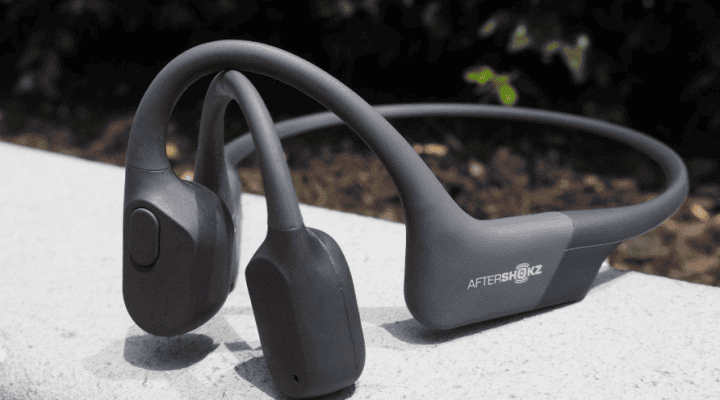
AfterShokz Aeropex open-ear headphones prove less can be more

These sport a refined, yet beefed up output in the company’s lightest form factor yet.

I’ve been using AfterShokz bone conduction headphones ever since I reviewed them in 2015 and they’ve become an inseparable part of my bike rides. The open-ear design allows me to pump up my soundtrack, while still being able to hear traffic and other goings on around me. Improvements have come incrementally with a few notable leaps, but the new AfterShokz Aeropex model seems to be the culmination of the past years’ developments. It’s lighter than the previous Air model (Trekz being dropped from the product name), with better sound and improved waterproofing which should keep them from being susceptible to repeated outpourings of sweat.

The new AfterShokz Aeropex is available starting today for $159.95. I’ve had the chance to use them for the past couple of weeks, so I can provide some perspective on how this new model works, especially in comparison to previous versions.

As always, I need to provide the caveat to people who are new to bone conduction headphones. While these sound great for what they are, there’s no comparison to using over-ear or in-ear headphones. Also, the open-ear design diminishes the output when you’re in loud environments. If a subway happens to be barreling away alongside me while I’m crossing the Manhattan Bridge on my bike commute to work, I get an earful of train noise drowning out the details of my music. Ultimately, the open-ear style isn’t ideal for every moment if you’re into full immersion. Additionally, if you have long hair, you’ll likely have to tie it into a pony tail to wear these properly and if you’re rocking a big cranium I’d try them on for sizing first.

That said, the Aeropex has the loudest volume capability to date from AfterShokz and in a slimmer form than ever. It fills your head with sound in a pleasing way while also allowing you to perceive the outside world. Sometimes while riding I have to dial back the volume since they’re blasting away a bit too loud. Unless it’s quiet though, I do usually run 85-100 percent volume levels. On the other end of the spectrum, you can viably carry on conversations and hang out with people while keeping a non-stop flow of tunes going at low volume — if you can handle that much stimulation. And as I’ve said before, these are great for turn-by-turn directions when other people are in the car or even as headphones for video calls and music while at your computer.

When AfterShokz launched the Titanium version in 2016, the form became a metal reinforced flexible and rubbery exterior. This was carried over to the Air in 2017 and further slimmed down for comfort. The Aeropex has been dialed back in scale a few notches more, leaving an ultra lightweight and almost imperceptible feel when being worn. Importantly, the transducer that rests on your cheek has less mass and the over-the-ear portion of the headset is now almost comfortably compatible with wearing sunglasses. Before this, it was doable, but far from ideal. You will note a change in the materials though, if you drop the headset or toss it on the table. Before it was a rubbery impact, whereas now it’s a clacking sound. I’m sure they’re just as durable, but they feel a bit more precious now.

The controls will all be familiar with a combo power on /volume up /pairing button and a volume down next to it. On the left transducer you will find a multifunction button, which you’ll primarily use for starting, stopping or skipping tracks. It can also answer calls (which I never do, spam!) and even redial the last call. This accidentally happens to me every once in a while and I’m always scrambling to remember how to cancel it, so it’s far from my favorite feature.

A two-second press of this button also calls up your phone’s assistant, be it Google or Siri. Trying to activate this feature and not just the start/stop playlist function is… challenging. When I managed to nail the timing on my tests, I failed to get a vocal response to my inquiries. The phone registered the request, but I didn’t hear anything over the headphones. AfterShokz checked and confirmed the feature works, though, so I’ll chalk it up to my aging OnePlus 5 or a weird settings issue for now.

While the Aeropex has one of the smallest form factors from AfterShokz yet (it’s actually similar to the upcoming Xtrainerz) the battery life has increased. The Air had up to 6 hours and up to 20 days standby. Aeropex has up to 8 hours, but only up to 10 days standby. I’ve usually taken several 20-30 minute rides without worrying to charge them and while a long standby time is great if you don’t use your device, 10 days is more than enough for even occasional users. You can also get a status check with a click of the multifunction button.

On the topic of charging, there’s a new proprietary cable for this headset. Like many devices nowadays, it has a magnetic connection making it easy plug in without hunting for the right angle or side of a microUSB. And amazingly so, I’m told that each device will come with two cables! This sidestepped one of my first thoughts when using proprietary cables, having to bring it with you all the time. Now if you commute, you can just keep one at work. Also, they’ll be selling them for $14.95 each if you’re in the habit of losing them.

The external charging surface doesn’t have a cover this time around, so it’s possible you’ll have water or sweat there if you set them down to recharge right after a workout. In order to avoid any problems with the battery, the system has an alert when the charger is connected and it detects moisture, so you can wipe it off first.

All in all, if you’ve been a fan of AfterShokz or bone conduction headphones in general, these are undoubtedly the best ones I’ve tried to date. The old Titanium version still kicks out some volume, but in a brute force type of way with lots of vibration on the cheek and a bulkier fit overall. It’s still a great budget pick, especially since the price has dropped to $79.95 and will fit on bigger noggins. The Air is also still on the market at a discount ($119.95) and works well. I’d say save up a bit to get the new Aeropex ($159.95) though, if you can swing it. They’re incredibly light and the audio output is decently loud, while also a bit more refined than the other two.

There’s no definitive word on the swimming-focused and entirely waterproof Xtrainerz that we tested at CES, but those are a 4GB on-board storage model without Bluetooth. If you want an all around performer, Aeropex is the one I’d recommend right now.

AfterShokz Aeropex – Specifications

  • Frequency response​ – 20Hz~20KHz
  • Bluetooth ​- v5.0, Qualcomm Bluetooth® chip
  • Wireless range​ – 33 feet
  • Continuous play – Up to 8 hours
  • Standby time ​- Up to 10 days
  • Charge time – 1.5-​2 hours
  • Weight​ – 26 grams
  • Warranty ​- 2 years
  • Sweat resistance​ – IP67
  • Battery capacity​ – 145mAh