Archives for July 14, 2019

Weekly Market Review – July 13, 2019

Stock Markets

The continued expectations of easing monetary policies across the globe buoyed stocks higher this week. After the Fed chairman’s testimony before Congress, the Dow Jones Industrial Average rallied to a new record high and closed above 27,000. Powell’s comments were clearly aimed at a more accommodative policy that strengthened expectations for a rate cut on the horizon. The European Central Bank (ECB) is also reiterating this sentiment and is considering injecting fresh stimulus to the economy via interest-rate cuts, or the possibly quantitative easing. As the second-quarter earnings season kicks off next week, attention will shift from central banks moves to earnings, which analysts believe may increase volatility.

U.S. Economy

The U.S. economic expansion seems set to continue in good stead. In his words to Congress this week, Chair Powell characterized the economy as “in a good place.” Many endorse the fact that our current economic expansion has endured largely because of moderate pacing of economic growth. The economy’s steady pacing is supported by solid consumer spending, which composes 70% of economic growth. Based on strong unemployment, modest wage growth, and low interest rates, consumers are expected to maintain the current positive trend. As always, there are risks to this optimistic outlook:

  • Too low of inflation

Inflation running either too high or too low is a negative. In the current climate the more immediate risk to the bull market is too low inflation more commonly called deflation. The risk here is that deflation could trigger a recession. The Fed has shown its willingness to cut short-term interest rates to correct this.

  • U.S.- China trade tensions

Trade tensions between the U.S. and China are a major factor with the potential to slow global growth by dampening business investment and disrupting supply chains. According to OECD (Organization for Economic Co-operation and Development), world trade growth for 2019 has fallen to 2.1% in 2019 from 3.9% in 2018. Trade tensions play a major role.

  • Slowing global growth

While trade tensions are currently stealing headlines, other global concerns can be worrisome. These are based around geopolitical uncertainties such as Brexit, burgeoning Italian debt, and a slowing Chinese economy. All these factors have contributed to a slowing of global growth. Based on current trends, analysts expect global economic growth to slow over 2019.

Metals and Mining

The gold market had solid gains for the week with prices holding above critical psychological level at $1,400 an ounce. Gold also benefited from Fed Reserve Chair Jerome Powell’s comments before Congress, which indicated a rate cut on July 31. A softer US dollar, geopolitical issues and a slow in economic growth were the main drivers behind the precious metal’s ability to trend between US$1,270 and US$1,420 per ounce throughout the quarter. August gold futures last traded at $1,418.60 an ounce, up more than 1% since last Friday. Next week will test endurance for gold bulls, as they wait to see if prices can hold above $1,400 an ounce in what should be a relatively uneventful week.

Silver made slight gains of 1.26 percent over the second quarter of this year which just came to a close. The white metal was somewhat stagnant throughout the period, but on a positive sentiment note, it reached its highest level towards the end of June.

Energy and Oil

Global oil demand continues to soften, which analysts say could result in a supply surplus in the second half of this year. The EIA downgraded its forecast for global oil demand growth to just 1.1 million barrels per day (mb/d) this year, down from the 1.2 mb/d the agency forecasted last month and from 1.4 mb/d in May in its latest Short-Term Energy Outlook. They say that the “increasingly weak outlook” for demand could upend global balances. A slowing economic picture now means that inventories could actually increase by 0.1 mb/d. So, even with the OPEC+ cuts extended, the oil market could remain in a state of surplus throughout this year and next.

Natural gas spot prices rose at most locations this week. Henry Hub spot prices rose from $2.24 per million British thermal units (MMBtu) last Wednesday to $2.46/MMBtu Friday.  At the New York Mercantile Exchange (Nymex), the price of the August 2019 contract increased 15¢, from $2.29/MMBtu last Wednesday to $2.444/MMBtu Friday. According to Baker Hughes, for the week ending Tuesday, July 2, the natural gas rig count increased by 1 to a total 174. The number of oil-directed rigs fell by 5 to a total of 788. The total rig count decreased by 4, and it now stands at 963.

World Markets

Stock markets in Europe fell even as continued signs that both the Fed and the European Central Bank (ECB) are endorsing further stimulus measures. The pan-European STOXX Europe 600, the UK’s FTSE 100 Index, the German DAX index, and France’s CAC 40 Index fell as trade tensions expanded to a U.S. and France dust up. The European Commission cut its eurozone growth and inflation estimates citing the fact U.S. trade policy could pose a risk to the group. The commission lowered its inflation rate increase expectation, which it believes will be further from the ECB’s target of close to, but less than 2% over all.

Stocks in China recorded a weekly loss, likely as the U.S. trade policy’s impact on China’s economy sunk in. The benchmark Shanghai Composite Index fell 2.67%, and the large-cap CSI 300 Index, gave up 2.16%. China reported that export growth in June slowed 1.3% from a year ago, while imports fell a bigger-than-expected 7.3% from the prior-year period.

Even as a temporary halt in the trade battle was reached between the U.S and China, analysts believe that the differences between the two countries are complex and are not easy to resolve. This leaves the risk of increased tariffs and other forms of retaliation to potentially escalate quickly if negotiations break down.

The Week Ahead

This week kicks off the second-quarter earnings season when about 10% of S&P 500 companies report earnings all week long. Key economic data coming this week include retail sales, industrial production numbers, housing starts, and the index of leading economic indicators report, along with consumer sentiment released Friday.

Key Topics to Watch

–           First S&P companies reporting

–           June retail sales report

–           June industrial production numbers

–           NAHB homebuilders index released

–           Leading economic indicators report

–           Consumer sentiment

Markets Index Wrap Up

NASA fights to keep the Voyager probes running after four decades

The mission’s ground team has switched off one of Voyager 2’s heaters to conserve energy.

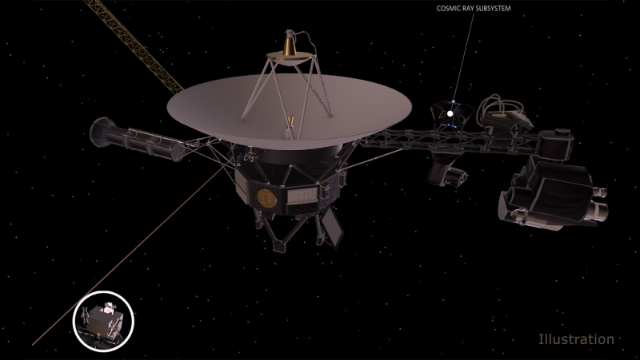
NASA’s Voyager probes are still out there, exploring interstellar space 42 years after they left our planet. To keep them running all these years with generators that are 40 percent less powerful than they were decades ago — and which are producing less and less energy over time — the agency had to sacrifice some of their parts and components. In fact, the mission managers have recently switched off the heater for Voyager 2’s cosmic ray subsystem instrument (CRS) as part of their new power management plan.

The probe’s cosmic ray system played a key role in confirming that Voyager 2 left the heliosphere in November, and it remains useful to this day. Since it was designed to detect fast moving particles both from the sun and from sources outside our solar system, it continued sending back data even after it entered interstellar space.

That’s why the managers held extensive discussions with the science team before deciding to switch off the instrument’s heater, which is necessary to keep it from freezing. In the end, everybody decided that it’s the component to sacrifice at this point in time, because the CRS can only look in certain fixed directions. Thankfully, that didn’t spell instant death for the cosmic ray instrument. The team has confirmed that it’s been sending back data even after its temperature dropped to minus 74 degrees Fahrenheit and even though it was tested at temperatures dropping only to minus 49 degrees Fahrenheit decades ago.

Voyager Project Manager Suzanne Dodd said it’s “incredible that Voyagers’ instruments have proved so hardy.” She added: “We’re proud they’ve withstood the test of time. The long lifetimes of the spacecraft mean we’re dealing with scenarios we never thought we’d encounter. We will continue to explore every option we have in order to keep the Voyagers doing the best science possible.”

As another example of the probes’ need to adapt to circumstances to keep going, Voyager 2 has fired up its correction maneuver thrusters on July 8th, 30 years after it was last fired. Its attitude control thrusters are old and haven’t been working as well, requiring the probe to fire an increasing number of pulses to make sure its antenna keeps pointed at our planet. Now, the spacecraft has switched thrusters like the Voyager 1 did in 2018, and will be using them to correct its orientation.

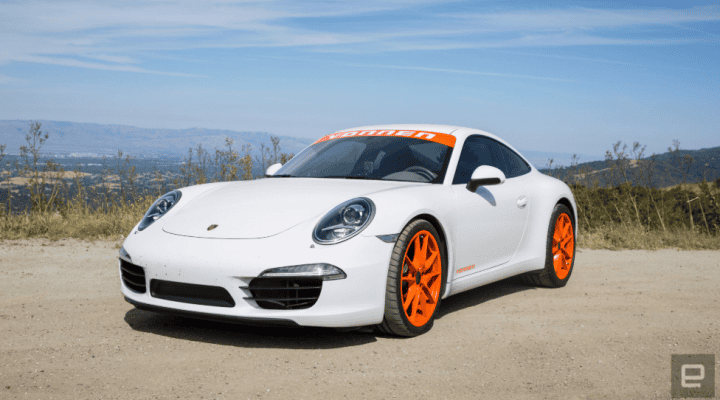
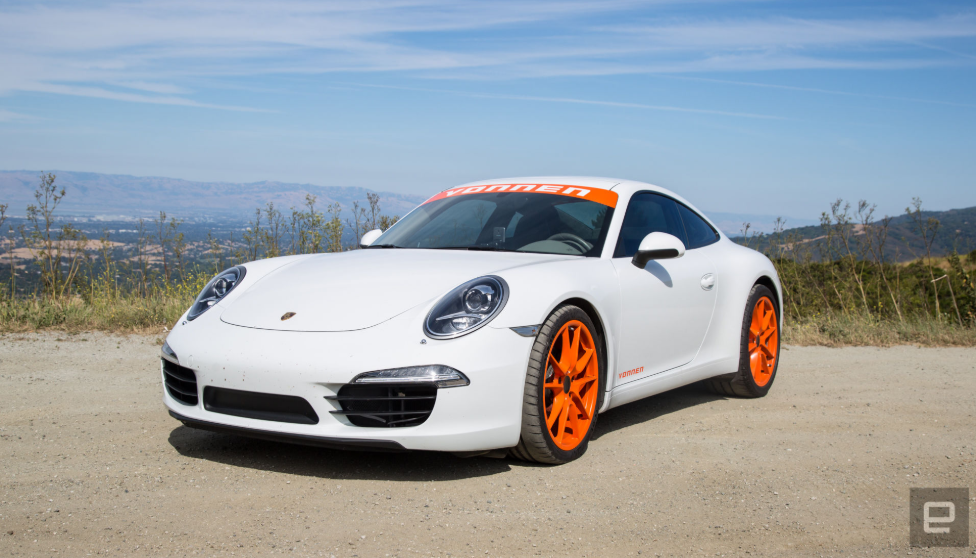
Vonnen’s hybrid power makes this Porsche 911 even quicker

“Just make it faster.”

A Porsche 911 is, by design, a pure sports car. Since 1963, the automaker hasn’t deviated from building exciting two-door sportscar rockets. But not all of the 911 community is satisfied with what comes out of the factory in Stuttgart, Germany.

That’s where Vonnen comes in. The aftermarket component-maker is a new company (albeit an offshoot of third-party Porsche part-maker Elephant Racing) that has one product — but it’s a doozy. The company has created a hybrid system for 911, and it’s not for better gas mileage.

The Shadow Drive system adds a whopping 150 horsepower and 150 pounds of torque to whatever 911 it’s installed in. I got a chance to get behind the wheel of the development vehicle, and I was impressed by the results.

The first vehicle the company put the Shadow Drive in was the 911 Carrera, the vehicle with the least amount of power in the lineup. The car’s 350 horsepower shouldn’t be dismissed, but it’s far less than a GT3. The reasoning was that this car would have the largest perceivable power boost when driving.

I can’t comment on that without driving the modified GT3, but I can say that the addition of the Shadow Drive threw me back in my seat more times than I could count. On mountain roads in Northern California, I’d hit the accelerator and a high-pitched whine would accompany a surge in power as the Shadow Drive spun up.

It’s a bit like a turbo, without the lag and more power. It’s good. It’s very, very good.

Vonnen's Shadow Drive 911 hybrid

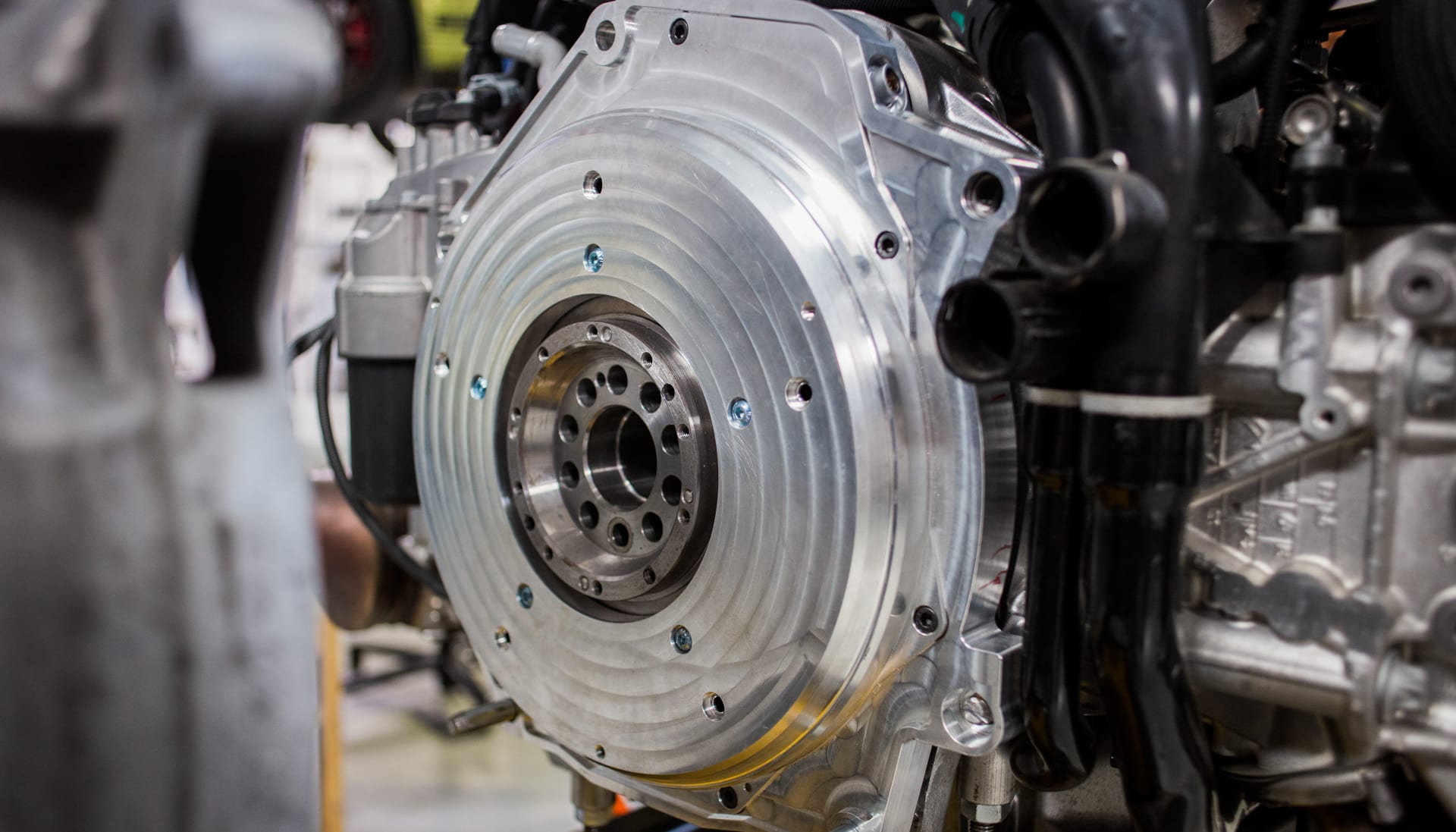
Vonnen has a clever solution to making the Shadow Drive a reality. It stuck the pizza box-sized EV motor between the engine and transmission. The element replaces the stock flywheel (it helps start the car and smoothes out the connection between the transmission and engine) and the starter. The electric motor takes care of bringing the car to life.

It’s not a perfect fit though. The Shadow Drive requires the transmission to be moved back about an inch (25mm). So Vonnen had to fashion a custom mount to make up the difference. But the trade-off for that space is a lot of power.

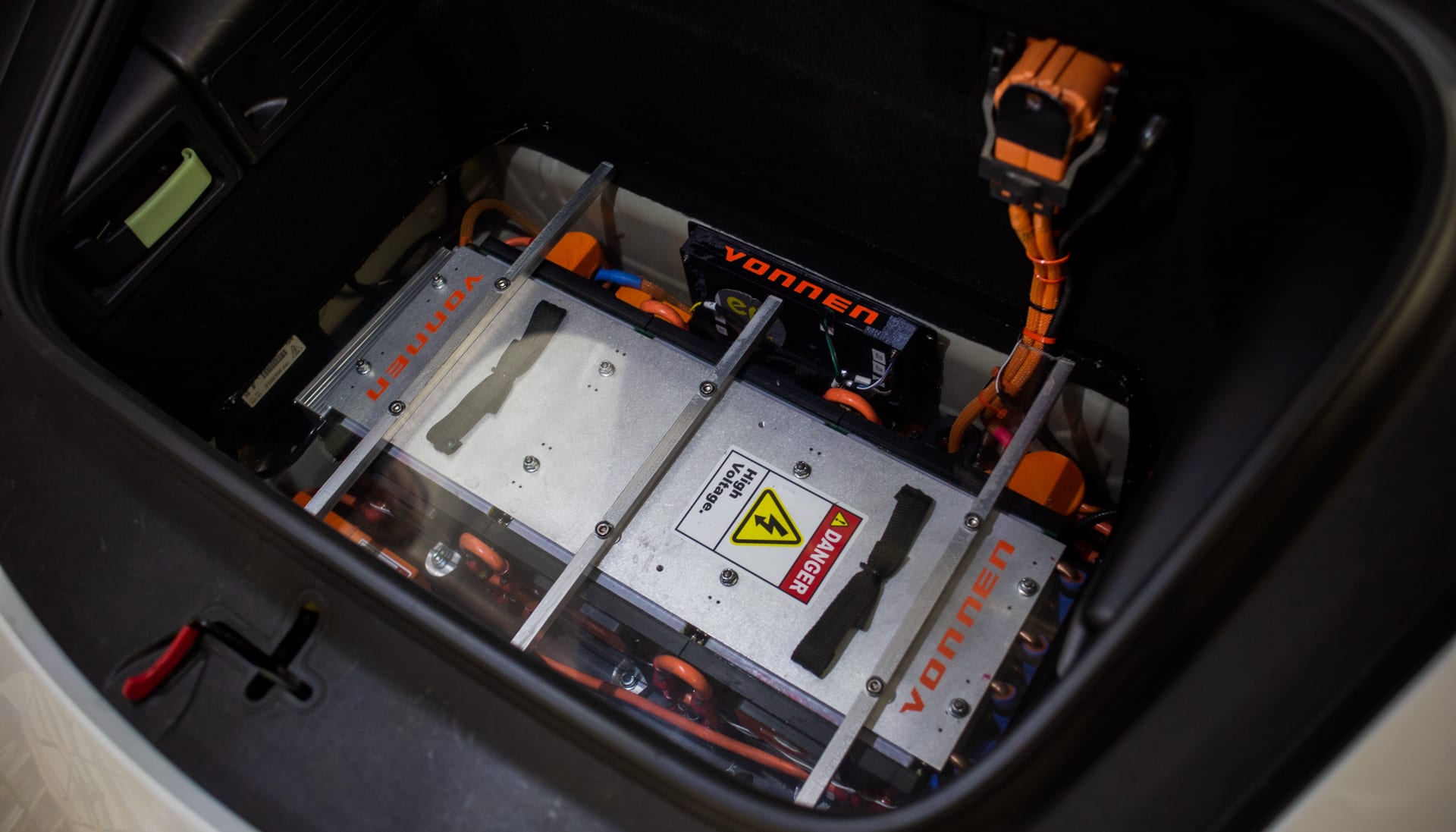
Feeding that motor is a battery pack situated in the front luggage compartment while the controller is placed behind the rear seats. On the development Carerra, it’s visible through the rear window. But Vonnen says that it can place the unit wherever the owner wants. So you can have the additional power of the Shadow Drive and your friends down at the Porsche club would be none the wiser.

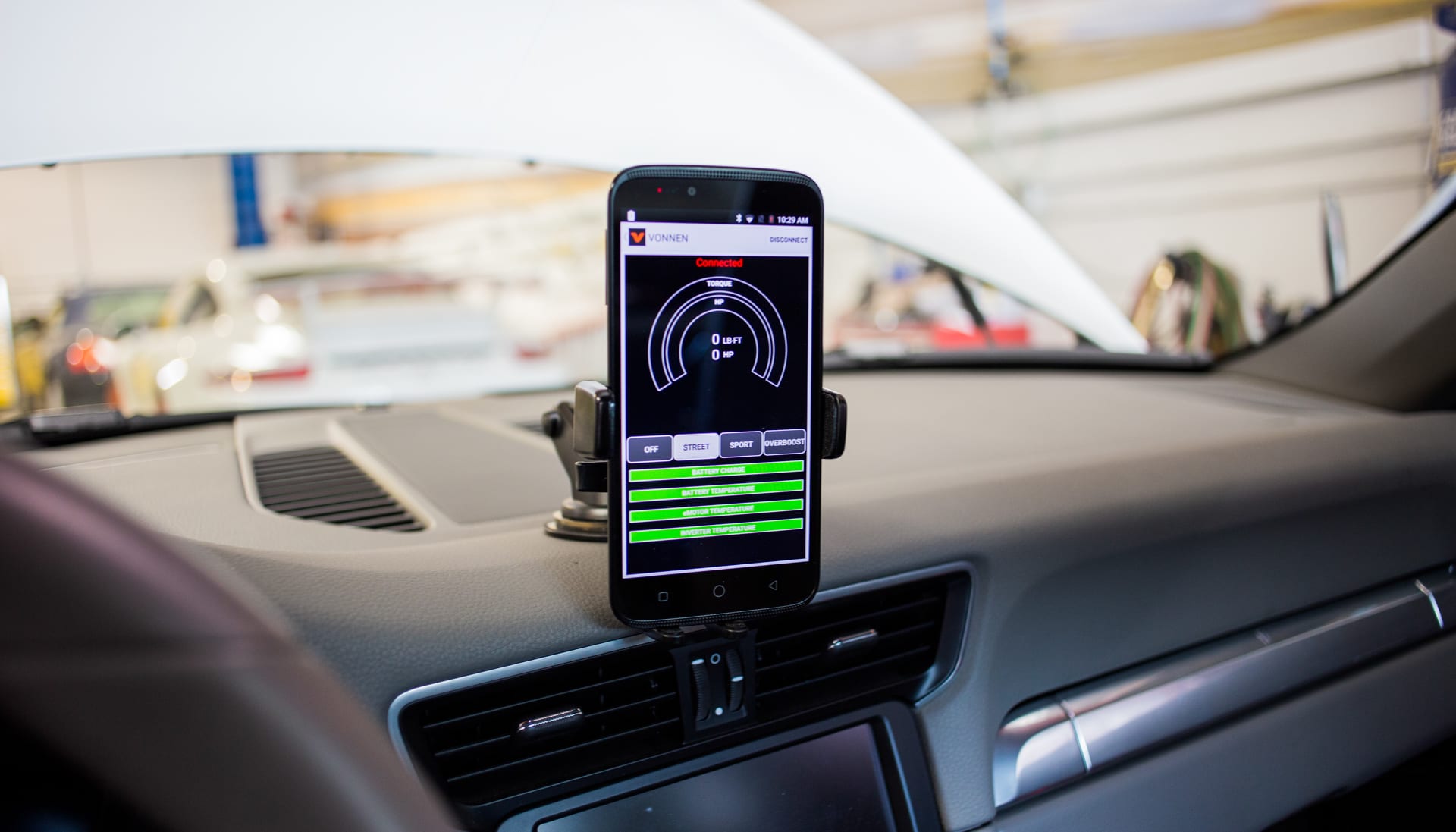
All in all, the system adds about 170 pounds to the car. That’s factoring in the removal of the stock flywheel and starter. So about the weight of a passenger. But the tradeoff is remarkable and adjustable. The Shadow Drive system uses a Bluetooth-connected companion app to place it into one of three modes: Street, Sport and Overboost.

These distinct settings adjust how and when the EV motor kicks in. The Shadow Drive is enabled based on how far down the accelerator is depressed. In Street mode, it kicks earlier than the other settings but doesn’t offer up all of the EV motor’s power.

Vonnen's Shadow Drive 911 hybrid

In Sport mode, the system waits a bit longer to kick in, but when it does, it’s a huge difference in power. This is the mode most drivers will use when they really want to use the Shadow Drive for a quicker run at the track. Meanwhile, Overboost is a bit like Ludicrous mode. The system goes all out when you slam on the gas pedal. Like Tesla’s feature, it’s not really meant to be used all the time and it tends to push the motor to its thermal limit and deplete the battery pack.

At least that’s what it did in the car I drove. Vonnen says that the Shadow Drive it’s manufacturing right now is 30 percent more thermally efficient than what I drove in the development 911. In other words, you can use Overboost more times in a row if you like.

Vonnen has pulled off a pretty ingenious way to add power to an already powerful car. But as with anything related to the 911, it’s not cheap. The turnkey solution will set owners back $75,000. CEO Chuck Moreland notes that the Shadow Drive is really for the owners of GT2 and GT3 911s. Folks that are happy to drop large piles of cash to make their fast cars even faster.

Vonnen's Shadow Drive 911 hybrid

Moreland also said that the Shadow Drive would work in older air-cooled 911s. Although it might have to tame the power output so as not to stress the components of these older vehicles. In all of this Moreland had one goal, “just make it faster.”

Sure it’s pricey, but Vonnen did exactly that.

Russia launches X-ray telescope to find ‘millions’ of black holes

Spektr-RG could significantly expand understanding of the universe.

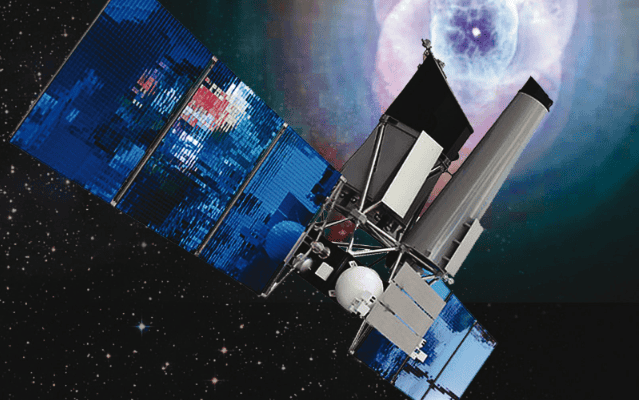
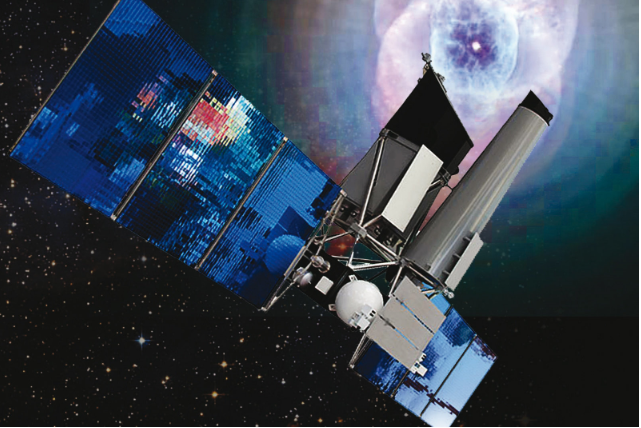
Russia is back in the business of space observation after losing control of a radio telescope a the start of 2019. The country has successfully launched Spektr-RG, an X-ray telescope co-developed with Germany’s help. The vessel will take 100 days to reach its final destination of Lagrange Point 2, where it can conduct studies in stable conditions a million miles from Earth. When it gets there, though, it could significantly reshape human understanding of the universe.

Spektr-RG is expected to conduct an exceptionally detailed 6.5-year survey that could discover roughly 100,000 galaxy clusters, hundreds of thousands of active stars and about 3 million supermassive black holes. In addition to providing a more detailed map of the cosmos, it could help understand the formation of black holes, the distribution of matter in the universe and the influences of dark energy on cosmic expansion.

This is a milestone for Russian astronomy. While the telescope’s final design varies significantly from the original concept and suffered multiple delays, it puts Russia (and by extension, Germany) on the cutting edge of X-ray astronomy. While existing X-ray telescopes have made major discoveries, they might not accomplish something on a similar scale for a while.

Sony says its USB hub is the world’s fastest SD card reader

The MRW-S3 is built for pro photographers.

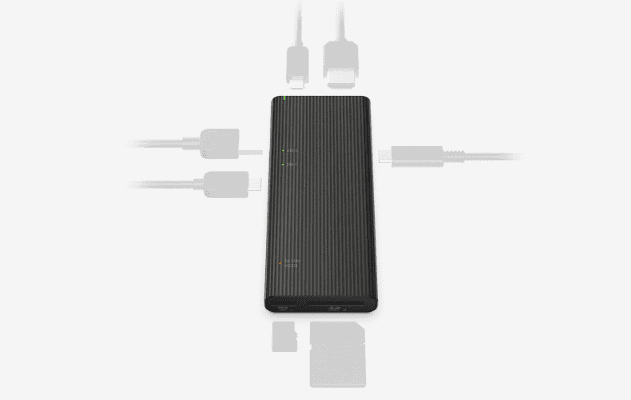
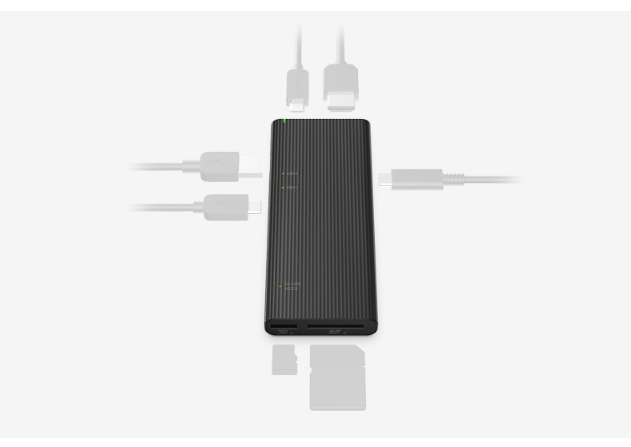
It’s hard to spice up USB hubs when they’re practically ubiquitous. Sony’s solution? Make it indispensable to pro photographers. The company’s newly announced MRW-W3 hub is billed as the “world’s fastest” UHS-II SD (and microSD) card reader, supporting read rates up to 300MB/s. Whether or not it lives up to the boasts, it should easily transfer your camera’s giant RAW photos and 4K videos. This isn’t a one-trick brick, either — it’s meant to handle many of your laptop’s other needs while you’re on the road.

The hub supports 100W power delivery to handle monitors and other particularly demanding peripherals. You’ll also have USB-C and USB-A connectors to connect devices new and old, not to mention HDMI output for video up to 4K at 30 frames per second. Even the case is resilient, with IP68 dust and water resistance as well as an aluminum “wave” design that improves grip and reduces scratches.

Sony will sell the MRW-S3 sometime in the fall alongside new SF-M Tough SD cards (in 64GB, 128GB and 256GB capacities) that can take advantage of the hub’s speeds. The tech giant hasn’t provided a price, but that might not be an obstacle. If you own a high-end mirrorless or DSLR camera that can seriously tax the fastest card readers, the price of the USB hub will seem trivial by comparison.

Stocks to Watch: Zenabis Global Inc. (TSX:ZENA) Down -3.09%

At close of market on Thursday, Zenabis Global Inc. (TSX:ZENA) stock finished trading at -3.09%, bringing the stock price to $1.57 on the Toronto Stock Exchange. The stock price saw a low of $1.55 and a high of $1.66.

The company’s stock was traded 837 times with a total of 726,338 shares traded.

Zenabis Global Inc. has a market cap of $310.93 million, with 203.3 million shares in issue.

Zenabis Global Inc., through its subsidiaries, is a licensed producer and seller of medical and recreational cannabis. It has facilities in New Brunswick, Nova Scotia and British Columbia. It also supplies propagated vegetable and bedding plants from its facilities in Pitt Meadows and Langley, British Columbia.