Archives for June 22, 2019

Weekly Market Review – June 22, 2019

Stock Markets

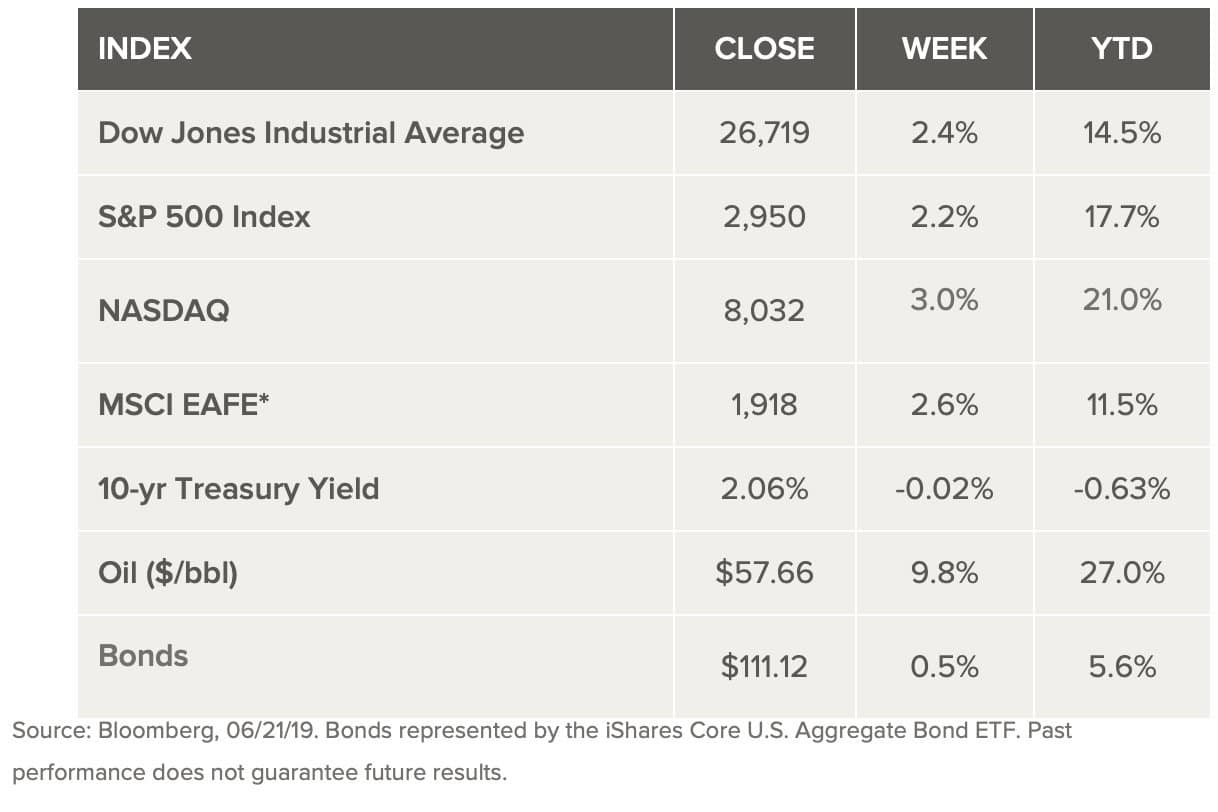
This is the third straight week that U.S. stocks finished higher. Both the S&P 500 and the Dow closed at new record highs. The clear driver for the for the rally in both bonds and stocks was the Federal Reserve releasing news that it is open to rate cuts this year – possibly as early as next month. The committee dropped its statement about being patient in setting rates, which had signaled it would hold rates steady for some time. Instead, it now states it will act as appropriate to sustain the economic expansion. Following the financial crisis of 2008, the U.S. stock market first achieved a new record high in 2013. It has now set 225 all-time highs, validating the fact that new highs can’t be viewed as a single indicator of exhaustion. It’s important to note that periodic dips in the market provide a good opportunity for long-term investors to expand diversity in their portfolios by adding high-quality assets at lower prices.

U.S. Economy

In the first quarter, the U.S. economy grew at a solid 3.1%, but showed some signs of weakness. Consumer spending dropped to half its average rate and when combined with a lackluster jobs report and slowing wage gains set the stage for potential slowdown. This week though, the Fed demonstrated to the markets its willingness to cut rates in order to head off rising risks from deflation, trade threats and a slowing global economy.  Markets reacted swiftly as the U.S. 10-year Treasury yields dropped to 2.0%, but rebounded to 2.06%. U.S. rates are low but still higher than most developed countries. So, it is likely that foreign demand for U.S. Treasuries will help keep long-term rates low and analysts expect it to prolong the bull market by providing inexpensive credit to businesses and consumers.

Metals and Mining

It looks like the patience of gold bulls has finally paid off. This week, demand for the precious metal managed to drive prices to levels we have not touched on in nearly six years. Gold climbed 2 percent on Friday morning (June 21), rising above US$1,400 per ounce to reach as high as US$1,410.78 at one point. The driver for the surge is obviously the Fed delivering its dovish opinion that the market was seeking. Essentially this has removed the ‘patience’ approach to cutting rates,” that the Fed has echoed all year. Some analysts feel gold’s major breakout could be just the start of a long-awaited rally as investors strongly expect a shifting interest rate based on a cut that could come as early as next month. Gold saw most of its gains this week following the Federal Reserve’s monetary policy meeting.

Silver followed gold’s lead once again proceeding the Fed announcement, but in the end gave up 1.2 percent of its gains. In the other precious metals group, platinum was down nearly 2 percent for the week. On Friday morning, the metal was trading at US$799 per ounce. Like the others, palladium rallied up 1.43 percent for the week, but edged down just over 1 percent on Friday. As of 9:43 a.m. EDT, palladium was trading at US$1,487 per ounce, still higher than gold.

Energy and Oil

Oil prices spiked up about 5 percent on Thursday as the U.S. announced out was considering a military strike against Iran. The U.S. military seemed poised to carry out a strike late Thursday, but the operation was called off by President Trump at the last minute. Reuters reported that Trump may have relayed a message to Iran that he was seeking to open negotiations. Friday morning Trump tweeted that he called off the strike because it would not be proportional to the shooting down of an unmanned drone. His tweet reads “I am in no hurry, our Military is rebuilt, new, and ready to go, by far the best in the world. Sanctions are biting & more added last night. Iran can NEVER have Nuclear Weapons, not against the USA, and not against the WORLD!,”.

Still, this had the whole region on alert. Iranian sources told media that the Supreme Leader was opposed to negotiations. They also said that any attack would have regional and international consequences. As the week closed oil prices were set for their largest weekly gain since February. Natural gas spot price movements were mixed this report week. Henry Hub spot prices remained flat at $2.36 per million British thermal units. At the New York Mercantile Exchange, the price of the July 2019 contract decreased 11¢, from $2.386/MMBtu last Wednesday to $2.276/MMBtu Friday. The price of the 12-month strip averaging July 2019 through June 2020 futures contracts declined 9¢/MMBtu to $2.442/MMBtu.

World Markets

Equity markets rose this week on expectations of added stimulus. European stocks rose, mostly fueled by anticipation of more central bank stimulus measures. The pan-European STOXX Europe 600 Index, UK’s FTSE 100 Index, the exporter-heavy German DAX index, and Italy’s FTSE MIB Index all gained. This followed an announcement by ECB President Mario Draghi that the bank could offer more stimulus measures as early as July. Draghi’s comments came prior the Federal Reserve’s commitment that it is ready to cut rates if the U.S. economic outlook does not improve.

The euro fell about 1% against the U.S. dollar on the week while the yield on 10-year German government bonds fell to a new all-time low of -0.315%, and the yield on the French 10-year bond hit 0%, its lowest level ever. The British pound rose almost 1% against the U.S. dollar, in part led by the Bank of England’s (BoE) decision to hold short-term rates steady at 0.75%.

With positive momentum across all markets, the Chinese stocks advanced for the week. Traders are betting that a meeting between U.S. President Trump and his Chinese counterpart Xi Jinping at this week’s G20 meeting in Japan would put the two countries back at the trade table, which halted last month. The benchmark Shanghai Composite Index gained 4.2% and the large-cap CSI 300 Index, added 4.9%. Both indexes recorded their largest weekly gains since the week ended April 5, according to Reuters.

Sentiment toward Chinese stocks also picked up after the Fed left its key rate unchanged and signaled that it was ready to lower short-term interest rates for the first time since 2008.

The Week Ahead

Important economic news to come out this week ranges from consumer confidence to global influence. The Conference Board’s consumer confidence report comes out on Tuesday followed by the important durable goods orders numbers on Wednesday. To cap off the week, the University of Michigan issues its sentiment report on Friday. The very important G20 Leader’s Summit kicks off in Japan beginning Friday. President Trump and Chinese leader Xi have said they will to meet separately in a session aimed at resolving important issues hanging up trade negotiations between the two global powers. The outcome will certainly send messages to global markets.

Key Topics to Watch

–           US – Iran military tensions

–           G20 Leader’s Summit

–           Conference Board Consumer Confidence Report

–           U of M sentiment report

–           Durable goods orders report

–           Gold entering new territory

Markets Index Wrap Up
The evolution of cognitive architecture will deliver human-like AI

But you can’t just slap features together and hope to get an AGI

There’s no one right way to build a robot, just as there’s no singular means of imparting it with intelligence. Last month, Engadget spoke with Carnegie Mellon University associate research professor and the director of the Resilient Intelligent Systems Lab, Nathan Michael, whose work involves stacking and combining a robot’s various piecemeal capabilities together as it learns them into an amalgamated artificial general intelligence (AGI). Think, a Roomba that learns how to vacuum, then learns how to mop, then learns how to dust and do dishes — pretty soon, you’ve got Rosie from The Jetsons.

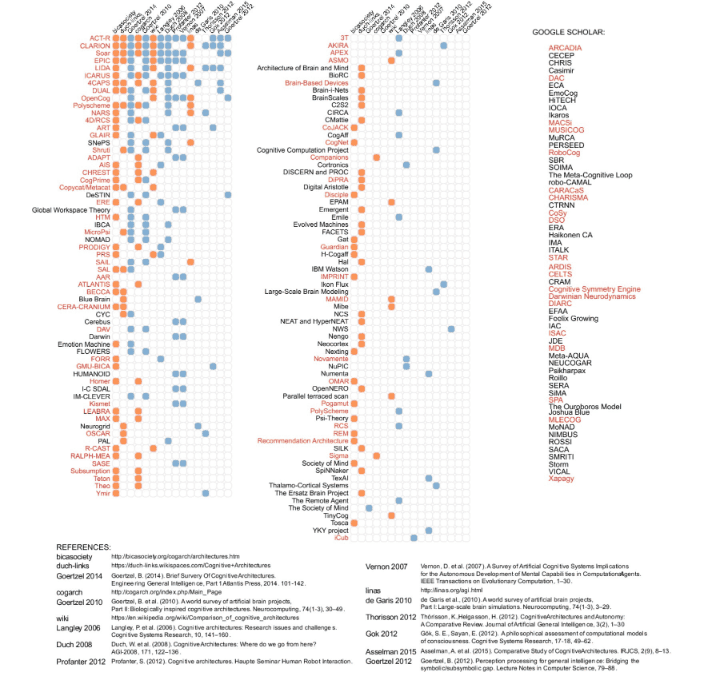
But attempting to model an intelligence after either the ephemeral human mind or the exact physical structure of the brain (rather than iterating increasingly capable Roombas) is no small task — and with no small amount of competing hypotheses and models to boot. In fact, a 2010 survey of the field found more than two dozen such cognitive architectures actively being studied.

The current state of AGI research is “a very complex question without a clear answer,” Paul S. Rosenbloom, professor of computer science at USC and developer of the Sigma architecture, told Engadget. “There’s the field that calls itself AGI which is a fairly recent field that’s trying to define itself in contrast to traditional AI.” That is, “traditional AI” in this sense is the narrow, single process AI we see around us in our digital assistants and floor-scrubbing maid-bots.

“None of these fields or sub-fields are necessarily internally consistent or well-organized,” John E. Laird, Professor of Engineering at the University of Michigan and developer of the Soar architecture, explained to Engadget. He points out that research in these fields operate as pseudo-confederations, formed mostly by whoever decides to shows up to a specific conference. “It’s very difficult to get necessary and sufficient criteria for AGI or any of the sub fields because it’s really a social contract of the people who decide to work in the area,” he concedes.

Laird notes that in the early days of AGI research, these conferences were dominated not by academics but by hobbyists and amateurs. “There were a lot of people who were interested in AI and what the future might be, but they weren’t necessarily active researchers. I think, over the years, that’s changed, and the kind of people that go to that conference specifically has changed.”

“From a historical perspective,” Christian Lebiere, Professor of Psychology at CMU and creator of the ACT-R architecture, added. “AI in the old days, was almost synonymous with Strong AI, which is a strong claim about a pretty broad set of human-like capabilities that could be achieved. People, to some extent, over-promised and under-delivered, so that came to a crashing halt in the early ’80s and then, to some extent, the community scaled back to Narrow AI.” Paulie’s robot butler from Rocky 4 is one such example of this overpromising.

But even among the competing architectures, researchers find plenty of functional overlap. Take ACT-R and Soar for example. “ACT-R is more closely tied to modeling human cognition and also mapping the processing to the brain,” Laird explained. In “Soar, we’re much more inspired by psychological and sometimes biological structures, and trying to build bigger AI systems.” That is, Soar explores “longer timescales, the more high level, cognitive capabilities,” Laird continued, while “ACT-R will be at the shorter time scales and more detailed modeling of low level psychological phenomena.”

“You can think of Sigma as a spin off Soar, that’s trying to learn from Soar, ACT-R and others,” Rosenbloom added.

In 2017, they proposed the Standard Model of the Mind, a general reference model which would serve as a “cumulative reference point for the field” that could serve as a guide post for research and application development. “We propose developing such a model for human-like minds, computational entities whose structures and processes are substantially similar to those found in human cognition,” the three wrote in AI Magazine.

“If you look at the AGI community,” Rosenbloom said, “you’ll see everything from attempts to build a single equation that covers all of AI to approaches where we could just pick a whole bunch of convenient technologies and put them together, and hope that they’ll yield something interesting.” And that’s what the Standard Model of the Mind is attempting to codify.

“The essence of the architectural approach is that it’s the structure that frames things,” Rosenbloom continued. “In computers, it provides a language which we can program things in. When we’re talking about cognitive architectures, we’re talking about what are the fixed memories, the learning and decision mechanisms, on top of what you’re going to program or teach it.”

“You’re trying to understand the structure [of the mind] and how the pieces work together. Understanding how they work together is a critical piece of it,” Rosenbloom said. “So it’s not just going to emerge more the individual pieces, you’ve got actually study that fixed structure as an important artifact, and then talk about the knowledge and skills on top of that.”

Laird notes that “there is some evidence that the brain is not just a homogenous bunch of neurons, that at birth somehow starts to congeal into the structures we have in our brain.” He argues that perhaps it took so many millennia for intelligent life to emerge on this planet is that it took thousands of generations to create the necessary architecture and underlying structure.

This is partly why these researchers have little interest in modelling lower level intelligences and working their way up to human-level thought processes. That and, “you can’t talk to a frog,” Laird exclaimed. “We’ve studied human cognition much more than animal cognition, at least when all this started. So you could say now the more we understand about animals, the more it makes sense to look at that kind of thing. But it didn’t necessarily in the past.”

This field of study gave rise to the behavioral approach in robotics. Its subsequent popularity, according to Laird at least, proved disastrous to AGI research. “It turns out it’s dominated by what we think of as low level issues of perception and locomotion” Lebiere explained. “You’re really building physical systems in the world. There is a chance that if you take that approach, you really don’t pay much attention and devote resources to most of the cognitive aspects.” Basically it’s the approach that led us to iterating better Roombas in pursuit of Rosie rather than developing her mind and sticking it in a robotic body.

“The alternative argument is that trying to just do the cognitive is building on a house of sand,” Laird countered. “That you really have to have good interaction with the environment through sensing an action.”

“At one point of the evolution of the cognitive architecture has been the integration of perception and action together with cognition on an equal footing,” Lebiere added.

But even as the bodies and minds of robots learn to grow and develop in tandem, neither Laird, Lebiere, or Rosenbloom are particularly concerned about the singularity or a global coup at the hands of our mechanical constructs.

“There is a set of concerns involving our systems, which are the same concerns you have about any computer system that’s doing its own thing,” Rosenbloom said. Self-driving vehicles for example, you’ve got to make sure that they not only work in the real-world environment they’re designed for but ensure that they’re working as intended. “But the notion is to go beyond that to intelligent systems that are going to try to rule the world,” he concluded. “That’s a whole different thing than just autonomous vehicle safety.”

Lebiere notes a secondary sticking point in the development of AGI. “Because so much of the machine learning side of data driven,” he argues, “a lot of the concerns about sort of that kind of AI are privacy concerns about data, rather than in and of itself concerned about the power of the AIs.”

But that’s not to say that the pursuit of AGI will stagnate any time soon. The field operates in cycles, Rosenbloom explains. Booms occur “when one of these technologies grows out of its narrowness. People are very excited, because all of a sudden, you can do things you couldn’t do before.” We saw similar a boom with Siri and other digital assistants. However once people realize the limitations of these new technologies, no matter how much further they were compared to before, people will eventually grow disenchanted with them and the cycle resets. But which AI-inspired technology will take off next remains anybody’s guess.

NASA could see more delays for SpaceX and Boeing private space flights

Both companies still struggle with technical issues, according to the Government Accountability Office.

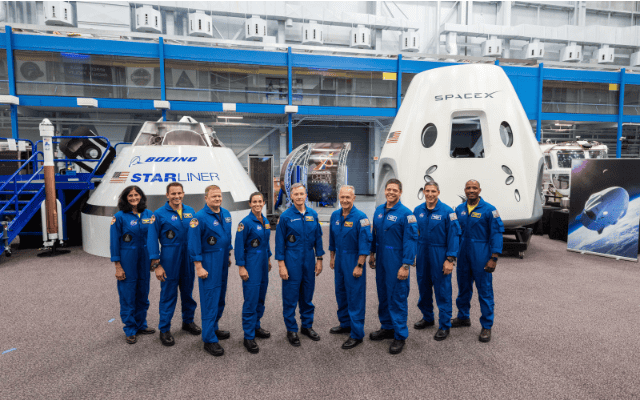
When NASA awarded Boeing and SpaceX contracts to develop vehicles that can take astronauts to the ISS, it was hoping they’ll be done by 2017. Unfortunately, both companies grappled with technical challenges that forced them to delay their timelines. A new Government Accountability Office report even wants NASA to prepare for even more delays, as neither company is near to meeting all the agency’s requirements for manned spaceflight.

“GAO continues to believe that NASA should develop a contingency plan to ensure uninterrupted access to the ISS if delays persist beyond September 2020. NASA generally agreed with GAO’s findings,” the report reads. NASA already intends to purchase more seats on the Soyuz until September next year to ensure continued access to the ISS. But it sounds like GAO is urging the agency to buy more slots for its astronauts beyond that month.

The GAO report says both companies still have to solve a bunch of technical problems, including the need to tweak some components for safety reasons, before their vehicles can receive certification. Both of them have to conduct several parachute tests to demonstrate that their capsules can land safely, as well.

While SpaceX was able to dock an unmanned Crew Dragon with the ISS in March, that same vehicle was destroyed while the company was testing its thrusters and emergency escape system. SpaceX said it was due to an “anomaly,” but didn’t detail what went wrong. NASA Administrator Jim Bridenstine recently admitted that it caused a change in the company’s schedule yet again. SpaceX originally wanted to launch a seven-day crewed test flight this summer, but a NASA document shows that it’s now targeting a November 15th launch date.

Meanwhile, the target launch date for Boeing’s uncrewed Starliner test flight is on September 17th — its first crewed flight’s schedule depends on that initial test’s success. A spokesperson said as a response to the report that the company “is progressing toward the first Starliner launch this summer.” He added that “[s]afety remains [their] number one priority, and [they’re] focused on performing a safe, successful uncrewed orbital flight test.”

Google hints its smart speakers will be renamed ‘Nest Home’ (updated)

Whether or not that’s simpler is another matter.

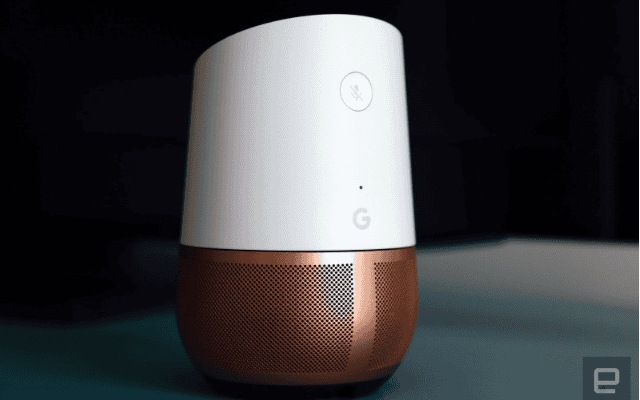
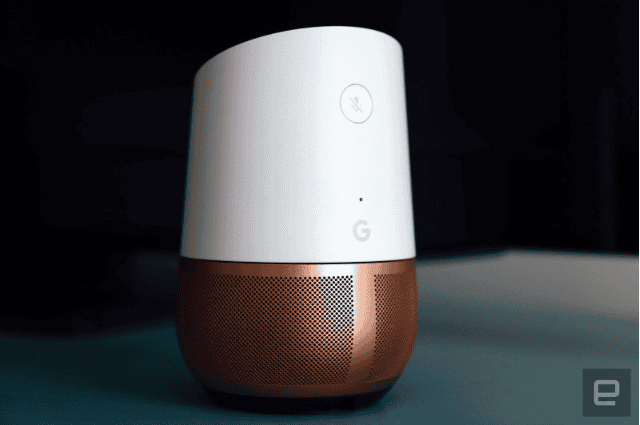
Google made clear that it would apply the Nest name to all its smart home products, but just how would it rename classic products? You now have a better idea. As of this writing, a visit to the Connected Home Accessories section of the Google Store’s Special Offers page shows the Google Home’s replaceable base as “Nest Home Base.” The product page still refers to the speaker by its original name, but you’ll find this change in the terms and conditions as well.

We’ve asked Google for comment. It’s not certain if an official renaming is right around the corner, especially when the Home Mini and Home Max aren’t affected yet. However, it seems like changes are at least underway. This also suggests that Google isn’t waiting for a hardware refresh to apply the Nest badge to one of its most iconic products — you may see the Nest name everywhere even if the devices are otherwise the same as before.

Cloudflare wants to protect the internet from quantum computing

It’s sharing its open-source library of post-quantum cryptography software.

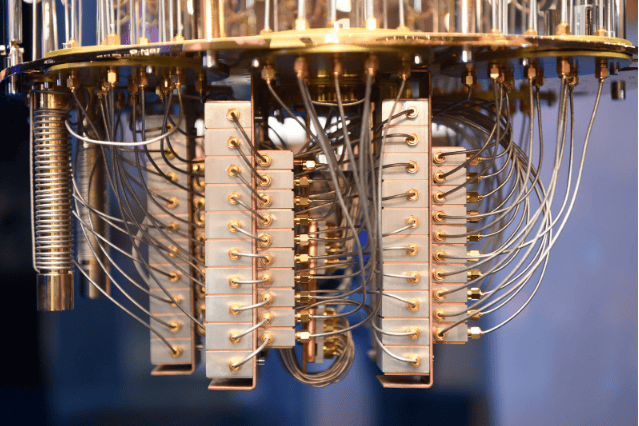
Quantum computing has the potential to revolutionize health care, AI, financial modeling, weather simulation and more. It’s also going to shake up encryption as we know it. Without advances in post-quantum cryptography, quantum computing could make it easy for hackers to access sensitive data, like credit card info. To prevent that, internet infrastructure company Cloudflare is testing post-quantum cryptography technology, and it’s sharing its open-source software package, CIRCL, or Cloudflare Interoperable Reusable Cryptographic Library, on GitHub.

While Cloudflare hasn’t solved the problems that cryptography raises for encryption, it’s been trying to “quantum-proof” TLS, the encryption technology formerly called SSL, which protects connections between web browsers and servers. Cloudflare plans to continue this work, and it hopes that by sharing CIRCL, it will help other researchers prepare for a post-quantum world. In a blog post, the company wrote, “we are trying to improve and propose standards to help make the internet a better place.”

Stocks to Watch: ATS Automation Tooling Systems Inc. (TSX:ATA) Up +1.94%

At close of market on Thursday, ATS Automation Tooling Systems Inc. (TSX:ATA) stock finished trading at +1.94%, bringing the stock price to $22.12 on the Toronto Stock Exchange. The stock price saw a low of $21.87 and a high of $22.29.

The company’s stock was traded 1,215 times with a total of 220,470 shares traded.

ATS Automation Tooling Systems Inc. has a market cap of $2.03 billion, with 91.91 million shares in issue.

ATS Automation Tooling Systems Inc is a Canada-based company that provides automation systems. The company designs and builds customized automated manufacturing and testing systems for customers, and provides pre- and post-automation services. The company’s products comprise conveyor systems, automated electrified monorails, tray handlers, laser systems, and other hardware and software products. The company also provides pre-automation solutions, including strategic direction and planning services, as well as aftermarket support. The company’s clients primarily come from the life sciences, transportation, consumer products and electronics, and energy sectors. The company generates the majority of its sales from the North American and European markets.