Archives for June 10, 2019

Boardroom battle for control of Canadian mining firm unearths toxic waste fines in Peru

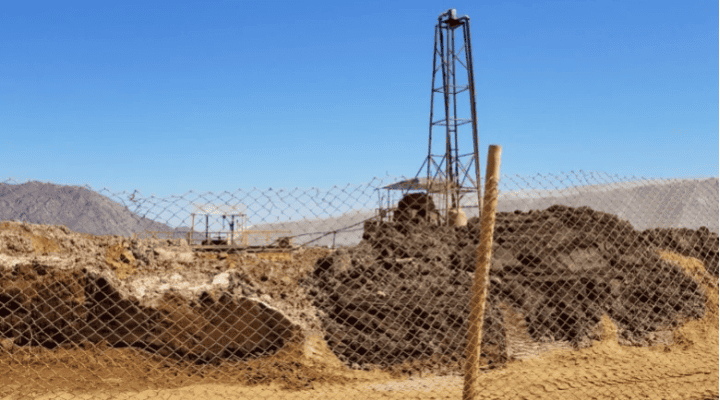
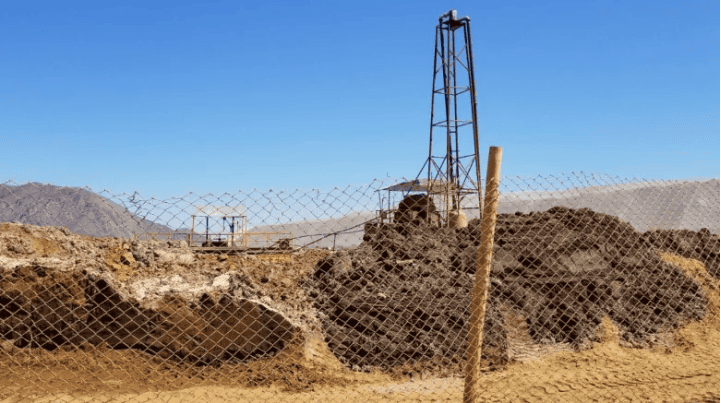
A processing facility in Tulin, Peru, leased by Australia-based Titan Minerals. Opponents of Titan’s proposed takeover of Core Gold, a small Canadian mining company, say environmental contamination at the facility could leave the new company facing hefty fines and other penalties. Supporters of the merger say Titan has continued to get environmental approvals from Peruvian authorities.

Australian-listed Titan Minerals makes a play for Vancouver-based Core Gold in deal opposed by some investors

A boardroom battle for control over a small Canadian mining company with untapped gold assets in South America has unearthed reports from Peruvian authorities of improperly stored toxic waste — and allegations of corporate malfeasance — in the rough and tumble world of junior resource firms.

Some shareholders of Core Gold, a Vancouver-based and Toronto-listed junior mining company, are adamantly opposed to a takeover bid by Australian-listed Titan Minerals.

Supporters of the deal, including Core Gold’s board of directors, say the takeover is crucial for bringing fresh capital into the cash-poor company so it can start developing a series of potentially lucrative mineral concessions in Ecuador. 

As part of their effort to rebuff the takeover, Core Gold’s former CEO and some shareholders have been leveraging serious environmental violations reported by Peruvian prosecutors at a facility Titan was leasing in Peru, including improperly disposing of cyanide-laced tailings.

The corporate showdown illustrates how duelling mining executives can leverage environmental complaints for their own economic interests, said Pablo Heidrich, a Carleton University political economy professor specializing in Latin America.

“It’s a business conflict and there is an overlap with an environmental crime committed by this junior mining company in Peru,” said Heidrich, after reviewing documents from Peruvian state prosecutors sanctioning a Titan subsidiary for its environmental conduct.

“This isn’t necessarily common but it’s not unusual … There are never any good guys or bad guys in a story like this.” 

Core Gold shareholders will vote on Titan’s takeover proposal on June 12 in Vancouver. Both sides have launched public relations offensives ahead of the meeting. 

The stakes

Core Gold controls three significant mining concessions in Ecuador, according to corporate statements. Together, these largely untapped properties could yield more than $1 billion in minerals, said Keith Piggot, who was Core Gold’s CEO for more than two years before he was ousted by the board in March.  

His estimate could not be independently verified and Core Gold’s current valuation — essentially a penny stock — comes nowhere close to justifying such projections.

In a statement, Titan said it’s offering each shareholder in Core Gold 20 shares in the newly merged company. It also pledged to bring $25 million in new financing so the firm can meet debt and other obligations. 

Peruvian state prosecutors have fined Titan’s Tulin operation, pictured here, for improperly handling toxic cyanide. 

Some shareholders think that’s not a good deal. “We feel this [proposal from Titan] is vastly undervaluing the assets of our company,” said Paul Tadeson, a retired GM employee living near Sharbot Lake, Ont., who invested much of his savings in Core Gold. 

He said the Australian-listed Titan is “basically a shell company,” and its environmental record in Peru could “put up red flags” with the government of Ecuador for getting mining permits to start developing Core’s concessions there.  

Titan and Core Gold’s current board said the company has continued to receive environmental permits from Peruvian authorities, underscoring their view that the firm has a solid environmental record. They say the vast majority of Core Gold shareholders — more than 80 per cent of votes cast so far — support the deal as the corporation’s best option.

Titan “has had a great response to the merger with Core Gold, with a large range of sophisticated and generalist funds participating in the placement, with continued support from our existing shareholders as well,” Titan executive chairman Matthew Carr said in a statement.

Titan did not respond to repeated requests for comment. A receptionist at the co-working space in Australia listed as its office said Carr rarely checks his official email, and messages left for the company were not returned.

The Australian Securities Exchange is probing whether Titan breached regulations on overstating assets, according to an email from the ASX compliance division. “We are looking into the issues you’ve raised to see if there has been a breach of our rules,” an ASX spokesperson wrote in May to a Core Gold shareholder concerned about Titan’s assets.

Environmental fines

The concerns about Titan’s environmental track record stem from its activities between 2012 and 2018, when the company’s subsidiary, Tulin Gold, was leasing a processing facility in southern Peru’s Ica province from a Russian-owned company, according to reports from Peruvian state prosecutors. 

Titan was not directly mining gold in the facility. Instead, the company was using it to process ore collected by smaller miners in the mountainous, wind-swept region.

Former Core Gold CEO Keith Piggot poses outside of the office of a Peruvian government regulator in Lima, Peru, earlier this year. Piggot says he was ousted from Core Gold for opposing the proposed merger with Titan. Core Gold’s board says he was sacked for poor performance. 

Tailings — waste created in the process of separating gold from rocks using cyanide —  weren’t disposed of properly by Titan, said state prosecution reports reviewed by CBC News.

Cyanide is a rapidly acting, potentially deadly chemical that can exist in various forms, according to the U.S. Centers for Disease Control and Prevention. 

Poisonous tailings were stored without being properly covered, allowing cyanide-laced dust to blow onto neighbouring villages in what prosecutors described as a “very serious” infraction. 

In another report, prosecutors said the company breached occupational health rules by exposing workers to cyanide tailings.

Multiple fines for these and other environmental and labour violations were levelled at the company between 2012 and 2017, the prosecutors’ reports said. 

“They hid what I estimate to be thousands of tons of waste within, and outside of the Tulin plant,” said Lucio Dario Meza, 34, who worked at the facility from 2015-2018, in a sworn statement to a Peruvian notary, which was collected by Piggot’s research team as part of his campaign against the deal.

“In 2016-2017, they buried tons of tailings without treating them,” Meza said in the letter. CBC News could not independently verify Meza’s account. He was dismissed from his job in 2018. 

A sign for the culturally-sensitive Nazca lines in the area of southern Peru’s Ica province where the Tulin gold processing plant is located. 

Core Gold’s current board of directors dismissed concerns over Titan’s environmental record. 

“Core Gold does note that if its former CEO’s assertions regarding Titan were true, that it seems unlikely the Peruvian authorities would have provided the final permit for Titan’s Vista Plant in Peru, which it announced on May 27, 2019,” Mark Bailey, the interim CEO of Core Gold, said in a statement. 

Competing claims

Sam Wong, Core Gold’s chief financial officer, initially expressed interest in an interview with CBC. But neither he, nor other members of Core’s board, nor the public relations company hired by the company to advise on Titan’s proposal responded to written questions or repeated followup calls. 

Piggot said fines issued by Peruvian prosecutors for environmental violations were not disclosed to Titan’s shareholders in Australia, and he believes the company faces serious liabilities.

Sooner or later, someone will have to clean up all this cyanide material.

– Keith Piggot, ex-CEO of Core Gold

“Sooner or later, someone will have to clean up all this cyanide material,” Piggot said in a phone interview from Peru. “Titan has a terrible track record with this environmental liability and it probably has negative value.” 

Piggot said he still controls about seven per cent of Core Gold’s shares, and claimed he was turfed for opposing the Titan merger. 

In a press release, Core Gold interim CEO Mark Bailey on Thursday accused Piggot of being “disgruntled and self-interested” while peddling “misleading claims.”

Core’s current board said Piggot was fired for poor performance. They point out that during his tenure the company’s liabilities rose by 27 per cent, its assets dropped by 60 per cent, and the stock tanked. 

According to a press release from Titan, two independent advisory firms, Institutional Shareholder Services Inc. and Glass Lewis & Co., on Thursday recommended Core Gold shareholders back the deal with Titan, arguing that Piggot bears “significant responsibility for the company’s financial condition.”


Canada’s military spies can collect, share info on Canadians, directive says

Military spies will be allowed to gather the information of Canadians in certain circumstances.

Instructions say the information must have a ‘direct and immediate relationship’ to military operations

Canada’s military spies can collect and share information about Canadian citizens — including material gathered by chance — as long as it supports a legitimate investigation, says a newly disclosed federal directive.

The prospect of defence-intelligence agents having personal data about Canadians worries civil-liberties advocates, because it is unclear just how much could be collected incidentally from the vast reaches of cyberspace.

The Canadian Press recently obtained a copy of the eight-page, August 2018 directive, “Guidance on the Collection of Canadian Citizen Information,” through the Access to Information Act.

The instruction to National Defence employees and members of the Canadian Forces says any information collected about Canadians must have a “direct and immediate relationship” to a military operation or activity.

But it also warns that “emerging technologies and capabilities” are increasing the possibility that such Canadian information will be scooped up inadvertently from open sources like social-media feeds.

Data about Canadians, whether it’s collected intentionally or not, may be kept and used to support authorized defence-intelligence operations, the directive says.

The national-security and intelligence committee of parliamentarians is examining the directive as part of a study on how National Defence and the Canadian Forces gather, use, keep and share information about Canadians as part of their intelligence work.

Report coming this year

The committee plans to deliver a special report to the prime minister on the subject this year.

It will be a follow-up to an April report from the committee that said the military has one of the largest intelligence programs in Canada, and it gets little outside scrutiny.

The committee, which examined thousands of pages and received several closed-door briefings, found that defence agencies carry out a full range of intelligence activities, collecting information through sensitive methods including technical means, human sources and investigations.

It said these activities involve considerable risks, including infringements of Canadians’ rights.

The committee called for stricter controls on the military’s spying, including the possibility of legislation spelling out when and how defence intelligence operations can take place.

No arbitrary surveillance

Currently, the only defence activity entailing collection of Canadian citizens’ information is the work of the Canadian Forces national counter-intelligence unit, said Capt. Nicola LaMarre, a National Defence spokesperson.

This includes identifying, investigating and countering threats to the security of Canada’s military from foreign intelligence services, or from individuals or groups engaged in espionage, sabotage, subversion, terrorist activities and other criminal activity as it relates to security concerns, she said.

As part of its mandate, the counter-intelligence unit may investigate Forces members and Defence employees, collecting information about them in the process, LaMarre added. But she said that doesn’t mean the unit can “arbitrarily conduct surveillance on Canadian citizens,” and investigations may take place only when there is a clear link to defence security interests.

Still, LaMarre said that in “an increasingly complex global information environment, and with Canadians constantly travelling all over the world,” military-intelligence personnel may incidentally gather some information about them.

Under the directive, information about Canadians, including material collected inadvertently, can be retained to support authorized intelligence operations, or shared with other Canadian departments and agencies if the law allows.

Tim McSorley, national co-ordinator for the Ottawa-based International Civil Liberties Monitoring Group, finds that troubling given the vast amount of information that swirls daily through the digital sphere.

“We’re worried about what it means when they collect inadvertent information,” he said in an interview. “We don’t know the scope or the degree to which Canadians’ information is being captured.”

As a result, there should be stronger legislative control and review of the military’s intelligence collection and sharing to ensure it isn’t straying beyond the bounds of privacy law and the Charter of Rights and Freedoms, he said.

“There can always be instances of over-reach, and that needs to be kept in check.”

Hundreds of British Columbians lost their jobs in recent sawmill closures: Now what?

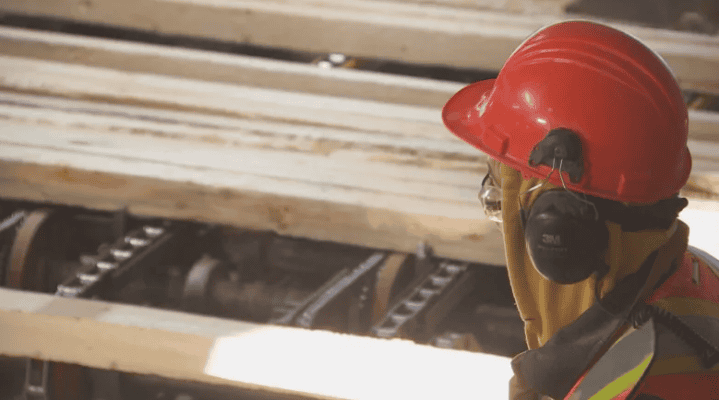
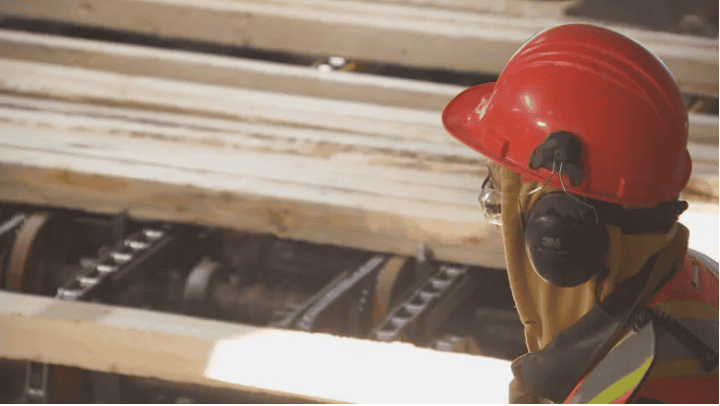
A worker sorts wood on a conveyer belt at the Duz Cho Lumber Mill in Mackenzie, B.C. in this file photo.

Transition teams working to identify needs, skills

More than 400 mill workers in B.C. are trying to figure out what comes next.

Canfor announced earlier this week that its Vavenby sawmill would be closing in July, leaving over 170 mill workers without jobs.  

In May, Tolko announced it would be closing its mill in Quesnel, where 150 people will become unemployed. And another 90 will be laid off at its Kelowna mill as it cuts down its workforce. That doesn’t account for all the contractors and workers in related industries who are also impacted by these cuts.

Terry Tate has worked in the forestry industry for 48 years and now works for the United Steelworkers, helping employees make the transition after layoffs. His biggest piece of advice for those feeling uncertain? Don’t panic.

“People panic and they jump at whatever people are throwing out there and they grab onto the program or their training but it really honestly doesn’t help them,” he said.

When a mill closure is announced, a transition team is formed, made up of representatives from the relevant government ministries, Service Canada, WorkBC and other key players. They work quickly to come up with an action plan to identify the needs of the people in the mill so they can move them as smoothly as possible into whatever might come next.

Even if mill workers have only ever worked in that industry, worker transition expert Terry Tate says it’s likely they have other skills that can help them get into another field. 

“The biggest concern is obviously, you know, ‘What do I do next?'” Tate said. “For some people that have never been unemployed this is a very, very stressful time.”

Identifying needs includes figuring out whether individuals are keen to relocate to another mill, ready to retire, and what kinds of transferable skills they might have. 

“Lots of people are handy,” Tate said. “They’ve got lots of different skill sets. So you actually work on those skill sets to enhance them, give them whatever tools they need.”

Tate said he’s encountered people who have experience building homes, so it was easy to set them up with contractors and find new jobs in construction.

He’s also met people who were natural carpenters, but didn’t have official certification. They were given assistance getting certified so they could move forward in a carpentry career, he said. 

“Whatever program funding and resources are available, you want to make sure that it’s tailored to actually help the people that are out there,” he said.

The worker transition team can also help employees access employment insurance, deal with creditors, and make sure their families can survive until they’ve got a new job lined up.

“There is a significant amount of resources and funding and assistance for workers put into this predicament,” Tate said. 

Government funding, primarily through WorkBC, is available to help retrain mill workers in new fields. Part of the transition team’s job is to help people access that funding.

Tate believes people who have lost their jobs due to these recent closures should remain hopeful and be open to assistance.

“You’ve really got to slow people down,” he said. “It’s just taking the time to sit with them, to go through the options that are there.”

Corrections Canada turns to detection equipment to fight contraband drone drops

In this Tuesday, Aug, 7, 2018, photo, a Wing Hummingbird drone carries a package as it leaves its launch site during a delivery flight demonstration in Blacksburg, Va.

The Correctional Service of Canada will unveil a $6M pilot drone detection program

Canada’s federal prisons will soon have a new weapon against a threat from above: Drones delivering drugs, cellphones and other dangerous contraband inside prison walls.

The Correctional Service of Canada will be spending $6 million to install radar-based drone detection equipment at six facilities following a spike in drone incidents.

Staff members have reported finding fragments of drones on prison grounds, or spotting the unmanned aerial devices flying above prison facilities at night.

Ghislain Sauvé, a director general with the Correctional Service of Canada, tells CBC News the prison service is fighting back.

“We want to eliminate to the maximum degree possible contraband coming into our institutions,” Sauvé said. “It’s becoming more and more common that drones are observed over institutions. It’s more and more common that we’re observing them dropping packages.”

Sauvé wouldn’t disclose exact numbers, but said that since 2015, the Correctional Service of Canada has seen an uptick in drone incidents.

The federal agency has launched a tender inviting companies to bid on a contract to build a radar system that would detect drones in the air and packages thrown over prison walls and fences.

Ghislain Sauvé is a director general with the Correctional Service of Canada. 

The equipment is to be installed on a trial basis at six of the 43 Correctional Services Canada institutions — in Dorchester, N.B., Mission, B.C., and Collins Bay, Ont., and Cowansville and Donnacona in Quebec.

Sauvé said Quebec facilities have reported the most drone incidents.

The goal is to have detection equipment running in one institution by March 2020, and then in the remaining five sites by March 2022.

‘Massive industry that is growing’

Version2, an Ottawa-based company developing drone detection technology, reports a surge in demand for its services.

President Peter Jones said most of his clients are law enforcement organizations that don’t want criminals or the general public spying on police operations or crime scenes.

Jones said airports have been showing interest in the technology as well. A rash of drone sightings grounded flights at London’s Gatwick airport at the peak of Christmas travel in 2018.

“It is an incredibly massive industry that is growing,” Jones said. “You can get everything from small detectors, like ours, to massive systems from all the major defence manufacturers that cost millions or tens of millions of dollars.”

Jones’s system, which can be installed as a permanent or portable set-up, detects radio waves drones emit within four kilometres. An internet browser-based program emits an audible alert and shows users on a map where the drone is flying.

Peter Jones installs an antenna on his car on June 4 in Ottawa. His company, Version2, is developing drone detection technology. 

Weapons by drone-drop

The union that represents workers inside federal penitentiaries has been sounding the alarm about drones and illegal drugs entering prisons for years. Jeff Wilkins, national president of the Union of Canadian Correctional Officers, said drugs fuel violent interactions among inmates and toward prison guards.

Wilkins said he worries that drones eventually could start delivering weapons, ammunition and explosives inside the walls. 

“There’s also the potential that the payloads drones carry can be even greater,” Wilkins said. “And weapons could be introduced inside.”

He said his union will be monitoring the results of the pilot.

Jeff Wilkins, national president of the Union of Canadian Correctional Officers, says he worries that drones eventually could start delivering weapons or explosives inside prisons. 

How do you stop a drone?

The CSC still hasn’t addressed one question: How do you stop a drone once it’s detected?

Sauvé told CBC there are companies and organizations that use nets, attack drones and even eagles to intercept predator drones — but he’s not confident those are practical options.

There’s always a risk that an intercepted drone could drop out of the sky and injure an inmate or staff member, he said.

For now, Sauvé said, the federal department will focus on identifying aerial intrusions and using that information to limit inmate access to drop areas and to target patrols on prison grounds and in cells.

“We’re going to make sure we get a system that works,” Sauvé said. “And once we’re satisfied with that … there’ll be more decisions in the future.”

The pilot project will end in March 2023 and a review will be conducted to determine how best to deploy a national solution.