Archives for June 10, 2019

3 Reasons to Retire as Early as You Can

The early bird gets the worm — advice that might seem pointless to early retirees (unless they plan to go fishing). But they do get more time to enjoy hobbies, travel, or any other activity they didn’t have time for while working.

Here’s a closer look at that reason — and two others — to consider retiring early. See if any of them make sense for you.

1. You only live once

It may be a trite saying — appearing on hats and T-shirts as YOLO — but that doesn’t make it any less true. Working as long as possible can leave you with a relatively short retirement, which can be good if you’re woefully behind in your retirement savings or if you simply love to work. But it’s not what many of us would like.

Check out this life expectancy information from the Social Security Administration:

  • A 65-year-old man can expect to live, on average, to 84.
  • A 65-year-old woman can expect to live to 86 1/2.

While it’s good news to know that you have a 50/50 chance to reach 84 and beyond, remember that those are averages, meaning that about half of men won’t reach 84, and more than half of women won’t hit 87. So it’s worth trying to make the most of the time you have.

Retiring while you’re still relatively young means you’ll likely be able to enjoy a more active lifestyle for some years. It will probably be easier to travel, to take up tennis or golf, and to garden. And better still, if you’re active in retirement, it can help you stay in better health, keeping healthcare costs lower and your mood higher.

2. You can afford to

Of course, it’s easy to imagine how nice an early retirement would be, but can you actually afford it? Many people can’t, but maybe you can!

Spend a little time estimating how much income you’ll need in retirement. Then use that number to figure out how much you have to save by retirement. Here’s how you might do it: If you figure you’ll need $65,000 annually in retirement, you might see that you will have $25,000 coming to you from Social Security, so you’ll need to come up with the difference: $40,000. Using the 4% rule as a rough guide, multiply that by 25 (the inverse of 4%) and you’ll arrive at a required nest egg of $1 million. Do you have that much now? You probably don’t, but you might be able to amass that sum sooner than you think. Here’s how regular investments can grow:

Growing at 8% for$10,000 invested annually$15,000 invested annually$20,000 invested annually
5 years$63,359$95,039$126,718
10 years$156,455$234,683$312,910
15 years$293,243$439,865$586,486
20 years$494,229$741,344$988,458
25 years$789,544$1,184,316$1,579,088
30 years$1,223,459$1,835,189$2,446,918

Give some thought to how much you’ve already saved, how much more you might accumulate, and when it will be enough to generate sufficient income to support you in retirement.

3. You want to do different work

If you dislike your current job or are burned out by it, there are lots of other ways you could earn money. They may or may not pay as much, but they could offer greater satisfaction and less stress.

Living with less stress is reason enough to consider retiring early and figuring out whether you can make that work. Stress has been found to hurt our health and even shorten our lives. If you can retire early from your current job, you can still work a little or a lot at a different job. That’s not a bad way to start your retirement — many retirees are restless or unhappy when jobless, as they suddenly have no structure to their lives and have lost the regular socializing they engaged in at work.

There are myriad ways to make extra money. About 25% of Americans are already engaging in a side business, and those businesses can become great primary occupations in retirement. For example, you might tutor kids, knit and sell sweaters, sell photographs, or become a petsitter.

Plenty of people simply can’t, or shouldn’t, retire early. But after a careful consideration of your finances — perhaps along with consulting a financial adviser — you might find that you can indeed leave your job early.


Your retirement savings go furthest in this state, analysis says

If you are looking to get the best bang for your retirement bucks, a new analysis suggests looking south.

Mississippi, long considered one of the poorest states in the U.S., is actually the best state to stretch retirement funds, according to new data released by GOBankingRates.

A “comfortable” retirement in The Magnolia State costs around $53,000 annually, the survey estimated. For context: $1 million saved for your golden years would stretch approximately 19 years in Mississippi — and that’s without any investing.

Other states in which retirees could max out retirement funds include Oklahoma ($54,558 annually, second on the list), Arkansas ($54,743, third) Missouri ($54,991, fourth) and Michigan ($55,301, fifth on the list).

The analysis was completed by reviewing cost-of-living information from the Missouri Economic Research and Information Center. GOBankingRates also included data from the Bureau of Labor Statistics. The average household age assumed was 65 and higher, with 1.8 people per household. The analysis also accounted for yearly consumption expenses like health care, food and housing.

The state most likely to hurt retirement savings was Hawaii, with an average annual estimate of $117,724 needed to live comfortably.

“The state has by far the most expensive housing and transportation costs of any state in the nation — at $51,837 and $10,571, respectively — and grocery costs are second-highest,” the survey said. “That housing cost is more than triple the national average.”

Other rough states to retire in included District of Columbia ($100,879 annually), California ($85,893 annually), New York ($84,035 annually) and Massachusetts ($82,859 annually).

3 Tax Tips for 2019 — and Beyond

Taxes get most people’s attention only during tax season, but they affect you all year long. It’s not just money coming out of each paycheck. The decisions you’re making today can affect the size of your tax bill next spring. With careful planning, you can bring that bill down and keep more of your own money. Here are three things you can do right now to make the next tax season a smoother ride.

1. Contribute as much as you can to tax-advantaged accounts.

You probably know that contributions to traditional IRAs and 401(k)s reduce your taxable income for the year, which in turn reduces how much you pay in income taxes. But you’re limited in how much you can place in these accounts. You’re allowed to contribute up to $6,000 to an IRA and $19,000 to a 401(k) in 2019. Adults 50 and older may contribute an extra $1,000 to an IRA and $6,000 to a 401(k), bringing their limits to $7,000 and $25,000, respectively. In exchange for the tax break today, you will pay taxes on your distributions in retirement.

Roth 401(k)s and IRAs don’t give you any tax breaks this year, but after you pay taxes on your initial contributions, the money grows tax-free. Contribution limits for Roth IRAs and 401(k)s are the same as the limits for the tax-deferred versions of these accounts. It’s worth noting that the above limits apply to all your IRAs and 401(k)s combined, not to each type of account.

Health savings accounts (HSAs) are another option if you’d like to stash a little money away from Uncle Sam. They enable you to set aside pre-tax dollars for healthcare expenses, and if you use them for a qualifying medical expense, you won’t pay taxes on the money at all. You can withdraw money from this account for any reason, but you’ll pay income tax, plus a 20% penalty if the expense isn’t medically related. But the penalty disappears at 65, making the HSA similar to a traditional IRA.

HSAs are available only to those with a high-deductible health insurance plan, defined as one charging a deductible of $1,350 or more for an individual or $2,700 or more for a family. Individuals can contribute up to $3,500 to an HSA in 2019 and families may contribute up to $7,000. Adults 55 and older are allowed an extra $1,000 in catch-up contributions per year.

2. Report all self-employed income.

Side hustles are common these days, and some don’t realize that the government doesn’t take any taxes from these earnings — but that doesn’t mean you don’t owe anything. It’s your responsibility to report all self-employed income you earned throughout the year, even if you never received a 1099 for your services, and set aside the government’s cut of your earnings. Failure to do so could result in an audit if the government catches wind.

If you earn a substantial amount of side income or if you’re fully self-employed, you’ll have to pay quarterly estimated taxes. These are due the 15th of April, June, September and January of the following year unless one of these days falls on a weekend, in which case the money is due the next business day. Your prior-year tax return should tell you how much to pay in each quarter, or you can use this worksheet. You could pay a penalty if you don’t pay at least the amount listed on your prior tax return or 90% of your tax liability, whichever is less, or if you end up owing more than $1,000 in taxes at the end of the year.

Consider opening a separate savings account and setting aside money weekly or monthly to keep your tax money separate from the rest of your earnings. Deposit a regular amount so you have enough by the estimated tax due dates.

A good thing about being self-employed is you can to write off business-related expenses, like supplies, business travel, or a home office. But you need receipts or bills proving these expenses in order to claim them as deductions. Keep all this paperwork together so you don’t have to search for it at tax time. If you don’t want all the paperwork cluttering up your home, scan them into your computer.

3. When in doubt, ask a professional for help.

Tax law changes from year to year, and staying up to date on the latest changes is essential for minimizing your tax bill. But few people want to read hundreds of pages of tax code, so the next best option is to consult with a tax professional. They should be up to date on the latest changes to income tax brackets and tax deduction and credit qualification requirements, as well as any other changes that may affect you.

If you have questions about how your financial decisions will affect your tax bill or what tax breaks you may qualify for, it’s always better to ask than to make assumptions. If you guess wrong, you could miss out on valuable savings or run into trouble with the IRS.

Taxes aren’t fun, but you can ease the pain by planning for them all year round. The three tips listed above can get you started.

This Marijuana Stock Could be Like Buying Amazon for $3.19
A little-known Canadian company just unlocked what some experts think could be the key to profiting off the coming marijuana boom.

And make no mistake – it is coming.

Cannabis legalization is sweeping over North America – 10 states plus Washington, D.C., have all legalized recreational marijuana over the last few years, and full legalization came to Canada in October 2018.

And one under-the-radar Canadian company is poised to explode from this coming marijuana revolution.

Because a game-changing deal just went down between the Ontario government and this powerhouse company…and you need to hear this story today if you have even considered investing in pot stocks.

Americans ‘need a wake-up call’ when it comes to their finances

As Americans face increasing amounts of debt, their ability to retire comfortably is coming more into question.

“People aren’t feeling the squeeze,” financial expert Chris Hogan said on Yahoo Finance’s On the Move (video above). “Our research has shown that 78% of people are living paycheck to paycheck. That means if one check doesn’t show up, they don’t have enough to really make basic needs met month in and month out. So, we need a wake-up call all the way around, and people need to engage in this and get more serious.”

Hogan added that he doesn’t think “people understand that it’s really important for us to make sure that we’re putting money away and saving because if we don’t save some money, we won’t have any to spend later.”

‘I really want to encourage college students to avoid this trap’

According to a recent survey conducted by Freedom Debt Relief, 41% of Americans have not set aside any money at all for retirement. The main reason indicated was due to the cost of everyday expenses.

Debt was also another impediment to saving adequately. About 79% of those surveyed said they have debt: Credit card debt accounted for 46%, mortgage debt 41%, and auto loan debt 28%.

“Having fallen into that trap myself and taken a few years to get out of it, I really want to encourage college students to avoid this trap,” Hogan said. “Credit card debt is something that once they get their hooks into you, this can take you 12 to 15 years if you’re not aware of it to attack it and get it out of your life. So, I want people to understand credit.”

‘Any kind of debt is a threat to your future’

Yahoo Finance previously reported how 25% of Americans surveyed in December 2018 expect to die in debt. Additionally, 41% of people don’t know when they’ll pay off what they owe, and 65% of adults with debt don’t know when or if they’ll get out of it.

“Any kind of debt is a threat to your future, right?” Hogan said. “Whenever we borrow someone else’s money, we’re charge a penalty called ‘interest.’ And so, helping young people understand how money works is absolutely essential. … Knowledge is absolutely crucial to be able to help young people avoid this trap down the road.”

Household debt recently reached $13.67 trillion, which is $993 billion higher than the peak of $12.68 trillion in the third quarter of 2008.

The best way to avoid personal debt? Budgeting, which Hogan described as “absolutely a crucial life skill.”

“It’s going to help you have more control over your money than you ever thought possible,” he said. “There’s a statement out there that you can either tell money where to go or wonder where it went. And if you’re not budgeting, that’s what ends up happening. Money is leaving you, and you don’t know what’s going on.”

Parents may be able to spot ear infections with a paper cone and an app

It uses a smartphone and a paper funnel to detect fluid buildup.

Researchers are working on a smartphone app that could help diagnose ear infections. As NPR reports, the app uses the phone’s microphone, its speaker and a small paper cone. In its current form, the app sends short, sound pulses through a funnel and into the ear canal. It then measures the echo of that sound, and an algorithm uses the reading to predict if there’s fluid behind the eardrum, one of the common symptoms of infection.

The team of researchers — from the University of Washington and the Seattle Children’s Research Institute — released their initial findings in Science Translational Medicine today. In their study, about 50 children had their ears checked with the app, and the tool was correct about 85 percent of the time, which is comparable to technology used in clinical settings. But as NPR reports, the app is still in development, and it will need FDA approval before it hits the market.

The researchers hope this might help parents diagnose ear infections, but specialists point out that not all fluid behind the eardrum indicates an infection. Not long ago, the Apple Watch heart monitor, which can warn of irregular heart rhythms, faced similar concerns. Some initially feared that its results could be false positives, but a recent study by Stanford University suggests otherwise. Of course, health-based apps have become increasingly popular, and the FDA has approved products like a personal ECG device, an app-connected inhaler and a contraceptive app, all of which might help pave the way for this product.

Major voting machine maker backs away from paperless models

It’s a sharp reversal for a company that has fought paper for years.

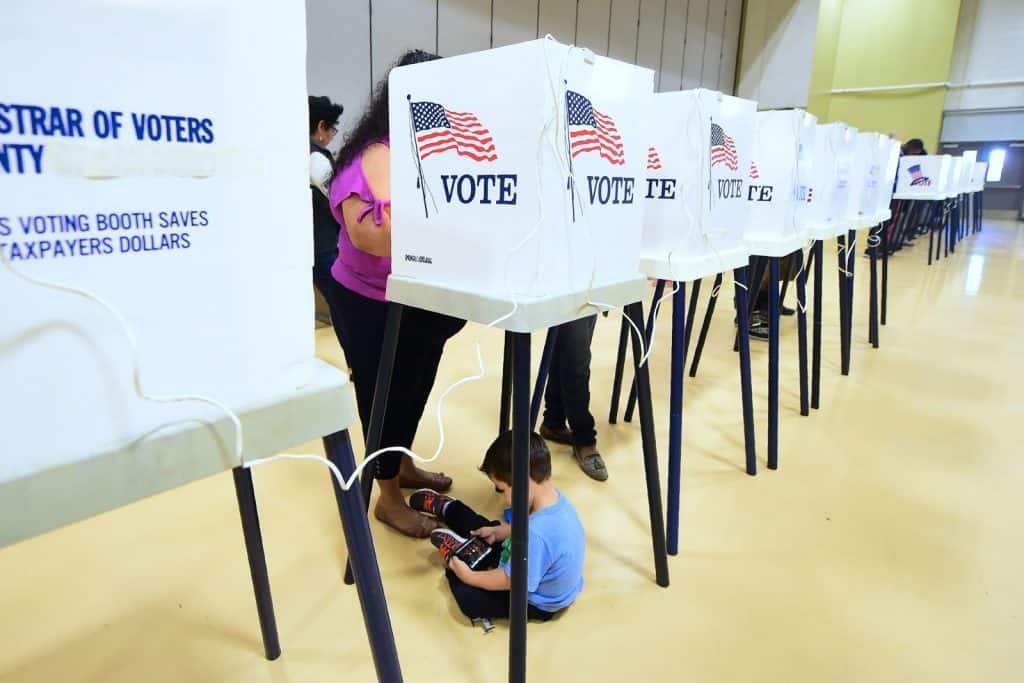
Voting machine security is still a sore point, but at least some vendors are starting to change their tune. ES&S chief Tom Burt has declared that his company will “no longer sell” paperless voting machines as the “primary” voting device for a given jurisdiction. It’s just too hard to conduct a “meaningful” audit of election results without a physical record, Burt said. He went so far as to ask the US Congress to mandate a paper record for all voters.

He also wanted laws dictating a “more robust” testing scheme run by vetted researchers, and to expand on existing advantages like a highly varied (and thus harder to compromise) infrastructure. While voting machines go undergo testing, they’re not necessarily secure enough to resist attacks “at any point in the process,” Burt said. There isn’t a standard for penetration tests, and legislation could help fix that.

The exec didn’t say how quickly the company would drop affected paperless models.

While it could take a while before this shift is noticeable (jurisdictions aren’t going to abruptly toss their existing machines), it’s a significant about-face. ES&S has been one of the strongest proponents of paperless voting, and only really started to rethink its position after Democrats started asking about major security lapses. Now, it’s pushing for paper backups — and that’s good news for anyone worried about attempts to hack upcoming elections, whether remotely or in person.