Archives for May 28, 2019

Stocks to Watch: Seacor Holdings Inc. (CKH) and Heritage Commerce Corp (HTBK) in the spotlight

The price of Seacor Holdings Inc. (NYSE:CKH) went up by $0.61 now trading at $42.77. Their shares witnessed a 23.51% increase from the 52-week low price of $34.63 they recorded on 2018-12-27. Even though it is still -35.49% behind the $57.95 high touched on 2018-07-26. The last few days have been rough for the stock, as its price has decreased by -4.04% during the week. It has also performed poorly over the past three months, as it lost around -11.1% while it has so far retreated around -18.19% during the course of a year. The stock of CKH recorded 15.59% uptrend from the beginning of this year till date. The 12-month potential price target for Seacor Holdings Inc. is set at $53. This target means that the stock has an upside potential to increase by 23.92% from the current trading price.

14 institutions entered new Seacor Holdings Inc. (NYSE:CKH) positions, 68 added to their existing positions in these shares, 57 lowered their positions, and 9 exited their positions entirely.

Seacor Holdings Inc. (CKH) trade volume has increased by 5.03% as around 66,302 shares were sold when compared with its 50-day average volume of traded shares which is 63,126. At the moment, CKH is witnessing a downtrend, as it is trading -4.28% below its 20-day SMA, -2.15% below its 50-day SMA, and -4.64% below its 200-day SMA. The company runs an ROE of roughly 9.2%, with financial analysts predicting that their earnings per share growth will be around 0% per annum for the next five year. This will be compared to the 5.4% increase witnessed over the past five years.

The first technical resistance point for Seacor Holdings Inc. (NYSE:CKH) will likely come at $43.08, marking a 0.72% premium to the current level. The second resistance point is at $43.39, about 1.43% premium to its current market price. On the other hand, inability to breach the immediate hurdles can drag it down to $42.05, the lower end of the range. CKH’s 14-day MACD is -1.3 and this negative figure indicates a downward trading trend. The company’s 14-day RSI (relative strength index) score is 41.62, which shows that its stock has been neutral. The 20-day historical volatility for the stock stands at 29.1 percent, which is high when compared to that of the 50-day’s 27.74 percent.

The shares of Heritage Commerce Corp (NASDAQ:HTBK) has increased by 2.34%, and now trading at $12.24 on the Wall Street in the intra-day deal, with their shares traded now around 205,691. This is a rise of 40,027 shares over the average 165,664 shares that were traded daily over the last three months. The stock that is trading at $12.24 went higher by 12.92% from its 52-week low of $10.84 that it attained back on 2018-12-27. The stock recorded a 52-week high of $18.1 nearly 355 days ago on 2018-06-07.

HTBK stock hasn’t performed well over the past 30 days, as it lost -3.09% while its price climbed by 7.94% year-to-date (YTD). Looking at the last few days, it has been good for the stock, as it rose 1.41% over the last week. The stock’s 12-month potential target price is now at $15.4. This means that the stock price might likely increase by 25.82% from its current trading price. 5 out of 6 Wall Street analysts which represents 83.33% rated the stock as a buy while the remaining 16.67% rated it as a hold, with 0% of analysts rating it as a sell.

Heritage Commerce Corp (NASDAQ:HTBK) has been utilizing an ROE that is roughly 10.7%, with stock analysts predicting that the company’s EPS for the next five years will go up by 7% per year, following the 18.4% raise that was witnessed during the past five years. The stock at the moment is on a downtrend, trading -0.31% below its 20-day SMA, -1.25% below its 50-day SMA, and -10.26% below its 200-day SMA. In percentage terms, the aggregate Heritage Commerce Corp shares held by institutional investors is 75.3%. 11 institutions jumped in to acquire Heritage Commerce Corp (HTBK) fresh stake, 51 added to their current holdings in these shares, 61 lowered their positions, and 13 left no stake in the company.

The stock’s 9-day MACD is -0.02 and this negative figure indicates a downward trading trend. The company’s 9-day RSI score is 50.43, which shows that its stock has been neutral. The 20-day historical volatility for the shares stand at 27.11 percent, which is less when compared to that of the 50-day’s 30.76 percent. On the daily chart, we see that the stock could reach the first level of resistance at $12.31, sporting a 0.57% premium to the current level. The next resistance point is at $12.37, representing nearly 1.05% premium to the current market price of Heritage Commerce Corp (HTBK). On the other hand, failure to breach the immediate hurdles can drag it down to $12.01, the lower end of the range.


Stocks to Watch: Eyes on Acuity Brands, Inc. (AYI), Flotek Industries, Inc. (FTK)

The price of Acuity Brands, Inc. (NYSE:AYI) went down by $-0.78 now trading at $135.51. Their shares witnessed a 30.95% increase from the 52-week low price of $103.48 they recorded on 2018-12-24. Even though it is still -27.67% behind the $173.01 high touched on 2018-09-21. The last few days have been good for the stock, as its price has grew by 0.33% during the week. It has also performed better over the past three months, as it added around 2.95% while it has so far climbed around 14.74% during the course of a year. The stock of AYI recorded 17.89% uptrend from the beginning of this year till date. The 12-month potential price target for Acuity Brands, Inc. is set at $149.11. This target means that the stock has an upside potential to increase by 10.04% from the current trading price.

69 institutions entered new Acuity Brands, Inc. (NYSE:AYI) positions, 224 added to their existing positions in these shares, 168 lowered their positions, and 46 exited their positions entirely.

Acuity Brands, Inc. (AYI) trade volume has decreased by -36.78% as around 242,583 shares were sold when compared with its 50-day average volume of traded shares which is 383,692. At the moment, AYI is witnessing a downtrend, as it is trading -4.07% below its 20-day SMA, -0.66% below its 50-day SMA, and 2.49% below its 200-day SMA. The company runs an ROE of roughly 19%, with financial analysts predicting that their earnings per share growth will be around 9.92% per annum for the next five year. This will be compared to the 21.1% increase witnessed over the past five years.

The first technical resistance point for Acuity Brands, Inc. (NYSE:AYI) will likely come at $136.98, marking a 1.07% premium to the current level. The second resistance point is at $138.44, about 2.12% premium to its current market price. On the other hand, inability to breach the immediate hurdles can drag it down to $133.9, the lower end of the range. AYI’s 14-day MACD is -1.89 and this negative figure indicates a downward trading trend. The company’s 14-day RSI (relative strength index) score is 41.18, which shows that its stock has been neutral. The 20-day historical volatility for the stock stands at 20.09 percent, which is low when compared to that of the 50-day’s 29.02 percent.

The shares of Flotek Industries, Inc. (NYSE:FTK) has increased by 0.33%, and now trading at $3.04 on the Wall Street in the intra-day deal, with their shares traded now around 252,910. This is a decline of -162,634 shares over the average 415,544 shares that were traded daily over the last three months. The stock that is trading at $3.04 went higher by 220% from its 52-week low of $0.95 that it attained back on 2018-12-24. The stock recorded a 52-week high of $3.68 nearly 27 days ago on 2019-05-01.

FTK stock hasn’t performed well over the past 30 days, as it lost -8.71% while its price climbed by 178.9% year-to-date (YTD). Looking at the last few days, it has been tough for the stock, as it tumbled -8.43% over the last week. The stock’s 12-month potential target price is now at $4. This means that the stock price might likely increase by 31.58% from its current trading price. 1 out of 2 Wall Street analysts which represents 50% rated the stock as a buy while the remaining 50% rated it as a hold, with 0% of analysts rating it as a sell.

Flotek Industries, Inc. (NYSE:FTK) has been utilizing an ROE that is roughly 0%, with stock analysts predicting that the company’s EPS for the next five years will go up by 10% per year, following the -31.1% drop that was witnessed during the past five years. The stock at the moment is on a downtrend, trading -10.34% below its 20-day SMA, -8.46% below its 50-day SMA, and 25.23% above its 200-day SMA. In percentage terms, the aggregate Flotek Industries, Inc. shares held by institutional investors is 61.2%. 15 institutions jumped in to acquire Flotek Industries, Inc. (FTK) fresh stake, 35 added to their current holdings in these shares, 49 lowered their positions, and 25 left no stake in the company.

The stock’s 9-day MACD is -0.19 and this negative figure indicates a downward trading trend. The company’s 9-day RSI score is 25.61, which shows that its stock has been oversold. The 20-day historical volatility for the shares stand at 35.71 percent, which is less when compared to that of the 50-day’s 38.39 percent. On the daily chart, we see that the stock could reach the first level of resistance at $3.11, sporting a 2.25% premium to the current level. The next resistance point is at $3.17, representing nearly 4.1% premium to the current market price of Flotek Industries, Inc. (FTK). On the other hand, failure to breach the immediate hurdles can drag it down to $2.95, the lower end of the range.

Canadian Utilities sells fossil fuel power assets for $835M

High voltage lines in Ontario are shown. Canadian Utilities has sold its fossil fuel assets in Ontario, Alberta, British Columbia and Saskatchewan.

Energy Capital Partners buys power plants in Alberta, Ontario, B.C.; SaskPower takes on Saskatoon assets

Eight months after announcing a strategic review of its power plants business, Canadian Utilities Ltd. has struck a deal to sell its entire Canadian fossil fuel-based electricity generation portfolio for about $835 million.

Heartland Generation Ltd., an affiliate of American investment firm Energy Capital Partners, has agreed to buy 11 partly or fully owned CUL natural gas-fired and coal-fired power plants with a total of 2,100 megawatts of capacity, the Calgary-based company announced Monday.

Nine of the plants are in Alberta and one each is in British Columbia and Ontario.

Included in the sales price is a separate deal to sell CUL’s 50 per cent stake in the Cory Cogeneration Station near Saskatoon to its partner, Saskatchewan government-owned SaskPower International, after it enacted its right to buy ahead of Heartland.

The deals leave CUL, which is 52 per cent owned by holding company Atco Ltd., with just 250 MW of generating capacity in five plants, one in Alberta, two in Australia and two in Mexico.

Plants in ‘latter stages’ of life

“The rationale [for the review] was really around the fact that these plants were entering into the latter stages of their lives,” said CEO Siegfried Kiefer in an interview.

“Many of them were becoming more and more un-contracted, so they were exposed to merchant power price fluctuations and so they started as a fleet to not match our investment criteria.”

The review process attracted a “healthy” amount of interest from potential buyers and the price was fair to both buyers and seller, he said.

The price received was in line with expectations, said Ben Pham of BMO Capital Markets, and clears the way for CUL to proceed with its $3.6-billion three-year capital spending plan.

The company’s strategy remains the same — to invest in long-life energy infrastructure assets that deliver predictable returns — although it may now look at more international projects and acquisition opportunities, Kiefer said.

He said the coal-fired plants in Alberta were being converted to natural gas and that process is expected to continue with the new owners.

CUL is also reviewing its 80 per cent ownership of the Alberta PowerLine electric transmission system and Kiefer said that process is going well.

The company reported adjusted earnings of $200 million in the first quarter of 2019, compared with $181 million in the same period of 2018.

Energy and industry lift TSX

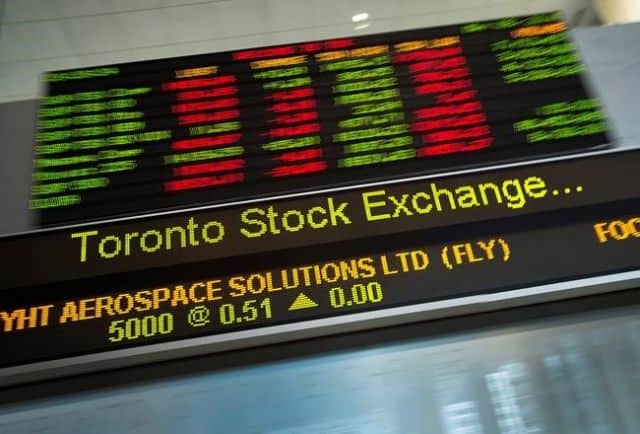
Canada’s main stock index was up in late-morning trading, helped by broad-based support led by the energy and industrial sectors.

The S&P/TSX composite index was up 46.34 points at 16,276.38.

U.S. stock markets were closed for the Memorial Day holiday.

The Canadian dollar traded for 74.39 cents US compared with an average of 74.37 cents US on Friday.

The July crude contract was down a penny at US$58.62 per barrel and the July natural gas contract was down four cents at US$2.57 per mmBTU.

The June gold contract was up US$1.00 at US$1,284.60 an ounce and the July copper contract was up 1.15 cents at US$2.71 a pound.

Trudeau ‘stacking the deck’

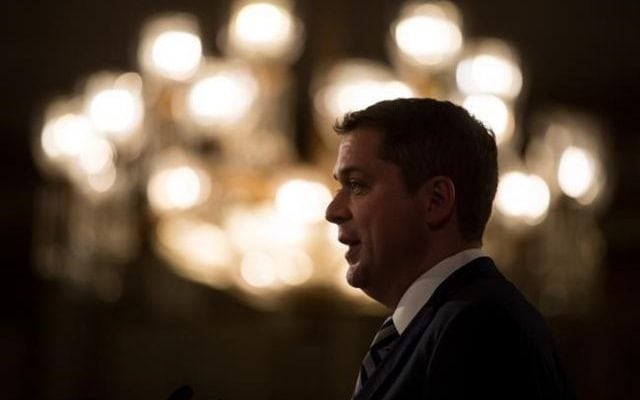
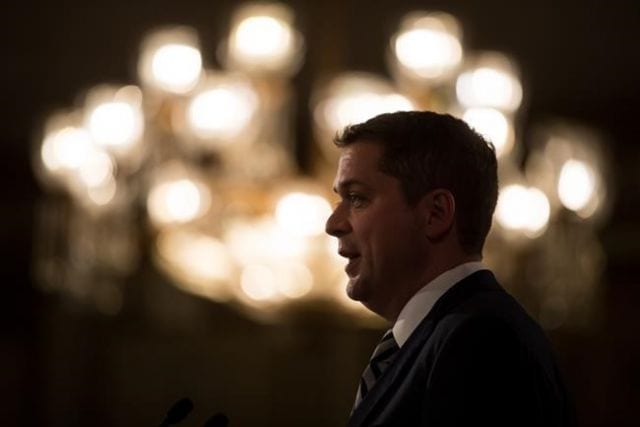
Conservative Leader Andrew Scheer says the Liberals’ decision to name an anti-Conservative union to a panel that will decide which media outlets receive government funding is the latest example of Prime Minister Justin Trudeau “stacking the deck” in his favour to get re-elected in October.

In an interview with The Canadian Press Sunday, Scheer said he believes the decision to include Unifor on the panel — which will determine eligibility for a $595-million bailout package — undermines the credibility of the panel’s work.

“There’s no reason for Unifor to be on this panel. They are a very aggressive, partisan group with very aggressive and partisan goals, even as late as a couple of days ago attacking Conservatives and me personally, and yet Justin Trudeau has decided to put this group on the panel,” Scheer said.

“That is completely unacceptable.”

Unifor has campaigned against the Conservative party and, in November, published tweets calling itself Scheer’s “worst nightmare.”

Earlier this week, the union’s national president Jerry Dias said the Conservative leader is trying to undermine confidence in a free and independent press by raising concern about Unifor’s presence on the panel. Dias compared Scheer’s tactics to those employed by U.S. President Donald Trump.

This further proves Unifor’s partisan leanings against his party and should disqualify the union from participating in the process, Scheer said.

Heritage Minister Pablo Rodriguez has defended Unifor’s place on the panel, saying the union has been included among other groups that represent journalists to ensure broad representation from the industry.

“Unifor is the single largest media union representing over 13,000 workers coming from a wide diversity of newspapers. We feel that putting the voice of journalists on this panel is essential. After all, who is best paced to advocate for the future of journalism than journalists themselves?” said Rodriguez’s spokesman Louis Belanger.

“Journalism is at the core of our democracy, but Conservatives aren’t one to miss an opportunity to attack its independence. They are into conspiracy theories and it’s insulting to the intelligence of Canadians and the professionalism of journalists.”

Belanger also noted the panel will not decide which organization gets what, but rather will advise on criteria that would be applied by a second panel, which has not yet been created.

But Scheer said he believes this move is indicative of a broader strategy by Trudeau in making decisions to give himself an upper hand in advance of the fall federal election.

Calgary city council votes down $70M small business grant program

Coun. Ward Sutherland apologized to the small business community for failing to come up with an effective plan.

Council voted 12-3 against giving small businesses up to $4,000 each

There will be no special assistance from city hall for Calgary businesses this year.

A proposed $70M grant program for small business has been defeated by city council in a 12-3 vote.

Mayor Naheed Nenshi, who voted for the grants, says he expects business owners will be disappointed.

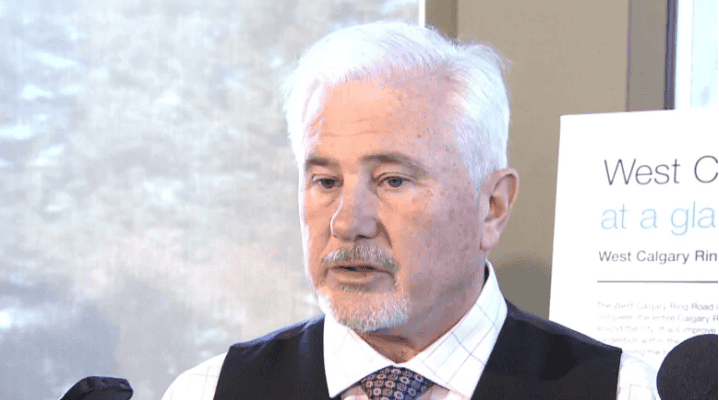
“It is frustrating and I can see how folks in the business community would be frustrated because council keeps saying ‘we got your back’ and yet seems unable to do things that actually have their back,” Nenshi said, adding that council ran out of time and options to craft something to help businesses.

Coun. Ward Sutherland, who also voted to provide the grants, apologized to the business community for the lack of action from council.

I would actually like to apologize to the business community that as a council we failed to address the issue,” Sutherland said. “It’s too late now. We don’t have the options. And at some point we’ve got to take responsibility. So my apologies.”

For the past two years, council gave rebates to the owners of business properties to limit the size of tax hikes they faced.

However, the program was deemed inefficient; it helped the property owner but not the businesses at those properties.

This year, the city proposed giving up to $4,000 to small businesses that would apply for a grant.

Business groups panned the idea. Some council members weren’t comfortable with the city picking who gets the cash.

“That is very disappointing,” tweeted Richard Truscott, vice president for Canadian Federation of Independent Business, Alberta and B.C. “Council dithered and delayed, & never landed on any short-term solution. As a result, a large number of #yyc#smallbiz will be facing huge property tax bills in June.”

A task force which will make recommendations to council this fall on how the $70 million could be used to help businesses, likely next year.