Archives for May 28, 2019

Intel’s 10th-gen Core CPUs will let you game on ultraportables

Intel finally unveils its long-awaited 10nm “Ice Lake” CPUs.

It was just about a month ago that Intel showed off its powerful new 9th-gen laptop CPUs, but now it’s finally ready to talk about its upcoming “Ice Lake” 10nm chips. For one, they’re officially known as 10th-gen Core. And they won’t be taking much limelight away from those beefier laptop chips, as Intel is focusing on ultraportables first with U-series processors. 10th-gen CPUs will be available in Core i3, i5, and i7 variants, as you’d expect. And, just like Intel already teased, they’ll feature its powerful new 11th-gen “Iris Plus” integrated graphics which are fast enough to run games decently in 1080p.

Intel 10th Gen Core

The heart of the 10th-gen CPUs is Intel’s Sunny Cove architecture, which features a quad-core, eight-thread design and speeds up to 4.1GHz. In comparison, the 8th-gen i7-8565U scaled up to 4.6GHz, while the previous i5 and i3 CPUs topped out at 3.9 GHz. We don’t have the full breakdown of specs for the new chips yet, but they definitely don’t seem like a downgrade. Intel claims Sunnycove can handle 18 percent more instructions per clock (IPC) than before, which means they’ll do a lot more at equivalent clock speeds. The company is also touting other architecture upgrades that should improve performance. That includes a much larger L1 and L2 cache; more execution ports (for handling more work at once); and better branch prediction (for anticipating tasks).

These improvements are a bit tougher to grasp than just boosting clock speeds, but the end result should be faster perceived performance for users. And, of course, there are some more direct speed improvements with the new 11th generation graphics, which features over a teraflop worth of performance with 64 execution units and a clock speed up to 1.1GHz. In comparison, Intel’s previous UHD 620 graphics only had 24 execution units.

As we previously saw, Iris Plus can achieve over 70 FPS in CS:Go while playing in 1080p, compared to around 45FPS from before. According to Intel’s stats, it’ll get close to 60FPS in Rocket League at the same resolution, and over 30FPS for Fortnite. With the previous graphics, Fortnite was barely playable in 1080p.

Intel

Outside of games, Iris Plus Graphics also adds support for VESA’s adaptive sync standard, which should reduce screen tearing and smooth out performance on supported displays. Additionally, it’ll offer video encoding acceleration for HEVC/VP9 4K/60FPS content and even 8K at 30FPS. You’ll be able to take advantage of those encoders in apps like Adobe Premiere and Cyberlink PowerDirector, something that seemed unimaginable with integrated graphics a year ago. And, as a nice bonus, there’s direct support for HDR and Dolby Vision playback, as well as better power efficiency.

You can also look forward to faster AI computation in 10th-gen CPUs. The new Core i7 is around two and a half times faster than last year’s when processing images through the ResNet-50 deep learning interface. In real-world usage, that means the new processors will be faster at things like semantic search in Microsoft Photos, which relies on local AI to sort images. During Intel’s Computex keynote, the company also showed off how the AI capabilities could help sharpen blurry video footage almost instantly.

As for other upgrades, the 10th-gen chips will include WiFi 6/802.11ax, which offers around 40 percent faster speeds than AC wireless, and far better performance in congested areas. There’s also Thunderbolt 3 support, as expected.
Intel 10th Gen Core

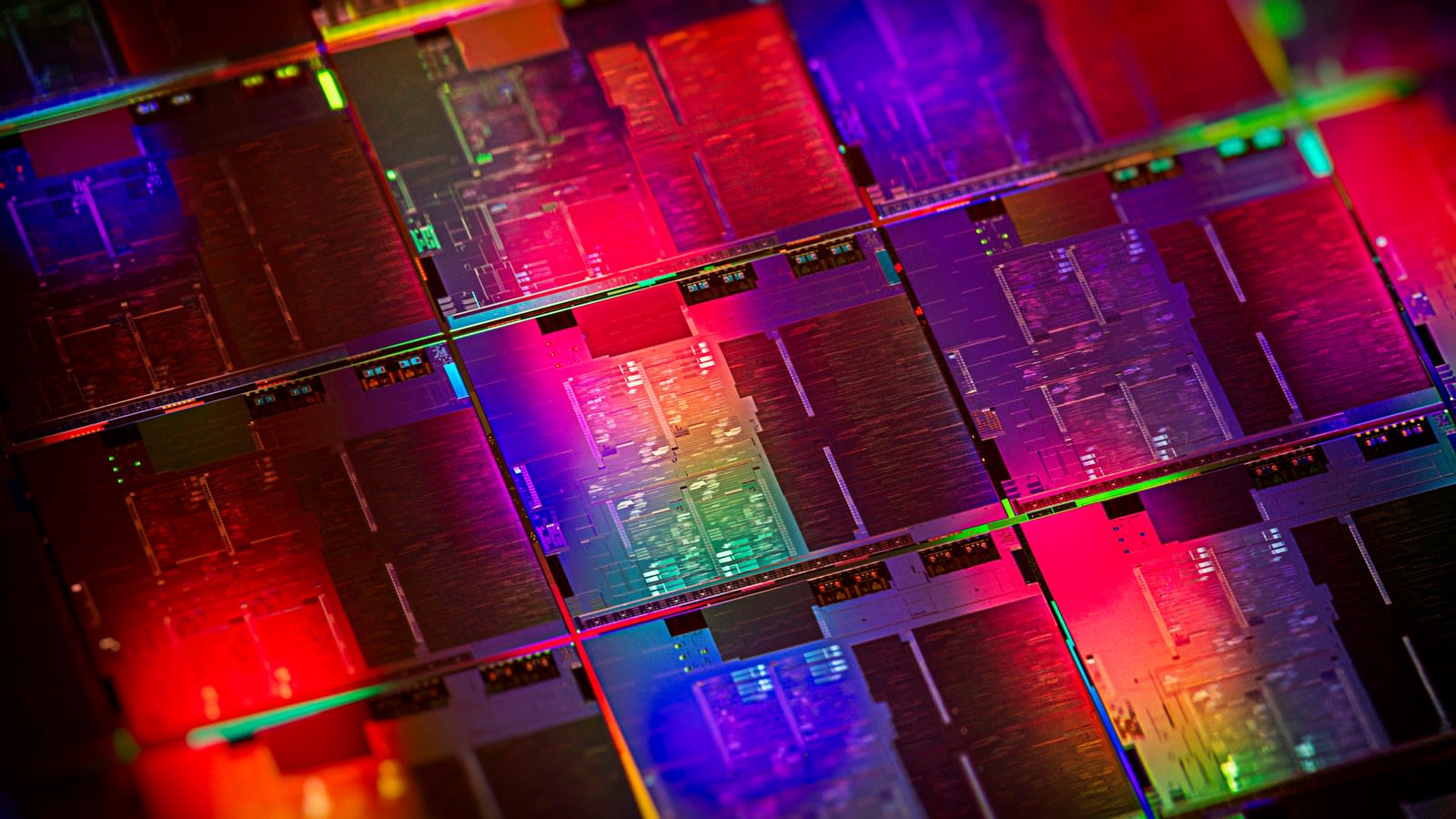
While it’s a bit tough to get excited over ultraportable laptop CPUs these days, Intel’s 10th-gen chips seem like a more fully-featured upgrade than previous generations. The jump to 10nm is a big part of that, allowing the company to craft a more efficient architecture that’s not just focused on chasing faster clock speeds. And together with the massive leap in graphics quality, these new processors will ultimately let thin and light laptops do more than ever before. It’s no wonder Intel has started a new initiative for next-generation laptops in Project Athena — all of a sudden, we can expect a lot more from notebooks.
Here are all the laptops getting NVIDIA’s new Quadro RTX graphics

If you’re looking for top-tier graphics, this is where your money needs to go.

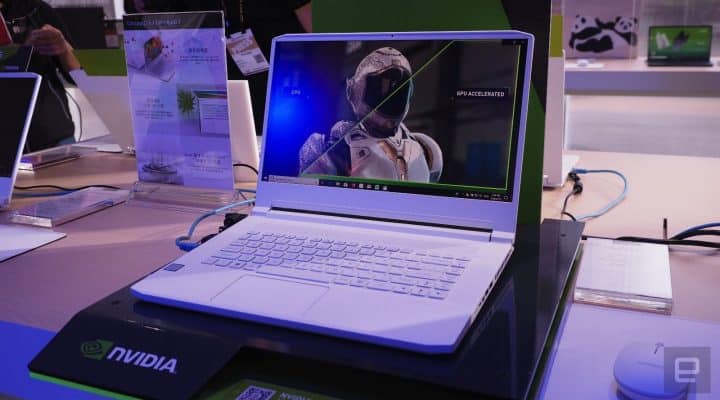
After NVIDIA revealed its Quadro RTX 5000 designed for laptops, a number of manufacturers have announced machines that’ll pack the new gear. Acer, ASUS, MSI, HP and Razer have all launched machines that offer the most powerful in professional, mobile graphics hardware. Here’s a brief run-down of what’s going to be available in the near future, and how much you can expect to pay for it. Now, these aren’t all of the “RTX Studio” laptops, which NVIDIA is using as branding for all devices that it will supply special drivers for. These are just the models packing, specifically, the new Quadro RTX 5000 GPU.

Acer

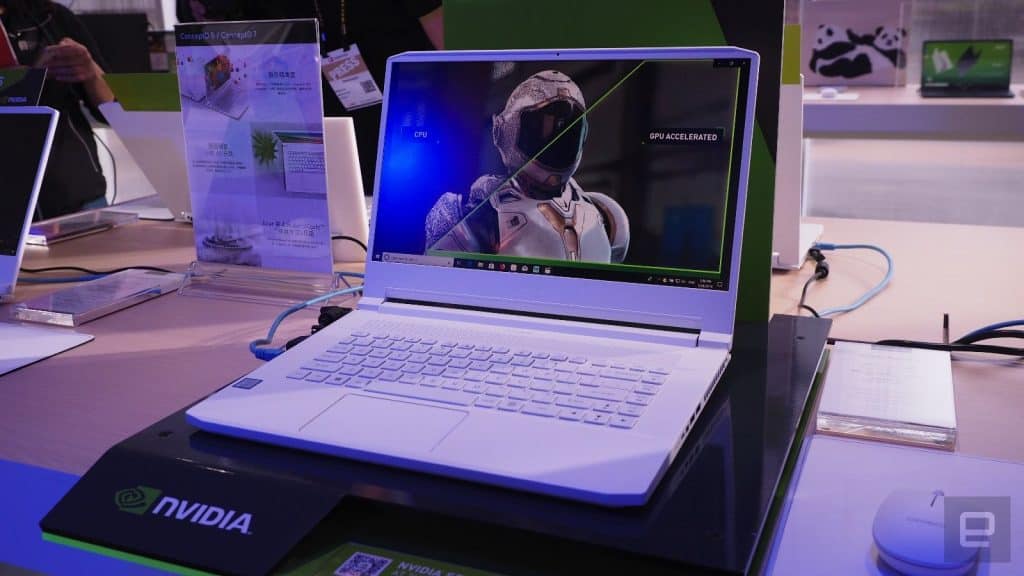
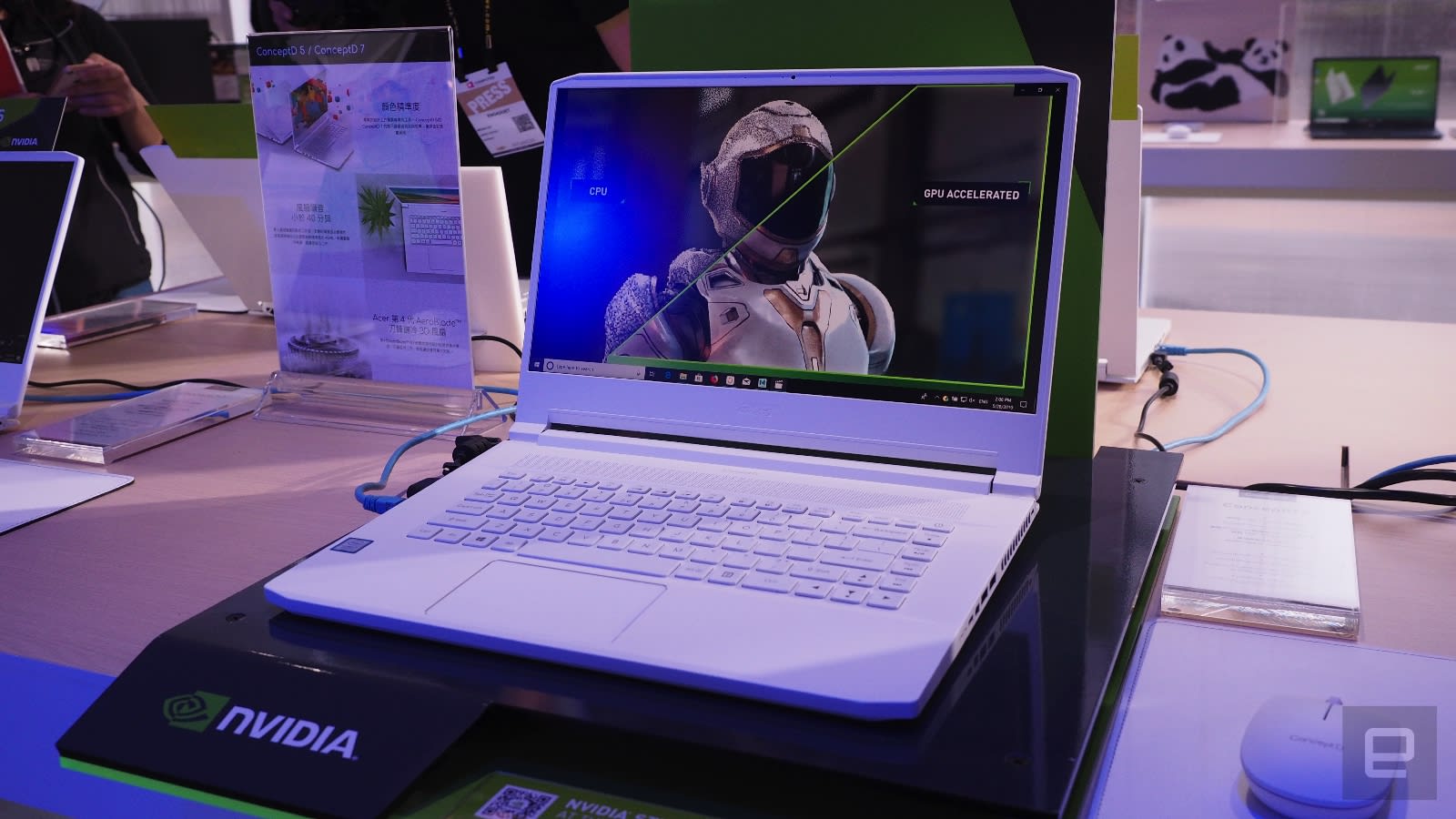
Acer ConceptD 7

The 15.6-inch Acer ConceptD 7, built to coax designer types away from the MacBook Pro, will pack the Quadro RTX 5000. NVIDIA also says that the ConceptD 9, with its fancy tilting display, will also get the new silicon, although Acer itself hasn’t confirmed that yet. Since the machines were only announced in April, Acer hasn’t felt the need to make any changes to the spec list. On the ConceptD 7, that means you’ll get the same ninth-generation Core i7, 32GB RAM, 1TB HDD and the 15.6-inch, Pantone-validated 4K display.

Price and Availability: To be announced.

ASUS

ASUS StudioBook

ASUS is launching the StudioBook 700G3T and the W500, both of which can be bought with a Quadro RTX 5000 GPU option. We have specs for the W500, which include a ninth-generation Core i7-9750H, 32GB RAM, and 1TB storage. That’s about all we know, for now, apart from the fact that the W500 measures in at 18.9 x 360 x 252mm and weighs 4.4 pounds.

Price and Availability: To be announced.

HP

HP

HP’s Zbook 15 G6 and Zbook 17 G6 will both get the new Quadro, as well as the choice of a ninth-generation Intel Core or Xeon CPU. For these enterprise-centric machines, the standout feature is the ability to swap out the memory and storage without the need for tools. And the larger of the pair offers “un-throttled performance” in simulation and GPU rendering, as well as a 100% DPI-P3 color gamut display.

Price and Availability: At some point in July, at an as-yet unspecified price.

MSI

MSI

MSI will include the RTX 5000 inside its line of workstation laptops, including its line-leading WS65 which is powered by a ninth-generation Core i9. The new models get a slimmer design and 4K display, as well as the promise that the hardware will meet Military Standard 810G for durability.

Price and Availability: Early next month, and already available to pre-order, for $3,500.

Razer

Razer

Razer has upgraded both its Blade 15 and Blade Pro 17 with the Quadro RTX 5000, and used the opportunity to make some other tweaks. That includes a new Mercury White finish to the bodies and more powerful CPU options. At first blush, both models resemble an old-school PowerBook G4, especially with the lighter shade on its bodies, and frankly, we’re here for it.

Price and Availability: To be announced.

Apple finally updates the iPod touch with an A10 chip

There’s also a 256GB option, but it’s the same on the outside.

No, your eyes aren’t deceiving you — after four long years, Apple has updated the iPod touch. The new version packs a much faster A10 Fusion chip that can keep up with modern iOS experiences like group FaceTime calls and augmented reality, not to mention newer mobile games. Apple has also given the storage a much-needed boost, with a new 256GB version joining the mix for those who need to hold absolutely everything.

Those of you who were hoping for a redesign, however, will be disappointed. The new iPod (that’s still very strange to write) is identical on the outside — same shape, same four-inch screen, same cameras. You even have the old-school home button instead of Touch ID. That’s not a huge knock for a device that’s meant for kids, the car or the gym, but it’s a reminder that the iPod isn’t exactly a high priority in an era of iPhones and Apple Watches.

It’s relatively inexpensive, at least. The refreshed iPod touch is available now for $199 with a 32GB capacity, $299 for 128GB and $399 for the range-topping 256GB model. That could be considered a lot when not much has changed, but look at it this way: it’s still the most affordable way into the iOS ecosystem, and it makes more sense with the kid-friendly Apple Arcade service on the horizon.

Sony built an IoT chip with a 60 mile range

It will use Sony’s proprietary low-power wide area (LPWA) network launching this fall.

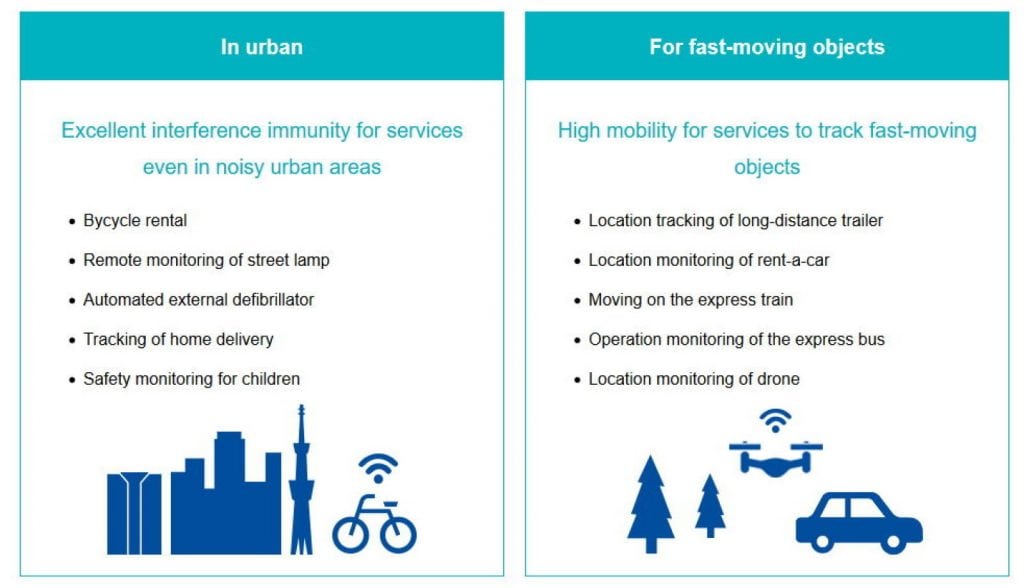
Sony is quietly launching a chip that could change how e-bikes, cars, street lamps and all kinds of other connected devices can relay information. The module, when installed on any IoT object, will allow it send data to Sony’s proprietary low-power wide area (LPWA) ELTRES network launching this fall. It can transmit up to about 60 miles and work in noisy urban environments on objects moving at high speeds, opening up a lot of new applications in security, monitoring, tracking and more.

Most IoT systems use the internet to transfer data to the cloud, either via WiFi with very limited range, or an expensive cellular data connection. Sony’s ELTRES LPWA network harnesses low-power wireless technology to transfer low-bit data across a wide area, with lower power consumption, making it feasible to connect a wide range of devices.

The CXM1501GR chip transmits signals in the 920MHz band to Sony’s ELTRES network, and is also equipped with GPS/GNSS sensors to obtain time and position data. Sony said it’ll work in a “broad range of IoT devices, aiming to develop various services making the most of stable wireless communications over long distances and while moving at high speeds, thereby creating a new market.”

In a use case document, Sony said the tech could be used to “help friends find each other at a ski hill,” track wildlife, geolocate ships, follow yacht races, monitor bike rentals, while tracking numerous things like drones, rental cars and trains.

The technology appears to be limited to Japan for now, where Sony recently launched an application program for interested companies. It plans to build out the network there and do extensive testing. If it works out, it could make things much more connected than they are now, with all the good — and bad — that entails.

Stocks to Watch: Eyes on Franklin Street Properties Corp. (FSP), Aytu Bioscience, Inc. (AYTU)

The price of Franklin Street Properties Corp. (NYSE:FSP) went up by $0.08 now trading at $7.54. Their shares witnessed a 28.45% increase from the 52-week low price of $5.87 they recorded on 2018-12-26. Even though it is still -22.28% behind the $9.22 high touched on 2018-08-01. The last few days have been rough for the stock, as its price has decreased by -1.95% during the week. It has also performed better over the past three months, as it added around 0.94% while it has so far retreated around -5.16% during the course of a year. The stock of FSP recorded 21.03% uptrend from the beginning of this year till date. The 12-month potential price target for Franklin Street Properties Corp. is set at $8. This target means that the stock has an upside potential to increase by 6.1% from the current trading price.

14 institutions entered new Franklin Street Properties Corp. (NYSE:FSP) positions, 85 added to their existing positions in these shares, 88 lowered their positions, and 34 exited their positions entirely.

Franklin Street Properties Corp. (FSP) trade volume has decreased by -1.4% as around 340,633 shares were sold when compared with its 50-day average volume of traded shares which is 345,484. At the moment, FSP is witnessing a downtrend, as it is trading -2.27% below its 20-day SMA, -0.06% below its 50-day SMA, and 0.15% below its 200-day SMA. The company runs an ROE of roughly 1.2%, with financial analysts predicting that their earnings per share growth will be around 0% per annum for the next five year. This will be compared to the -7.9% decrease witnessed over the past five years.

The first technical resistance point for Franklin Street Properties Corp. (NYSE:FSP) will likely come at $7.64, marking a 1.31% premium to the current level. The second resistance point is at $7.75, about 2.71% premium to its current market price. On the other hand, inability to breach the immediate hurdles can drag it down to $7.41, the lower end of the range. FSP’s 14-day MACD is -0.12 and this negative figure indicates a downward trading trend. The company’s 14-day RSI (relative strength index) score is 45.71, which shows that its stock has been neutral. The 20-day historical volatility for the stock stands at 20.2 percent, which is low when compared to that of the 50-day’s 26.11 percent.

The shares of Aytu BioScience, Inc. (NASDAQ:AYTU) has increased by 1.07%, and now trading at $1.89 on the Wall Street in the intra-day deal, with their shares traded now around 86,231. This is a decline of -651,933 shares over the average 738,164 shares that were traded daily over the last three months. The stock that is trading at $1.89 went higher by 177.94% from its 52-week low of $0.68 that it attained back on 2018-12-24. The stock recorded a 52-week high of $10.38 nearly 349 days ago on 2018-06-13.

AYTU stock hasn’t performed well over the past 30 days, as it lost -4.06% while its price climbed by 138.52% year-to-date (YTD). Looking at the last few days, it has been tough for the stock, as it tumbled -0.53% over the last week. The stock’s 12-month potential target price is now at $7. This means that the stock price might likely increase by 270.37% from its current trading price. 2 out of 2 Wall Street analysts which represents 100% rated the stock as a buy while the remaining 0% rated it as a hold, with 0% of analysts rating it as a sell.

Aytu BioScience, Inc. (NASDAQ:AYTU) has been utilizing an ROE that is roughly -81%, with stock analysts predicting that the company’s EPS for the next five years will go down by 0% per year, following the 53.3% raise that was witnessed during the past five years. The stock at the moment is on a downtrend, trading -9.05% below its 20-day SMA, -2.26% below its 50-day SMA, and 2.43% above its 200-day SMA. In percentage terms, the aggregate Aytu BioScience, Inc. shares held by institutional investors is 18.8%. 4 institutions jumped in to acquire Aytu BioScience, Inc. (AYTU) fresh stake, 7 added to their current holdings in these shares, 7 lowered their positions, and 7 left no stake in the company.

The stock’s 9-day MACD is -0.03 and this negative figure indicates a downward trading trend. The company’s 9-day RSI score is 40.95, which shows that its stock has been neutral. The 20-day historical volatility for the shares stand at 59.53 percent, which is less when compared to that of the 50-day’s 82.14 percent. On the daily chart, we see that the stock could reach the first level of resistance at $1.96, sporting a 3.57% premium to the current level. The next resistance point is at $2.02, representing nearly 6.44% premium to the current market price of Aytu BioScience, Inc. (AYTU). On the other hand, failure to breach the immediate hurdles can drag it down to $1.78, the lower end of the range.

Stocks to Watch: Eyes on Indepence Contract Drilling, Inc. (ICD), Toyota Motor Corporation (TM)

The price of Independence Contract Drilling, Inc. (NYSE:ICD) went down by $-0.09 now trading at $2.47. Their shares witnessed a -0.4% increase from the 52-week low price of $2.48 they recorded on 2019-05-24. Even though it is still -104.45% behind the $5.05 high touched on 2018-10-09. The last few days have been rough for the stock, as its price has decreased by -10.51% during the week. It has also performed poorly over the past three months, as it lost around -24.92% while it has so far retreated around -50.6% during the course of a year. The stock of ICD recorded -20.83% downtrend from the beginning of this year till date. The 12-month potential price target for Independence Contract Drilling, Inc. is set at $5.5. This target means that the stock has an upside potential to increase by 122.67% from the current trading price.

8 institutions entered new Independence Contract Drilling, Inc. (NYSE:ICD) positions, 41 added to their existing positions in these shares, 26 lowered their positions, and 8 exited their positions entirely.

Independence Contract Drilling, Inc. (ICD) trade volume has decreased by -38.44% as around 110,570 shares were sold when compared with its 50-day average volume of traded shares which is 179,614. At the moment, ICD is witnessing a downtrend, as it is trading -10.78% below its 20-day SMA, -12.9% below its 50-day SMA, and -29.34% below its 200-day SMA. The company runs an ROE of roughly -5.9%, with financial analysts predicting that their earnings per share growth will be around 7% per annum for the next five year. This will be compared to the -36.8% decrease witnessed over the past five years.

The first technical resistance point for Independence Contract Drilling, Inc. (NYSE:ICD) will likely come at $2.61, marking a 5.36% premium to the current level. The second resistance point is at $2.76, about 10.51% premium to its current market price. On the other hand, inability to breach the immediate hurdles can drag it down to $2.26, the lower end of the range. ICD’s 14-day MACD is -0.15 and this negative figure indicates a downward trading trend. The company’s 14-day RSI (relative strength index) score is 34.11, which shows that its stock has been neutral. The 20-day historical volatility for the stock stands at 50.29 percent, which is high when compared to that of the 50-day’s 49.14 percent.

The shares of Toyota Motor Corporation (NYSE:TM) has increased by 0.92%, and now trading at $118.55 on the Wall Street in the intra-day deal, with their shares traded now around 121,215. This is a decline of -21,535 shares over the average 142,750 shares that were traded daily over the last three months. The stock that is trading at $118.55 went higher by 6.69% from its 52-week low of $111.12 that it attained back on 2018-12-26. The stock recorded a 52-week high of $137.56 nearly 351 days ago on 2018-06-11.

TM stock hasn’t performed well over the past 30 days, as it lost -3.77% while its price climbed by 2.13% year-to-date (YTD). Looking at the last few days, it has been good for the stock, as it rose 0.13% over the last week. The stock’s 12-month potential target price is now at $148.85. This means that the stock price might likely increase by 25.56% from its current trading price. 2 out of 2 Wall Street analysts which represents 100% rated the stock as a buy while the remaining 0% rated it as a hold, with 0% of analysts rating it as a sell.

Toyota Motor Corporation (NYSE:TM) has been utilizing an ROE that is roughly 9.7%, with stock analysts predicting that the company’s EPS for the next five years will go up by 17.5% per year, following the 2.3% raise that was witnessed during the past five years. The stock at the moment is on a downtrend, trading -1.76% below its 20-day SMA, -2.09% below its 50-day SMA, and -1.85% below its 200-day SMA. In percentage terms, the aggregate Toyota Motor Corporation shares held by institutional investors is 0.8%. 37 institutions jumped in to acquire Toyota Motor Corporation (TM) fresh stake, 127 added to their current holdings in these shares, 147 lowered their positions, and 33 left no stake in the company.

The stock’s 9-day MACD is -0.85 and this negative figure indicates a downward trading trend. The company’s 9-day RSI score is 42.02, which shows that its stock has been neutral. The 20-day historical volatility for the shares stand at 13.37 percent, which is more when compared to that of the 50-day’s 13.06 percent. On the daily chart, we see that the stock could reach the first level of resistance at $118.94, sporting a 0.33% premium to the current level. The next resistance point is at $119.33, representing nearly 0.65% premium to the current market price of Toyota Motor Corporation (TM). On the other hand, failure to breach the immediate hurdles can drag it down to $117.65, the lower end of the range.