
Archives for May 17, 2019

LG’s custom chip is made to power AI in appliances and robots

INCHEON AIRPORT, SEOUL, SOUTH KOREA – 2018/06/12: Cleaning robot from LG on display at Incheon International Airport in Seoul / South Korea. The cleaning Robot, is LG’s latest addition to the international robot market.

The Neural Engine handles voice and image recognition, as well as security.

For the last few years LG has been pushing integration of AI features in all kinds of products with its ThinQ brand, and now it’s designed custom hardware to enable on-device AI processing in “future robot vacuum cleaners, washing machines, refrigerator and even air conditioners.”

Google and Apple both use custom AI hardware (Pixel Visual Core and the A12 Bionic’s Neural Engine) in their phones, Tesla has unveiled its own processor to handle self-driving features and Amazon is reportedly working on a chip to help Alexa processing work offline. These “neural processing units” have had a lot of hype, but being able to handle complex tasks without a cloud connection could come in handy.

Similarly, the LG Neural Engine is intended to process image and voice data even when it’s not connected to the cloud. That means a device with the chip could recognize its environment and adjust settings accordingly, navigate through a place it hasn’t been before and understand a user’s commands in natural language — all offline. LG also claims powerful security is built in — with all the data it takes in, resisting hackers who could remotely control a unit or use your washing machine’s sensors to violate your privacy would an unwanted outcome.

The Korean company has been investing heavily in AI, most recently opening a new research lab in Toronto to follow its other North American location in Silicon Valley, so while this may be a first, it’s definitely not the last thing we’ll hear about LG and AI.


Boeing says its 737 Max software update is complete

A Boeing 737 MAX 8 jetliner being built for Turkish Airlines takes off on a test flight, Wednesday, May 8, 2019, in Renton, Wash. Passenger flights using the plane remain grounded worldwide as investigations into two fatal crashes involving the airplane continue.

It still needs FAA certification.

Today, Boeing announced that it has completed the software update to its 737 Max planes. The update is meant to correct the software flaws that contributed to the Lion Air and Air Ethiopia crashes that killed 346 people in total. The update was expected in April, but Boeing needed extra time to guarantee that it had “identified and appropriately addressed” the problems that led to those crashes.

The FAA tentatively approved the updates in March, but the software still needs to undergo FAA testing in order to receive certification. At the moment, Boeing is providing the FAA with additional information, including details on how pilots interact with the airplane controls and displays in different flight scenarios. “We’re committed to providing the FAA and global regulators all the information they need, and to getting it right,” Boeing’s CEO Dennis Muilenburg said in a statement.

As previously reported, the updated anti-stall Maneuvering Characteristics Augmentation System (MCAS) will compare data from both of the plane’s angle-of-attack sensors, rather than just one. If there’s a discrepancy of 5.5 degrees or more, the system won’t kick in. And, in the event of an incident, crews will be able to counteract the system if necessary. Boeing says it has flown the 737 Max with the updated MCAS software for more than 360 hours on 207 test flights. It also conducted simulator testing, and it will participate in a series of global customer conferences before the planes are cleared for flight.

NASA teams up with SpaceX, Blue Origin to design a human lunar lander

It will take astronauts to the moon’s surface and back up to the Gateway lunar base.

NASA has revealed its efforts to create a human landing system shortly after it announced the Artemis lunar exploration program. The space agency has teamed up with 11 private space companies, including SpaceX and Blue Origin, to conduct studies and build prototypes of a lander that can carry astronauts to the surface of the moon. NASA is awarding the companies a total of $45.5 million to work on the project over the next six months under the Next Space Technologies for Exploration Partnerships program.

The agency is hoping the initiative could lead to the development of a human landing system that includes a transfer vehicle astronauts can use from its proposed orbital moon base called the Gateway to low-lunar orbit. In addition, the lander must also have a descent element that can carry the astronauts to the lunar surface and an ascent element that can ferry them back up to the Gateway. Finally, NASA wants the lander and its components to have refueling abilities to make them reusable.

Some of the participants will work on all those elements, while others will only work on one or two. SpaceX, for instance, is only conducting one study on the descent element. Blue Origin, on the other hand, will conduct a descent element study, a transfer vehicle study and will also build a transfer vehicle prototype.

A few days ago, the administration has submitted an amendment to the fiscal 2020 budget that would add another $1.6 billion to the $10.7 billion budget set aside to take the first woman and the next man to the moon by 2024. Called the Artemis exploration project, the mission is meant to carry American astronauts to the moon’s south pole in five years’ time and to establish our presence on Earth’s natural satellite by 2028.

Garmin’s latest GPS is designed for off-road explorers

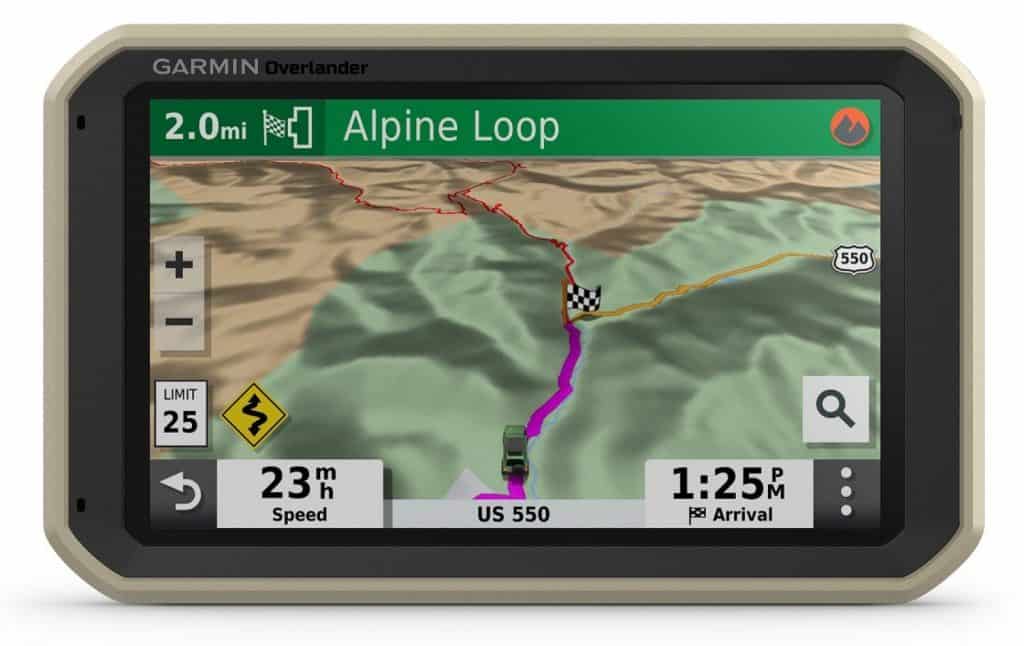
Overlander

With GPS now a basic cell phone feature, and more vehicles rolling off the production lines with built-in satnav systems, the role of standalone satellite-navigation devices is diminishing. Why have an extra bit of kit in your car that needs additional maintenance? But Garmin thinks there’s still a place for them, particularly in the world of off-roading and overlanding.

Today, the company has announced the all-terrain Garmin Overlander, an all-in-one GPS designed for people who want to explore the remote regions of the great outdoors. It comes with built-in topography maps for off-grid guidance covering public land boundaries and 4×4 roads in North and South America. The seven-inch touchscreen color device also comes preloaded with adventure-specific points of interest and campground locations, all available without cell signal.

Traversing these kinds of roads isn’t always for the faint-hearted, so it comes with a bunch of safety features, too. An in-built mini satellite communicator will let you send and receive text messages wherever you are, and you can transmit interactive SOS distress signals at the touch of a button. The Overlander also offers custom routing based on your vehicle’s dimensions, and comes with integrated pitch and roll gauges, a digital compass and a barometric altimeter. And if you just can’t do without your usual tech, the corresponding Garmin explore app lets you wirelessly sync your routes, waypoints and tracks from the device straight to your smartphone.

Of course, the Overlander isn’t going to appeal to all drivers, but for those with a taste for overlanding it packs in a whole heap of features that are still way beyond a smartphone’s paygrade. With a suggested retail price of $700 it’s not cheap, but then again, what price can you put on adventure?

Stocks to Watch: Eyes on Aqua Metals, Inc. (AQMS), Summit Materials, Inc. (SUM)

The price of Aqua Metals, Inc. (NASDAQ:AQMS) went down by $0 now trading at $2.04. Their shares witnessed a 38.78% increase from the 52-week low price of $1.47 they recorded on 2018-12-27. Even though it is still -112.25% behind the $4.33 high touched on 2019-03-18. The last few days have been rough for the stock, as its price has decreased by -20.62% during the week. It has also performed poorly over the past three months, as it lost around -19.69% while it has so far retreated around -35.85% during the course of a year. The stock of AQMS recorded 12.09% uptrend from the beginning of this year till date. The 12-month potential price target for Aqua Metals, Inc. is set at $10.67. This target means that the stock has an upside potential to increase by 423.04% from the current trading price.

16 institutions entered new Aqua Metals, Inc. (NASDAQ:AQMS) positions, 33 added to their existing positions in these shares, 24 lowered their positions, and 7 exited their positions entirely.

Aqua Metals, Inc. (AQMS) trade volume has increased by 23.79% as around 880,829 shares were sold when compared with its 50-day average volume of traded shares which is 711,544. At the moment, AQMS is witnessing a downtrend, as it is trading -16.8% below its 20-day SMA, -31.88% below its 50-day SMA, and -20.2% below its 200-day SMA. The company runs an ROE of roughly -75.6%, with financial analysts predicting that their earnings per share growth will be around 35% per annum for the next five year. This will be compared to the 0% decrease witnessed over the past five years.

The first technical resistance point for Aqua Metals, Inc. (NASDAQ:AQMS) will likely come at $2.09, marking a 2.39% premium to the current level. The second resistance point is at $2.13, about 4.23% premium to its current market price. On the other hand, inability to breach the immediate hurdles can drag it down to $1.85, the lower end of the range. AQMS’s 14-day MACD is -0.3 and this negative figure indicates a downward trading trend. The company’s 14-day RSI (relative strength index) score is 31.78, which shows that its stock has been neutral. The 20-day historical volatility for the stock stands at 95.84 percent, which is high when compared to that of the 50-day’s 85.21 percent.

The shares of Summit Materials, Inc. (NYSE:SUM) has increased by 3.52%, and now trading at $17.06 on the Wall Street in the intra-day deal, with their shares traded now around 1,308,994. This is a decline of -432,274 shares over the average 1,741,268 shares that were traded daily over the last three months. The stock that is trading at $17.06 went higher by 51.64% from its 52-week low of $11.25 that it attained back on 2018-12-24. The stock recorded a 52-week high of $29.81 nearly 365 days ago on 2018-05-17.

SUM stock has performed well over the past 30 days, as it added 7.09% while its price climbed by 37.58% year-to-date (YTD). Looking at the last few days, it has been good for the stock, as it rose 5.24% over the last week. The stock’s 12-month potential target price is now at $19.35. This means that the stock price might likely increase by 13.42% from its current trading price. 12 out of 16 Wall Street analysts which represents 75% rated the stock as a buy while the remaining 25% rated it as a hold, with 0% of analysts rating it as a sell.

Summit Materials, Inc. (NYSE:SUM) has been utilizing an ROE that is roughly 1.4%, with stock analysts predicting that the company’s EPS for the next five years will go up by 66.16% per year, following the 19.3% raise that was witnessed during the past five years. The stock at the moment is on a uptrend, trading 2.66% above its 20-day SMA, 3.85% above its 50-day SMA, and 4.35% above its 200-day SMA. In percentage terms, the aggregate Summit Materials, Inc. shares held by institutional investors is 34.89%. 37 institutions jumped in to acquire Summit Materials, Inc. (SUM) fresh stake, 107 added to their current holdings in these shares, 94 lowered their positions, and 30 left no stake in the company.

The stock’s 9-day MACD is 0.2 and this positive figure indicates an upward trading trend. The company’s 9-day RSI score is 57.9, which shows that its stock has been neutral. The 20-day historical volatility for the shares stand at 45.4 percent, which is more when compared to that of the 50-day’s 43.16 percent. On the daily chart, we see that the stock could reach the first level of resistance at $17.34, sporting a 1.61% premium to the current level. The next resistance point is at $17.61, representing nearly 3.12% premium to the current market price of Summit Materials, Inc. (SUM). On the other hand, failure to breach the immediate hurdles can drag it down to $16.23, the lower end of the range.

Stocks to Watch: Shaw Communications Inc. Class B Non-voting Shares (TSX:SJR.B) Down -1.94%

At close of market on Wednesday, Shaw Communications Inc. Class B Non-voting Shares (TSX:SJR.B) stock finished trading at -1.94%, bringing the stock price to $26.73 on the Toronto Stock Exchange. The stock price saw a low of $26.73 and a high of $27.33.

The company’s stock was traded 3,659 times with a total of 748,866 shares traded.

Shaw Communications Inc. Class B Non-voting Shares has a market cap of $13.71 billion, with 488.03 million shares in issue.

Shaw Communications is a cable TV company in western Canada, serving as one of the biggest providers of Internet, television, and landline telephone services in British Columbia, Alberta, Saskatchewan, Manitoba, and northern Ontario. In fiscal 2017, 87% of Shaw’s total revenue resulted from this wireline business. With its 2016 acquisition of Wind Mobile (subsequently rebranded Freedom Mobile), Shaw is also now a wireless service provider in Ontario, Alberta, and British Columbia–three of Canada’s four largest provinces. Shaw has upgraded Wind’s 3G network to a 4G LTE network; undertaken an aggressive pricing strategy; and significantly enhanced its spectrum holdings ahead of 2019’s 600 MHz auction, where it will have favored bidding status relative to the big three national carriers.