Archives for May 14, 2019

Should you trust a credit bureau with your checking account?

America’s credit bureaus haven’t exactly covered themselves in glory when it comes to protecting your private data. So you might well be skeptical about two new credit-enhancing products that require not just credit information but also access to your bank accounts.

Experian and credit scoring company FICO introduced UltraFICO last year as a way to elevate credit scores based on how people handle their checking, savings or money market accounts. UltraFICO is currently in a pilot phase and expected to be more widely available this summer.

The credit bureau also launched Experian Boost, which allows people to add on-time cellphone and utility payments to their Experian credit reports. The positive bill payment history can add points to certain credit scores, but people have to link their bank accounts so Boost can scan for those payments.

Both free products are aimed at people with “thin” credit reports — which Experian defines as having fewer than five credit accounts — and UltraFICO may help those with damaged credit as well. For Boost, people have to sign up for a membership, while UltraFICO would be offered by lenders to applicants who might otherwise be turned down or get higher rates.

Both products get bank account information from data aggregator Finicity, which promises “bank-level security,” including “best in class” third-party security certifications and regular audits by internal and external teams.

“All data is encrypted throughout the process from data entry to data transmission to data at rest,” says Finicity CEO Steve Smith.

“Data at rest” means the bank account information, including login credentials and passwords, that must remain in a database for at least seven years for regulatory reasons.

Now, Experian is not the credit bureau that exposed 145 million people’s data in a massive breach two years ago. That was Equifax. But in 2015, Experian reported a breach of the same types of information — names, addresses, dates of birth, Social Security numbers, driver’s license numbers — belonging to more than 15 million T-Mobile customers. And last year, Experian’s site exposed the personal identification numbers needed to thaw credit freezes.

You don’t have a choice about being in a credit bureau database. Information about you and your credit accounts is reported to the bureaus whether you like it or not. With bank accounts, you typically still have the option of choosing who gets access — and you should choose carefully.


This is the thing most likely to cause you financial ruin — but few prepare for it

Health can destroy wealth.

Just in the past year, Americans borrowed an estimated $88 billion to cover health-care costs, according to a 2019 survey from West Health and Gallup. What’s more, 45% of Americans are concerned that a big health event could cause bankruptcy.

They’re right to be concerned. More than two in three bankruptcies are caused by medical problems, either from bills, income loss due to illness, or both, according to data released this year in the American Journal of Public Health. It looked at more than 900 Americans who filed for personal bankruptcy between 2013 and 2016.

Other surveys come to a similar conclusion, noting that medical issues are the No. 1 cause of bankruptcies.

In fact, it’s mostly people who are middle class and have insurance who are filing for bankruptcy, David Himmelstein, the lead author of the study, tells MarketWatch.

“Unless you’re Bill Gates, you’re just one serious illness away from bankruptcy,” Himmelstein, a distinguished professor at the City University of New York’s Hunter College and lecturer at Harvard Medical School, said in a statement.

“For middle-class Americans, health insurance offers little protection,” he added. “Most of us have policies with so many loopholes, co-payments and deductibles that illness can put you in the poorhouse. And even the best job-based health insurance often vanishes when prolonged illness causes job loss — just when families need it most.”

Consider this: In 2018, the average cost of health care for the typical American family of four covered by an average employer-sponsored PPO plan was $28,166, according to the Milliman Medical Index. Every month, this rises roughly $100, the index found.

So imagine how high these costs might go if you had a bad accident or prolonged illness that meant you couldn’t work, resulting in loss of your job and the insurance that came with it. “That’s the triple whammy,” Himmelstein said.

Medical issues are all too common. Indeed, 44% of Americans got hit with a medical expense they didn’t expect in the year prior. And for too many, it’s devastating: 530,000 families go bankrupt each year because of medical issues, the American Journal of Public Health revealed.

And yet, far too few people have money saved to handle these issues. Four in 10 Americans don’t have the savings to cover an unexpected $400 expense, according to Federal Reserve data released in 2018 — and more than 1 in 4 skipped necessary medical care in 2017 simply because they can’t afford the cost. What’s more, research shows that flexible spending accounts are underutilized.

Why do we have so little savings for medical costs? “It comes down to human nature — a combination of being focused on other things that seem more urgent, and flat out being in denial that something will happen to them,” says certified financial planner Bobbi Rebell, host of the Financial Grownup podcast and co-host of the Money in the Morning podcast.

Plus, she adds that “very few people take the time to actually comb through their insurance policies and look for the details of coverage each year” so they may be unaware of what’s not covered. For others, it’s simply “high cost of living and low salaries,” says Kimberly Foss, president and founder of Empyrion Wealth.

Rebell recommends saving at least your out-of-pocket maximum. “That maximum out of pocket is your worst case scenario. After that the insurance company should pick up 100%,” she says. Of course, you could also lose your job and insurance, so it’s always a good idea to sock away even more.

Foss recommends that everyone “should all aim to have about six months’ living expenses in savings.”

If you’re nearing retirement, prepare for big medical bills before your last day on the job. Fidelity data show that the average couple will need $280,000 in today’s dollars for medical expenses in retirement; that does not include long-term care.

These Are the Only Three Money Apps You Need

Budgeting apps keep you from overspending

The budgeting app keeps track of your income and expenses, warns you when you start overspending, and lets you monitor your total net worth. Rosenberg uses Mint, but I prefer YNAB—its “give every dollar a job” system has revolutionized the way I look at my finances, and my net worth has grown by $27K since I started using the app six months ago.

The big reason why I prefer YNAB to Mint (I’ve tried both) is because YNAB forces you to deal with the consequences of your spending. We all overspend our budget now and then—but when you overspend with YNAB, the app asks you to rebalance your budget right away, with money you planned to spend in the future. That extra dinner out this month might mean less money in your clothing budget for next month, for example.

If you spend less than you planned, on the other hand, that money rolls into next month’s budget. This means you can save up for a special treat—or decide it’s time to move those dollars from “dining out” to “vacation” or “investing.”

Investment trackers encourage you to invest more

There are three big reasons why my net worth has grown by $27K in the past six months:

As a freelancer, I’m always looking for ways to increase my income.
YNAB has helped me identify which expenses I can cut from my budget.
After earning more money and cutting expenses, I’ve been pouring a lot more money into investments.

This is where the investment tracker comes in. I use Vanguard’s app, while Rosenberg uses Personal Capital. Both tools track investment returns and portfolio performance—and Personal Capital comes with a few additional features, such as the ability to set spending and saving goals.

Even though my investment tracker doesn’t come with a goal-setting feature, I’m still encouraged to invest more money simply by having the app on my phone. When I check the app and see how much my investments have grown over time, I get a dose of positive reinforcement and a reminder that the more I invest, the bigger my principal and the more opportunity for growth.

If the market is down and my investment values have dropped, I view it as a reminder that stocks are on sale today—so why not take advantage of a bargain?

Credit monitors save you money by helping you improve your credit
According to Capital One’s CreditWise app, my credit score is currently 796, or “Excellent.” This app alerts me to any change in my credit, as well as the reason why my credit score might have gone up or down—my credit score recently dropped by 12 points, for example, when I increased my total credit use from 2% to 4% (that is to say, I put another $1,000 on my credit cards to cover an upcoming vacation).

This isn’t that big of a deal; I’m going to pay off my credit cards in full like I do every month, and my credit score will get those 12 points back in a week or two.

But if you’re applying for a mortgage or a car loan or are in a situation where every credit point counts, having this information at your fingertips can help you make choices that’ll get you the highest credit score possible. This, in turn, could earn you a lower-interest loan and save you a lot of money in the long run.

Rosenberg uses Credit Karma to track his credit, which offers a similar service—and in addition to tracking your credit score, these apps also warn you when your credit changes in a way that suggests someone might be trying to steal your identity.

“I’m a bit of a money nerd,” Rosenberg writes, “so I like to see lots of details about my finances. I keep all three of these websites in my bookmarks bar so I can get to them with a single click.”

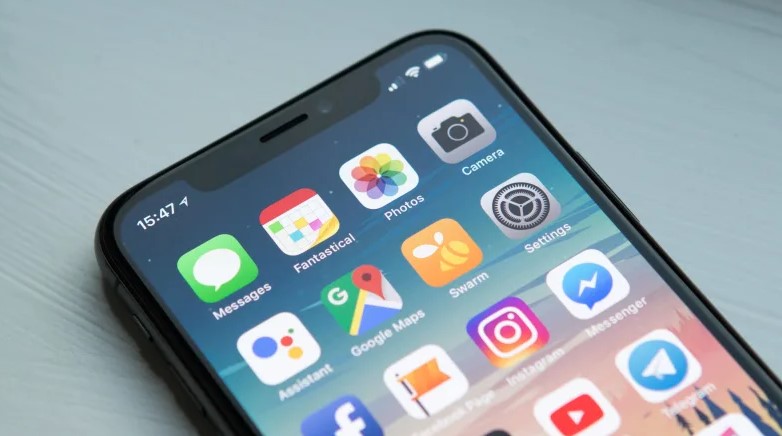
I’ve got my apps both in my bookmarks bar and on my phone—not just so I can access them with a single click, but also so that whenever I grab my phone to check the weather or listen to a podcast, I get this little visual reminder that I am a person who budgets and invests and tracks her finances.

Which, in turn, reminds me to check in with my apps and see how my money is doing.

Woodfibre buys gas co.

The developer of the proposed Woodfibre LNG project on the West Coast is buying a private Calgary oil and gas producer.

In a joint announcement, Pacific Oil & Gas Ltd. says it has struck a cash deal to buy Canbriam Energy Inc., which produces natural gas from the prolific Montney geological formation in northeastern B.C. Financial details were not disclosed.

Pacific Oil & Gas is an arm of the Singapore-based Royal Golden Eagle group of companies, focused on energy development for the Asian market.

The companies say the transaction will result in a “well-capitalized” entity able to grow current Canbriam production of about 200 million cubic feet per day of natural gas, including 6,000 barrels per day of associated natural gas liquids.

The Woodfibre LNG project, located southwest of Squamish, is licensed to export 2.1 million tonnes of liquefied natural gas per year for 40 years but has not been officially sanctioned for construction.

The deal includes Canbriam’s owned and operated gas processing plants and water handling infrastructure, “ideally situated” to support natural gas export opportunities, the companies said in a statement.