Archives for May 14, 2019

Google Assistant finally controls Sonos speakers

Hey Google, kick out the jams.

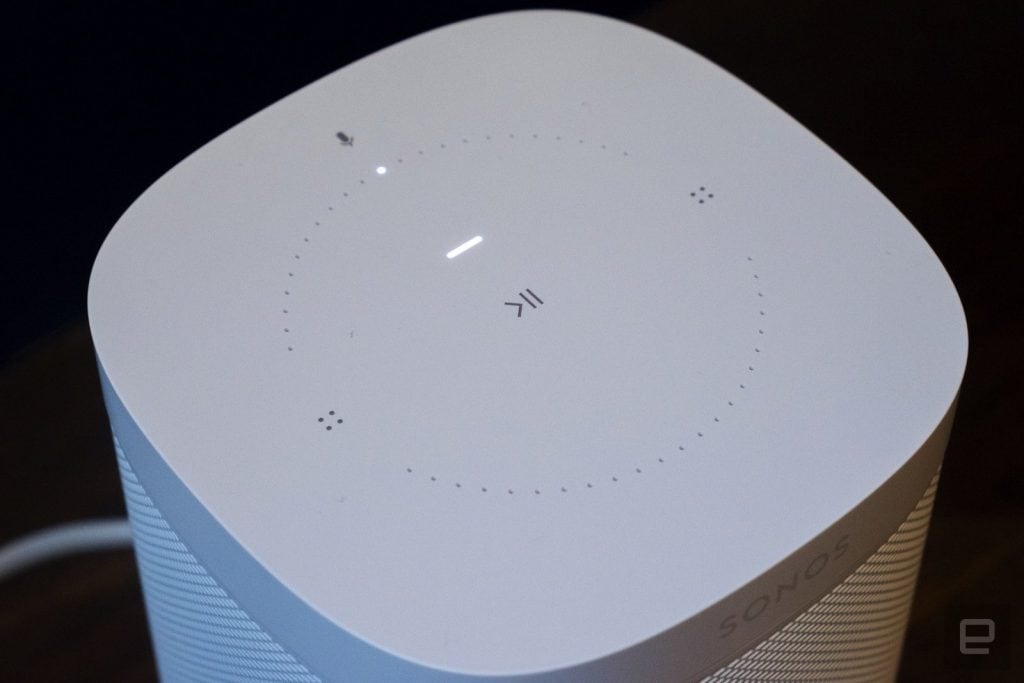
It took well over a year, but Sonos is finally ready to offer native voice control on its speakers beyond Alexa. Sonos is rolling out a promised software update that enables Google Assistant control, whether it’s directly through supporting speakers (like the One or Beam) or through connected Google Home devices. Notably, this makes Sonos the first company to offer a choice of voice assistants on a single speaker — you can choose whichever AI helper makes sense to play songs or check the weather. This also lets you use different assistants in different rooms, even if you’re controlling the same task.

Americans will be the first to get support, while listeners in Australia, Canada, France, Germany, the Netherlands and the UK should receive support in July. More countries will follow, Sonos said. Whenever it shows up in your part of the world, it’s a big deal if you find Sonos’ sound appealing but don’t want to be picky about your choice of smart home ecosystem. You’ll also like this if you’re a YouTube Music or Google Play Music fan — you can’t use Alexa to control Google’s services, so this makes Sonos an option if you subscribe and insist on hands-free playback.


WhatsApp Discovers Spyware That Infected With a Call Alone

WhatsApp says a vulnerability in the popular communications app let mobile phones be infected with sophisticated spyware with a missed in-app call alone.

Spyware crafted by a sophisticated group of hackers-for-hire took advantage of a flaw in the popular WhatsApp communications program to remotely hijack dozens of phones, the company said late Monday.

The Financial Times identified the actor as Israel’s NSO Group, and WhatsApp all but confirmed the identification, describing hackers as “a private company that has been known to work with governments to deliver spyware.” A spokesman for the Facebook subsidiary later said: “We’re certainly not refuting any of the coverage you’ve seen.”

The malware was able to penetrate phones through missed calls alone via the app’s voice calling function, the spokesman said. An unknown number of people — an amount in the dozens at least would not be inaccurate — were infected with the malware, which the company discovered in early May, said the spokesman, who was not authorized to be quoted by name.

John Scott-Railton, a researcher with the internet watchdog Citizen Lab, called the hack “a very scary vulnerability.”

“There’s nothing a user could have done here, short of not having the app,” he said.

The spokesman said the flaw was discovered while “our team was putting some additional security enhancements to our voice calls” and that engineers found that people targeted for infection “might get one or two calls from a number that is not familiar to them. In the process of calling, this code gets shipped.”

WhatsApp, which has more than 1.5 billion users, immediately contacted Citizen Lab and human rights groups, quickly fixed the issue and pushed out a patch. He said WhatsApp also provided information to U.S. law enforcement officials to assist in their investigations.

“We are deeply concerned about the abuse of such capabilities,” WhatsApp said in a statement.

NSO said in a statement that its technology is used by law enforcement and intelligence agencies to fight “crime and terror.”

“We investigate any credible allegations of misuse and if necessary, we take action, including shutting down the system,” the statement said. A spokesman for Stephen Peel, whose private equity firm Novalpina recently announced the purchase of part of NSO, did not return an email seeking comment.

The revelation adds to the questions over the reach of the Israeli company’s powerful spyware, which takes advantage of digital flaws to hijack smartphones, control their cameras and effectively turn them into pocket-sized surveillance devices.

NSO’s spyware has repeatedly been found deployed to hack journalists, lawyers, human rights defenders and dissidents. Most notably, the spyware was implicated in the gruesome killing of Saudi journalist Jamal Khashoggi, who was dismembered in the Saudi consulate in Istanbul last year and whose body has never been found.

Several alleged targets of the spyware, including a close friend of Khashoggi and several Mexican civil society figures, are currently suing NSO in an Israeli court over the hacking.

Monday, Amnesty International — which said last year that one its staffers was also targeted with the spyware — said it would join in a legal bid to force Israel’s Ministry of Defense to suspend NSO’s export license.

That makes the discovery of the vulnerability particularly disturbing because one of the targets was a U.K.-based human rights lawyer, the attorney told the AP.

The lawyer, who spoke on condition of anonymity for professional reasons, said he received several suspicious missed calls over the past few months, the most recent one on Sunday, only hours before WhatsApp issued the update to users fixing the flaw.

In its statement, NSO said it “would not or could not” use its own technology to target “any person or organization, including this individual.”

Conjuring designs from thin air in a virtual world

Designers can now draw 3D images in mid-air

Virtual Reality (VR) technology promised to make it possible for designers to ‘see’ new cars, factories and houses before they had been even built. With new high-quality headsets and software, that vision is closer to coming true.

Most designs used to start with an idea, a pen and some paper.

Now, imagine conjuring 3D shapes out of thin air and sharing your life-like designs in real time with people half way around the world.

The whole process of designing a new product becomes faster, cheaper and more effective. VR is finally beginning to fulfil its potential for business.

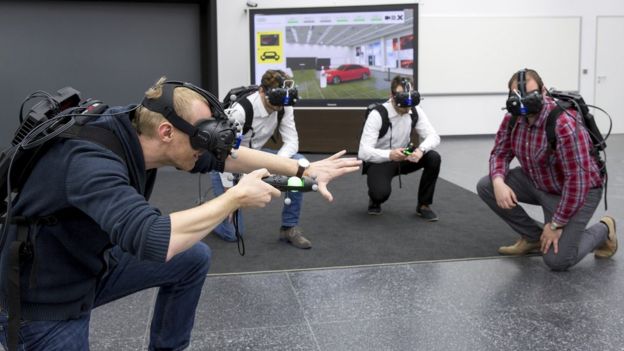
Audi workers wearing VR headsets
Audi has been experimenting with VR collboration to speed up the design process

“You can walk around your sketches so you can see how your lines work in a 3D environment, and move freely in a room,” explains Jan Pflueger, augmented and virtual reality co-ordinator for German car firm Audi.

In the past, the technology – hardware, software, connectivity – simply wasn’t up to the job.

“Designers didn’t like using headsets because the image resolution was too low,” says Mr Pflueger.

Not only were the images poor quality, the headsets were heavy and uncomfortable to wear.

But now that processing speeds have increased and optics tech has improved, we’re reaching the stage where VR is coming close to the limits of what the human eye can perceive.

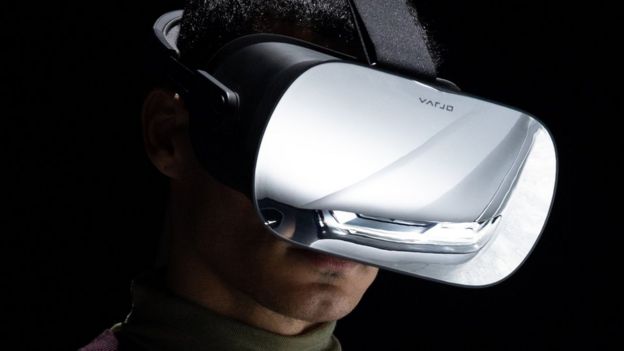
For example, Audi is working with Finnish start-up Varjo, which has recently starting selling a high-end (€5,995; £5,170) headset boasting “human eye resolution” using a technique called “foveated rendering”.

Man wearing Varjo headset
Finnish start-up Varjo is marketing its new VR headset to big business

It uses eye-tracking technology to tell which part of the image you’re focusing on, then concentrates its processing power on that section to render it in high definition.

So you perceive the highest quality without having to process the entire image in high definition for every frame, which would require huge computing resources.

“In the beginning, designers hadn’t been able to view their designs properly, but now they can walk around cars or other objects in life size,” explains Niko Eiden, Varjo chief executive.

And because the image quality is so good, car designers can experiment with different materials for seats, dashboards and so on without having to make expensive physical models, says Mr Pflueger.

“This speeds up the design process because they can make decisions about how designs should be modified at a very early stage,” he adds.

Close-up of eye
Varjo’s headset includes eye tracking technology

Designing a car or aeroplane is a laborious process, involving hundreds of iterations, physical models, wind-tunnel testing – all of which takes time and a lot of money. High-quality VR is removing many of these steps and cutting costs as a result, says Mr Pflueger.

And it is newcomers like Varjo and Pimax that are challenging the established leaders, such as HTC and HP, in the high-end business VR headset market, says David Nahon, head of immersive VR at French software firm, Dassault Systemes.

Dassault specialises in software to create 3D VR images, along with companies such as Gravity Sketch and Masterpiece VR.

“When you see the images at life-size scale you have much more empathy with the end user of your design, because you’re in his or her shoes. You trigger different neurons,” says Mr Nahon.

And the fact that people can consult with clients and collaborate with other designers in these shared virtual spaces also improves the efficiency of the design process, he adds.

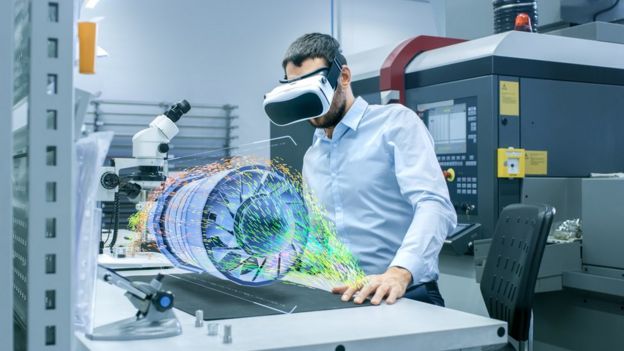
Man wearing VR headset looking at virtual turbine
VR is giving engineers the ability to analyse faults in machinery remotely

It also enables the creation of “digital twins” of industrial equipment, aero engines, even human organs, enabling specialists to diagnose issues more accurately in a life-life 3D environment, he says.

It can work for customers as well as designers. Homebuyers could look around yet-to-be-built apartments, for example, and choose the combination of colours, carpets, furniture and kitchens that they like. Similarly with car buyers in the showroom.

And being able to visualise and discuss the huge amounts of data we have now in 3D is helping researchers spot patterns and anomalies they never would have spotted before, argues Marty Resnick, VR specialist at research firm Gartner.

“This kind of immersive analytics is having a big impact in medical research and business,” he says. “It’s giving colleagues the ability to collaborate more effectively.”

But such high quality graphics require a lot of processing power, so most high-end headsets have to be “tethered” to a powerful computer. This is still restrictive if designers or customers want to walk around a big virtual boat, say.

A big breakthrough will be to offer near human-eye resolution VR without the need for any cables. And this is where high-speed 5G mobile connectivity could have a big impact. With streaming speeds 10 to 20 times faster than existing connections, the high-resolution images could be beamed to the headsets wirelessly.

“5G will eventually allow us to go tetherless,” says Varjo’s Mr Eiden.

Despite these recent VR advances, several industry observers think “mixed” or “augmented” reality – combining video of the real world with virtual reality images – will be the eventual technology of choice for most businesses.

This means you’ll be able to design in 3D but also see the real world around you if you want to. Firms such as Microsoft with its HoloLens, Magic Leap and Daqri are leaders in this space, with training and remote assistance seen as the most useful business applications.

“Ultimately, mixed reality is going to win, but we’re a long way from that,” says Mr Resnick. “Devices need to get lighter, cheaper, faster, better.”

Varjo plans to add “see-through” video capability to its VR headset in time, and boss Niko Eiden foresees a day when image quality will be so good “that you won’t be able to differentiate between the real and the virtual”.

Adobe’s latest Lightroom smooths skin without the ‘plastic’ effect

Soften or enhance details on portraits, nature shots and more.

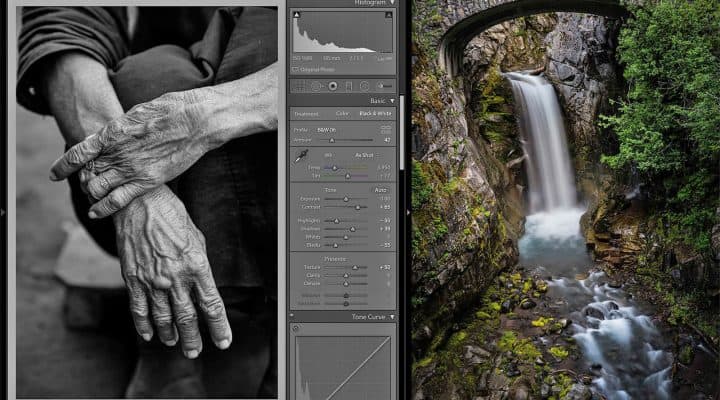
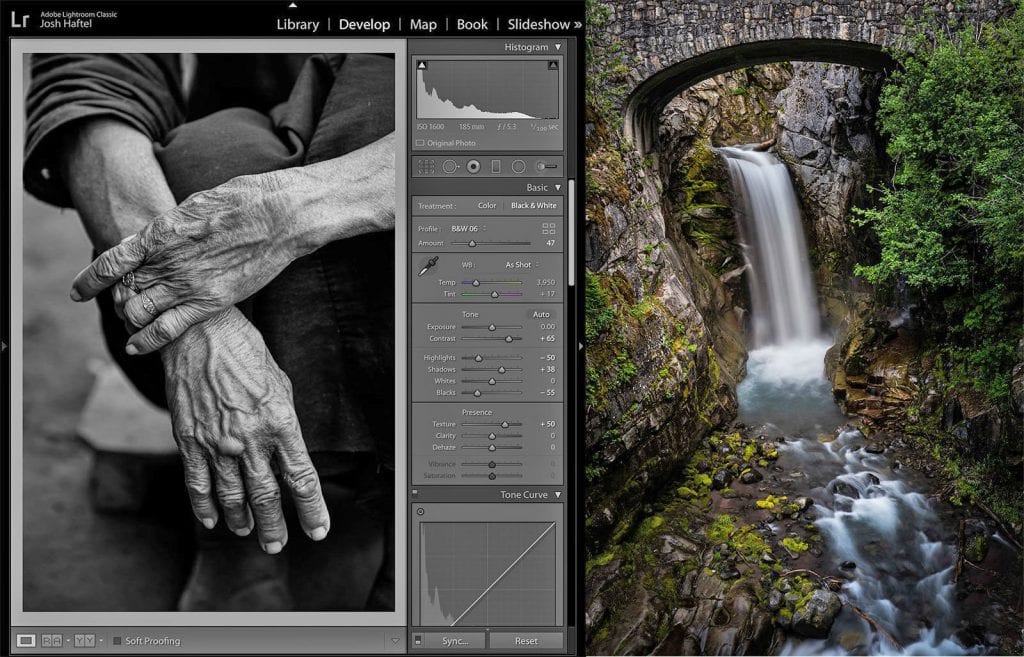
Instagrammers and portrait photographers alike use Facetune-style skin smoothing techniques on photos, but it often gives your subject an overly unnatural “plastic” effect. Adobe is addressing that issue with a new plugin called Texture in its latest release of Lightroom and Lightroom Classic. It lets you do subtle retouching on portraits to reduce wrinkles and blemishes without eliminating them completely, while preserving or enhancing fine detail in pores and hair.

The effect works by focusing on medium-, rather than pixel-sized chunks of an image. By moving the slider the other way, you can also accentuate details in bark or hair without increasing the noise or making bokeh look too sharp.

It can be used globally in a shot or in specific regions of a picture to make your subject’s face softer without affecting their hair or lips (as shown in a very exaggerated way in the shot below). Suffice to say, the feature is bound to become popular with image-conscious social media types, portrait photographers and even landscape and wildlife shooters.

Adobe Lightroom texture face smoothing

Adobe introduced some other new Lightroom features, like inspirational stock photos with interactive tutorials, a Google Drive-like “Share & Invite” collaboration tool, chromatic aberration defringing and more.

It’s no doubt hoping to draw some attention away from recent bad news. Adobe recently told users they could only use the last two versions of Creative Cloud CC apps, reportedly due to a lawsuit it’s fighting with Dolby. That has angered a lot of users, who prefer to use specific versions of the apps for speed, usability and stability (bug) reasons.

Stocks to Watch: Eyes on General Moly, Inc. (GMO), Mountain Province Diamonds Inc. (MPVD)

The price of General Moly, Inc. (NYSE:GMO) went up by $0.01 now trading at $0.21. Their shares witnessed a 31.25% increase from the 52-week low price of $0.16 they recorded on 2018-11-29. Even though it is still -119.05% behind the $0.46 high touched on 2018-08-24. The last few days have been good for the stock, as its price has grew by 3% during the week. It has also performed poorly over the past three months, as it lost around -10.43% while it has so far retreated around -45.79% during the course of a year. The stock of GMO recorded -8.32% downtrend from the beginning of this year till date. The 12-month potential price target for General Moly, Inc. is set at $0. This target means that the stock has an upside potential to increase by -100% from the current trading price.

4 institutions entered new General Moly, Inc. (NYSE:GMO) positions, 10 added to their existing positions in these shares, 11 lowered their positions, and 4 exited their positions entirely.

General Moly, Inc. (GMO) trade volume has increased by 1.19% as around 158,952 shares were sold when compared with its 50-day average volume of traded shares which is 157,082. At the moment, GMO is witnessing a downtrend, as it is trading -0.82% below its 20-day SMA, -9.05% below its 50-day SMA, and -22.74% below its 200-day SMA. The company runs an ROE of roughly -10.5%, with financial analysts predicting that their earnings per share growth will be around 0% per annum for the next five year. This will be compared to the 14.2% increase witnessed over the past five years.

The first technical resistance point for General Moly, Inc. (NYSE:GMO) will likely come at $0.21, marking a 0% premium to the current level. The second resistance point is at $0.21, about 0% premium to its current market price. On the other hand, inability to breach the immediate hurdles can drag it down to $0.2, the lower end of the range. GMO’s 14-day MACD is 0 and this negative figure indicates a downward trading trend. The company’s 14-day RSI (relative strength index) score is 45.55, which shows that its stock has been neutral. The 20-day historical volatility for the stock stands at 50.31 percent, which is low when compared to that of the 50-day’s 56.15 percent.

The shares of Mountain Province Diamonds Inc. (NASDAQ:MPVD) has decreased by -4.17%, and now trading at $1.15 on the Wall Street in the intra-day deal, with their shares traded now around 197,160. This is a rise of 67,520 shares over the average 129,640 shares that were traded daily over the last three months. The stock that is trading at $1.15 went higher by 41.98% from its 52-week low of $0.81 that it attained back on 2019-04-09. The stock recorded a 52-week high of $2.92 nearly 357 days ago on 2018-05-22.

MPVD stock has performed well over the past 30 days, as it added 25.39% while its price plunged by -19.94% year-to-date (YTD). Looking at the last few days, it has been good for the stock, as it rose 9.52% over the last week. The stock’s 12-month potential target price is now at $7. This means that the stock price might likely increase by 508.7% from its current trading price. 2 out of 3 Wall Street analysts which represents 66.67% rated the stock as a buy while the remaining 33.33% rated it as a hold, with 0% of analysts rating it as a sell.

Mountain Province Diamonds Inc. (NASDAQ:MPVD) has been utilizing an ROE that is roughly 0%, with stock analysts predicting that the company’s EPS for the next five years will go down by 0% per year, following the 0% drop that was witnessed during the past five years. The stock at the moment is on a uptrend, trading 11.86% above its 20-day SMA, 18.86% above its 50-day SMA, and -21.78% below its 200-day SMA. In percentage terms, the aggregate Mountain Province Diamonds Inc. shares held by institutional investors is 18.01%. 6 institutions jumped in to acquire Mountain Province Diamonds Inc. (MPVD) fresh stake, 11 added to their current holdings in these shares, 14 lowered their positions, and 4 left no stake in the company.

The stock’s 9-day MACD is 0.07 and this positive figure indicates an upward trading trend. The company’s 9-day RSI score is 69.98, which shows that its stock has been overbought. The 20-day historical volatility for the shares stand at 42.43 percent, which is less when compared to that of the 50-day’s 51.14 percent. On the daily chart, we see that the stock could reach the first level of resistance at $1.22, sporting a 5.74% premium to the current level. The next resistance point is at $1.29, representing nearly 10.85% premium to the current market price of Mountain Province Diamonds Inc. (MPVD). On the other hand, failure to breach the immediate hurdles can drag it down to $1.05, the lower end of the range.

Stocks to Watch: Papa Murphy’s Holdings, Inc. (FRSH) and TPG Pace Holdings Corp. (TPGH) in the spotlight

The price of Papa Murphy’s Holdings, Inc. (NASDAQ:FRSH) went up by $0.01 now trading at $6.45. Their shares witnessed a 50.7% increase from the 52-week low price of $4.28 they recorded on 2018-10-29. Even though it is still -0.78% behind the $6.5 high touched on 2019-04-30. The last few days have been rough for the stock, as its price has decreased by -0.15% during the week. It has also performed better over the past three months, as it added around 23.56% while it has so far climbed around 17.7% during the course of a year. The stock of FRSH recorded 35.79% uptrend from the beginning of this year till date. The 12-month potential price target for Papa Murphy’s Holdings, Inc. is set at $7. This target means that the stock has an upside potential to increase by 8.53% from the current trading price.

4 institutions entered new Papa Murphy’s Holdings, Inc. (NASDAQ:FRSH) positions, 8 added to their existing positions in these shares, 13 lowered their positions, and 3 exited their positions entirely.

Papa Murphy’s Holdings, Inc. (FRSH) trade volume has decreased by -66.74% as around 85,440 shares were sold when compared with its 50-day average volume of traded shares which is 256,856. At the moment, FRSH is witnessing a uptrend, as it is trading 0.02% above its 20-day SMA, 9.43% above its 50-day SMA, and 21.52% above its 200-day SMA. The company runs an ROE of roughly 0%, with financial analysts predicting that their earnings per share growth will be around 12.5% per annum for the next five year. This will be compared to the 19.9% increase witnessed over the past five years.

The first technical resistance point for Papa Murphy’s Holdings, Inc. (NASDAQ:FRSH) will likely come at $6.45, marking a 0% premium to the current level. The second resistance point is at $6.46, about 0.15% premium to its current market price. On the other hand, inability to breach the immediate hurdles can drag it down to $6.44, the lower end of the range. FRSH’s 14-day MACD is -0.01 and this negative figure indicates a downward trading trend. The company’s 14-day RSI (relative strength index) score is 69.8, which shows that its stock has been overbought. The 20-day historical volatility for the stock stands at 2.26 percent, which is low when compared to that of the 50-day’s 67.13 percent.

The shares of TPG Pace Holdings Corp. (NYSE:TPGH) has increased by 0.19%, and now trading at $10.35 on the Wall Street in the intra-day deal, with their shares traded now around 163,374. This is a rise of 98,886 shares over the average 64,488 shares that were traded daily over the last three months. The stock that is trading at $10.35 went higher by 5.94% from its 52-week low of $9.77 that it attained back on 2018-06-06. The stock recorded a 52-week high of $10.4 nearly 222 days ago on 2018-10-04.

TPGH stock has performed well over the past 30 days, as it added 1.17% while its price climbed by 3.5% year-to-date (YTD). Looking at the last few days, it has been good for the stock, as it rose 0.39% over the last week. The stock’s 12-month potential target price is now at $0.

TPG Pace Holdings Corp. (NYSE:TPGH) has been utilizing an ROE that is roughly 0%, with stock analysts predicting that the company’s EPS for the next five years will go down by 0% per year, following the 0% drop that was witnessed during the past five years. The stock at the moment is on a uptrend, trading 0.54% above its 20-day SMA, 1.38% above its 50-day SMA, and 2.9% above its 200-day SMA. In percentage terms, the aggregate TPG Pace Holdings Corp. shares held by institutional investors is 62.85%. 6 institutions jumped in to acquire TPG Pace Holdings Corp. (TPGH) fresh stake, 14 added to their current holdings in these shares, 9 lowered their positions, and 4 left no stake in the company.

The stock’s 9-day MACD is 0.01 and this positive figure indicates an upward trading trend. The company’s 9-day RSI score is 66.9, which shows that its stock has been neutral. The 20-day historical volatility for the shares stand at 3.19 percent, which is less when compared to that of the 50-day’s 3.26 percent. On the daily chart, we see that the stock could reach the first level of resistance at $10.37, sporting a 0.19% premium to the current level. The next resistance point is at $10.38, representing nearly 0.29% premium to the current market price of TPG Pace Holdings Corp. (TPGH). On the other hand, failure to breach the immediate hurdles can drag it down to $10.28, the lower end of the range.