
Archives for May 8, 2019

Students learn personal finance

Charlotte Stewart’s Personal Finance Class at Tug Valley High School has completed a 10-week simulation with H&R Block.

The H&R Budget Challenge is a personal finance simulation played in real time over a 10-week period. Students receive paychecks and bills in real time and are challenged to build a budget that allows them to pay their bills on time, manage their credit card balance and save money for retirement in a 401(k).

The simulation does not use real money, but is extremely realistic including features such as online bill pay, direct deposit, email bill alerts, 401(k) paycheck deductions and more.

The program even includes a mobile application as an option for students who want to manage simulated financial decisions with their mobile phones.

Budget Challenge also includes many of the complicated banking and credit card fees that plague young people in the real world, so students can learn the ropes and make their costly “rookie” mistakes in the safety of the classroom.

Budget Challenge is also a competition that scores and ranks students based on how well they save, answer weekly quizzes and manage their financial responsibilities (pay bills). Students can compete with other students in their class, and classes can compete with other classes.

The winner with the highest score for this year’s challenge was Makayla Hager.

Why a vibrant stock market matters

It has often been observed that capital is the mother’s milk of business. The story of American prosperity is also the story of the world’s deepest and most liquid capital markets. Today we look in particular at the market for equity capital (stocks).

Stock markets serve two critical objectives: to raise funds from outside investors, and to provide liquidity to allow investors to exit an investment at will. This involves two different types of transactions: primary and secondary market activities. Here is a primer.

Primary market transactions involve the first-time sale of stock by the current private owners to the general public. A new issue brought to market is referred to as an initial public offering or IPO, whereby interested investors may purchase stock directly from the company. The process is complex and highly regulated and begins with the hiring of an investment bank known as an underwriter (or more typically, a syndicate formed by several banks to spread the risk). The underwriter creates marketing materials including a legal document called a prospectus, and begins the selling process.

One recent IPO that debuted in April is Pinterest, a private firm that sold 75 million shares to the public at $19 per share. All of the proceeds went directly to existing private shareholders in exchange for their share of ownership. At this point, Pinterest became a publicly traded company.

Secondary market transactions, on the other hand, comprise the vast majority of capital market activity. It is here that investors buy and sell the existing shares in public companies created by the IPO. This is the part of the stock market with which most of us are acquainted from the evening news. A number of indexes summarize the performance of various sectors of the market, many of which are familiar: the Dow Jones Industrial Average and the S&P 500 for example. Transaction prices are determined by competitive bidding among buyers and sellers, one of the purest examples of an unfettered free market.

A broad secondary exchange system is crucial to the process of raising capital. For investors to be willing to risk their own capital, they must have a reasonable expectation that they will be able to dispose of their positions quickly and cost-effectively. In addition, since prices are set by competition, they help in determining a reasonable value for the companies whose stocks trade on the exchanges.

Recall our earlier example of the Pinterest IPO. The initial price of $19 was set according to financial projections as well as indications of interest from potential investors, but was still an educated guess. Since the stock began trading in the secondary market, roughly one third of the total shares have changed hands on average each day since the issue went public. The current stock price is about $28 per share, an indication that investor interest remains high and that the IPO price was probably set too low.

The size of the U.S. secondary trading is staggering. The number of shares that change hands on an average day, referred to as the daily volume, is about 6 billion. Every day.

A somewhat disturbing trend has developed in recent years. The number of publicly traded companies has fallen in half over the past 20 years as more firms raise debt to buy back their outstanding shares. This reduces efficiency of price discovery, and leaves many great companies loaded up with debt that imperil their survival. Debate continues over how and even whether to respond to this trend.

Still, the US stock market continues to play a critical role in financing the American business juggernaut.

How Do Americans Feel About Their Morning Commutes?

Very few people enjoy commuting. It’s time spent in a car, maybe in traffic, accomplishing nothing. In fact, commutes not only cost us time, but they also cost us money: The average commuter wastes 42 hours each year sitting in traffic, which costs $1,400 in gas, according to data provided by Driving-tests.org. There’s a physical and mental health cost as well, with people who spend more time commuting at a greater risk for obesity and depression.

In big cities, however, the problems can be amplified. It’s not just difficult to get to work — sometimes it can be downright miserable, and nearly half (48.6%) of commuters in big cities “hate” their commutes according to a Driving-tests.org survey.

Who’s the most miserable?

Boston may boast the reigning Super Bowl and World Series champions, but it also carries another crown — it’s the city where people are most likely to hate their commutes. More than half (56%) of Bostonians felt that way, beating San Francisco (55.4%) and Chicago (54.5%). Houston scored 50%, while New York City came in just below at 49%

“For some drivers, dread for the commute isn’t as much about the time spent sitting in traffic — it’s about the daily activities missed out on instead,” according to the Driving-tests.org report. “Seventy percent of women and 68% of men in busy cities said they sacrificed their free time as a result of having to drive back and forth from work.”

People hate their commutes enough that they would be willing to make sacrifices if they could eliminate having to drive to work. Almost 35% were willing to give up social media for a year, while 18.4% would give up all television (including streaming services).

Of course, the severity of the sacrifice varies based on a person’s existing habits. The 21.6% who were willing to be single for a year in exchange for not having to commute would only be making a major sacrifice if they’re currently in relationships.

What can you do?

Allowing workers the flexibility to work from home can benefit both a company and its employees. A smart employer thinks about the needs of its workers, and offer flexibility when possible. Even letting people work from home a day or two a week can make a major difference in their happiness level.

For employees, it’s important to ask, or even to seek out another job that allows remote work. If you can make that happen, it’s then important to make sure you do the best job possible — in part for you, and in part for anyone else who comes after you.

In some cases it’s not possible for a company to allow remote work. In those cases, the employer should consider other measures that make commutes easier. Allowing flexible hours can give workers the ability to come in early or late in order to avoid rush hour.

That doesn’t eliminate the commute, but it can lessen the pain. This is an area where employers and employees should consider every option and see what provides the greatest benefit.

Saving money: Choosing between a savings and money market account

You’ve heard of savings accounts and money market accounts. Which one should you choose?

Savings accounts are great for when you want to put away your money but still want relatively easy access. It’s not a checking account — that’s used for everyday transactions. The idea is to save your money. And keep it in the account. That means you get a higher interest rate than you do with checking accounts.

Money market accounts are similar and are generally considered a type of savings account. However, the interest rate is usually a little higher, meaning it may be a better place to park your money.

But here’s the catch — money market accounts often require higher minimum balances and deposits – something like $5,000, $10,000 or even $25,000.

The most important things to do when picking an account is to look at the interest rate you’ll be getting, and note any restrictions on the account — including minimum deposits and your ability to remove funds.

Also, be aware of any fees. One charge could wipe out your interest payments for a month, or even more.

Getting interest on your money can really add up over time. And it’s always good to put some money away for that rainy day.

Google is making it easier to build Android apps on a Chromebook

Maybe this will help developers write Android apps that work better on big screens.

At I/O last year, Google announced it was adding Linux support to Chrome OS, a move that made it a lot easier for web and Android developers to use Chromebooks. One year later, the company says that more than half of all Chromebooks now work with Linux, and all new devices released this year will support Linux as well. And today, Google has a handful of developer-focused updates that’ll make building Android apps on Chrome OS a good bit easier.

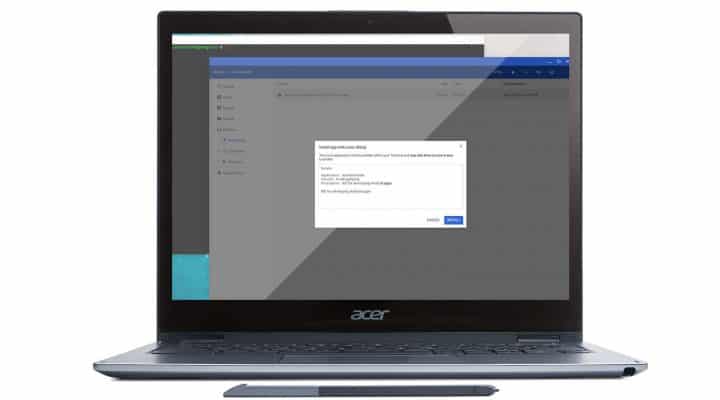
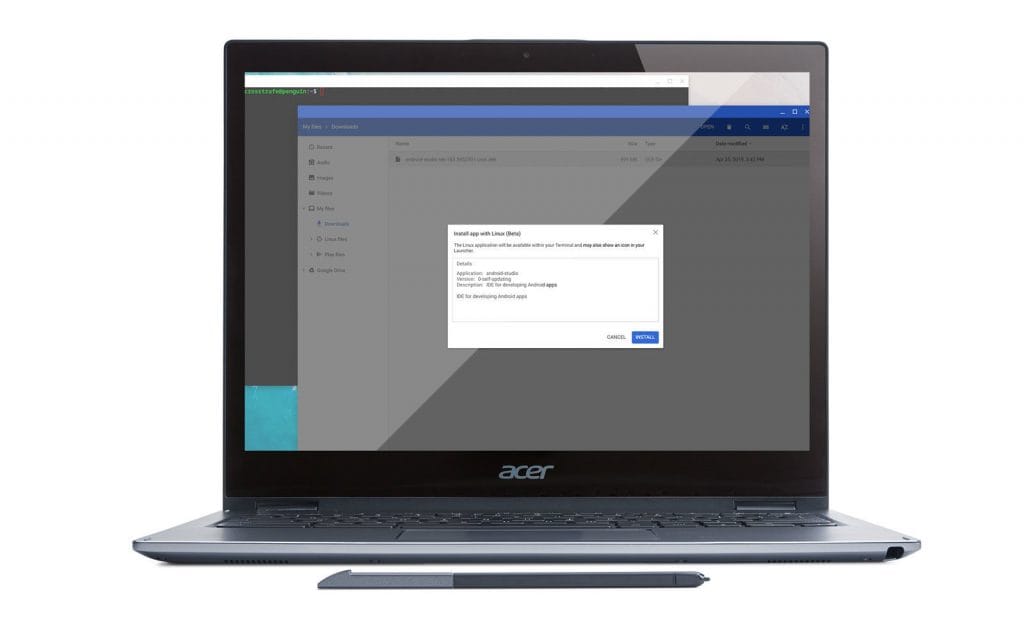
For starters, Google’s making it a lot easier to install the Android Studio development environment on a Chromebook. Last year’s Linux support made it possible to do, but it wasn’t exactly the smoothest process. Now, though, Google says it’ll be a one-click install. The company also added secure USB support for Android phones and Chromebooks, which means that developers can build, debug and push app builds to a phone using Google’s “developer-recommended” Chrome OS devices.

Google is also tying Chrome OS and Linux together through the file manager. Users will be able to swap and move files between Google Drive, local Chrome OS storage and Linux using the default files app. The company also improved port forwarding, something that Google says will enable developers to run a web server via Linux while debugging at the same time.

These aren’t groundbreaking, major changes — but they should hopefully make it easier for developers to do their work on Chrome OS. And that might have a secondary benefit of getting Android devs to think about larger screens when building their apps. Chromebooks have been able to run Android apps for years now, but the experience is often sub-par, simply because developers don’t have big displays in mind when building those apps. It’s the same problem that plagued Android tablets for years, and one that Google still hasn’t quite been able to solve.

But there’s a lot of momentum behind Chromebooks. Google says that in the last year, the number of monthly active Chrome OS users who enabled Android apps on their device grew by 250 percent. The company also referred to NPD data saying that 21 percent of all laptops sold in the US were Chromebooks, both stats that show there’s some potential benefit to Android developers making their apps work better on those devices. Given that I/O is Google’s big annual pitch for developers, it makes sense that the company is trying to make it easier to develop Android apps on Chrome OS — and hopefully those developers will take bigger screens into account as they do it.

MIT AI model is ‘significantly’ better at predicting breast cancer

The model can find breast cancer earlier and eliminates racial disparities in screening.

MIT researchers have invented a new AI-driven way of looking at mammograms that can help detect breast cancer in women up to five years in advance. A deep learning model created by a team of researchers from MIT’s Computer Science and Artificial Intelligence Laboratory (CSAIL) and Massachusetts General Hospital can predict — based on just a mammogram — whether a woman will develop breast cancer in the future. And unlike older methods, it works just as well on black patients as it does on white patients.

The scientists first looked at the mammograms of over 60,000 patients who were treated at Massachusetts General. They then identified the women that developed breast cancer within five years of their screening. With this data, scientists created a model that recognizes the subtle patterns in breast tissue that are the early signs of cancer. The results of the study can be found in a paper published this week in the journal Radiology.

AI has potential to help fix the racial disparity in women’s healthcare as well. Since current guidelines for breast cancer are based on primarily white populations, this can lead to delayed detection among women of color, a 2018 report in JAMA Surgery found. This has lead to severe consequences; Black women are 43 percent more likely to die from breast cancer than white women. On average, Hispanic, black and Asian women develop breast cancer at an earlier age than their white counterparts.

Scientists found that their AI model worked on both black patients and white patients for a simple reason; their training data included both populations. “It’s particularly striking that the model performs equally as well for black and white people, which has not been the case with prior risk assessment tools”, said Dr. Allison Kurian, associate professor of Medicine and Health Research and Policy at Stanford University to MIT. “If validated and made available for widespread use, this could really improve on our current strategies to estimate risk.”