
Archives for May 1, 2019

A drone delivered an organ to a transplant patient for the first time

The groundbreaking project could make it possible to save thousands of lives.

For the first time, a drone has delivered a kidney to a transplant patient who had waited eight years for a donor. The organ was carried on a short, 10 minute, 2.7 mile test flight from Baltimore’s St. Agnes Hospital to the University of Maryland (UMD) medical center, and successfully transplanted a few hours after the delivery. “There’s a larger purpose at stake,” said UMD engineering dean Darryll J. Pines. “It’s ultimately not about the technology; it’s about enhancing human life.”

The project was created by Dr. Joseph R. Scalea, who also did the transplant procedure. He told the NY Times that he launched the venture with aviation and engineering experts from UMD after experiencing numerous organ delivery delays. In one case, an organ took 29 hours to arrive, and “had I put that in at nine hours, the patient would probably have another several years of life,” he said. “Why can’t we get that right?”

The recipient, Baltimore nursing assistant Trina Glispy, was starting to lose hope that a suitable donor organ would ever be found, but was discharged from the hospital last week. “This whole thing is amazing,” she told UMD. “Years ago, this was not something that you would think about.”

While it might seem reckless to do a test with a live organ, UMD carried out 44 test flights over 700 hours and took every possible precaution. “We built in a lot of redundancies, because we want to do everything possible to protect the payload,” said Anthony Pucciarella, director of the UMD test operation. That included backup propellers and motors, dual batteries, a backup power distribution board, and a parachute recovery system. The team also got logistics and flight tracking support from AiRXOS, a GE Aviation division working on drone infrastructure and support services.

With all that, it may have been less risky than transporting the organ by ambulance and certainly quicker. Flying an organ by drone also offers certain advantages, like the ability to constantly monitor critical temperatures, ETAs and other statistics. “We can monitor in real time,” Dr. Scalea told the NYT. “It’s like Uber for organs.”

Scalea notes that despite advances in organ transplant procedures, there’s still a wide gap between the number of recipients on transplant waiting lists and the number of available organs. “This new technology has the potential to help widen the donor organ pool and access to transplantation,” he said. “Delivering an organ from a donor to a patient is a sacred duty with many moving parts. It is critical that we find ways of doing this better.”


Instagram is testing more tools to combat bullying

It will nudge aggressive commenters and offer an away mode for sensitive times.

At the F8 conference today, Facebook announced it’s working on more tools to stop and prevent bullying. The changes will include things like nudges — if you make an aggressive comment, Instagram will warn you to tone it down a bit. The platform will also offer a new away mode, which users can opt into when they’re going through a sensitive time — possibly a breakup or a transition to a new school.

The tools are part of Facebook’s overall mission to make its platforms safer, and therefore, more inviting. This isn’t the first time Instagram has targeted bullying. Past attempts have included filtering out harassing comments and using machine learning to spot bullying in photos. This is an ongoing battle, and Instagram’s Adam Moserri said it will likely take years to deploy all of the tools the company has in mind.

Firefox virtual reality web browser comes to SteamVR this summer

Surf the web in between VR gaming sessions.

Mozilla’s Firefox Reality browser has been available through a number of platform-specific VR portals, but it’ll soon be available in a relatively neutral form. The developer has revealed that it’s working with Valve to bring Firefox Reality to SteamVR sometime this summer. You’ll install it through a new web dashboard button and browse pages in a window that floats over “any OpenVR experience.” To put it another way, you could check a walkthrough for a VR-capable Steam game while you’re playing it, whether you’re using an HTC Vive, an Oculus Rift or Valve’s own Index headset.

You can visit Steam (the link isn’t available as we write this) to add Firefox Reality to your Wishlist so that you can get it as soon as it’s ready.

This might be a bigger launch than it seems. Web browsing in VR is still in its early days, and still tends to be dictated by which device you’re using. You might not have to be quite so picky from now on. This is also good news for gamers who want a major browser without having to switch environments or otherwise disrupt their experience more than necessary.

NASA was sold faulty rocket parts for almost 20 years

An Oregon-based company falsified aluminum certification tests for nearly two decades.

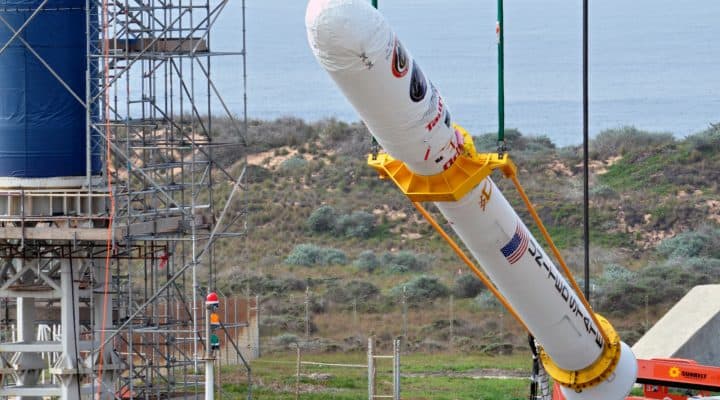
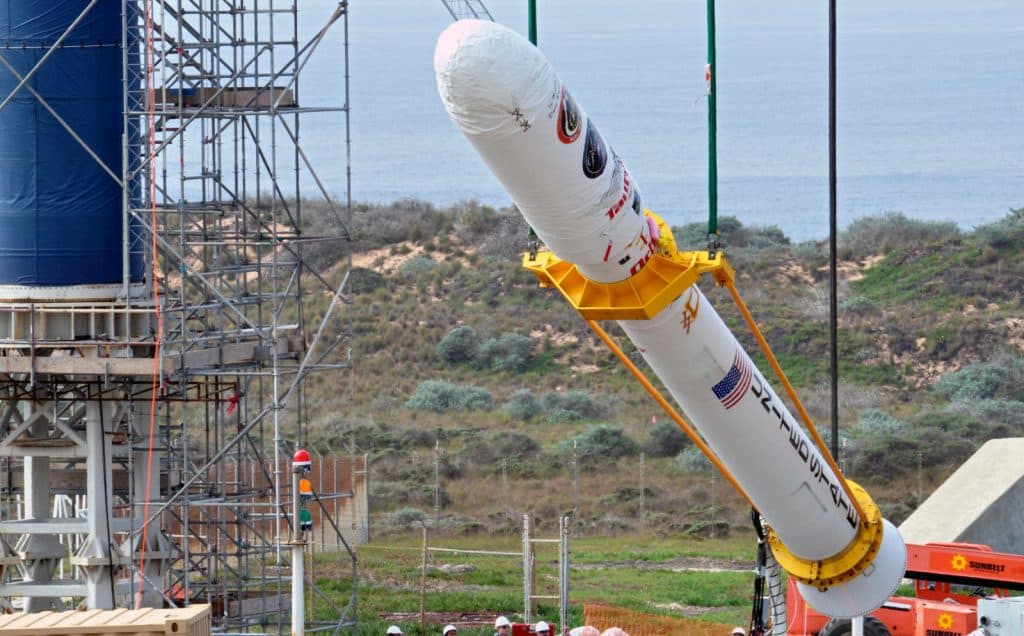
When the launch of NASA’s Orbiting Carbon Observatory and Glory missions failed in 2009 and 2011, the agency said it was because their launch vehicle malfunctioned. The clamshell structure (called fairing) encapsulating the satellites as they traveled aboard Orbital ATK’s Taurus XL rocket failed to separate on command. Now, a NASA Launch Services Program (LSP) investigation has revealed that the malfunction was caused by faulty aluminum materials. More importantly, the probe blew a 19-year fraud scheme perpetrated by Oregon aluminum extrusion manufacturer Sapa Profiles, Inc., which Orbital ATK fell victim to, wide open.

LSP, along with NASA’s Office of the Inspector General and the US Department of Justice, have discovered the Sapa Profiles falsified critical tests on the aluminum it sold. For almost two decades, employees would doctor failing numbers or violate other testing standards, such as increasing the speed of testing machines or using sample sizes that didn’t meet specifications. They’d then provide clients, including government contractors, with falsified certifications. SPI itself was motivated by profits and the need to conceal the inconsistent quality of its aluminum products, while its employees were motivated by production-based bonuses.

Jim Norman, NASA’s director for Launch Services at NASA Headquarters in Washington, explains why suppliers’ integrity is incredibly important for the agency’s missions:

“NASA relies on the integrity of our industry throughout the supply chain. While we do perform our own testing, NASA is not able to retest every single component. That is why we require and pay for certain components to be tested and certified by the supplier. When testing results are altered and certifications are provided falsely, missions fail. In our case, the Taurus XLs that failed for the OCO and Glory missions resulted in the loss of more than $700 million, and years of people’s scientific work. It is critical that we are able to trust our industry to produce, test and certify materials in accordance with the standards we require. In this case, our trust was severely violated.”

The company, now known as Hydro Extrusion Portland, Inc., has agreed to pay NASA, the DOJ and other entities $46 million. It’s a tiny fraction of the $700 million NASA lost from the failed missions, but at least officials were able to hold SPI accountable for its actions. Sapa Profiles/Hydro Extrusion was also suspended from government contracting on September 30th, 2015, and it can no longer do business with the federal government.

Stocks to Watch: Wake-Up Call for Owens & Minor, Inc. (OMI), McKesson Corporation (MCK)

The price of Owens & Minor, Inc. (NYSE:OMI) went down by $-0.11 now trading at $3.41. Their shares witnessed a 4.6% increase from the 52-week low price of $3.26 they recorded on 2019-04-25. Even though it is still -461.88% behind the $19.16 high touched on 2018-08-06. The last few days have been good for the stock, as its price has grew by 0.89% during the week. It has also performed poorly over the past three months, as it lost around -55.42% while it has so far retreated around -78.81% during the course of a year. The stock of OMI recorded -46.13% downtrend from the beginning of this year till date. The 12-month potential price target for Owens & Minor, Inc. is set at $5.44. This target means that the stock has an upside potential to increase by 59.53% from the current trading price.

41 institutions entered new Owens & Minor, Inc. (NYSE:OMI) positions, 108 added to their existing positions in these shares, 113 lowered their positions, and 49 exited their positions entirely.

Owens & Minor, Inc. (OMI) trade volume has decreased by -41.06% as around 1,149,398 shares were sold when compared with its 50-day average volume of traded shares which is 1,950,052. At the moment, OMI is witnessing a downtrend, as it is trading -8.99% below its 20-day SMA, -26.87% below its 50-day SMA, and -66.99% below its 200-day SMA. The company runs an ROE of roughly -55.8%, with financial analysts predicting that their earnings per share growth will be around -7.47% per annum for the next five year. This will be compared to the -43.8% decrease witnessed over the past five years.

The first technical resistance point for Owens & Minor, Inc. (NYSE:OMI) will likely come at $3.54, marking a 3.67% premium to the current level. The second resistance point is at $3.68, about 7.34% premium to its current market price. On the other hand, inability to breach the immediate hurdles can drag it down to $3.24, the lower end of the range. OMI’s 14-day MACD is -0.1 and this negative figure indicates a downward trading trend. The company’s 14-day RSI (relative strength index) score is 25.46, which shows that its stock has been oversold. The 20-day historical volatility for the stock stands at 34.91 percent, which is low when compared to that of the 50-day’s 63.59 percent.

The shares of McKesson Corporation (NYSE:MCK) has increased by 0.74%, and now trading at $119.25 on the Wall Street in the intra-day deal, with their shares traded now around 1,009,382. This is a decline of -365,502 shares over the average 1,374,884 shares that were traded daily over the last three months. The stock that is trading at $119.25 went higher by 12.38% from its 52-week low of $106.11 that it attained back on 2018-12-24. The stock recorded a 52-week high of $158.25 nearly 364 days ago on 2018-05-02.

MCK stock has performed well over the past 30 days, as it added 1.87% while its price climbed by 7.95% year-to-date (YTD). Looking at the last few days, it has been good for the stock, as it rose 3.52% over the last week. The stock’s 12-month potential target price is now at $138. This means that the stock price might likely increase by 15.72% from its current trading price. 7 out of 17 Wall Street analysts which represents 41.18% rated the stock as a buy while the remaining 58.82% rated it as a hold, with 0% of analysts rating it as a sell.

McKesson Corporation (NYSE:MCK) has been utilizing an ROE that is roughly -3.4%, with stock analysts predicting that the company’s EPS for the next five years will go up by 6% per year, following the -21.8% drop that was witnessed during the past five years. The stock at the moment is on a uptrend, trading 3.11% above its 20-day SMA, 0% below its 50-day SMA, and -4.44% below its 200-day SMA. In percentage terms, the aggregate McKesson Corporation shares held by institutional investors is 89.3%. 103 institutions jumped in to acquire McKesson Corporation (MCK) fresh stake, 362 added to their current holdings in these shares, 467 lowered their positions, and 94 left no stake in the company.

The stock’s 9-day MACD is 2.84 and this positive figure indicates an upward trading trend. The company’s 9-day RSI score is 63.58, which shows that its stock has been neutral. The 20-day historical volatility for the shares stand at 24.07 percent, which is less when compared to that of the 50-day’s 25.58 percent. On the daily chart, we see that the stock could reach the first level of resistance at $120.44, sporting a 0.99% premium to the current level. The next resistance point is at $121.64, representing nearly 1.96% premium to the current market price of McKesson Corporation (MCK). On the other hand, failure to breach the immediate hurdles can drag it down to $116.66, the lower end of the range.

Stocks to Watch: Eyes on Flowserve Corporation (FLS), Yeti Holdings, Inc. (YETI)

The price of Flowserve Corporation (NYSE:FLS) went down by $-0.56 now trading at $49.03. Their shares witnessed a 36.65% increase from the 52-week low price of $35.88 they recorded on 2018-12-24. Even though it is still -15.97% behind the $56.86 high touched on 2018-09-19. The last few days have been rough for the stock, as its price has decreased by -2.23% during the week. It has also performed better over the past three months, as it added around 14.34% while it has so far climbed around 8.86% during the course of a year. The stock of FLS recorded 28.96% uptrend from the beginning of this year till date. The 12-month potential price target for Flowserve Corporation is set at $48.27. This target means that the stock has an upside potential to increase by -1.55% from the current trading price.

58 institutions entered new Flowserve Corporation (NYSE:FLS) positions, 183 added to their existing positions in these shares, 197 lowered their positions, and 58 exited their positions entirely.

Flowserve Corporation (FLS) trade volume has decreased by -26.89% as around 752,546 shares were sold when compared with its 50-day average volume of traded shares which is 1,029,310. At the moment, FLS is witnessing a uptrend, as it is trading 1.13% above its 20-day SMA, 5.75% above its 50-day SMA, and 4.93% above its 200-day SMA. The company runs an ROE of roughly 7.3%, with financial analysts predicting that their earnings per share growth will be around 18.75% per annum for the next five year. This will be compared to the -23.9% decrease witnessed over the past five years.

The first technical resistance point for Flowserve Corporation (NYSE:FLS) will likely come at $49.58, marking a 1.11% premium to the current level. The second resistance point is at $50.12, about 2.17% premium to its current market price. On the other hand, inability to breach the immediate hurdles can drag it down to $48.38, the lower end of the range. FLS’s 14-day MACD is 0.15 and this positive figure indicates an upward trading trend. The company’s 14-day RSI (relative strength index) score is 57.95, which shows that its stock has been neutral. The 20-day historical volatility for the stock stands at 16.6 percent, which is low when compared to that of the 50-day’s 22.93 percent.

The shares of YETI Holdings, Inc. (NYSE:YETI) has increased by 0.51%, and now trading at $35.68 on the Wall Street in the intra-day deal, with their shares traded now around 1,467,809. This is a decline of -160,091 shares over the average 1,627,900 shares that were traded daily over the last three months.

YETI stock has performed well over the past 30 days, as it added 17.95% while its price climbed by 140.43% year-to-date (YTD). Looking at the last few days, it has been good for the stock, as it rose 12.77% over the last week. The stock’s 12-month potential target price is now at $31.09.

YETI Holdings, Inc. (NYSE:YETI) has been utilizing an ROE that is roughly -160.5%, with stock analysts predicting that the company’s EPS for the next five years will go up by 47.1% per year, following the 51.5% raise that was witnessed during the past five years. The stock at the moment is on a uptrend, trading 13.28% above its 20-day SMA, 25.72% above its 50-day SMA, and 68.27% above its 200-day SMA. In percentage terms, the aggregate YETI Holdings, Inc. shares held by institutional investors is 77%. 95 institutions jumped in to acquire YETI Holdings, Inc. (YETI) fresh stake, 95 added to their current holdings in these shares, 5 lowered their positions, and 1 left no stake in the company.

The stock’s 9-day MACD is 2.08 and this positive figure indicates an upward trading trend. The company’s 9-day RSI score is 75.32, which shows that its stock has been overbought. The 20-day historical volatility for the shares stand at 45.19 percent, which is less when compared to that of the 50-day’s 53.91 percent. On the daily chart, we see that the stock could reach the first level of resistance at $36.6, sporting a 2.51% premium to the current level. The next resistance point is at $37.53, representing nearly 4.93% premium to the current market price of YETI Holdings, Inc. (YETI). On the other hand, failure to breach the immediate hurdles can drag it down to $33.83, the lower end of the range.