
Archives for April 22, 2019

Stocks to Watch: Cedar Fair, L.P. (NYSE:FUN), The Stars Group Inc. (TSX:TSGI) Valuation in Focus

Cedar Fair, L.P. (NYSE:FUN) has an ERP5 rank of 7880. The ERP5 Rank is an investment tool that analysts use to discover undervalued companies.  It looks at the stock’s Price to Book ratio, Earnings Yield, ROIC and 5 year average ROIC.  The lower the rank, the more undervalued a company is considered to be.

Investors might be looking at various types of stocks that can be added to the portfolio. Selecting a wider range of equities may help the portfolio withstand prolonged market turmoil. Growth stocks typically have the potential to produce profit growth and above average revenues. Growth companies may reinvest a large amount of earnings back into the business. Fast growing companies can be attractive, but it may be important to verify whether or not shares are valued properly before buying in. Some investors may choose to select cyclical stocks. Cyclicals include companies that are very sensitive to the overall swings of the economy. Investors might also turn to adding foreign stocks to the portfolio. Keeping the portfolio diversified may end up being an important factor for longer-term investing success.

The Q.i. Value of Cedar Fair, L.P. (NYSE:FUN) is 26.00000. The Q.i. Value is another helpful tool in determining if a company is undervalued or not. The Q.i. Value is calculated using the following ratios: EBITDA Yield, Earnings Yield, FCF Yield, and Liquidity. The lower the Q.i. value, the more undervalued the company is thought to be.

Technicals

The EBITDA Yield is a great way to determine a company’s profitability. This number is calculated by dividing a company’s earnings before interest, taxes, depreciation and amortization by the company’s enterprise value. Enterprise Value is calculated by taking the market capitalization plus debt, minority interest and preferred shares, minus total cash and cash equivalents. The EBITDA Yield for Cedar Fair, L.P. (NYSE:FUN) is 0.096762.

The Earnings to Price yield of Cedar Fair, L.P. (NYSE:FUN) is 0.041609.  This is calculated by taking the earnings per share and dividing it by the last closing share price.  This is one of the most popular methods investors use to evaluate a company’s financial performance.  Earnings Yield is calculated by taking the operating income or earnings before interest and taxes (EBIT) and dividing it by the Enterprise Value of the company.  The Earnings Yield for Cedar Fair, L.P. (NYSE:FUN) is 0.063768.  Earnings Yield helps investors measure the return on investment for a given company.  Similarly, the Earnings Yield Five Year Average is the five year average operating income or EBIT divided by the current enterprise value.  The Earnings Yield Five Year average for Cedar Fair, L.P. is 0.065108.

The FCF Yield 5yr Average is calculated by taking the five year average free cash flow of a company, and dividing it by the current enterprise value. Enterprise Value is calculated by taking the market capitalization plus debt, minority interest and preferred shares, minus total cash and cash equivalents. The average FCF of a company is determined by looking at the cash generated by operations of the company. The Free Cash Flow Yield 5 Year Average of Cedar Fair, L.P. (NYSE:FUN) is 0.037560.

Ratios

The Current Ratio of Cedar Fair, L.P. (NYSE:FUN) is 0.85. The Current Ratio is used by investors to determine whether a company can pay short term and long term debts. The current ratio looks at all the liquid and non-liquid assets compared to the company’s total current liabilities. A high current ratio indicates that the company might have trouble managing their working capital. A low current ratio (when the current liabilities are higher than the current assets) indicates that the company may have trouble paying their short term obligations.

The Leverage Ratio of Cedar Fair, L.P. (NYSE:FUN) is 0.816907.  Leverage ratio is the total debt of a company divided by total assets of the current and past year divided by two.  Companies take on debt to finance their day to day operations.  The leverage ratio can measure how much of a company’s capital comes from debt.  With this ratio, investors can better estimate how well a company will be able to pay their long and short term financial obligations.

The price to book ratio or market to book ratio for Cedar Fair, L.P. (NYSE:FUN) currently stands at 93.896816.  The ratio is calculated by dividing the stock price per share by the book value per share.  This ratio is used to determine how the market values the equity.  A ratio of under 1 typically indicates that the shares are undervalued.  A ratio over 1 indicates that the market is willing to pay more for the shares.  There are often many underlying factors that come into play with the Price to Book ratio so all additional metrics should be considered as well. 

Adding it All Up

The Piotroski F-Score is a scoring system between 1-9 that determines a firm’s financial strength.  The score helps determine if a company’s stock is valuable or not.  The Piotroski F-Score of Cedar Fair, L.P. (NYSE:FUN) is 4.  A score of nine indicates a high value stock, while a score of one indicates a low value stock.  The score is calculated by the return on assets (ROA), Cash flow return on assets (CFROA), change in return of assets, and quality of earnings.  It is also calculated by a change in gearing or leverage, liquidity, and change in shares in issue.  The score is also determined by change in gross margin and change in asset turnover.

The Gross Margin Score is calculated by looking at the Gross Margin and the overall stability of the company over the course of 8 years. The score is a number between one and one hundred (1 being best and 100 being the worst). The Gross Margin Score of Cedar Fair, L.P. (NYSE:FUN) is 14.00000. The more stable the company, the lower the score. If a company is less stable over the course of time, they will have a higher score.

Figuring out when to exit a certain position can be just as important as deciding which stocks to buy in the first place. Many investors will end up holding onto a loser for far too long. The emotional attachment to a particular stock may keep the investor from making the decision to sell when necessary. On the other side of the coin, investors may hold onto a winner for way too long hoping for further gains. Investors may have to come up with a specific plan for what to do in these situations. Planning ahead may help ease the burden of making the tough portfolio decisions.

The ERP5 Rank is an investment tool that analysts use to discover undervalued companies.  The ERP5 looks at the Price to Book ratio, Earnings Yield, ROIC and 5 year average ROIC.  The ERP5 of The Stars Group Inc. (TSX:TSGI) is 1990.  The lower the ERP5 rank, the more undervalued a company is thought to be.

Market slides can be troublesome for investors. When markets are moving lower, investors may become extra nervous about certain holdings. With the stock market reaching heightened levels, investors may not be putting too much though into the specific portfolio holdings. This can all change if there is a sudden downturn. Investors who have spent the hours researching their stock picks may be more confident when the tides inevitably turn. Putting in the time to regularly review stock holdings may assist the investor when certain adjustments need to be made. Focusing on developing and maintaining a solid plan may end up being a useful tool when obstacles eventually pop up down the line.

The Q.i. Value of The Stars Group Inc. (TSX:TSGI) is 41.00000. The Q.i. Value is another helpful tool in determining if a company is undervalued or not. The Q.i. Value is calculated using the following ratios: EBITDA Yield, Earnings Yield, FCF Yield, and Liquidity. The lower the Q.i. value, the more undervalued the company is thought to be.

The EBITDA Yield is a great way to determine a company’s profitability. This number is calculated by dividing a company’s earnings before interest, taxes, depreciation and amortization by the company’s enterprise value. Enterprise Value is calculated by taking the market capitalization plus debt, minority interest and preferred shares, minus total cash and cash equivalents. The EBITDA Yield for The Stars Group Inc. (TSX:TSGI) is 0.049089.

The Earnings to Price yield of The Stars Group Inc. (TSX:TSGI) is -0.019321.  This is calculated by taking the earnings per share and dividing it by the last closing share price.  This is one of the most popular methods investors use to evaluate a company’s financial performance.  Earnings Yield is calculated by taking the operating income or earnings before interest and taxes (EBIT) and dividing it by the Enterprise Value of the company.  The Earnings Yield for The Stars Group Inc. (TSX:TSGI) is 0.029111.  Earnings Yield helps investors measure the return on investment for a given company.  Similarly, the Earnings Yield Five Year Average is the five year average operating income or EBIT divided by the current enterprise value.  The Earnings Yield Five Year average for The Stars Group Inc. is 0.020921.

The FCF Yield 5yr Average is calculated by taking the five year average free cash flow of a company, and dividing it by the current enterprise value. Enterprise Value is calculated by taking the market capitalization plus debt, minority interest and preferred shares, minus total cash and cash equivalents. The average FCF of a company is determined by looking at the cash generated by operations of the company. The Free Cash Flow Yield 5 Year Average of The Stars Group Inc. (TSX:TSGI) is 0.025487.

Price Index

We can now take a quick look at some historical stock price index data. The Stars Group Inc. (TSX:TSGI) presently has a 10 month price index of 0.52601. The price index is calculated by dividing the current share price by the share price ten months ago. A ratio over one indicates an increase in share price over the period. A ratio lower than one shows that the price has decreased over that time period. Looking at some alternate time periods, the 12 month price index is 0.69566, the 24 month is 1.09248, and the 36 month is 1.60136. Narrowing in a bit closer, the 5 month price index is 1.15306, the 3 month is 1.07842, and the 1 month is currently 1.14493.

Returns

Looking at some ROIC (Return on Invested Capital) numbers, The Stars Group Inc. (TSX:TSGI)’s ROIC is 0.952987. The ROIC 5 year average is 0.951086 and the ROIC Quality ratio is 2.351174. ROIC is a profitability ratio that measures the return that an investment generates for those providing capital. ROIC helps show how efficient a firm is at turning capital into profits.

The Stars Group Inc. (TSX:TSGI) has a Price to Book ratio of 1.277916. This ratio is calculated by dividing the current share price by the book value per share. Investors may use Price to Book to display how the market portrays the value of a stock. Checking in on some other ratios, the company has a Price to Cash Flow ratio of 9.471590, and a current Price to Earnings ratio of -51.757045. The P/E ratio is one of the most common ratios used for figuring out whether a company is overvalued or undervalued.

The Stars Group Inc. (TSX:TSGI) presently has a current ratio of 1.03. The current ratio, also known as the working capital ratio, is a liquidity ratio that displays the proportion of current assets of a business relative to the current liabilities. The ratio is simply calculated by dividing current liabilities by current assets. The ratio may be used to provide an idea of the ability of a certain company to pay back its liabilities with assets. Typically, the higher the current ratio the better, as the company may be more capable of paying back its obligations.

The Price to book ratio is the current share price of a company divided by the book value per share.  The Price to Book ratio for The Stars Group Inc. TSX:TSGI is 1.277916.  A lower price to book ratio indicates that the stock might be undervalued.  Similarly, Price to cash flow ratio is another helpful ratio in determining a company’s value.  The Price to Cash Flow for The Stars Group Inc. (TSX:TSGI) is 9.471590.  This ratio is calculated by dividing the market value of a company by cash from operating activities.  Additionally, the price to earnings ratio is another popular way for analysts and investors to determine a company’s profitability.  The price to earnings ratio for The Stars Group Inc. (TSX:TSGI) is -51.757045. This ratio is found by taking the current share price and dividing by earnings per share.

Investors might be shifting their focus trying to gauge the next big stock market move. Some may be contemplating recent action, and it remains to be seen if the momentum will push the market higher, or if a pullback is in the cards. Investors may have to make a decision whether to take a conservative stance, or put the pedal to the metal. Investors may also be closely tracking the underperformers and over performers, especially in the hot sectors. Studying specific sectors may provide some insight on which stocks are primed for a breakout. Comparing stocks within the same industry or sector may also help discover which ones are more likely to outperform over the next few quarters. 

Stocks to Watch: BlackBerry Limited (TSX:BB), RBC Bearings Incorporated (NasdaqGS:ROLL) Valuation in Focus

BlackBerry Limited (TSX:BB) has an ERP5 rank of 13894. The ERP5 Rank is an investment tool that analysts use to discover undervalued companies. The ERP5 looks at the Price to Book ratio, Earnings Yield, ROIC and 5 year average ROIC. The lower the ERP5 rank, the more undervalued a company is thought to be.

Many individual investors who trade stocks are looking for the next big breakout. It can be much more exciting to be able to tell glamorous stories of picking a winning stock before everybody else was aware. Of course, this is no easy task. There are so many stocks to choose from, and hunting for undervalued stocks may take lots of time that many investors do not have. Other investors will strictly trade the big established names with the hope that consistent growth will provide stable returns to the portfolio. Understanding risks involved with picking stocks can help the investor figure out what is best for them individually. It is typically considered wise to make sure that there is proper diversification in the stock portfolio. Finding that balance to achieve long lasting portfolio health is generally what most investors attempt to accomplish when trading equities.

FCF Yield 5yr Avg

The FCF Yield 5yr Average is calculated by taking the five year average free cash flow of a company, and dividing it by the current enterprise value. Enterprise Value is calculated by taking the market capitalization plus debt, minority interest and preferred shares, minus total cash and cash equivalents. The average FCF of a company is determined by looking at the cash generated by operations of the company. The Free Cash Flow Yield 5 Year Average of BlackBerry Limited (TSX:BB) is 0.035073.

Technicals & Ratios

The EBITDA Yield is a great way to determine a company’s profitability. This number is calculated by dividing a company’s earnings before interest, taxes, depreciation and amortization by the company’s enterprise value. Enterprise Value is calculated by taking the market capitalization plus debt, minority interest and preferred shares, minus total cash and cash equivalents. The EBITDA Yield for BlackBerry Limited (TSX:BB) is 0.019974.

The Earnings to Price yield of BlackBerry Limited (TSX:BB) is 0.018437. This is calculated by taking the earnings per share and dividing it by the last closing share price. This is one of the most popular methods investors use to evaluate a company’s financial performance. Earnings Yield is calculated by taking the operating income or earnings before interest and taxes (EBIT) and dividing it by the Enterprise Value of the company. The Earnings Yield for BlackBerry Limited (TSX:BB) is -0.007330.

Earnings Yield helps investors measure the return on investment for a given company. Similarly, the Earnings Yield Five Year Average is the five year average operating income or EBIT divided by the current enterprise value. The Earnings Yield Five Year average for BlackBerry Limited is -0.149344.

Q.i. Value

The Q.i. Value of BlackBerry Limited (TSX:BB) is 56.00000. The Q.i. Value is another helpful tool in determining if a company is undervalued or not. The Q.i. Value is calculated using the following ratios: EBITDA Yield, Earnings Yield, FCF Yield, and Liquidity. The lower the Q.i. value, the more undervalued the company is thought to be.

Quant Scores

The M-Score, conceived by accounting professor Messod Beneish, is a model for detecting whether a company has manipulated their earnings numbers or not. BlackBerry Limited (TSX:BB) has an M-Score of -2.098657. The M-Score is based on 8 different variables: Days’ sales in receivables index, Gross Margin Index, Asset Quality Index, Sales Growth Index, Depreciation Index, Sales, General and Administrative expenses Index, Leverage Index and Total Accruals to Total Assets. A score higher than -1.78 is an indicator that the company might be manipulating their numbers.

The Value Composite One (VC1) is a method that investors use to determine a company’s value. The VC1 of BlackBerry Limited (TSX:BB) is 62. A company with a value of 0 is thought to be an undervalued company, while a company with a value of 100 is considered an overvalued company. The VC1 is calculated using the price to book value, price to sales, EBITDA to EV, price to cash flow, and price to earnings. Similarly, the Value Composite Two (VC2) is calculated with the same ratios, but adds the Shareholder Yield. The Value Composite Two of BlackBerry Limited (TSX:BB) is 66.

Investors may be interested in viewing the Gross Margin score on shares of BlackBerry Limited (TSX:BB). The name currently has a score of 43.00000. This score is derived from the Gross Margin (Marx) stability and growth over the previous eight years. The Gross Margin score lands on a scale from 1 to 100 where a score of 1 would be considered positive, and a score of 100 would be seen as negative.

At the time of writing, BlackBerry Limited (TSX:BB) has a Piotroski F-Score of 5. The F-Score may help discover companies with strengthening balance sheets. The score may also be used to spot the weak performers. Joseph Piotroski developed the F-Score which employs nine different variables based on the company financial statement. A single point is assigned to each test that a stock passes. Typically, a stock scoring an 8 or 9 would be seen as strong. On the other end, a stock with a score from 0-2 would be viewed as weak.

From time to time, even solid companies may experience some sort of setback. Just because a company encounters one negative event, it might not be appropriate to sell the stock. Often times, the stock may still be valuable on a fundamental level, and there may be plenty of room for resurgence. When bad news hits, the stock price may be greatly impacted. Sometimes there can be an overexaggeration which leads to erroneous selling. This can in turn provide buying opportunities to those in the know. Investors who do the homework and closely examine the underlying numbers may put themselves in a good position when situation like this arise. Investors that are looking for longer term value may find that a panic sell-off is the perfect chance to get into a stock that has just suffered a temporary setback. Paying attention to these occurrences can greatly help the investor spot potential buying opportunities in the equity market.

RBC Bearings Incorporated (NasdaqGS:ROLL) has an ERP5 rank of 5982. The ERP5 Rank is an investment tool that analysts use to discover undervalued companies. It looks at the stock’s Price to Book ratio, Earnings Yield, ROIC and 5 year average ROIC. The lower the rank, the more undervalued a company is considered to be.

Individuals may have the tendency to make irrational investing decisions based on certain biases rather than focusing on market fundamentals. They might purchase a certain stock when the price is surging higher or when the entire stock market is in an upswing. This behavior is typically driven by the fear of missing out on possible profits that they think that everybody else is making. When the market continues to rise, they may believe that they need to get in quick before missing out completely. On the other side, investors may be too quick to sell a certain stock when it is been moving to the downside. They may be scared of further losses and the fear of uncertainty may creep in and cause unnecessary selling.

Q.i. Value

The Q.i. Value of RBC Bearings Incorporated (NasdaqGS:ROLL) is 41.00000. The Q.i. Value is another helpful tool in determining if a company is undervalued or not. The Q.i. Value is calculated using the following ratios: EBITDA Yield, Earnings Yield, FCF Yield, and Liquidity. The lower the Q.i. value, the more undervalued the company is thought to be.

The EBITDA Yield is a great way to determine a company’s profitability. This number is calculated by dividing a company’s earnings before interest, taxes, depreciation and amortization by the company’s enterprise value. Enterprise Value is calculated by taking the market capitalization plus debt, minority interest and preferred shares, minus total cash and cash equivalents. The EBITDA Yield for RBC Bearings Incorporated (NasdaqGS:ROLL) is 0.057472.

The Earnings to Price yield of RBC Bearings Incorporated (NasdaqGS:ROLL) is 0.032006. This is calculated by taking the earnings per share and dividing it by the last closing share price. This is one of the most popular methods investors use to evaluate a company’s financial performance. Earnings Yield is calculated by taking the operating income or earnings before interest and taxes (EBIT) and dividing it by the Enterprise Value of the company. The Earnings Yield for RBC Bearings Incorporated NasdaqGS:ROLL is 0.048191. Earnings Yield helps investors measure the return on investment for a given company. Similarly, the Earnings Yield Five Year Average is the five year average operating income or EBIT divided by the current enterprise value. The Earnings Yield Five Year average for RBC Bearings Incorporated is 0.035557.

FCF Yield 5yr Avg

The FCF Yield 5yr Average is calculated by taking the five year average free cash flow of a company, and dividing it by the current enterprise value. Enterprise Value is calculated by taking the market capitalization plus debt, minority interest and preferred shares, minus total cash and cash equivalents. The average FCF of a company is determined by looking at the cash generated by operations of the company. The Free Cash Flow Yield 5 Year Average of RBC Bearings Incorporated (NasdaqGS:ROLL) is 0.019875.

Price to book, Price to cash flow, Price to earnings

The Price to book ratio is the current share price of a company divided by the book value per share. The Price to Book ratio for RBC Bearings Incorporated NasdaqGS:ROLL is 3.368073. A lower price to book ratio indicates that the stock might be undervalued. Similarly, Price to cash flow ratio is another helpful ratio in determining a company’s value. The Price to Cash Flow for RBC Bearings Incorporated (NasdaqGS:ROLL) is 26.864430. This ratio is calculated by dividing the market value of a company by cash from operating activities. Additionally, the price to earnings ratio is another popular way for analysts and investors to determine a company’s profitability. The price to earnings ratio for RBC Bearings Incorporated (NasdaqGS:ROLL) is 31.243980. This ratio is found by taking the current share price and dividing by earnings per share.

Value Comp 1 / Value Comp 2

The Value Composite One (VC1) is a method that investors use to determine a company’s value. The VC1 of RBC Bearings Incorporated (NasdaqGS:ROLL) is 58. A company with a value of 0 is thought to be an undervalued company, while a company with a value of 100 is considered an overvalued company. The VC1 is calculated using the price to book value, price to sales, EBITDA to EV, price to cash flow, and price to earnings. Similarly, the Value Composite Two (VC2) is calculated with the same ratios, but adds the Shareholder Yield. The Value Composite Two of RBC Bearings Incorporated (NasdaqGS:ROLL) is 63.

Volatility 12 m, 6m, 3m

Stock volatility is a percentage that indicates whether a stock is a desirable purchase. Investors look at the Volatility 12m to determine if a company has a low volatility percentage or not over the course of a year. The Volatility 12m of RBC Bearings Incorporated (NasdaqGS:ROLL) is 33.011700. This is calculated by taking weekly log normal returns and standard deviation of the share price over one year annualized. The lower the number, a company is thought to have low volatility. The Volatility 3m is a similar percentage determined by the daily log normal returns and standard deviation of the share price over 3 months. The Volatility 3m of RBC Bearings Incorporated (NasdaqGS:ROLL) is 29.997400. The Volatility 6m is the same, except measured over the course of six months. The Volatility 6m is 37.496700.

MF Rank

The MF Rank (aka the Magic Formula) is a formula that pinpoints a valuable company trading at a good price. The formula is calculated by looking at companies that have a high earnings yield as well as a high return on invested capital. The MF Rank of RBC Bearings Incorporated (NasdaqGS:ROLL) is 5182. A company with a low rank is considered a good company to invest in. The Magic Formula was introduced in a book written by Joel Greenblatt, entitled, “The Little Book that Beats the Market”.

Piotroski F-Score

The Piotroski F-Score is a scoring system between 1-9 that determines a firm’s financial strength. The score helps determine if a company’s stock is valuable or not. The Piotroski F-Score of RBC Bearings Incorporated (NasdaqGS:ROLL) is 8. A score of nine indicates a high value stock, while a score of one indicates a low value stock. The score is calculated by the return on assets (ROA), Cash flow return on assets (CFROA), change in return of assets, and quality of earnings. It is also calculated by a change in gearing or leverage, liquidity, and change in shares in issue. The score is also determined by change in gross margin and change in asset turnover.

Return on Assets

There are many different tools to determine whether a company is profitable or not. One of the most popular ratios is the “Return on Assets” (aka ROA). This score indicates how profitable a company is relative to its total assets. The Return on Assets for RBC Bearings Incorporated (NasdaqGS:ROLL) is 0.088946. This number is calculated by dividing net income after tax by the company’s total assets. A company that manages their assets well will have a higher return, while a company that manages their assets poorly will have a lower return.

Dedicated investors are usually on the lookout for promising stocks that have been overlooked by the investment community. They may be searching for companies that have slipped under the radar and are primed for a move higher. Some investors may do the research and locate these stocks that are infrequently in the financial news headlines and are relatively unknown by the average investor. These stocks may be smaller cap, trading on a foreign exchange, or stocks that used to be prominent that have not been part of the conversation recently. Finding these stocks may take some extra research and effort. Investors who are able to do enough digging may be able to find some great names to help support the stock portfolio.

Dollar Firm in Thin Post-Holiday Trade, Loonie up as Oil Prices Jump

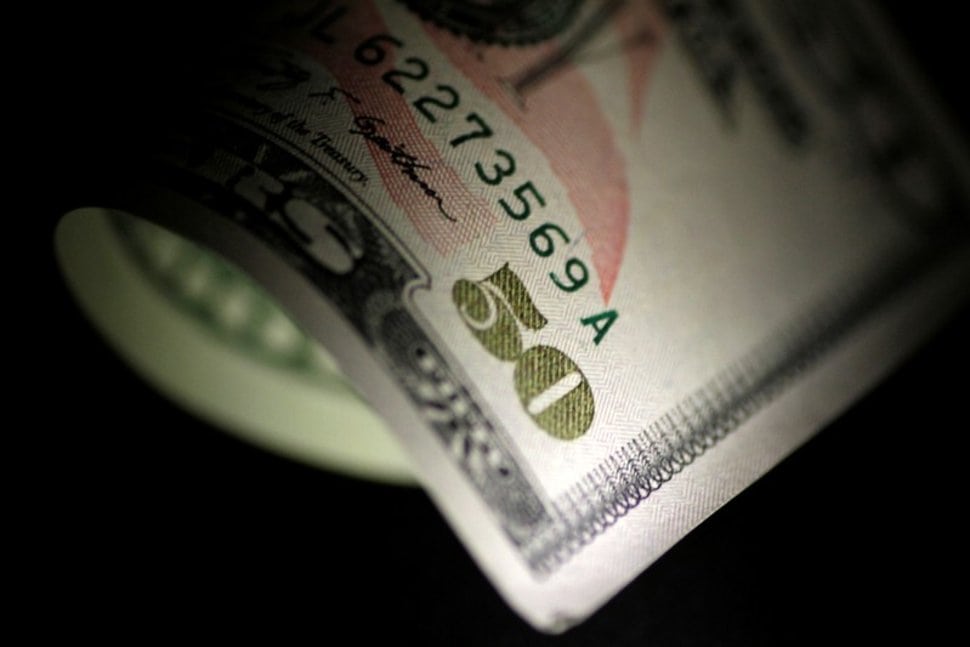
A U.S. Dollar note is seen in this June 22, 2017 illustration photo.

TOKYO – The dollar edged up against key peers such as the euro and the yen on Monday, boosted by the relative strength of the U.S. economy, while losing ground against the Canadian dollar following a rise in crude oil prices.

Financial markets in Australia, Hong Kong and many major countries in Europe are closed on Monday for the Easter holiday. Currency trading continues globally but volume is expected to be light.

The dollar was lackluster against the loonie as crude oil prices rose more than 2 percent following a Washington Post report the United States is likely to ask all importers of Iranian oil to end their purchases or will be subject to U.S. sanctions. [O/R]

The greenback has found support in recent weeks on the back of a gradual rise in U.S. 10-year Treasury yields and signs of strength in the world’s top economy, including better-than-expected retail sales in March, following a weak start to the year.

“It’s better to say that the euro has been weak rather than that the dollar is strong,” said Yukio Ishizuki, senior currency strategist at Daiwa Securities.

“Traders have mostly priced in the weakness of the euro zone economy by now,” Ishizuki said. “It’s a little bit difficult to see the euro weakening further from here, so I think it will be hard for the dollar to strengthen.”

The dollar index was last down a tenth of a percent at 97.383, drifting slightly lower after booking a 0.4-percent gain last week.

The index remained within striking distance of its 2019 high of 97.71 brushed in early March.

Investors’ immediate focus will be on U.S. existing home sales for March, due at 1400 GMT, for further clues on the health of the U.S. economy.

“Yields on U.S. bonds have picked up a bit. I think the dollar is bought to a certain extent in reaction to that,” said Kazushige Kaida, head of foreign exchange at State Street Bank.

In February, U.S. home sales surged to their highest in 11 months, as the housing market showed renewed momentum following a pause in interest rate hikes by the Federal Reserve.

The euro gave up nearly 0.1 percent to $1.1240, adding to last week’s losses of nearly half a percent after data on Thursday showed that activity in Germany’s manufacturing sector shrank for a fourth straight month in April.

Sterling was last a shade lower at $1.2996, dipping below the $1.30 handle and nearly 0.4 percent off a two-month low of $1.2945 hit last month.

The Canadian dollar gained about a quarter of a percent to C$1.3360 on the back of the rise in crude oil prices following the Washington Post report.

Against the Japanese yen, the dollar was about 0.1 percent higher at 111.94 yen, within reach of this year’s peak of 112.17 hit on Wednesday last week.

Starting on Saturday, on Japan will have an unprecedented 10-day holiday from late April to early May to mark the ascension of the new emperor, Crown Prince Naruhito.

Daiwa’s Ishizuki said he expected currency trading by Japanese investors to remain relatively light as traders and companies are shifting into holiday mode.

With 6 months to go, Justin Trudeau is up against history

Unlike most prime ministers since the end of the Second World War, Justin Trudeau and his party are trailing in the polls with just six months to go before the federal election.

Incumbent governments usually lead in the polls this far out from an election — and struggle when they don’t

Half a year is a long time in politics, but when you’re trailing in the polls it might not feel like it’s long enough.

That’s where Justin Trudeau’s Liberal government finds itself with six months to go before the fall federal election.

And when past prime ministers have been in this spot before, it generally hasn’t ended well for them.

Since the Second World War, when political public opinion polling first started in Canada, the governing party has trailed in the polls six to eight months before the subsequent election nine times.

On two occasions, that party was reduced to a minority government. On five occasions, it was defeated. On only two occasions did it secure a majority.

For parties that led in the polls this far out from election day, it’s a much different picture: of the 14 such cases since 1945, the party leading has been defeated just three times.

That’s a bad historical precedent for Prime Minister Trudeau.

According to the CBC’s Canada Poll Tracker, an aggregation of all publicly available polling data, the Liberals trail the Conservatives by a margin of 2.5 percentage points, with 32.7 per cent against 35.2 per cent for Andrew Scheer’s party.

On average, prime ministers who met defeat at the ballot box trailed in the polls by a margin of three points at the six-month mark. Those parties that went on to re-election with a majority government enjoyed an average lead of 12 points at the six-month mark.

Obviously, much can change in six days before an election, let alone six months. Still, the historical record shows it’s much better to be ahead than behind, even this far out.

Exceptions that prove the rule

Past prime ministers have successfully overcome wider polling deficits than the one Trudeau faces now. But those were exceptional cases.

Ahead of the 1962 election, John Diefenbaker’s Progressive Conservatives were behind Lester Pearson’s Liberals by a margin of six points. In the end, Diefenbaker managed to hold on but was sent back to Ottawa with a shaky minority government that met its end within a year.

In early 1988, Brian Mulroney’s PCs were behind by seven points. But Mulroney was able to turn the November federal election into a referendum on the free trade agreement with the United States, keeping his party in power in the process.

At the end of 1967, the Liberals were trailing the PCs and their newly installed leader, Robert Stanfield, by nine points. It took a change of leadership of their own for the Liberals to win in 1968 under Pierre Trudeau.

PC Leader Robert Stanfield shakes the hand of Prime Minister Pierre Trudeau ahead of the 1968 leaders debate. Stanfield led in the polls in late 1967 before Trudeau took over the Liberal Party in 1968.

Pierre Trudeau barely overcame the odds again after just one term in 1972. He was narrowly behind Stanfield going into that fall’s election and emerged with a minority government.

That isn’t the only example that has some familiar (as well as familial) connections to the current Trudeau government. The Liberals were trailing behind the PCs by a similar margin at the end of 1978, before Joe Clark’s short-lived minority government was elected in 1979.

There are a few exceptions on the other side of the ledger, too. Louis St-Laurent lost despite a 17-point lead in 1957 after 22 years of Liberal government, Paul Martin was ahead by 10 points in 2005 before he lost his lead to the Conservatives over the course of the 2005-06 campaign. And Stephen Harper was narrowly ahead in 2015 at the six-month mark, though that was due to the opposition vote being divided between Trudeau’s Liberals and Tom Mulcair’s New Democrats.

Scheer, Singh on par with predecessors

Both the Conservatives and the NDP are roughly where those parties tend to be at this stage of the pre-election period.

At just over 35 per cent nationwide, Scheer’s party is about even with where past Conservative parties under different leaders have stood with six months to go. Excluding the run-up to the 1997 and 2000 elections — when the right was divided between the PCs and the Reform/Canadian Alliance parties — the Conservatives have averaged 34 per cent support with six months to go before an election.

It’s a level of support that can go either way. Clark’s party was at 37 per cent at this stage before his defeat in 1980, while Diefenbaker’s PCs were also at 37 per cent before he was reduced to a minority government in 1962. Stanfield’s party had 35 per cent support at the six-month mark before he held Pierre Trudeau to a minority in 1972, while Harper’s Conservatives were at 35 per cent before he was re-elected in 2008.

The NDP’s current standing in the polls is very typical for the party this far out from voting day. With 15.3 per cent, Jagmeet Singh’s NDP is just slightly below the 16 per cent average the party and its predecessor, the CCF, have managed at this point in election cycles since 1945. It puts Singh right in the middle of the pack of historical NDP performances.

Liberals at their lowest, except for the last three times

The Liberals’ current level of support, however, is atypical. The Liberals have averaged 40 per cent support six months ahead of past elections — but the party’s current 33 per cent support puts Trudeau’s Liberals in 21st place out of 24 past elections. The only pre-election periods in which the Liberals had lower support than they do today were in 2008, 2011 and 2015 — the last three federal votes.

Of those, the 2011 election was the worst the Liberal Party of Canada has ever experienced. The last one in 2015 saw the Liberals win the most seats they have since 1949.

It’s a reminder that history is not always doomed to repeat itself. Looking at where the numbers stand six months before Canadians render their verdict on Trudeau’s time in power, and the record of his predecessors in the office, the prime minister must be hoping for a clean break with history.

Ontario cuts conservation authority funding for flood programs

Toronto has experienced several major flooding events in the last decade, including an event that left much of the Toronto Islands submerged in several feet of water.

Ontario seeing more intense, more frequent flooding events in recent years

Ontario conservation authorities say the provincial government has cut their funding for flood management programs in half.

Conservation Ontario, which represents the province’s 36 conservation authorities, said impacts of the cuts will be felt immediately, particularly in smaller and more rural areas.

“Cutting natural hazards funding is particularly problematic right now in light of the fact that — like everywhere else — Ontario is experiencing stronger and more frequent flood events as a result of climate change impacts,” general manager Kim Gavine said in a statement.

“Using a watershed-based approach, conservation authorities deliver effective and cost efficient flood management programs across the province, partnering for many years with the province, municipalities and others.”

Ontario had given $7.4 million to the conservation authorities for that work, but they say that has now been reduced by 50 per cent.

Conservation authorities forecast flooding and issue warnings, monitor stream flow, regulate development activities in flood plains, educate the public about flooding and protect natural cover that helps reduce the impacts of flooding.

Natural Resources and Forestry Minister John Yakabuski said the government is trying to eliminate the deficit — currently at $11.7 billion — and has asked conservation authorities to focus on their core mandate.

“Flood control is part of that core mandate and we’ve asked them to focus on that,” he said.

“Across the province we average less than 10 per cent of conservation authorities’ funding. In fact, some of them are as low as 2.5 per cent provincial funding. And we’ve heard from different conservation authorities across the province that have said that this will not affect their ability to deal with flood management.”

Green party Leader Mike Schreiner said it’s short-sighted, when a flood on one day in August last year in Toronto cost $80 million in insurable losses.

“I don’t think there’s any way to reconcile saying, ‘Focus on your core mandate and then we’re going to cut your core mandate in half,’ especially at a moment in time when we know the intensity of storms is going up, the risk of flooding is going up, the costs associated with that are going up,” he said.

The chief administrative officer of Quinte Conservation said his organization has relied on the province’s transfer payment to fund essential flood programs throughout its 6,000 square-kilometre watershed.

“The government has been very clear about its goal to reduce costs, but a 50-per-cent reduction in payments that support government mandated responsibilities will have a significant impact on how we can deliver our programs and services,” Brad McNevin said in a statement.

Financial Market ‘Pause Party’ Makes Fed Rate Cut Less Likely

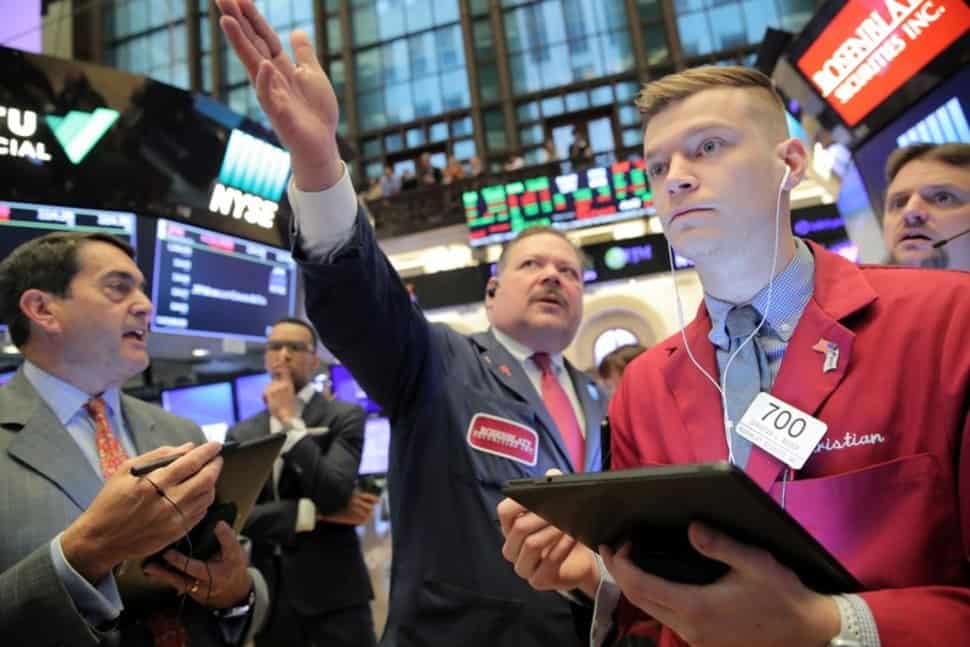
Traders work on the floor at the New York Stock Exchange (NYSE) in New York, U.S., April 18, 2019.

WASHINGTON/NEW YORK – Risk-taking has been the rage since the Federal Reserve quit hiking interest rates at the end of last year. U.S. stocks are back near record highs and investors are stockpiling the lowest-grade corporate bonds with only a smidgen of extra compensation for the added risk.

That rebounding mood on Wall Street may be welcomed by a president that has been demanding the Fed cut rates after markets fell sharply last year, and complaining that even pausing at the current level is the wrong call.

But if anything the ‘pause party’ on Wall Street makes it even less likely that the U.S. central bank will cut rates. Recent positive news on retail sales and exports, which have eased concerns of a sharply slowing economy, makes the case for a rate cut even weaker.

Investors at least have gotten the message, and shifted from projecting a rate cut later this year to now putting the odds at only 50-50 that the Fed will move lower by early 2020.

Wall Street celebrates the Fed’s ‘pause https://tmsnrt.rs/2VRQYqp

The state of financial markets, say some analysts, is evidence the Fed’s rate increases last year were on point, allowing the economy to continue growing while keeping risks in check. A rate cut at this stage would only be courting problems.

“The argument for why they should keep the possibility of a rate hike on the table is because of financial stability,” Citi chief economist Catherine Mann said in remarks on Wednesday to a conference on financial stability at the Levy Economics Institute of Bard College.

After a decade of near zero interest rates, “moving toward a constellation of asset prices that embodies risks is critical for getting us to a more stable financial market,” she said, noting that both equity prices and low-grade bond yields show a market that remains too sanguine.

In their critiques of the Fed, U.S. President Donald Trump, White House chief economic adviser Larry Kudlow, and possible Fed nominee Stephen Moore have argued that lower rates would allow faster growth and be in line with Trump’s economic plans. They contend that, with the risk of inflation low, the central bank does not need to maintain ‘insurance’ against it by keeping rates where they are.

 Overlooked in that analysis are the financial stability concerns steadily integrated into Fed policymaking since the 2007 to 2009 financial crisis. Mann spoke at a conference named in honor of economist Hyman Minsky, who explored how financial excess can build during good times, and unwind in catastrophic fashion. The downturn a decade ago showed just how deeply that dynamic can scar the real economy.

 Financial stability isn’t a formal mandate for the Fed, which under congressional legislation is supposed to maintain the twin goals of maximum employment and stable prices. But since the crisis the central bank has concluded that keeping financial markets on an even keel is a necessary condition for achieving the other two aims.

That doesn’t mean an end of volatility or a guarantee of profits, but rather that risks are properly priced and that the use of leverage – investments made with borrowed money – is kept within safe limits.

Keeping an eye on stock valuations https://tmsnrt.rs/2Dr6u5z

 That's a key reason why even policymakers focused on maintaining high levels of employment, like Boston Fed president Eric Rosengren, at times have taken on a hawkish tone in favor of rate increases. The worse outcome for workers, Rosengren and others have said, would be to let markets inflate too much, and crash again, even if that means risking a bit higher unemployment in the interim. 

Markets are currently “a little rich,” Rosengren said in recent remarks at Davidson College in North Carolina.

Though not enough to warrant a rate increase, he said, it does argue against a rate reduction. Overall, Fed officials including Chairman Jerome Powell say they feel financial risks are within a manageable range, something policymakers feel has been helped along by the rate increases to date.

The state of financial markets is “something that the Fed has to wrestle with,” Rosengren said. “It’s appropriate for interest rates to be paused right now.”