
Archives for April 10, 2019

Canada Goose takes off

Luxury parka maker Canada Goose announced plans today to open six new stores including two in Europe.

The retailer says it plans to open a store in Milan, Italy, and in Paris as well as an additional store in the United States and three more in Canada.

The Milan store will be on Via della Spiga in the city’s fashion district, while the Paris store will be on Rue St. Honore, which is also home to some of the world’s top luxury retailers.

The new U.S. store will be in Minneapolis, Minn., at the Mall of America.

The new Canadian locations will be in Toronto at the CF Sherway Gardens mall, in Edmonton at the West Edmonton Mall, and in Banff, Alta.

Canada Goose currently operates 11 company stores.

Companies in this story: (TSX:GOOS)

Shaw reports profit

Shaw Communications Inc. reported a second-quarter profit of $155 million compared with a loss of $175 million a year earlier.

The company says the profit amounted to 30 cents per share for the three months ended Feb. 28 compared with a loss of 35 cents per share in the same quarter last year.

Revenue for the quarter totalled $1.32 billion, down from $1.33 billion a year ago.

The dip in revenue came as the company’s wireline business, which includes its traditional cable and satellite TV, internet and phone operations, held steady at about $1.07 billion.

Wireless revenue dipped to $247 million compared with $264 million a year ago as a drop in equipment revenue more than offset an increase in service revenue.

Analysts on average had expected a profit of 30 cents per share for the quarter and revenue of $1.37 billion, according to Thomson Reuters Eikon.

‘End of the line’: City terminates Thales’ troubled Metro Line LRT contract Social Sharing

The company responsible for the Metro Line signalling system says its contract has been terminated by the City of Edmonton.

Contractor ‘extremely disappointed’ in city’s ‘commitment to the failure of this project’

The City of Edmonton has officially severed ties with the company behind the Metro Line LRT’s problem-riddled signalling system.

Thales Canada Inc. was served a notice of termination on April 4, the city confirmed in a news conference Tuesday. 

“This is the end of the line for Thales,” Mayor Don Iveson told reporters. “Thales has consistently let Edmontonians down in delivering on their contractual obligations. 

“The signalling system they delivered to the city isn’t complete, isn’t reliable, has not worked.”

Iveson said there was “ample evidence” to support the termination. The decision was unanimously supported by council, he said. 

The city said field testing of the system, which began in December, found that the Thales system couldn’t keep trains on schedule and caused trains to stop suddenly.

‘Enough is enough’

“We are not the first city to experience significant reliability issues with Thales,” Iveson said. “Their shortcomings are well documented, from New York to Singapore to Hong Kong.

“The City of Edmonton has given Thales ample time, five years in fact, and plenty of resources to complete their work but enough is enough and it’s time to find a resolution on the Metro Line without Thales.

“We will now move forward with a different signalling system that will deliver the LRT we all expect and deserve. And this isn’t about picking a scapegoat, it’s about accountability.” 

The termination will not immediately change Metro Line operations, the city said. For now, Metro Line trains will continue to operate on current schedules using the “incomplete Thales signalling system.” 

City sought settlement, Thales went ‘public’ 

City manager Linda Cochrane said administration made every effort to find a resolution to the ongoing contract issues before the termination notice was served.

“We issued a formal notice of termination to Thales and proposed that it remain confidential so we could attempt to reach a settlement but Thales has alternatively chosen to go public,” Cochrane said.

 Thales said its employees were escorted from the worksite last week.

“Thales is extremely disappointed in the city’s commitment to the failure of this project and its abandonment of the objectives to achieve a better LRT service for Edmontonians,” Thales said in a harshly-worded news release earlier Tuesday.

“Thales regrets this decision and will vigorously pursue appropriate remedies with all means available to us.” 

Company officials held a news conference Tuesday morning at Manulife Place in downtown Edmonton.

“This is absolutely not the message Thales wanted to be delivering today,” Dave Beckley, ThalesCanada’s vice-president of customer service, told reporters. “Despite years of challenges on this project, we never walked away.”

The cancellation of the contract is unprecedented in the company’s history, Beckley said.

“Every job I’ve worked on has had surprises … and we’ve worked through them with the strong and solid support of our customers, and unfortunately that has not been the case here.”

Dave Beckley, Thales Canada’s vice-president of customer service, speaks in Edmonton Tuesday, April 9.

Thales said it stands by its work on the LRT line and “thousands of hours of testing on the system” have demonstrated that both the Metro and Capital Lines are ready for full service.

“Instead of working with Thales to deliver a successful service to LRT riders, and after years of unprecedented interference in this project, the city spent months conducting its own testing in a manner contrary to industry standards, while contemplating a fundamental change to the Metro Line signalling scheme.”

Thales said that since work on the Metro Line began in 2011, the city has continually asked for changes to the system which fall outside the original scope of the project, including automated train operators and the introduction of special train service to NAIT.

‘Thales will not be a scapegoat’

A city plan to remove all Thales equipment from the transit system demonstrates a disregard for Edmontonians’ investment into the project and will waste millions of dollars, Thales said.

Any alternate transit plan will only lead to future traffic disruptions for Edmontonians, the company said.

“Despite these extraordinary efforts, Thales continued to witness a fundamental lack of leadership from the City of Edmonton on this project,” Beckley said in the news release.

“Thales will not be a scapegoat for the city’s lack of experience and understanding of [communications based train control] systems. It is this type of challenging work environment that contributed to the failure of this infrastructure project, shortchanging Edmontonians and ultimately eroding trust in the LRT.”

In May, the city issued a notice of default on the signalling contract after Thales Canada Inc. failed to fix the system by council’s April 30, 2018 deadline.

Under that notice, the company committed to a new deadline of Dec. 4, 2018.

City has withheld $22 million

On the day of the deadline, Thales announced the signalling system was fully functional. The same day, the city announced that it would put the signalling system through a series of tests to ensure it was working properly.

The city has paid Thales $33 million but has withheld a further $22 million.

The Metro Line LRT stops at MacEwan University, the Royal Alexandra Hospital and NAIT and has more than 34,000 riders per week day.

The $600-million line has been plagued by problems since it opened more than a year late in September 2015. An audit that year revealed the contract with Thales was poorly managed, and that updates and delays weren’t communicated properly to city council.

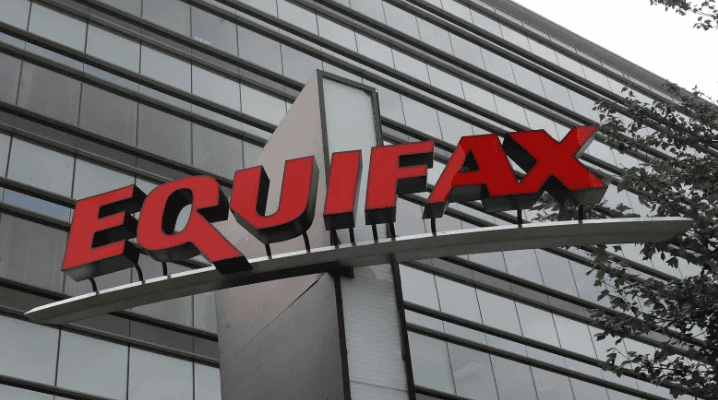
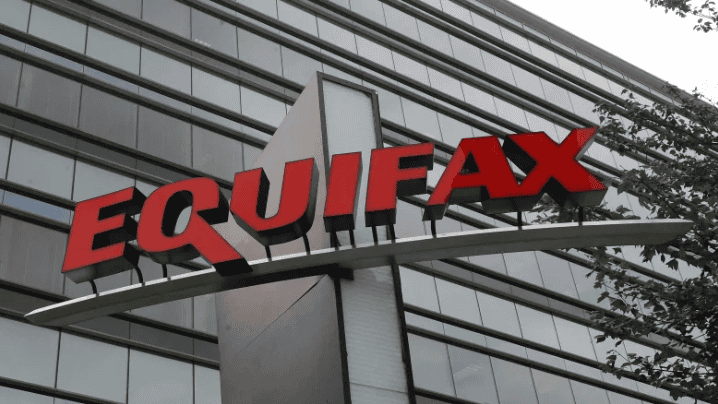
Equifax fell short of privacy obligations to Canadians, says privacy commissioner

The breach occurred when hackers gained access to one of Equifax’s systems on May 13, 2017 through a vulnerability in the software platform the company had known about for more than two months, but had not fixed.

More than 143 million people around the world, including 19,000 Canadians, were affected

Equifax contravened Canada’s privacy law and fell short of its obligations to Canadians during and after a global data breach in 2017, federal privacy commissioner Daniel Therrien said Tuesday.

More than 143 million people around the world, including 19,000 Canadians, were affected by unauthorized access the financial services company’s systems.

“Given the vast amounts of highly sensitive personal information Equifax holds, and its pivotal role in the financial sector as a credit reporting agency, it was completely unacceptable to find such significant shortcomings in the company’s privacy and security practices,” Therrien said in a news release.

His office concluded the company’s deficiencies included poor security safeguards, a lack of accountability for Canadians’ information and limited protection measures offered to affected individuals after the breach.

The Office of the Privacy Commissioner also concluded that Equifax retained information too long.

Therrien said Equifax Canada and its U.S.-based parent company have agreed to improve their security, accountability and data destruction.

The company said it has co-operated with the investigation.

“Although Equifax does not agree with all of the OPC’s findings and recommendations, we value our relationship with the OPC and the work that it does to protect Canadian consumers,” the company said by email.

“Data security and combating cybercrime is an ongoing battle for all organizations which requires continued innovation and attention.”

The breach occurred when hackers gained access to one of Equifax’s systems on May 13, 2017 through a vulnerability in the software platform the company had known about for more than two months, but had not fixed.

The attackers operated undetected for about 77 days, ultimately gaining access to Canadian personal information unrelated to the compromised portal.

Equifax Inc. detected the attack on July 29, 2017 and contained it the following day. However, Equifax Canada wasn’t notified of the breach until just before the U.S. parent company publicly disclosed it on Sept. 7, 2017.

Canadians whose personal information was breached were notified the following Oct. 23, but letters sent to them included inaccurate information, including inviting them to use a portal that wasn’t accessible from Canada.

Of the 19 people complained to the privacy commission about Equifax, five said their personal information was compromised during the breach.

They alleged that Equifax shouldn’t have allowed their personal information to be compromised and they were surprised their information was in the United States at all.

Equifax Canada stored Canadians’ credit files on servers within the country and segregated from Equifax Inc.’s systems. However, the information of 19,000 Canadians was breached after they purchased products and services from Equifax Canada, with Equifax Inc. playing an integral role in delivering the purchases.

The the OPC said the transfer of information to the United States without the customers’ knowledge was inconsistent with its obligations to obtain consent before disclosing personal information to third parties located in another country.

The privacy office said it has launched a consultation on cross-border transfers that will result in clarified obligations about obtaining valid consent and accountability for protecting the information. Written submissions are accepted until June 4.

“We know there are advantages to transborder data flows, but individuals ought to — and do, under the law — have a say in whether their personal information will be disclosed outside Canada,” Therrien said.

“Whether this affects their decision to enter into a business relationship with an organization or to forego a product or service should be left to the discretion of the individual.”

While Equifax Canada offered free credit monitoring to breach victims for at least four years, other protections didn’t match what was offered by the parent company, including credit freezes that restrict access to credit files.

“Canadians affected by the breach face the same risks, and it is unfortunate that Equifax Canada refused to offer a credit freeze option to affected Canadians,” added Therrien.