
Archives for March 10, 2019

Flickr protects all its users’ Creative Commons photos

It will preserve memorialized accounts’ uploads, whether they’re pro subscribers or free users.

Flickr has taken extra steps to protect the photos on its platform uploaded under the Creative Commons license. On March 12th, the service will purge free tier users’ photos until they only have 1,000 items saved — not including CC-licensed items, that is. Flickr clairifed after it first announced the purge last year that it will not delete any Creative Commons photo. Now, its VP of Product, Andrew Stalden, has revealed that the platform will leave all CC images untouched, even those uploaded in the future. Further, Flickr will now memorialize accounts owned by deceased members to make sure they never get affected by the new free tier policy.

It will preserve all the public content of an “in memoriam” account, even if the user’s Pro membership lapses. Flickr will also lock it up to prevent bad actors from logging in and taking over. Users who know of an account that doesn’t have a caretaker and needs to be memorialized can ask the service to change its status right here. Finally, the service is axing its bulk license change tools in order to make sure members don’t mistakenly flip the CC licenses on their images unless they meant to do so. They can always switch their items’ licenses individually on the photo page itself.


The Rolls-Royce Cullinan is the nicest office you’ll never sit in

Take that, WeWork.

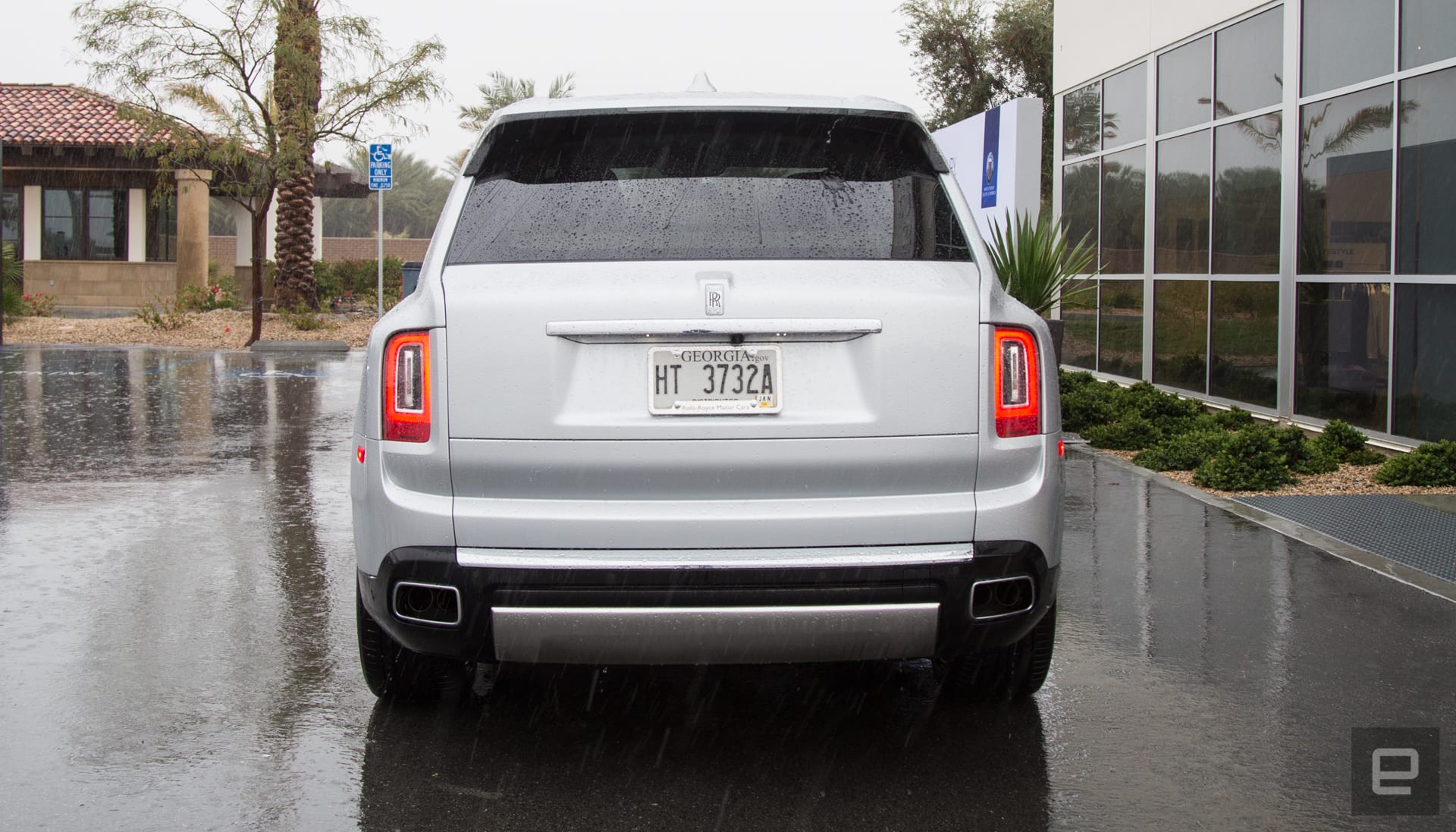
The pinnacle of high society is the Rolls-Royce. Only the richest TV and movie characters roll up in a Rolls. When they hop out of the back, you know that they’re the heirs to a diamond mine or a diabolical supervillain with a huge bank account. So it’s not surprising that the back of the first SUV from the automaker exudes an aura of exclusivity that transcends automobile segments. But they let me drive it all the same.

The $325,000 Cullinan is an exercise in combining the latest automotive tech with old-school money. It’s named after the largest diamond ever discovered. That gem sits embedded in the Queen of England’s Imperial State Crown. Sure, the name is a bit on the nose for a high-end British brand, but even with that in mind, it’s tough to explain the feeling of driving the Cullinan.

It’s like floating in a glassy swimming pool filled with Evian. Potholes, cracks in the asphalt, even the puddles that grow larger by the second (thanks to an uncharacteristic rainstorm in Palm Springs), were inconsequential to the luxury SUV. Sure the tires bounced up and down, but the suspension and Rolls-Royce’s “Magic Carpet Ride” technology smooth literally everything out.

Rolls Royce Cullinan

At one point, I was aiming for holes and small ponds to get the reaction I expected from driving a vehicle into a rough patch. Nope. The SUV made sure I was comfortable as possible while overlooking the bonnet of the car. Which brings me to the fact that while other automakers curve the hood of their vehicles so they disappear. Not Rolls-Royce. You see the entire great expanse that ends with the famous Spirit of Ecstasy hood ornament.

Under that hood is a 6.75-liter twin-turbo V12 engine that delivers 563 horsepower and 627 foot-pounds of torque. That gargantuan engine purrs lightly while cruising. It also helps that the vehicle has seven layers of soundproofing. But the powerplant can propel the luxury estate on wheels with an impressive amount of gusto.

So it can put the hammer down when needed, but that’s the Rolls-Royce way. It’s almost blasphemy to stomp the accelerator while sitting behind the wheel surrounded by stitched leather and a large dash that has enough wood to build a beautiful shed in your backyard. You don’t “go fast” in a Rolls. Everyone waits for you while you leisurely make your way to your destination.

The infotainment system goes all-in on that feeling of upper-class decor. A minimalist affair that delivers what a modern oligarch would expect from their Rolls — and it also supports CarPlay!

The Cullinan also ships with the requisite drivers’ assist features. Unfortunately, I didn’t have a chance to properly put it through its paces, but it’s more than likely on par with what BMW (the parent company of Rolls-Royce) has on the road.

Rolls Royce Cullinan

The exquisite-looking knobs and switches on the dash are just begging to be flipped and turned with the automaker opting for a more refined labeling system than pretty much every other car on the road. The climate control fan doesn’t have a “low” feature. Instead, it’s “soft.” There’s nothing “low” about a Rolls, apparently.

But the real moment where you realize you’re riding in the pinnacle of automotive luxury is when you’re in the backseat. A Rolls-Royce, after all, is meant to transport the rich and powerful. Sure they might drive themselves sometimes, but to make a real entrance, you emerge from the back seat of the Cullinan.

It’s, of course, more comfortable than any car I’ve ever sat in. But more importantly, it’s super-nerdy. Yes, it’s classy and beautiful, but if the backseat of a car has a small desk table (imagine a very fancy seat-back table) and tablet that emerge with the push of a button, that’s nerdy. With it, you can control the infotainment system of the vehicle, including the navigation. Instead of reading a paper copy of The Wall Street Journal, today’s tech-savvy affluent passengers will be firing up the latest podcast or financial news from the comfort of their very own tablet which, like the front display, is a reskinned version of BMW’s.

That should make potential owners sigh with relief. BMW has a great infotainment system UI, and it makes sense for Rolls-Royce to use that instead of trying to roll its own. Let the parent company do all the heavy lifting and the ultra-high-end brand can just adjust it for its customers. Whether you’re in the back or front seat, the last thing you want is a system that’s not mature ruining your experience.

My participation involved opening and closing the little workstation again and again. While the inside is an impressive collection of leather, shiny metal and wood brought together to resemble the library in a British manor, the exterior is more subdued.

Yes, the giant wheels, bonnet and front of the vehicle are pure Rolls, but overall it seems like the SUV needs something to truly convey the same styling of the automaker’s other vehicles. In other words, it’s a bit blocky.

Rolls Royce Cullinan

Overall, the Cullinan is a wonderful mix of old-country class fused with impressive technology. It’s like an iPad wrapped in an oak and leather case that just happens to massage your hands and cost more than your first car. Which is exactly what the Rolls-Royce buyer wants. That, and a reduction in the estate tax.

Finally Shows Promise: Fitbit, Inc. (FIT)

Shares of Fitbit, Inc. (NYSE:FIT) have generated a 1-year price change of 9.73%. However, a year is a very long time in the capital markets arena, so let’s take a look at some more recent price performance. This stock has seen its price move by -2.87% in the past week, and it has experienced a price shift of -9.45% over the past month.

How is this company’s stock performing right now? This publicly-traded organization’s shares demonstrated a change of -4.64% during most recent session, ending the trading day priced at $5.75 with a 24-hour trading volume that reached 7.45 million – compared to its average trading volume of as 5.39M, as recorded over the past three months. With that closing price, the market capitalization of this company is now sitting at $1.66B.

At the time of writing, Fitbit, Inc.. has a P/S value of 1.10 and a P/B values of 2.03. The current distance from this particular stock’s 20 days simple moving average is -10.42%, while it is -4.22% from its 50 days simple moving average and -1.16% from its recorded 200 days simple moving average. Additionally, this stock’s distance from its 52-week high price is currently -26.19%, while it’s sitting 35.93% away from its 52-week low price.

In the investing world, the current ratio and the debt ratio are two metrics that demonstrate to potential buyers of a stock how fast the company is able to pay down the debt that it owes and just how soon it can fully take care of all its present dues. At the present moment, the current ratio of FIT is at 1.80 while its debt ratio is 0.00.

A public company’s share value can be further analyzed by looking at its EPS growth rate, which Wall Street analysts use to project its 5-year EPS growth rate. For Fitbit, Inc. (NYSE:FIT), analysts are expecting its 5-year EPS growth rate to be 10.50%.

While considering a stock buy, it’s wise to consider what the average Wall Street analyst’s current price target is for each potential investment. It provides us with an idea of where certain stocks’ price paths are expected to go in the near future. At the moment, the price target set for FIT is $6.64. It’s also helpful to look at the average analyst recommendation score – which is provided on a scale of 1 to 5 where 1 is strong buy, 2 is buy, 3 is hold, 4 is Sell and 5 is a strong sell. Right now, the average analyst recommendation for FIT stands at 2.70, which indicates that analysts recommend investors Buy their shares of FIT.

Traders use the ATR to analyze potential exit and entry points, as it is a useful tool to add into any trading technique. ATR for this stock is sitting at 0.30. Beta tells us about a stock’s volatility, also known as its systematic risk, compared to the market overall. At the time of this article, the beta value for FIT is 1.78. For the past 7-day period, this stock’s volatility was 4.89%, while it was 4.17% for the past 30-day period.

Professionals on Wall Street also frequently check the Relative Strength Index (RSI) of a potential investment, which tells us the speed and change of a stock’s price path. This RSI is expressed on a scale of 0 to 100. If it is higher than 70, then it’s overbought, while it’s oversold if it is below 30. Right now, FIT has an RSI of 39.42.

Why This Stock Could Go Crazy? NVIDIA Corporation (NVDA)

Shares of NVIDIA Corporation (NASDAQ:NVDA) have generated a 1-year price change of -38.36%. However, a year is a very long time in the capital markets arena, so let’s take a look at some more recent price performance. This stock has seen its price move by -3.24% in the past week, and it has experienced a price shift of -0.46% over the past month.

How is this company’s stock performing right now? This publicly-traded organization’s shares demonstrated a change of -1.83% during most recent session, ending the trading day priced at $149.26 with a 24-hour trading volume that reached 11.11 million – compared to its average trading volume of as 16.63M, as recorded over the past three months. With that closing price, the market capitalization of this company is now sitting at $91.13B.

At the time of writing, NVIDIA Corporation. has a P/S value of 7.78, a P/E value of 24.76 and a P/B values of 9.71. The current distance from this particular stock’s 20 days simple moving average is -3.34%, while it is 1.33% from its 50 days simple moving average and -29.99% from its recorded 200 days simple moving average. Additionally, this stock’s distance from its 52-week high price is currently -49.02%, while it’s sitting 19.93% away from its 52-week low price.

In the investing world, the current ratio and the debt ratio are two metrics that demonstrate to potential buyers of a stock how fast the company is able to pay down the debt that it owes and just how soon it can fully take care of all its present dues. At the present moment, the current ratio of NVDA is at 7.90 while its debt ratio is 0.21.

A public company’s share value can be further analyzed by looking at its EPS growth rate, which Wall Street analysts use to project its 5-year EPS growth rate. For NVIDIA Corporation (NASDAQ:NVDA), analysts are expecting its 5-year EPS growth rate to be 8.37%.

While considering a stock buy, it’s wise to consider what the average Wall Street analyst’s current price target is for each potential investment. It provides us with an idea of where certain stocks’ price paths are expected to go in the near future. At the moment, the price target set for NVDA is $186.53. It’s also helpful to look at the average analyst recommendation score – which is provided on a scale of 1 to 5 where 1 is strong buy, 2 is buy, 3 is hold, 4 is Sell and 5 is a strong sell. Right now, the average analyst recommendation for NVDA stands at 2.10, which indicates that analysts recommend investors Buy their shares of NVDA.

Traders use the ATR to analyze potential exit and entry points, as it is a useful tool to add into any trading technique. ATR for this stock is sitting at 5.11. Beta tells us about a stock’s volatility, also known as its systematic risk, compared to the market overall. At the time of this article, the beta value for NVDA is 1.87. For the past 7-day period, this stock’s volatility was 2.81%, while it was 2.95% for the past 30-day period.

Professionals on Wall Street also frequently check the Relative Strength Index (RSI) of a potential investment, which tells us the speed and change of a stock’s price path. This RSI is expressed on a scale of 0 to 100. If it is higher than 70, then it’s overbought, while it’s oversold if it is below 30. Right now, NVDA has an RSI of 45.59.

Stock Investment Overview: Stericycle, Inc. (SRCL)

Shares of Stericycle, Inc. (NASDAQ:SRCL) have generated a 1-year price change of -24.51%. However, a year is a very long time in the capital markets arena, so let’s take a look at some more recent price performance. This stock has seen its price move by 6.89% in the past week, and it has experienced a price shift of 5.89% over the past month.

How is this company’s stock performing right now? This publicly-traded organization’s shares demonstrated a change of -0.04% during most recent session, ending the trading day priced at $47.65 with a 24-hour trading volume that reached 1.97 million – compared to its average trading volume of as 1.24M, as recorded over the past three months. With that closing price, the market capitalization of this company is now sitting at $4.35B.

At the time of writing, Stericycle, Inc.. has a P/S value of 1.24, a P/E value of 209.91 and a P/B values of 1.41. The current distance from this particular stock’s 20 days simple moving average is 3.70%, while it is 12.02% from its 50 days simple moving average and -11.80% from its recorded 200 days simple moving average. Additionally, this stock’s distance from its 52-week high price is currently -33.29%, while it’s sitting 38.68% away from its 52-week low price.

In the investing world, the current ratio and the debt ratio are two metrics that demonstrate to potential buyers of a stock how fast the company is able to pay down the debt that it owes and just how soon it can fully take care of all its present dues. At the present moment, the current ratio of SRCL is at 1.10 while its debt ratio is 0.97.

A public company’s share value can be further analyzed by looking at its EPS growth rate, which Wall Street analysts use to project its 5-year EPS growth rate. For Stericycle, Inc. (NASDAQ:SRCL), analysts are expecting its 5-year EPS growth rate to be 6.70%.

While considering a stock buy, it’s wise to consider what the average Wall Street analyst’s current price target is for each potential investment. It provides us with an idea of where certain stocks’ price paths are expected to go in the near future. At the moment, the price target set for SRCL is $55.00. It’s also helpful to look at the average analyst recommendation score – which is provided on a scale of 1 to 5 where 1 is strong buy, 2 is buy, 3 is hold, 4 is Sell and 5 is a strong sell. Right now, the average analyst recommendation for SRCL stands at , which indicates that analysts recommend investors Buy their shares of SRCL.

Traders use the ATR to analyze potential exit and entry points, as it is a useful tool to add into any trading technique. ATR for this stock is sitting at 1.45. Beta tells us about a stock’s volatility, also known as its systematic risk, compared to the market overall. At the time of this article, the beta value for SRCL is 1.06. For the past 7-day period, this stock’s volatility was 4.37%, while it was 2.66% for the past 30-day period.

Professionals on Wall Street also frequently check the Relative Strength Index (RSI) of a potential investment, which tells us the speed and change of a stock’s price path. This RSI is expressed on a scale of 0 to 100. If it is higher than 70, then it’s overbought, while it’s oversold if it is below 30. Right now, SRCL has an RSI of 59.55.

Another Way Of Looking At Sarepta Therapeutics, Inc. (SRPT)

Shares of Sarepta Therapeutics, Inc. (NASDAQ:SRPT) have generated a 1-year price change of 87.58%. However, a year is a very long time in the capital markets arena, so let’s take a look at some more recent price performance. This stock has seen its price move by -7.15% in the past week, and it has experienced a price shift of -5.49% over the past month.

How is this company’s stock performing right now? This publicly-traded organization’s shares demonstrated a change of 1.27% during most recent session, ending the trading day priced at $133.93 with a 24-hour trading volume that reached 2.16 million – compared to its average trading volume of as 1.25M, as recorded over the past three months. With that closing price, the market capitalization of this company is now sitting at $10.01B.

At the time of writing, Sarepta Therapeutics, Inc.. has a P/S value of 36.55 and a P/B values of 13.86. The current distance from this particular stock’s 20 days simple moving average is -3.82%, while it is 5.89% from its 50 days simple moving average and 5.24% from its recorded 200 days simple moving average. Additionally, this stock’s distance from its 52-week high price is currently -24.12%, while it’s sitting 92.71% away from its 52-week low price.

In the investing world, the current ratio and the debt ratio are two metrics that demonstrate to potential buyers of a stock how fast the company is able to pay down the debt that it owes and just how soon it can fully take care of all its present dues. At the present moment, the current ratio of SRPT is at 8.80 while its debt ratio is 0.65.

A public company’s share value can be further analyzed by looking at its EPS growth rate, which Wall Street analysts use to project its 5-year EPS growth rate. For Sarepta Therapeutics, Inc. (NASDAQ:SRPT), analysts are expecting its 5-year EPS growth rate to be -0.20%.

While considering a stock buy, it’s wise to consider what the average Wall Street analyst’s current price target is for each potential investment. It provides us with an idea of where certain stocks’ price paths are expected to go in the near future. At the moment, the price target set for SRPT is $201.36. It’s also helpful to look at the average analyst recommendation score – which is provided on a scale of 1 to 5 where 1 is strong buy, 2 is buy, 3 is hold, 4 is Sell and 5 is a strong sell. Right now, the average analyst recommendation for SRPT stands at 1.70, which indicates that analysts recommend investors Strong Buy their shares of SRPT.

Traders use the ATR to analyze potential exit and entry points, as it is a useful tool to add into any trading technique. ATR for this stock is sitting at 7.67. Beta tells us about a stock’s volatility, also known as its systematic risk, compared to the market overall. At the time of this article, the beta value for SRPT is 2.08. For the past 7-day period, this stock’s volatility was 4.93%, while it was 4.83% for the past 30-day period.

Professionals on Wall Street also frequently check the Relative Strength Index (RSI) of a potential investment, which tells us the speed and change of a stock’s price path. This RSI is expressed on a scale of 0 to 100. If it is higher than 70, then it’s overbought, while it’s oversold if it is below 30. Right now, SRPT has an RSI of 48.35.