
Archives for February 19, 2019

ANALYSTS ISSUED AWAITATIONS FOR CORNERSTONE ONDEMAND, INC.’S Q1 2019 REVENUE (CSOD)

Cornerstone OnDemand, Inc. (NASDAQ:CSOD) – Stock analysts at DA Davidson issued their Q1 2019 earnings estimates for shares of Cornerstone OnDemand in a research report issued on Wednesday, February 13th. DA Davidson analyst R. Jaluria anticipates that the software maker will earn ($0.05) per share for the quarter. DA Davidson currently has a “Buy” rating and a $65.00 target price on the stock. DA Davidson also issued estimates for Cornerstone OnDemand’s Q2 2019 earnings at ($0.08) EPS, Q3 2019 earnings at ($0.01) EPS, Q4 2019 earnings at $0.03 EPS, FY2019 earnings at ($0.11) EPS, Q1 2020 earnings at $0.05 EPS, Q2 2020 earnings at $0.05 EPS, Q3 2020 earnings at $0.10 EPS, Q4 2020 earnings at $0.15 EPS and FY2020 earnings at $0.34 EPS.

Other research analysts have also recently issued research reports about the stock. JMP Securities restated a “buy” rating and set a $65.00 price target on shares of Cornerstone OnDemand in a research note on Sunday. Goldman Sachs Group assumed coverage on shares of Cornerstone OnDemand in a research note on Friday, February 1st. They set a “neutral” rating and a $56.00 price target for the company. TheStreet upgraded shares of Cornerstone OnDemand from a “d” rating to a “c” rating in a research note on Wednesday, February 13th. Needham & Company LLC restated a “strong-buy” rating and set a $70.00 price target (up previously from $60.00) on shares of Cornerstone OnDemand in a research note on Wednesday, February 13th. Finally, Zacks Investment Research upgraded shares of Cornerstone OnDemand from a “hold” rating to a “buy” rating and set a $58.00 price target for the company in a research note on Tuesday, January 8th. One equities research analyst has rated the stock with a sell rating, three have assigned a hold rating, eight have issued a buy rating and two have issued a strong buy rating to the stock. The company currently has an average rating of “Buy” and an average target price of $61.25.

Shares of CSOD opened at $57.35 on Monday. The stock has a market cap of $3.36 billion, a price-to-earnings ratio of -249.35 and a beta of 1.15. The company has a debt-to-equity ratio of 5.29, a current ratio of 1.59 and a quick ratio of 1.59. Cornerstone OnDemand has a 12 month low of $37.74 and a 12 month high of $60.19.

Cornerstone OnDemand (NASDAQ:CSOD) last announced its quarterly earnings results on Tuesday, February 12th. The software maker reported $0.24 EPS for the quarter, topping analysts’ consensus estimates of $0.22 by $0.02. The firm had revenue of $138.25 million during the quarter, compared to analysts’ expectations of $129.91 million. Cornerstone OnDemand had a negative net margin of 6.29% and a negative return on equity of 30.63%. The company’s revenue for the quarter was up 4.8% compared to the same quarter last year. During the same quarter last year, the company earned $0.19 earnings per share.

Several hedge funds and other institutional investors have recently bought and sold shares of the company. Vanguard Group Inc increased its holdings in shares of Cornerstone OnDemand by 3.5% during the third quarter. Vanguard Group Inc now owns 4,738,027 shares of the software maker’s stock worth $268,882,000 after buying an additional 159,877 shares in the last quarter. Vanguard Group Inc. increased its holdings in shares of Cornerstone OnDemand by 3.5% in the third quarter. Vanguard Group Inc. now owns 4,738,027 shares of the software maker’s stock valued at $268,882,000 after purchasing an additional 159,877 shares in the last quarter. BlackRock Inc. increased its holdings in shares of Cornerstone OnDemand by 4.6% in the fourth quarter. BlackRock Inc. now owns 3,931,599 shares of the software maker’s stock valued at $198,271,000 after purchasing an additional 171,143 shares in the last quarter. Praesidium Investment Management Company LLC increased its holdings in shares of Cornerstone OnDemand by 7.4% in the fourth quarter. Praesidium Investment Management Company LLC now owns 3,442,143 shares of the software maker’s stock valued at $173,587,000 after purchasing an additional 237,527 shares in the last quarter. Finally, Clearbridge Investments LLC increased its holdings in shares of Cornerstone OnDemand by 7.1% in the third quarter. Clearbridge Investments LLC now owns 2,762,049 shares of the software maker’s stock valued at $156,746,000 after purchasing an additional 184,277 shares in the last quarter. 93.51% of the stock is owned by institutional investors.

In other news, Director Harold W. Burlingame sold 1,552 shares of the firm’s stock in a transaction that occurred on Tuesday, December 18th. The shares were sold at an average price of $50.80, for a total transaction of $78,841.60. Following the completion of the sale, the director now owns 53,326 shares of the company’s stock, valued at $2,708,960.80. The transaction was disclosed in a document filed with the SEC, which is accessible through this link. Also, CEO Adam L. Miller sold 29,200 shares of the firm’s stock in a transaction that occurred on Thursday, December 6th. The stock was sold at an average price of $51.70, for a total transaction of $1,509,640.00. Following the sale, the chief executive officer now directly owns 3,289,563 shares of the company’s stock, valued at approximately $170,070,407.10. The disclosure for this sale can be found here. In the last ninety days, insiders have sold 132,041 shares of company stock valued at $7,137,904. Company insiders own 11.70% of the company’s stock.

Cornerstone OnDemand Company Profile

Cornerstone OnDemand, Inc, together with its subsidiaries, provides learning and human capital management software through software-as-a-service model worldwide. Its enterprise human capital management platform comprises four product suites, such as Recruiting Suite that helps organizations to source and attract candidates, assess and select applicants, onboard new hires, and manage the entire recruiting process; Learning Suite, which enables clients to manage training and development programs, knowledge sharing and collaboration among employees, track compliance requirements, and support career development for employees; Performance Suite that provides tools to manage goal setting, performance reviews, competency assessments, development plans, continuous feedback, compensation management, and succession planning; and HR Administration Suite, which supports employee records administration, organizational management, employee and manager self-service, workforce planning, and compliance reporting.


2 Stocks to Watch Today: Electrameccanica Vehicles Corp. (SOLO), New York Community Bancorp, Inc. (NYCB)

Electrameccanica Vehicles Corp. (NASDAQ: SOLO) experienced a high price of $5 with a low value of $4.23 at the end of the last trading session, which followed after a loss of -8.73% and settled at $4.39 during the course of the last 24 hours for the day. Respectfully, the company now has 30.46M shares after the latest changes, so the present market capitalization sits at $133.72M. The trading volume of Electrameccanica Vehicles Corp. shares went over 10,521,193 in a single day during the last trading session in comparison to the average volume of SOLO, usually circulating around 1.76M.

During the course of the last year, the stock has touched a high of $10.00 and a low of $0.90, which as a result has the increased attention of top market experts who are tracking the progress of the asset as it is getting closer to a notable historic high price or low value.

In the preceding year, the company reportedly generated EPS of -$0.37 per share of its common stock. The profitability indicators are showing that this organization has a gross margin of 31.50%.

If we were to do a comparison between the current price and its previous movement in the market, we can easily conclude that the price went to a positive change, going up by +3.17 in the past five trading days, which resulted in a percentage change of +259.84% and a moving average of 3.23. In the past 20 days, its price changed by +3.10, which means that the stock’s moving average was 1.76. Looking back at a cycle of the last 50 days, shares of SOLO changed by $+3.05 (which is +227.61%) and demonstrated a moving average of 1.45. Meanwhile, this stock’s MACD Oscillator was 2.17 over the past 9 days, and 2.53 over the past two weeks, also marking 2.75 in the period of the last 20 days.

New York Community Bancorp, Inc. (NYSE:NYCB)’s shares demonstrated a change of 1.18% during the most recent trading session, ending the trading day at the price of $12.05 with a 24-hour trading volume that reached 6,239,036 – compared to its average trading volume of as 8.08M, as recorded over the past three months. With that closing price, the market capitalization of this company is now sitting at $5.64B. The moving average for last 20 days of New York Community Bancorp, Inc. is at 5.90%, while the average went up by 16.44% during the last 50 days with 12.52% recorded during the last 200 days. Additionally, this stock’s distance from its 52-week high price is currently down by -17.07%, while it’s sitting 39.95% away from its 52-week low price.

When you are considering investing in stocks, it is wise to consider counting in Wall Street analysts’ target prices, which should help you place a more profitable investment. The price targets can provide you with an idea of the predicted movement of stocks you are interested in. At the moment, the price target set for New York Community Bancorp, Inc. is $11.67. It’s also helpful to look at the average analyst recommendation score – which is provided on a scale of 1 to 5 where 1 is “strong buy”, 2 is “buy”, 3 is “hold”, 4 is “sell” and 5 is a “strong sell”. Right now, the average analyst recommendation for NYCB stands at 2.80, which indicates that analysts recommend investors to Buy their shares of NYCB until the stock approaches its target price.

Traders use the ATR to analyze potential exit and entry points, as it represents a useful tool in almost any trading strategy. ATR for this stock is sitting at 0.23. Beta tells us about a stock’s volatility, also known as its systematic risk, compared to the market overall. The current beta value for NYCB is 0.94, while for the past seven days, this stock’s volatility was 1.17%, also recording 1.92% for the past 30-day period.

Professionals on Wall Street also frequently check the Relative Strength Index (RSI) of a potential investment, which tells us the speed and change of a stock’s price movement in the market. RSI is expressed on a scale of 0 to 100. If the indicators are set higher above 70, then the RSI factors are indicating that the stocks are overbought. The factors will indicate that a stock is oversold if the result is set below 30. Right now, New York Community Bancorp, Inc. (NYCB) has an RSI of 74.06 – indicating that the asset is being overbought.

Sidewalk Toronto faces growing opposition, calls to cancel project

The site of Toronto’s proposed ‘Quayside’ smart city designed by Alphabet, Google’s parent company

Governments should consult public on parcel of waterfront land, Coun. Gord Perks says

Plans for a high tech Toronto community led by an Alphabet Inc.-backed entity should be scrapped, say politicians and prominent Canadian business and technology leaders.

In the wake of a leaked report last week that revealed Sidewalk Labs’ interest in laying claim to developer fees and taxes usually routed to the city in exchange for funding Toronto’s waterfront transit, longtime critics of the project said it is time to revisit whether the project should continue to move forward.

The project — a partnership with Waterfront Toronto that hopes to bring affordable housing, heated sidewalks, raincoats for buildings and autonomous vehicle infrastructure to 12 acres of the city’s waterfront known as Quayside — has been mired in controversy since Sidewalk won a contract in 2017.

In addition to funding a light rail transit line, the latest round of ideas floated by Sidewalk includes plans to provide infrastructure to a waterfront area bigger than, but surrounding, Quayside.

City councillor Gord Perks, who represents the west-end Parkdale-High Park neighbourhood, has long fretted about Sidewalk’s data privacy policies, lack of transparency and desires around solid waste and transportation, but considered Thursday’s revelations around it wanting to fund a light rail transit line a “confirmation of our worst fears.”

“The three governments who are involved should halt the process with Google and go to the public and say we have an area of land as big as the downtown, what would you like to do?” he told The Canadian Press.

“Based on that we should figure out what pieces need to be developed publicly and which pieces involve the private sector.”

The proposed pavement design features hexagonal tiles that will allow for quicker repairs. They may also be able to light up and heat up to melt ice.

Perks was adamant that he would not support Sidewalk’s light rail transit plan and said “rather than wasting time chasing after a pot of gold at the end of that rainbow, we should get on and do what we know does work: build it with public dollars.”

Despite the criticisms, Sidewalk spokesperson Keerthana Rang said in an email to The Canadian Press that the company is still “excited” about the project, which she said “will be up to residents, Waterfront Toronto and all three levels of government to decide if it should go forward.”

“Unfortunately, there are some who have never been open to exploring what a partnership between Waterfront Toronto and Sidewalk Labs might make possible on the waterfront, and so this is not particularly surprising,” she said.

Waterfront Toronto ‘values all points of views’

Waterfront Toronto spokesperson Andrew Tumilty wrote in an email that his organization “values all points of views from the community and remains committed to a full evaluation of Sidewalk Labs’ proposal when it is received.”

An Ontario government source, who spoke on the condition of anonymity, told The Canadian Press previously that the scope of Sidewalk’s ideas was “concerning” and said “As it is written, there is no way our government would sign off on that plan.”

Among those who were calling for the project’s cancellation Monday was Bianca Wylie, the co-founder of the advocacy group Tech Reset Canada, who has long been advocating for the project to end.

“It should absolutely be shut down, but the reason for that isn’t what was in the plan. It’s the process,” she said. “There has been inadequate transparency from the very beginning.”

Despite Sidewalk hosting several meetings to collect public feedback, Wylie has long worried about the company being secretive with its plans — its transit ideas were only shared after slide decks containing the concepts were leaked to media — and is concerned about the breadth of topics Sidewalk has been lobbying all three levels of government on.

The Canadian Press found at least 32 lobbyist registration records for the company at the City of Toronto, where Sidewalk staff as prominent as chief executive officer Dan Doctoroff have registered to lobby on everything from transportation to public health.

Sidewalk Labs wants to build pedestrian bridges, floating barges and outdoor projection screens in Quayside.

Records show the company has registered at least 40 people to lobby the province and eight, including Doctoroff, to lobby the federal government on similar matters. Federal records show Sidewalk’s lobbyists have aimed their efforts at a broad swath of departments including the prime minister’s office and the treasury board.

“Nobody asked for an omnibus proposal of putting a vendor in a place where they could influence all kinds of different things in a neighbourhood,” said Wylie. “There is no reason for anyone to have any trust in this project.”

Developer Julie Di Lorenzo, who resigned from the Waterfront Toronto board over the project, also cast aspersions on the integrity of the project and its future.

“They are trying again to act like a master developer of hundreds of acres of lands that belong to The City of Toronto and its residents. It’s outrageous,” she told The Canadian Press.

“Those monies belong to our democratically elected governments and property owners. Every time Sidewalk shows us a map, the land area they ‘need’ gets bigger.”

Trans Mtn decision looms

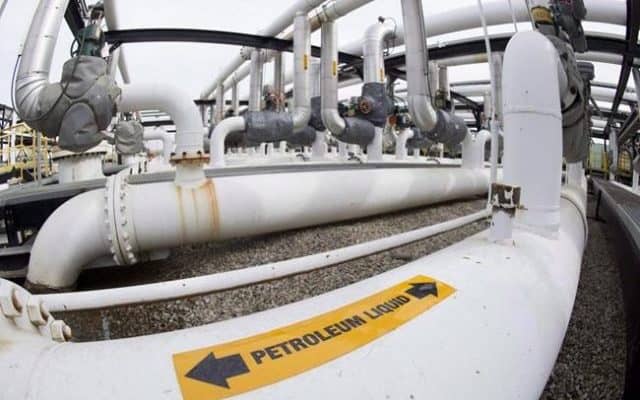
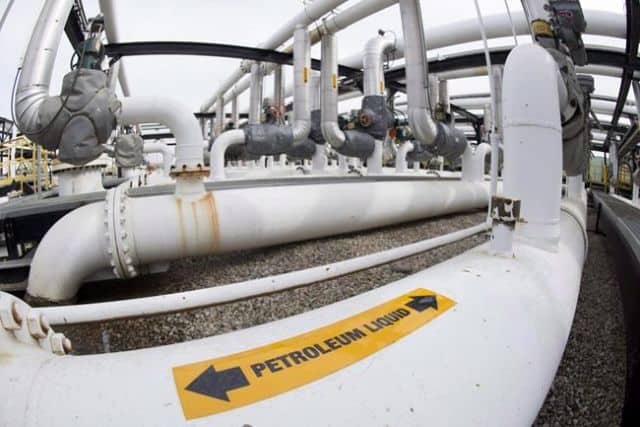
Pipes are shown at the Kinder Morgan Trans Mountain facility in Edmonton.

Canada’s energy regulator will tell the federal government this week whether it still thinks the Trans Mountain pipeline should be expanded, but cabinet’s final say on the project’s future is still several months away.

The National Energy Board is reconsidering the project’s impact on marine life, including highly endangered southern resident killer whales, after the Federal Court of Appeal ruled last year that the NEB’s 2016 approval failed to properly take into account how the whales would be affected by additional oil tankers in their waters.

The report’s delivery will start the clock on a 90-day deadline for cabinet to decide whether the controversial project will proceed, a deadline officials are already signalling could be pushed back.

In addition to the NEB review, Natural Resources Minister Amarjeet Sohi has ordered a new round of consultations with Indigenous communities to satisfy the court.

A team of 60 people has been assigned to consultation teams that have met with 70 communities since October, but that leaves 47 affected communities still waiting for a meeting.

There is no deadline for those consultations to wrap up, but officials in Sohi’s office have told The Canadian Press a final decision on whether the pipeline proceeds won’t be made until those they are complete.

Meantime, cabinet is under immense pressure to decide the fate of the pipeline before the federal election in the fall. There is also pressure to get the expansion built because Ottawa bought the existing pipeline from Kinder Morgan for $4.5 billion last August, after political opposition to the expansion left the company’s shareholders reluctant to proceed.

The impact of the expansion on the southern resident killer whales — of which only 74 survive — is key to the discussion. Conservationists say the pipeline will make their recovery nearly impossible.

“The decision really comes down to: Will the federal government say that the economic interests associated with the pipeline outweigh the presence of having southern resident killer whales on the landscape,” said Misty MacDuffee, a biologist with the Raincoast Conservation Foundation.

The whales started the year on a high note with the birth of a new calf, and two more females in the population are pregnant. But the happy news comes with a major caveat: no southern resident baby has survived more than a year since 2015.

The whales are being harmed by everything from boat noise and the decline in chinook salmon to contaminants in the water from sewage. The National Energy Board in 2016 did conclude the Trans Mountain pipeline expansion would “further impede” the recovery of the whales, but still gave the project the go-ahead because it said its mandate was to consider the impacts of the pipeline itself, not from project-related marine shipping.

Fisheries Minister Jonathan Wilkinson said he won’t prejudge what the National Energy Board will say, but he is confident the government has put in place enough new protections for whales and other marine life to mitigate the impact of the pipeline.

“No government has ever taken these kind of steps to try to address a critical species like the southern resident killer whale,” he said.

The Oceans Protection Plan, a $1.5 billion federal policy unveiled in 2016, includes new protected areas for the whales; attempts to recover their main food source, Chinook salmon; new research on water contaminants; and plans to reduce noise from the thousands of boats that travel near the whales each year.

The plan was not in place when the National Energy Board first reviewed the project, and Wilkinson notes the court didn’t take it into account either.

MacDuffee said there is nothing that can currently be done to reduce the effects of boat noise on the whales. She adds that while the government says only six more tankers a week will be added, those six tankers will mean the whales will go from being in the presence of boats about 85 per cent of the time, to more than 95 per cent of the time.

Oilsands science slammed

Oilsands science slammed

Dozens of oilsands environmental impact studies are marred by inconsistent science that’s rarely subjected to independent checks, says a university study.

“It doesn’t make any sense,” says University of British Columbia biology professor Adam Ford, who published his findings in the journal Environmental Reviews.

“You would have to go out of your way to make it this bad. It’s just a symptom of the state of the industry and it’s definitely a signal that we can do better.”

In 30 different assessments filed between 2004 and 2017, Ford found each study considered different factors in different ways. Few independently checked their conclusions. And those who did were notably less confident about the industry’s ability to restore what it had disturbed.

Ford says the inconsistent approach means the resulting tens of thousands of pages piled in the offices of the Alberta Energy Regulator reveal little about the overall health of one of the most heavily industrialized landscapes in Canada.

Energy companies planning to build oilsands projects must file an environmental impact assessment. Such assessments generally take representative species and consider, based on expert opinion, how development would affect different aspects of their habitat.

Moreover, the ways used to evaluate industrial impact were all different. Some 316 different mathematical models were used to measure habitat and they came up with different results from each other 82 per cent of the time.

Only 33 of the models were independently verified by field data or separate statistical methods. Ford found the assessments that used verification were about twice as likely to project serious environmental impacts.

Since there’s so much variation with so little checking, there’s no way to tell which assessments are more accurate, Ford says.

“Given the largely inconsistent approaches used to measure and rank ‘habitat,’ we have no basis with which to measure the performance, accuracy, or reliability of most habitat models used in oilsands (assessment),” the paper says.

The paper also says that of the 1681 oilsands applications made to the regulator since December 2013, 91 per cent were approved and one per cent denied.

“It is not clear if or how reporting negative impacts on wildlife in an (assessment) has any bearing on project approval,” it concludes.

The Alberta Energy Regulator declined to comment on the paper.

Ford suggests standardized oilsands assessments would be faster, cheaper and more likely to produce a clear picture of what’s happening in northern Alberta.

“There are people who live on this land (whose) culture and way of life is tied to those animals. And we’re telling them we’re pretty much making this up.”

Petroleum terminal expands

A Portland petroleum terminal is significantly expanding its capacity to unload rail cars, a move that sets the stage to more than double the number of oil trains along the Columbia and Willamette rivers into Oregon’s biggest city, OPB has learned.

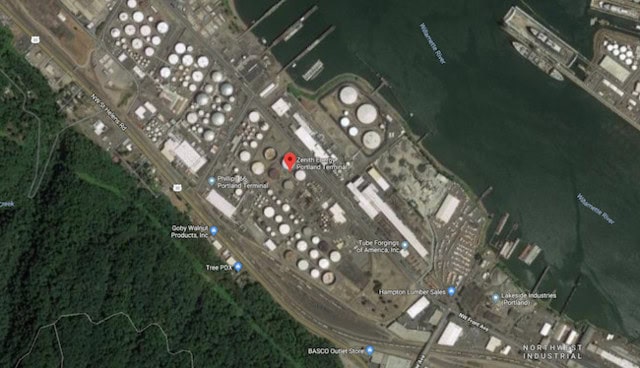
Zenith Energy, sandwiched between the river and Forest Park in the city’s northwest industrial district, began receiving train shipments of crude from Canada’s oil sands last year, records show, which it stored in tanks and later pumped onto ocean-going vessels.

Zenith’s outpost in Portland now has visible construction underway on a project to build three new rail platforms that will nearly quadruple the site’s previous capacity for offloading oil from tank cars, according to building plans filed with the City of Portland in 2014, which the city’s Bureau of Development Services confirmed Wednesday.

When operational, a terminal with such a capacity could handle multiple oil trains per week — a sizeable increase over Zenith’s 2018 operations. According to Oregon Department of Environmental Quality estimates, the site handled fewer than 30 full oil trains throughout last year.

Public Resistance To Oil Projects

The site’s expansion of crude-by-rail infrastructure comes despite much public resistance in the Northwest for new oil projects. That includes a vote by Portland’s City Council in 2016 to oppose any new fossil fuel infrastructure. That same year the Northwest experienced firsthand one of the oil-train mishaps that have occurred across North America as more and more oil has been moved by what critics have dubbed “rolling pipelines” and “bombs trains.”

Public records and interviews with state officials indicate those trains would carry a kind of heavy oil that presents a new risk for Northwest communities and rivers, and one the state’s emergency spill responders say they are ill-equipped to contain if it spills.

“It greatly complicates the spill. It’s going to take a lot more money and time and cause a lot more harm to the environment probably,” said Scott Smith, who regulates the Zenith terminal’s oil spill preparedness as part of the Oregon DEQ emergency response program.

He said the increased oil-by-rail traffic creates a risk in Portland of an environmental disaster like the one in Michigan in 2010, when heavy Canadian oil spilled from a pipeline into the Kalamazoo River. It took more than five years and $1 billion to clean up.

“It’s really among the most challenging spills we have out there, and if it was a large spill, it would cause quite a bit of damage,” Smith said.

Zenith declined to comment on how the project would affect its ability to unload more crude oil, saying only that the project would allow it to fit additional railcars on site and minimize the need to shuffle cars around.

“The multi-million-dollar project will provide an even safer and more efficient operation,” Megan Mastal, a public-relations representative for Zenith Energy, said in an emailed statement.

The company also declined to say what products it would handle. Mastal disputed that Zenith would be handling what’s known as bitumen, which is a type of petroleum extracted from Canada’s oil sands. It is thick like peanut butter and often diluted with other petroleum products before it is transported.