
Archives for February 19, 2019

Audi helps you avoid red lights by suggesting speeds

Faster isn’t always better.

Audi’s cars already tell you how long a red light will last, but now they’ll help you avoid those red lights in the first place. It’s launching the first implementation of the Green Light Optimization Speed Advisory (GLOSA), a system that provides speed recommendations to reduce the amount of time you spend at red lights. The extension of Traffic Light Information technology combines your car’s position and traffic light data to calculate an ideal speed that shows up on your vehicle’s instrument cluster or heads-up display. In theory, you could save time by driving slightly slower and catching an uninterrupted string of green lights.

Speed suggestions and TLI are available as part of an Audi Connect Prime feature on 2017 and newer models outside of the A3 and TT. You’re still limited to using them in certain areas, however. TLI is currently available in 13 urban regions, including Dallas, Denver, Gainesville, Houston, Kansas City, Las Vegas, Los Angeles, New York (White Plains), Orlando, Phoenix, Portland, the San Francisco Bay Area (Palo Alto and Walnut Creek) and Washington, DC.

The technology could become more useful in the future, though. Future TLI upgrades might use a car’s automatic stop/start system to restart the engine when a red light is turning green, and a navigation tie-in could plan routes that minimize stops. Think of this as another small step toward autonomous cars. You might still have to take the wheel, but computers are minimizing many of the little annoyances.


Qualcomm’s X55 modem will help make 5G phones a practical reality

It promises slicker devices and a wider range of 5G standards.

The first batch of 5G phones is right around the corner, but Qualcomm is already preparing for the follow-up. It’s introducing a Snapdragon X55 modem that should make 5G more viable in the real world. Unlike the X50, the new chipset will support “all major frequency bands” for (millimeter wave or lower), different operation modes and network deployments (including 4G/5G spectrum sharing), effectively supporting most any 5G rollout on the horizon. You’ll be more likely to get coverage beyond your home network, and shouldn’t be left behind if there’s a coverage upgrade.

The X55 is fast, too, promising 7Gbps peak download speeds and 3Gbps uploads in ideal conditions.

Crucially, it should lead to slicker devices. The 7-nanometer manufacturing should help with the X55’s power efficiency from the get-go, but it’s also using tricks like 100MHz envelope tracking and adaptive antenna tuning to minimize the electricity draw when you’re on a 5G network. You shouldn’t need a large handset or a bulky add-on just to enjoy better-than-LTE speeds.

Device makers already have samples of the X55, and the modem is poised to reach shipping hardware sometime in late 2019. In essence, Qualcomm is giving you a clue as to when 5G will become truly practical. The X55 should usher in a second wave of 5G phones that don’t have to make extensive compromises in the name of speed.

Huawei’s P30 series will debut on March 26th

The tech giant will launch its next flagship in Paris a month after MWC wraps up.

Huawei’s upcoming flagship phones won’t be popping up at Mobile World Congress. The tech giant has announced a special P30 series launch event in Paris, which will take place on March 26th, 2019 — almost a full month after MWC wraps up in Barcelona. Huawei staged a similar event for the P20 last year, also in Paris and also a month after the mobile convention, so this event didn’t exactly come out of left field.

The company didn’t reveal anything more than the date and the location of the launch, but the promo video it posted on Twitter hints at what could be one of its biggest offerings. It features prominent spots in Paris, including the Eiffel Tower and the Arc de Triomphe, dramatically zooming in on them until their finer details are perfectly visible on screen. According to previous reports, the P30 Pro might come with a periscope-like camera to enable lossless optical zoom. The video didn’t contain anything about reviving the headphone jack, though, so you’ll likely have to wait until next month to find out for sure.

Panasonic’s FZ1000 II 16x superzoom targets Sony’s RX10

It also unveiled the ZS80 travel zoom camera.

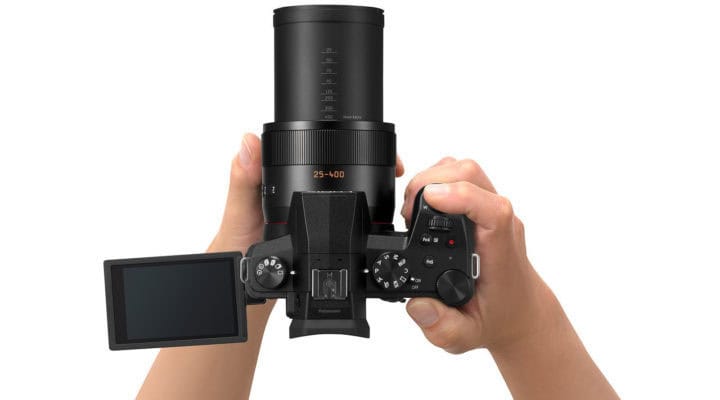
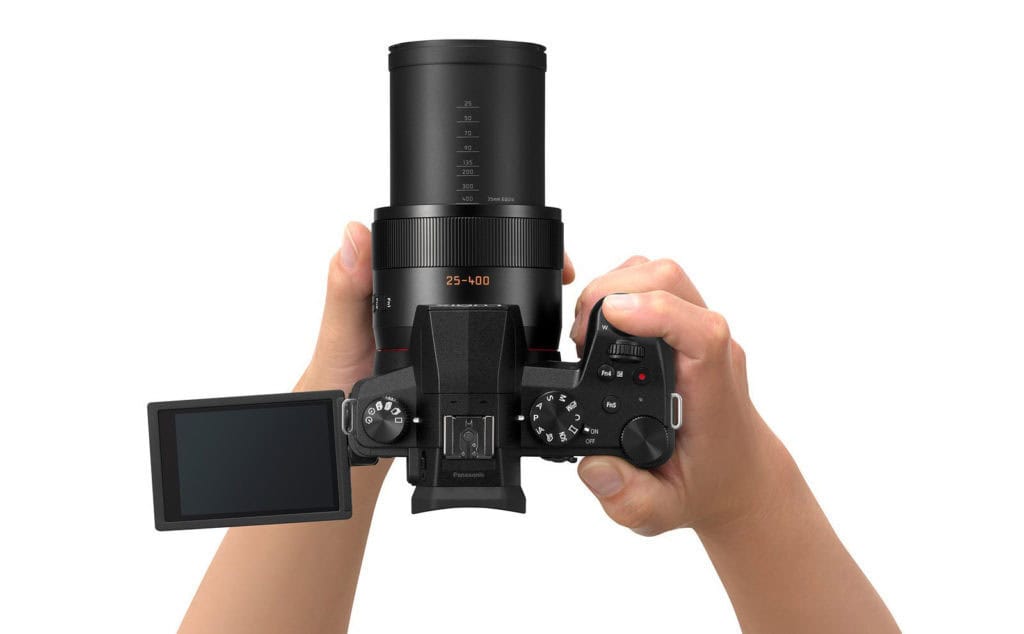
If you’re looking at Sony’s RX10 IV but don’t want to pay 1,700 freaking dollars, Panasonic might have the camera for you. It just unveiled the FZ-1000 II, an upgrade to the 2014 FZ-1000, that costs nearly half that. It’s got a 1-inch, 20.1-megapixel “high-sensitivity” CMOS sensor and 16x 25-400mm f/2.8-4.0 (35mm equivalent) Leica zoom, only a bit less than the 24-600mm reach of its rival. It also has a fully articulating 3-inch touchscreen ideal for selfies and vlogging, bettering the tilt-only display on the RX10 IV.

The new sensor gives it much better low-light capability than its predecessor, Panasonic said. Other features include 12 fps shooting speeds, a 2.36 million dot EVF, dual-control wheels, 4K photo, five-axis hybrid optical stabilization and 4K 30fps video. It also has WiFi and Bluetooth for mobile device transfers. The Lumix FZ1000 II will cost $899 / £769 when it arrives in March 2019.

Panasonic ZS80 superzoom travel compact

The Lumix DC-ZS80 (TZ95 in the UK), meanwhile, is a travel superzoom with an even longer 24-720mm f/3.3-6.4 30x Leica lens and 1/2.3-inch MOS sensor. While that’s a far cry from Nikon’s crazy 125x P1000, it’s still pretty long, so a built-in optical stabilizer helps smooth things out. You can shoot bursts at 10 fps and 4K 3,840 x 2,160 video at 30 fps. It comes with a 2.3 million dot live view finder and a three-inch flip up touchscreen ideal for selfies and vlogging. The ZS80 is now on pre-order for $449 / £399 and will arrive at the end of April 2019.

Stocks to Watch For: Spirit MTA REIT (NYSE:SMTA), Clorox Company (The) (NYSE:CLX)

Spirit MTA REIT (NYSE:SMTA)

Spirit MTA REIT (NYSE:SMTA), ended its previous trading session at $7.82 showing a loss of -0.0599999999999996 or -0.76 percent with respect to the price of $7.88 when stock market opened. The company traded 114733 shares over the course of the trading day. Giving the average volume of 355.18 Million over the course of 3 consecutive months. Which signifies a pretty good change over the time with its shares outstanding of 43.32 Million.

Spirit MTA REIT (NYSE:SMTA) is currently trading Higher than its price target which is set to $0 by the analyst. The stock is -23.77% Below its 1-Year High which is $10.26. SMTA has a difference of 11.87% from its 1 year low which stands at $6.99. The company is currently rated by analyst who are keeping a close eye on the stock as 0. Where 1 means Buy, 2.5 meaning Hold and 5 as Sell.

Spirit MTA REIT (NYSE:SMTA) Performance Snapshot

The stock performed exceptionally bad in the previous week which depicts an decrease of -3.22 percent in the shares price. The company added about 0.13% in its share price over 1-Month. While taking about the performance of the stock over 1-year interval is 0 Percent. SMTAcurrently shows 9.68% as its year to date performance.

Spirit MTA REIT (NYSE:SMTA) Price Insight

The stock needs to grow about $-7.82 to reach its price target. In order to seek the stock’s directional movements, 20-Days, 50 Days and 200-Days moving averages are -0.54%, 1.33% and -11.63 percent respectively. The stock trades about 0.85 percent of its Float giving its total shares Outstanding are 43.32 Million. SMTA lost about -15.06 percent in 6 months showing its Average True Range of 0.28. The company currently has a RSI and Beta of 49.07 and 0.

While talking about Spirit MTA REIT (NYSE:SMTA) valuation ratios, the stock trades with a P/S and P/B of 1.41 and 1.85 which is significantly better and attractive as compared to its peers.

Clorox Company (The) (NYSE:CLX)

Clorox Company (The) (NYSE:CLX), closed the last trading session at $156.28 with decrease of $-0.0699999999999932 or -0.04 percent against the opening price of $156.35. The trading day volume of the company stands at 785389 shares while the average trading volume of Clorox Company (The) (NYSE:CLX) is 1.1 Million over the course of 3 consecutive months. Which signifies a pretty good change over the time with its shares outstanding of 128.22 Million.

The price target of Clorox Company (The) (NYSE:CLX) is currently set at 150.86 by the analysts. The stock is $-6.81 Below its 1-Year High which is $167.70. CLX hit its 1-Year low price of $113.57. The company is currently rated by analyst who are keeping a close eye on the stock as 3. Where 1 means Buy, 2.5 meaning Hold and 5 as Sell.

Performance Indicators of Clorox Company (The) (NYSE:CLX)

The value of the stock increased by 0.4% during the previous week performance. Looking at the 1 month performance of Clorox Company (The) (NYSE:CLX), the stock jumped 2.88%. While the 1 year performance shows a positive percentage of 21.34 and year to date performance stands at 1.39%.

Clorox Company (The) (NYSE:CLX) Analytical Review

The stock needs to grow about $-5.41999999999999 to reach its price target. In order to seek the stock’s directional movements, 20-Days, 50 Days and 200-Days moving averages are 2.83%, 1.17% and 8.57 percent respectively. The stock trades about 6.21 percent of its Float giving its total shares Outstanding are 128.22 Million. CLX gained about 7.8 percent in 6 months showing its Average True Range of 3.14. The company currently has a RSI and Beta of 56.24 and 0.3.

STOCKS TO WATCH: EYES ON QEP RESOURCES, INC. (QEP), BAIDU, INC. (BIDU)

The last few days have been good for QEP Resources, Inc. (NYSE:QEP), as its price has grew by 8% during the week. It has also performed poorly over the past three months, as it lost around -0.48% while it has so far climbed around 5.82% during the course of a year. The price of the stock went up by $0.13 now trading at $8.37. Their shares witnessed a 67.4% increase from the 52-week low price of $5 they recorded on 2018-12-26. Even though it is still -64.52% behind the $13.77 high touched on 2018-07-10. The stock of QEP recorded 48.67% uptrend from the beginning of this year till date. The 12-month potential price target for QEP Resources, Inc. is set at $10.9. This target means that the stock has an upside potential to increase by 30.23% from the current trading price.

When giving their opinion, around 33.33% of Wall Street analysts, which represents 6 out of 18 rated the stock as a Buy. 12 brokerage firms of the remaining 66.67% rated the stock as a Hold with 0 analyst rating it as a sell. Overall, the number of aggregate QEP shares held by institutional investors represents 0% of total shares. 60 institutions entered new QEP Resources, Inc. (NYSE:QEP) positions, 153 added to their existing positions in these shares, 137 lowered their positions, and 49 exited their positions entirely.

QEP Resources, Inc. (QEP) trade volume has decreased by -44.14% as around 4,010,457 shares were sold when compared with its 50-day average volume of traded shares which is 7,179,506. At the moment, QEP is witnessing a uptrend, as it is trading 1.09% above its 20-day SMA, 10.82% above its 50-day SMA, and -16.73% above its 200-day SMA. The company runs an ROE of roughly -6.5%, with financial analysts predicting that their earnings per share growth will be around -5.69% per annum for the next five year. This will be compared to the 141.6% increase witnessed over the past five years.

The first technical resistance point for QEP Resources, Inc. (NYSE:QEP) will likely come at $8.47, marking a 1.18% premium to the current level. The second resistance point is at $8.57, about 2.33% premium to its current market price. On the other hand, inability to breach the immediate hurdles can drag it down to $8.18, the lower end of the range. QEP’s 14-day MACD is 0.06 and this positive figure indicates an upward trading trend. The company’s 14-day RSI (relative strength index) score is 56.56, which shows that its stock has been neutral. The 20-day historical volatility for the stock stands at 38.65 percent, which is low when compared to that of the 50-day’s 93.82 percent.

The shares of Baidu, Inc. (NASDAQ:BIDU) has decreased by -2.31%, and now trading at $170.06 on the Wall Street in the intra-day deal, with their shares traded now around 3,433,765. This is a rise of 550,875 shares over the average 2,882,890 shares that were traded daily over the last three months. The stock that is trading at $170.06 went higher by 10.59% from its 52-week low of $153.78 that it attained back on 2019-01-03. The stock recorded a 52-week high of $284.22 nearly 278 days ago on 2018-05-16.

BIDU stock has performed well over the past 30 days, as it added 0.18% while its price climbed by 7.23% year-to-date (YTD). Looking at the last few days, it has been good for the stock, as it rose 0.09% over the last week. The stock’s 12-month potential target price is now at $233.02. This means that the stock price might likely increase by 37.02% from its current trading price.23 out of 33 Wall Street analysts which represents 69.7% rated the stock as a buy while the remaining 30.3 rated it as a hold, with 0 of analysts rating it as a sell.

Baidu, Inc. (NASDAQ:BIDU) has been utilizing an ROE that is roughly 21.6%, with stock analysts predicting that the company’s EPS for the next five years will go up by 2.64% per year, following the 11.9% raise that was witnessed during the past five years. The stock at the moment is on a uptrend, trading 0.31% above its 20-day SMA, 0.7% above its 50-day SMA, and -20.57% below its 200-day SMA. In percentage terms, the aggregate Baidu, Inc. shares held by institutional investors is 81.8%. 106 institutions jumped in to acquire Baidu, Inc. (BIDU) fresh stake, 392 added to their current holdings in these shares, 403 lowered their positions, and 125 left no stake in the company.

The stock’s 9-day MACD is 0.67 and this positive figure indicates an upward trading trend. The company’s 9-day RSI score is 48.91, which shows that its stock has been neutral. The 20-day historical volatility for the shares stand at 24.43 percent, which is less when compared to that of the 50-day’s 34.72 percent. On the daily chart, we see that the stock could reach the first level of resistance at $174.13, sporting a 2.34% premium to the current level. The next resistance point is at $178.19, representing nearly 4.56% premium to the current market price of Baidu, Inc. (BIDU). On the other hand, failure to breach the immediate hurdles can drag it down to $164.93, the lower end of the range.