Archives for January 17, 2019

Tesla releases a plug-in EV charger you can take with you

It charges 25 percent faster than Tesla’s mobile connector.

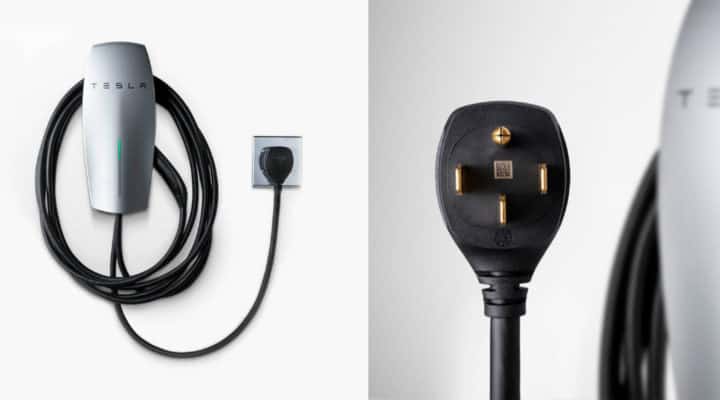
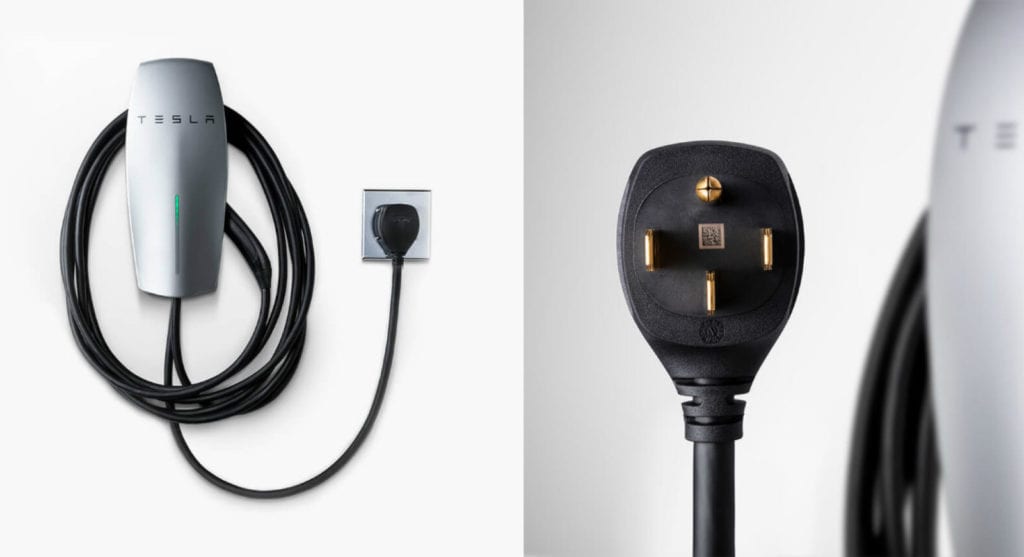
Tesla has released its first non-hardwired Wall Connector with a NEMA 14-50 plug for EV charging. Boasting 40 amps (9.6kW) of power, Tesla says the home charging device can juice up Model S, Model X and Model 3 cars 25 percent faster than the company’s Gen 2 Mobile Connector, which comes as standard with its EVs.

Like Tesla’s existing hardwired option, the advantage with the new device is that it lets you keep the mobile connector in your car for use when travelling. What’s unique here is the attached NEMA 14-50 plug, allowing users to take the wall connector with them if they move.

Tesla claims that it also has the benefit of not requiring an electrician installation — “simply mount [it]…to a wall…and plug in” — but (as Electrek notes) that only works if you already have a NEMA 14-50 power outlet. And, if that’s the case, then you can just revert to using the Mobile Connector anyway. At $500, the new charger costs the same as the hardwired version and is available now on Tesla’s website.


Collection 1 data breach covers more than 772 million email addresses

Top view of a mobile phone lying on a white office desk, log in on the screen, part of a notebook, sharp pencils, blue color. Business concept, lay flat

Yes, one of yours is probably in there somewhere.

If you’re signed up for one of the many services that alerts you to data breaches when they’re discovered (if you’re not, you probably should be) then you likely have an email waiting for you. Troy Hunt runs Have I Been Pwned where he makes it his business to dig up these files as they’re being passed around by hackers, and has alerted the world to “Collection #1,” which claims to combine usernames and passwords from thousands of databases.

That includes some where the password data may have been stored encrypted, so if someone has managed to crack open a site where you had an account registered, it’s likely they have your info and know what password you were using. If you’ve logged into a customer support portal or some random forum with your email address and used the same password you use for your main email account, Netflix, Facebook or other accounts, then it could be trivially easy for someone to have that and use it to log in as you.

Unfortunately, for reasons Hunt explains in his blog post, it’s impossible to see what account or password may have been included via his site, which is why you should probably be using a password manager (if you have a truly unique password, you can see if it’s ever been exposed in one of the breaches on this page). That would make it easy to maintain unique passwords wherever you have accounts, and easily change them if there’s a breach.

So to recap — sign up for Have I Been Pwned, it’s free and can alert you to breaches quickly. Use unique passwords, which could be easier to do if you use a password manager like 1Password or LastPass, or even if you just write them down and store them securely, in addition to multifactor authentication where available. You can’t stop your information from popping up in breaches like this, but taking those steps can lower the risk of impact before your personal Facebook page starts offering deep discounts on Ray-Bans or someone in Latvia is adding to your Spotify playlists.

Airbus starts work on A220

Airbus SE broke ground Wednesday on the A220 aircraft assembly line at its facility in Mobile, Ala., the first step in a US$300-million construction project paid for by Bombardier Inc.

That amount makes up a chunk of the US$925 million the Quebec plane-and-train maker could shell out by the end of 2021 under a partnership that saw Airbus take control of the C Series — now known as the A220 — last July without paying a penny.

The event took place at the Airbus plant in Alabama, where assembly of the popular A320 passenger jet is already underway. The French airplane giant said the new project will create 400 factory jobs.

Production of the narrow-body A220 is expected to start in the third quarter, whether or not plant construction is complete, in order to make the first deliveries in 2020.

Airbus said the project will generate economic spinoffs for Quebec, forecasting that northern suppliers of the A220 will rake in about $400 million per month once the Mirabel, Que., and Mobile facilities are up and running at full capacity.

The two plants will churn out 10 aircraft and four aircraft a month, respectively, the company said.

“The cost of parts produced by all suppliers in Quebec, including Bombardier, is more than $2.6 million for each aircraft,” Airbus said.

The A220 has some 537 firm orders from 19 customers, including Delta Air Lines, JetBlue and Moxy, according to the company’s latest data states. That includes 135 orders placed by U.S. airlines since Airbus seized the reins six months ago, a takeover that was first announced in October 2017.

The project will also receive US$16 million in the form of incentives from the local, regional and state governments, Airbus said.

Sears staves off liquidation

Sears has won a reprieve in a desperate attempt to stave off its own demise.

The company’s largest shareholder and chairman, Eddie Lampert, won a bankruptcy auction in New York, according to a source familiar with negotiations. The person agreed to speak on condition of anonymity because they were not authorized to discuss the negotiation publicly.

Lampert had upped his bid to more than $5 billion in recent days.

Lampert, who steered the company into bankruptcy protection may be able to keep the roughly 400 remaining Sears stores open, which would mean tens of thousands of jobs are saved, at least for now.

Whether Sears, founded 132 years ago, can survive in the era of Amazon remains questionable.

Sears filed for Chapter 11 bankruptcy protection in October. At that time, it had 687 stores and 68,000 workers. At its peak in 2012, its stores numbered 4,000.

Lampert says there’s still potential for the company even as it struggles to compete not only with Amazon, but Walmart, Target and dollar stores that have carved out their own niche.

Under Lampert, Sears has survived by spinning off stores and selling brands that had grown synonymous with the company, like Craftsman. Lampert has loaned out his own money and cobbled together deals to keep the company afloat, though critics said he has done so with the aim of benefiting his ESL hedge fund.

Four years ago the company created a real estate investment trust to extract revenue from the enormous number of properties owned by Sears. It sold and leased back more than 200 properties to the REIT, in which Lampert is a significant stake holder.

Lampert personally owns 31 per cent of the Sears’ outstanding shares and his hedge fund has an 18.5 per cent stake, according to FactSet. He stands to realize a big tax gain keeping Sears alive, using the company’s years of net operating losses to offset future taxable income if one of his other companies takes over the chain, says David Tawil, president and co-founder of Maglan Capital, which follows distressed companies.

Tawil and others believe Lampert wants to be in full control of liquidating Sears’ assets, including real estate.

Lampert combined Sears with Kmart in 2005, about two years after he helped bring Kmart out of bankruptcy. He pledged to return Sears to greatness, but that never happened.

The company, hammered during the recession and outmatched in its aftermath by shifting consumer trends and strong rivals, hasn’t had a profitable year since 2010 and has suffered 11 straight years of annual sales declines. Lampert has been criticized for not investing in the stores, which remain shabby. .

Wind power making gains as competitive source of electricity

The wind industry argues it can can compete with other forms of power generation, and a flurry of new contracts put out by several provinces seem to bear that out.

Recent contracts awarded in Alberta and Saskatchewan will keep electricity prices low

It’s taken a decade of technological improvement and a new competitive bidding process for electrical generation contracts, but wind may have finally come into its own as one of the cheapest ways to create power.

Ten years ago, Ontario was developing new wind power projects at a cost of 28 cents per kilowatt hour (kWh), the kind of above-market rate that the U.K., Portugal and other countries were offering to try to kick-start development of renewables.

Now some wind companies say they’ve brought generation costs down to between 2 and 4 cents — something that appeals to provinces that are looking to significantly increase their renewable energy.

The cost of electricity varies across Canada, by province and time of day, from an average of 6.5 cents per kWh in Quebec to as much as 15 cents in Halifax.

Capital Power, an Edmonton-based company, recently won a contract for the Whitla 298.8-megawatt (MW) wind project near Medicine Hat, Alta., with a bid of 3.9 cents per kWh. That price covers capital costs, transmission and connection to the grid, as well as the cost of building the project.

The Halkirk Wind project in east-central Alberta, which began operating in 2012, was built by Capital Power. The company’s Whitla project near Medicine Hat is still under development.

Jerry Bellikka, director of government relations, said Capital Power has been building wind projects for a decade, in the U.S., Alberta, B.C. and other provinces. In that time the price of wind generation equipment has been declining continually, while the efficiency of wind turbines increases.

Increased efficiency

“It used to be one tower was 1 MW; now each turbine generates 3.3 MW. There’s more electricity generated per tower than several years ago,” he said.

One wild card for Whitla may be steel prices — because of the U.S. and Canada slapping tariffs on one other’s steel and aluminum products. Whitla’s towers are set to come from Colorado, and many of the smaller components from China.

“We haven’t yet taken delivery of the steel. It remains to be seen if we are affected by the tariffs.” Belikka said.

Another company had owned the site and had several years of meteorological data, including wind speeds at various heights on the site, which is in a part of southern Alberta known for its strong winds.

But the choice of site was also dependent on the municipality, with rural Forty Mile County eager for the development, Belikka said.

Alberta aims for 30% electricity from wind by 2030

Alberta wants 30 per cent of its electricity to come from renewable sources by 2030 and is encouraging that with a guaranteed pricing mechanism in what is otherwise a market-bidding process.

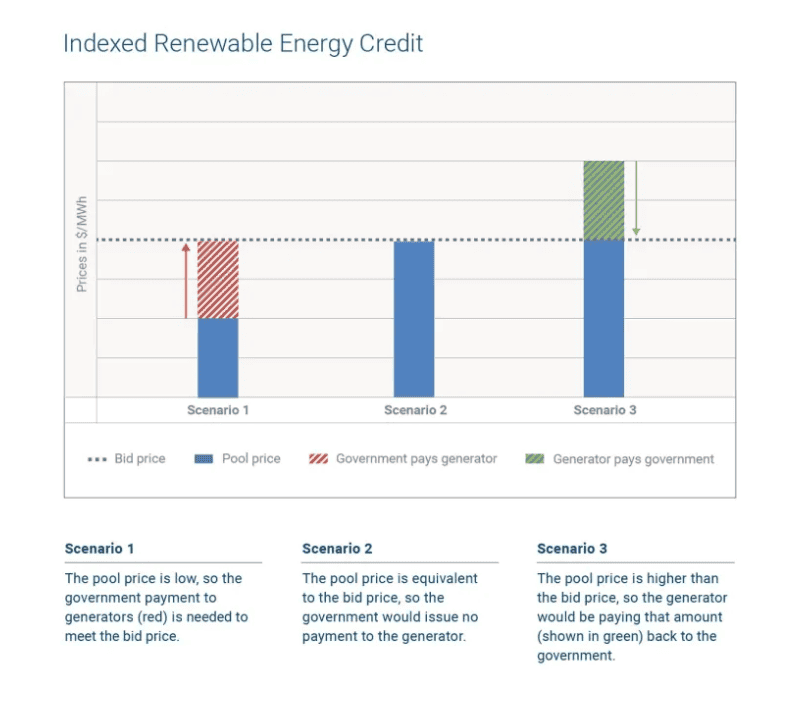
While the cost of generating energy for the Alberta Electric System Operator (AESO) fluctuates hourly and can be a lot higher when there is high demand, the winners of the renewable energy contracts are guaranteed their fixed-bid price.

The average pool price of electricity last year in Alberta was 5 cents per kWh; in boom times it rose to closer to 8 cents. But if the price rises that high after the wind farm is operating, the renewable generator won’t get it, instead rebating anything over 3.9 cents back to the government.

On the other hand, if the average or pool price is a low 2 cents kWh, the province will top up their return to 3.9 cents.

This contract-for-differences (CfD) payment mechanism has been tested in renewable contracts in the U.K. and other jurisdictions, including some U.S. states, according to AESO.

Competitive bidding in Saskatchewan

In Saskatchewan, the plan is to double its capacity of renewable electricity, to 50 per cent of generation capacity, by 2030, and it uses an open bidding system between the private sector generator and publicly owned SaskPower.

In bidding last year on a renewable contract, 15 firms submitted bids, with an average price of 4.2 cents per kWh.

One low bidder was Potentia with a proposal for a 200 MW project, which should provide electricity for 90,000 homes in the province, at less than 3 cents kWh, according to Robert Hornung of the Canadian Wind Energy Association.

“The cost of wind energy has fallen 70 per cent in the last nine years,” he says. “In the last decade, more wind energy has been built than any other form of electricity.”

Ontario remains the leading user of wind with 4,902 MW of wind generation as of December 2017, most of that capacity built under a system that offered an above-market price for renewable power, put in place by the previous Liberal government.

In June of last year, the new Conservative government of Doug Ford halted more than 700 renewable-energy projects, one of them a wind farm that is sitting half-built.

The feed-in tariff system that offered a higher rate to early builders of renewable generation ended in 2016, but early contracts with guaranteed prices could last up to 20 years.

Hornung says Ontario now has an excess of generating capacity, as it went on building when the 2008-9 bust cut market consumption dramatically.

But he insists wind can compete in the open market, offering low prices for generation when Ontario needs new  capacity.

“I expect there will be competitive processes put in place. I’m quite confident wind projects will continue to go ahead. We’re well positioned to do that.”

Business group wants National Shipbuilding Strategy reopened for Quebec shipyard

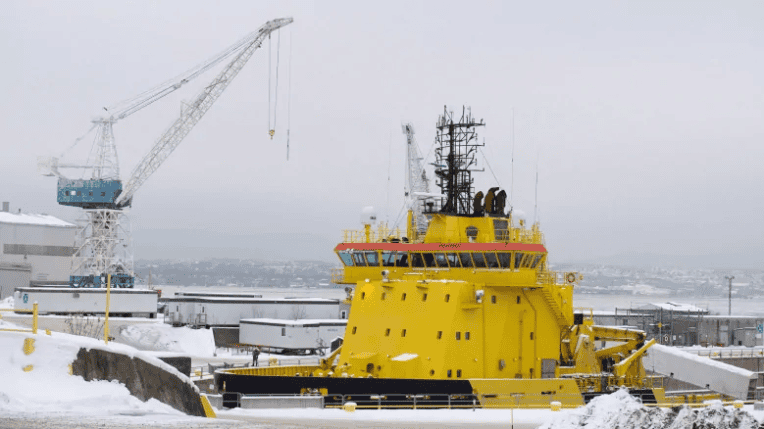
A ship sits in dry dock at the Davie shipyard in Levis, Que., in December.

Association puts pressure on Liberals to direct new projects to Davie yard

A Quebec-based business association claiming to represent over 1,000 companies inside and outside the province is launching a high-profile campaign to convince the Liberal government to reopen the oft-maligned National Shipbuilding Strategy.

The group is demanding the federal government include the Davie shipyard, in Levis, Que., in the policy and plans to make it a major issue in the October federal election.

The Association of Davie Shipbuilding Suppliers, which has been around for about a year, represents companies that do business with the shipyard.

It plans an online campaign, beginning Thursday, and will lobby chambers of commerce as well as federal and provincial politicians.

It is hoping to use its extensive membership and thousands of associated jobs to put pressure on the government in an election year to direct the building of additional coast guard ships exclusively to the Quebec yard, one of the oldest in the country.

The shipbuilding strategy, conceived under the previous Conservative government but embraced by the Liberals, has turned into a giant sinkhole for federal cash with little to show for it, Simon Maltais, the association’s vice-president, told CBC News.

“We can call it a boondoggle,” he said. “It has been seven years in the making. At the moment, there is absolutely no operational ship afloat and working for Canada.”

The Conservatives under former prime minister Stephen Harper chose two shipyards — Irving Shipbuilding of Halifax and Seaspan in Vancouver — as the government’s go-to companies for the construction of new warships and civilian vessels.

The Davie shipyard was, at the time, emerging from bankruptcy, and under the strategy it only became eligible for repair and refit work on existing vessels and perhaps the construction of smaller vessels.

Delays and cost overruns

Irving and Seaspan have invested hundreds of millions of dollars in modernizing their yards and have just begun to produce new vessels.

The first Arctic offshore patrol ship for the navy is being outfitted in Halifax and others are in various stages of construction.

Three offshore fisheries science vessels, constructed in Vancouver for the coast guard, are undergoing repairs after defective welds were discovered last year.

The entire program has been beset with delays and rising cost estimates.

Last year, Public Services and Procurement Canada refused to release a revised timeline for the delivery of ships from Seaspan, including construction of a heavy icebreaker and the navy’s two joint support ships.

Politics and shipbuilding

Maltais said it makes no sense to keep excluding Davie from full-fledged ship construction work when much of the coast fleet is over three decades old and in dire need of replacement.

Refreshing the strategy would insure the federal government gets the ships it needs and Quebec companies “get their fair share” of the program.

“We know it’s an electoral year and, yes, we want the federal government and the people in the election to talk about it,” he said.

Maltais clams members of his association have been talking to federal politicians on both sides of the aisle in the province and they support the idea.

“They seem to be on the same page as us,” he said.

Defence analyst Dave Perry, an expert in procurement and the shipbuilding program, said the political campaign has the potential to make the federal government uncomfortable, but he doubts it will achieve the objective of reopening the strategy to add a third shipyard.

“That would certainly be a major change in the strategy,” he said. “There had been a view of doing something less than that.”

The proposal being put forward by the association would not take any work from Halifax or Vancouver, but instead direct all new work, on additional icebreakers for example, to the Quebec yard.

Just recently, Davie was awarded a contract to convert three civilian icebreakers for coast guard use, but the association argues the need is greater.

The federal government did debate an overhaul of the strategy, according to documents obtained and published by CBC News last summer.

The size and scope of the “policy refresh” was not made clear in a heavily redacted memo, dated Jan. 23, 2018.

So far, nothing has taken place and government officials have insisted they were still committed to the two-yard strategy.

During the last election campaign, the Liberals pledged to fix the “broken” procurement system and invest heavily in the navy.